The 2017 KO Sailing USODA Optimist Team Trials were held this past weekend at the Brant Beach Sailing Foundation and Yacht Club in Brant Beach, New Jersey. 223 sailors competed in the event which ran from May 11-14th. The regatta had winds between 10-15 knots and temperatures in the 50s for most of the days of racing. 75 sailors made up the Gold Division along with 148 in the Silver A and Silver B Divisions. South Florida sailors came in at the top of the fleet with the Lauderdale Yacht Clubs Stephan Baker in 1st, Justin Callahan in 2nd and Mitchell Callahan in 5th. Coral Reef Yacht Club Sailors Liam O’Keefe and top female sailor Charlie Leigh finished 3rd and 4th respectively.
To take a look at the Gold Fleet results click here- https://sail1design.com/wp-content/uploads/2017/05/race_1-12_gold_fleet.pdf
For the Silver A & B Fleet results click here- https://sail1design.com/wp-content/uploads/2017/05/race_1-11_silvera___silver_b__1_.pdf
Congratulations to all the competitors and best of luck moving forward with the upcoming international events.

Club Profile: Kittery Point Yacht Club
The Kittery Point Yacht Club is located in New Castle NH, on the southern shore of the Piscataqua River. Its clubhouse stands opposite Seavey Island, home of the historic Portsmouth Naval Shipyard. Ships from all over the world pass before it, vying with local lobster and fishing boats during the week and hundreds of pleasure boats on holidays and weekends.


Learn more about the KPYC’s summer sailing program!
Breaking Boatbuilding Molds: Zim Sailing
By Airwaves Writer Taylor Penwell
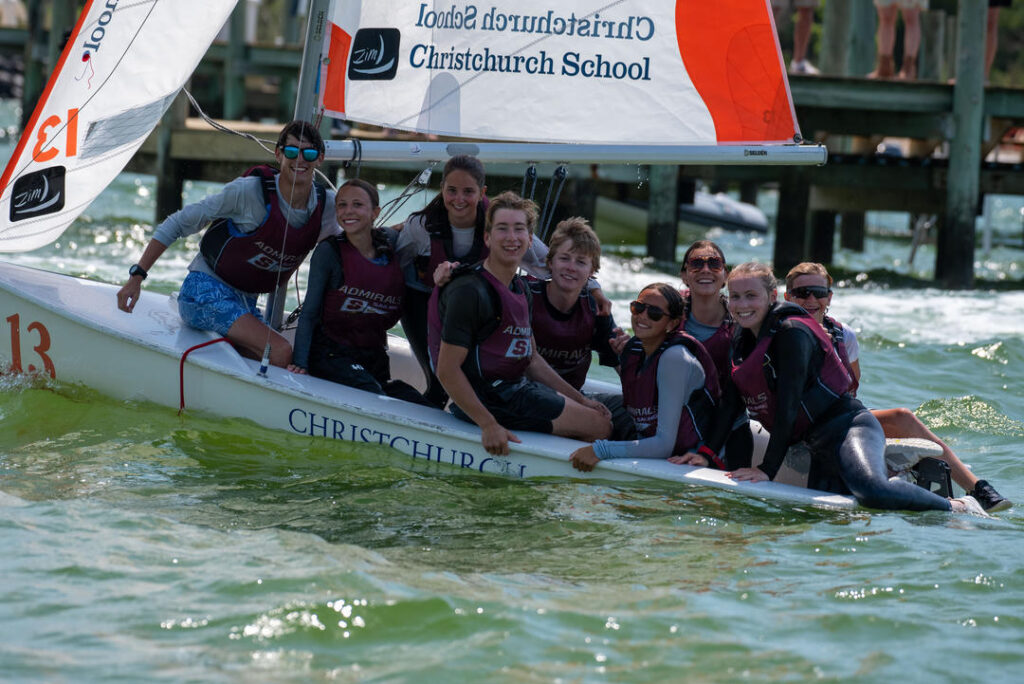
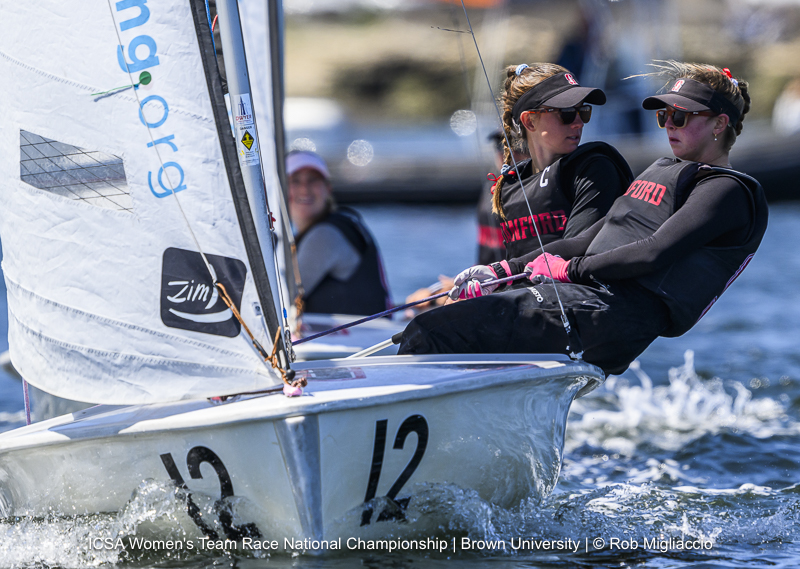
Zim Sailing, a sponsor and team member with Sail1Design, is a sail boat manufacturer that is breaking the molds compared to other sailing manufacturers in the dinghy industry. Based out of Warren, Rhode Island, Zim Sailing was founded by former Vanguard employee Steve Perry after Vanguard was bought out by Laser Performance. Steve Perry saw an opportunity to start a new small boat manufacturing company that would differentiate itself from other competitors.
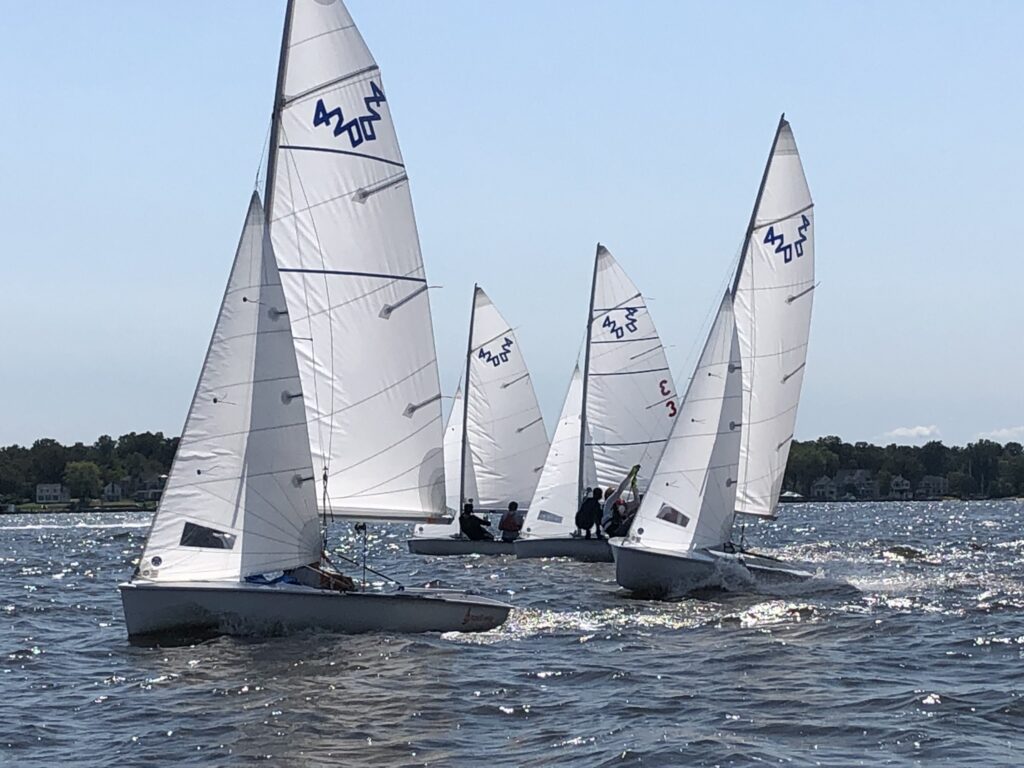
After leaving Vanguard, Steve called on many of his long time industry partners and relationships to help him get the company started. Where in the world did “ZIM” come from? The name Zim Sailing is an acronym based on the name of the company’s sister factory in China: Zou Inter Marine. In 2009 Steve purchased molds from C420 and CFJ classes and began testing and building his own brand of boats. After he was granted approval from the classes, Steve started delivering the Zim Sailing C420s with his personal car and in the same year moved his office from his kitchen table at home into a small 1600 sq. ft. contractor space. Steve has been working to bring more and more of the company’s production capacity to the United States each year.
Since 2009 Zim Sailing’s reach has grown tremendously but still has only thirteen employees total in the United States, including the 4 USA based boat builders. Zim Sailing prides itself on these thirteen employees’ abilities as top experts in their respective fields to have the knowledge and personal experience to deliver the best products and services in the industry to the customer. The company has been constantly expanding and moving into new sailing markets. Zim Sailing carries boats for all levels of sailing, from the grassroots level, recreational sailing, green fleet optimists, all the way up to collegiate sailing. Zim Sailing is sure to keep all these markets in mind with every move they make as a business.
Zim Sailing now carries 14 brands of sailboats, 9 of which they build:
Zim 15 * 420E Megabyte * Hartley Boats
C420 * Collegiate 420 * 29er Bic SUPs
CFJ * Collegiate FJ * World Wide Sailor Pram
Opti Byte * RS Sailing Boats
*made in the USA
Zim Sailing keeps a large inventory of all the parts needed for the boats they provide. Having this large inventory in-house allows them to have this large array of products, in contrast to some other market problems at the moment. “We build centerboards, daggerboards, rudders here so there is not shortage or wait when an order comes in for parts. If an order is called in they have the ability to ship it out in the same day and get it to the customer in the same week.” Having this large supply of stock, Zim Sailing can get parts to you pretty immediately which is not something the market is used to because the industry standard takes much longer to process and ship the same types
of orders. “This is one of the main ways we set ourselves apart from other companies. “
Reasons for going with Zim Sailing:
- Quality products
- Product line/offering
- Parts and gear availability
- Customer service
When asked what Zim Sailing prides itself on the company Marketing Executive Laura Beigel said, “Our product offering is one and our parts inventory is another. The range of boats that we carry are multifunctional which gives the customer more bang for their buck. For example, we work with sailing programs all over the country who are seeking boats that can be used in classes with sailing students of all different skill levels, from learn to sail for kids and adults to adventure classes or racing classes. This is one way were are able to offer such affordable options to our customers all the time. We try to give them something that is versatile. The other thing we distinguish ourselves on is the quality of our boats. They are crafted by hand and quality control checked after every stage of production, then QC checked a few more times during the finishing stages before they leave the warehouse. Every detail matters to us. ”
Only 3 warranty claims have ever been made on Zim Sailing boats since the founding of the company. A truly amazing accomplishment.
If you go to a Club 420 or Optimist regatta in the states there is a high chance you will see a Zim Sailing charter boat trailer there. Zim Sailing is a national sponsor for US Sailing and the USODA, along with the Junior Sailing Olympic Festivals. Chartering boats at these high level events has helped market the Zim Sailing brand of boats.
In the years to come the sky’s the limit for Zim Sailing. One of their short term goals is to is to get a lot better at what we are already doing. “To improve upon what we have got as far as the service in concerned, we are constantly evaluating the products to ensure we are offering exactly what people want and what people need,” says Beigel. Another is to make sure Zim Sailing has everything in stock people need and continually work to project things customers might want or need in the future. Another goal is to manage the growth and to manage it well to continue to deliver the best products and service to the customer as they expand their business.
Zim Sailing sees itself as an up and coming company in a market that is lacking a bit in many places and is changing the game as they say, and that is something they want to continue to work on moving forward is to break all those stereotypes about untimely processing of orders and lack of inventory. “We seek to be the ‘go to’ resource for everyone for anything in the sailing industry and to be counted on for making it possible to get everyone on the water sailing.”
To learn more about Zim Sailing and what they can do for you go to their website at,
http://www.zimsailing.com/
Coaching Drills
Article Written by Dave Elsmo, Head coach of the Wisconsin Sailing Team
As with our first installment we will be continuing to overview the most effective drills for team growth. We will continue with coach-led drills as the third part perspective can be invaluable in whittling away the bigger corrections so sailors can concentrate on their in-boat communication and physicality.
Rolling Starts:
Any team looking to climb in the results needs to put a priority on getting off the line with speed and options. Too often, I see sailors going through the motions of getting off the line with little or no consideration of pre-start homework or line geometry. Teammates tend to get comfortable knowing who they can out boat-handle and often go for the easy start. This brings the competitiveness of the team down and reinforces a lowest hanging fruit mentality that won’t work at higher level events. I feel that if you spend any more than 45 seconds luffing during the pre-start you are doing it wrong. Sailors need to get into the mindset that each start must to be taken as if it is a make or break it first leg and act accordingly. Boats in the second row or the poachers waiting outside the boat-end of the line must be coached back into the fray. After the start sailors should sail without tacking for at most 45 seconds to give them a fair perspective of their placement.
We modify our rolling starts based on problems that arise during events or to model a venue we know has distinct attributes. Here are a few modifications I recommend
Problem 1: Sailors at an event find themselves getting their hole to leeward poached causing a delayed acceleration and a second row start:
Modificaton 1: I will incorporate two extra marks into the starting area to make a box two boatlengths wide. Sailors must be within the box during the entirety of the last minute of each sequence. If they need to bail out they must do so under an I-flag restriction and round the ends before re-entering. Under this modification sailors have to fight harder for their hole and it disincentivizes getting to the line late.
Problem 2: The team will be visiting a very shift venue for their upcoming event.
Modification 2: We will either set our starts up closer to shore to introduce the same shifty attributes or, if that isn’t possible, will incorporate a second and third mark to the pin end of the line. Sailors are expected to do their regular pre-start homework but for
the first two minute of the sequence they will not know which pin the RC will be using. At the 1 minute horn the RC boat hails which pin is the correct end of the line and sailors must adjust accordingly. This tends to put the focus on a starting plan with options and quick thinking with regards to last minute changes.
Problem 3: The team will be visiting a current-heavy venue but sails on inland waters.
Modification 3: Adjusting for current can be difficult in inland waters, but is still do-able. Best practices for these starts is to use two coach boats that can drive slow to windward or leeward to mimic moving water. If that is not possible put your pin-end mark in the water without enough anchor rode to touch bottom. The RC boat can then drift together with the mark to simulate current.
Problem 4: Sailors are setting up way too late to get a start that resembles regatta-like conditions.
Modification 4: We will remove all the sound notifications within the last minute of the sequence and add two marks to the pin-end. The RC can start the race any time within the last minute of the sequence with one long sound. I find it only takes one or two early starts to get people to the line.
Problem 5: Sailors aren’t fighting for the favored side of the line.
Modification 5: Make one side of the line distinctly favored and incentivize the start by racing the first leg of a course.
It is my opinion that running 30 minutes of rolling starts can be highly effective if all sailors are engaging in the spirit of the drill. If people get lazy or disinterested re-engage them individually, challenge them to start in a different area of the line or have them on-on-one another member of the team. This will keep people thinking and engaged through out all the whistling.
Last Two Legs:
Often in less developed conferences, teams comprise sailors with a wide-range of skill. Getting your practices to contain regatta-quality conditions can be difficult if not impossible with smaller teams. In an effort to create congested scenarios it helps to slice courses into chunks to give less experienced sailors opportunities they may not encounter in a given race. Most practice races space out after the first mark and the rich tend to get richer. The Last Two Legs drill emphasizes a hyper congested downwind and a premium on positioning at the leeward mark. Secondarily it gives everybody the same chance at a good rounding.
To set up the drill set a starting-line to windward of a leeward gate with a downwind leg about half the length of your standard race. Sailors are to stay to windward of the starting line until the sequence is over. We tend to run a two minute sequence for this drill as the object isn’t to get a good start, it’s to get people sailing downwind on the same ladder-rung. After the ‘start’ sailors are to race downwind to the leeward mark round and finish to windward. Since the legs are so short, the boats in the middle of the fleet will need to fight for positioning and the boats on the edges will need to be wary of how much distance they travel to get to the marks.
Cone Drill:
This continuously running drill helps emphasize the importance of ducking a starboard boat to gain leverage and climb the ladder. The drill itself is normally started with a rabbit drill. The coach boat then runs to windward of the fleet and whistles the drill on. Boats that make it to the laylines of the coach boat are to tack in. Different iterations of this drill can help for different mindsets.
- If you put the Port-Tack MUST duck restriction on the drill it helps teach a proper duck therefore reinforcing the need to get leverage to the right.
- If you remove the restriction it allows sailors to experience a busy windward mark layline when coming from the left side of the course. Should they feel they can gain to windward, boats have the option to leebow and stay on their ladder rung or duck to get leverage.
S1D Venue Insight: Sailing on the Charles @ MIT
- Charles River – MIT/Harvard
Charles River, the Mecca of college sailing. The River basin is shaped like a long rectangle with dimensions of less than one mile long by less than a half mile wide. The orientation has the long axis running WSW to ENE. North and northwest are always shifty, especially near the finish not far from the rotation dock. East and west winds are the steadiest with the potential for small waves if the wind is high enough. No wind direction is truly steady but winds that align with the long axis are less shifty than the winds blowing across. If there is a geographical pattern, it is that the wind tends to blow perpendicular from a shoreline. This would indicate sailing towards a shore but with a huge caution. The wind gets lighter near shore so you never want to go too close. For example, when the mark is in the NW corner, you want to stay away from the land as you approach the mark because any shift or puff from the land will only last a few seconds. Better to approach on port tack with slightly more consistent wind from beyond the Mass Ave. Bridge.
In springtime the most common wind is east. A true wind direction of 070 degrees is right from the center span of the Longfellow Bridge to the center of the Mass. Ave. Bridge. In this direction you are looking for long shifts up the middle. A NE wind has puffs and shifts off the left side but again, go too far left into the wall and any puffs will be short lived and surrounded by lulls. The pure sea breeze direction is ESE which diagonals off the right hand shore. There will be good puffs and shifts on the right but don’t bang right. These shifts and puffs will come in steps and sailing too close to the Boston shore will put you in the blanket zone of the skyscrapers.
Heavy recreational traffic is part of the game on the Charles and this includes sailboats and rowing shells mostly. While some racers are frustrated by rec sailors in their way, others take advantage. Skip Whyte, former URI great and long-time coach used to “Manipulate the blockers.” Of course if you try this you will want to avoid being obnoxious in the process.
- Fireflies at MIT
Fireflies are different but cool. They are not particularly fast as they are only twelve feet long but when sailed well they all go about the same speed and they point high. With similar speeds Fireflies are more tactical than 420s. Of course you want to sail light but you do not have to as the hull is narrow unlike a 420. As in FJs, big skippers do just fine in Fireflies.
Tuning: the jib halyard is adjustable whilst racing but it’s not that big a deal. You do not need a tight rig to point; with inboard leads and a narrow bow, the boats points high already. The MIT Fireflies have a fully battened main. As such, be careful to not over trim the main which can stall. FJs mains are trimmed harder than Firefly mains.
Boat Handling: the narrow rudder can stall easily in downspeed maneuvers. Crews will need to bare off using their weight rather than skippers using all rudder. That said, with gentle luffing, you can make a Firefly point well up on the starting line to prevent others from coming in to windward or to get clear of boats to leeward. Be careful in breeze, Fireflies are tippy with their round bottom on a narrow waterline. Death rolling to windward on the run is not uncommon but Fireflies can tip to leeward as well such as during a rushed penalty turn in a big puff.
- FJs on the Charles
The MIT FJs are lighter than most as they were made by Whitecap Composites in nearby Peabody, Massachusetts. They will plane in 17 knots instead of 20 knots and they accelerate pretty well.
The Harvard and BU FJs are older style LP boats and are more like most of the other fleets. Like all FJs, trim the main pretty hard even when you begin to get overpowered in 15 knots. Play the jib first as the main sheet helps keep both main and jib flatter. This technique compensates for a little heel to a point. Flatter is of course better than heeling but, not quite as critical as in a 420. On windy or just puffy days the main will need to play out with boom vang on. This will prevent heeling too much. The vang will keep the main flat but the jib will get fuller with mainsheet ease.
All FJs capsize easily. The single best way to prevent capsizing is to keep boom vang on downwind. Without it, the main twists at the top which directs the wind pressure force to windward instead of straight ahead.
- Mecca? Really?
The Charles River Basin is home to three big powerhouse college teams (MIT, Harvard, and BU) while many smaller teams also call the Charles home. The biggest of those is Northeastern. Dozens of small high school teams sail out of Community Boating on the Boston side but crew shells come from up river mostly and seem to use the entire river including the basin especially in spring. Although Harvard, Yale and Princeton claim some of the earliest college racing, the busy everyday college dinghy racing began at MIT from the boathouse in 1935. MIT is host to countless college regattas, a few high school regattas and boasts one of the biggest rec and phys. ed. programs among universities with some 1400 members and at least 100 small boats. Yes, the wind is shifty but the urban scenery is as special as the history.
- Wind, weather, and climate
MIT sailing has an incredibly helpful weather page on their website via:
http://sailing.mit.edu/weather/ Click on pictures at the bottom for high res up-to-the-minute views of the dock, the river and the wind. Click on history at the top for graphs of wind, temperature, and plenty of other fascinating data.
Advanced Team Racing Clinic at Harvard – Aug 22-24
CRIMSON SAILING ACADEMY is running an Advanced Team Racing Clinic on August 22-24 (Tuesday-Thursday).
The ADVANCED TEAM RACING CLINIC will cover the fundamental attitude, the overall plan and the fine details of execution required to team race at the highest level. The clinic will include classroom, video, and on-the-water sessions. Sailing will take place in Harvard’s fleet of FJ dinghies. Come as a skipper, a boat or as a team of 3 boats. A minimum of 6 boats is required for the clinic to proceed.
Last summer 30 sailors came and trained with us, which made for a very competitive practice. We had Harvard and Tufts coaches running races and drills.
The clinic is a day clinic intended for high school, junior and college sailors who wish to learn collegiate sailing techniques and practice like one of the top college sailing teams in the country.
NO HOUSING IS PROVIDED.
LEAD INSTRUCTOR: Bern Noack, Harvard University Assistant Sailing Coach
DATE: August 22-24 (Tuesday – Thursday) – $280 per sailor if registered by July 23. $300 after July 22.
LOCATION: Harvard Sailing Center, 45 Memorial Drive, Cambridge, MA
For more information:
Visit our website: http://www.crimsonsailingacademy.com/teamracing.html
Email us: [email protected]
Call us at: 85 – SAILING – 1, (857) 245-4641
Sponsor News: Selden Signs on as Offical Spar of the 505 Worlds
Seldén Mast Inc. was set up in 1998 in Charleston, South Carolina and produces rig systems for dinghies, keelboats and yachts and distributes the entire product range throughout North and South America. Seldén is a long-time manufacturer of 5O5 spars, having previously manufactured under the Proctor name. Seldén’s “Alto” aluminum section has become particularly popular among 5O5 sailors for its performance and production quality. Carbon 5O5 booms, spinnaker poles, and a full range of rigging services are also available through Seldén Mast Inc.
“Seldén Mast Inc. has been an incredible partner since the 2015 North American Championship and we are ecstatic that they are with us again for the SAP Worlds”, says regatta chairman Jesse Falsone. “They have provided on-site support during regattas and have delivered numerous fitted spars matching exacting owner requirements. Selden delivers an outstanding product and customer service.”
Tom Sharkey, Managing Director at Seldén Mast Inc., says “We are pleased to partner with the 2017 SAP 5O5 Worlds as official spar supplier. The 5O5 Class embodies the performance and longevity that are also hallmarks of the Seldén brand. We look forward to working with the organizers to run a spectacular event.”
- Information on Seldén Mast Inc.: www.seldenmast.com
- Information about the SAP 5O5 Worlds: 505worlds2017.com
ICSA News: Conference Championships!
#1 Yale Wins New England Championship

Photo by Ken Legler
April 30, 2017– Sunday morning at the Savin Hill Yacht Club showed an early, stiff seabreeze. “Brisk,” said PRO Alden Reid. As predicted, the breeze, building throughout the day, coupled with the temperature created a championship atmosphere fitting only for the New England Coed Championship/ US Coast Guard Alumni Bowl.
The #1 Yale Bulldogs entered the boatyard 4 points behind Saturday’s leaders, the #15 Roger Williams Hawks and defending New England Champions. Throughout the day on Sunday the Bulldogs outmatched the opposition, finishing the regatta 1st overall with 201 total points, 17 point ahead of Roger Williams.
NEISA Sailor of the Year, Ian Barrows with Babineau trophy winner, NEISA Crew of the Year, Clara Robertson won A-Division narrowly over University of Rhode Island’s Rachel Bryer (‘17), Hannah Scanlon (‘18) and Ellis Havelock (‘18). Throughout the season, Mr. Barros and Ms. Robertson have proven to be the fastest boat in the nation. The pair caught fire in the middle of the day Saturday and sailed extremely impressively in the breeze.
Roger William’s second place finish was led by an transcendent B-Division win by Junior, Mackenzie Bryan, Jennifer Angell (‘19) and Michael McBrien (‘18).
The home team, #3 Boston College finished 3rd overall with 226 points.
#1 Yale, #15 Roger Williams, #3 Boston College, #11 Boston University, #12 Coast Guard, #7 Dartmouth, #18 Brown, Rhode Island and #12 Tufts composed the top 9 respectively and are the teams that will represent NEISA at the ICSA Semi-Final, May 30-31 in Charleston, SC.
Notably, #20 Harvard, #4 MIT, #14 Bowdoin and #17 Connecticut College failed to qualify for the Coed Semi-final regatta. This year’s NEISA Coed Championship was one of the deepest regattas of the year.
#9 Hobart and William Smith Colleges Dominate MAISA Championship
In one of the most impressive showing this season, Hobart and William Smith Colleges dominated Sunday to win the America Trophy/ MAISA Conference Championship, hosted at Cornell University.
Cayuga Lake presented a home-like advantage for the neighboring HWS sailors. With no races outside the top-3 on Sunday, Freshman Hector Guzman with Maya Weber (‘20) and Adam Schafer (‘17), won B-Division by a whopping 22 points after 15 races. The standout performance from the B-Division team in conjunction with a well sailed regatta from Greiner Hobbs (‘18) and Anna Flaherty (‘20) sealed the deal for MAISA’s newest champion. If Guzman and company can replicate that effort in Charleston, the HWS team is a legitimate contender to take down the perennial favorite, Yale.
“It has been a while since our last America Trophy win,” said HWS Head Coach, Scott Iklé “It reminds us how special and important these events are to the athletes. These championships are hard to win. A championship title is a confirmation of hard work, commitment and dedication by a team. There are a lot of great teams in MAISA with rich histories, so to once again be included on the winner’s list of the America Trophy is a sense of accomplishment for all the past, present and future HWS sailors. It was a special weekend.”
“Sailing at Cornell is like sailing at home,” continued Iklé. “There is a strong tie between the teams and the programs have worked together to grow with each other’s help. This friendship extends back to the late 1990’s, so it was great to see the two teams working together to pull off the event. It was great to have almost the entire HWS team there at some time during the weekend cheering on their teammates, but more importantly working with their friends at Cornell to showcase college sailing in the Finger Lakes. Both teams took pride in running this regatta for their MAISA friends.
Senior, Patrick Snow won A-Division with Mary Morocco (‘19) and Brittany Slook (‘20) for the Naval Academy Midshipmen. #5 Navy finished second overall at the regatta, with 158 points.
Fordham finished 3rd with 196 points.
#9 Hobart and William Smith, #5 Navy, Fordham, #2 Georgetown, #10 George Washington, #16 St. Mary’s, Hampton, #19 ODU and Kings Point were the qualifying teams from MAISA and rounded up the top 9 accordingly.
#7 Stanford Wins the Pacific Coast and Santa Barbara City College goes to first National Championship
The #7 Stanford Cardinal won the PCCSC Championship decisively with 66 total points. A committee won A-Division for Stanford with Will La Dow (‘18), Reinier Eenkema Van Dijk (‘17) and William Marshall (‘19) all taking turns on the tiller with John Cannistraro (‘17) and Cassie Obel (‘19) in the front of the boat.
Jacob Resenberg (‘20) of Stanford with Sarah Placek (‘18), Haley Fox (‘18) and Elena Vandenberg (‘18) narrowly, finsihing with 38 points, 1 point fewer than Hawaii’s Chuck Eaton (‘17) with Cuylar Zimmerman (‘19) and Annika Garrett (‘19).
UC Santa Barbara finsihed second with 81 points, Hawaii finsihed 3rd with 91 points and for the first time in school history, Santa Barbara City qualified for the Semi-Finals, finishing 4th overall.
University of Washington wins NWICSA Coed Championship
Behind an impressive scoreline, the Washington Huskies won the NWICSA Coed Championship with 20 total points after 12 races. The effort undoubtedly resulted in a win in both A and B division.
Connor Hughes (‘19) and Audrey Jacobs (‘18) won A-Division with 9 points, including 3 first place finishes. Nathaniel Gordon (‘20) and Cassidy Lynch (‘17) won B-Division with 11 points and 3 bullets of their own.
The UBC Thunderbirds of British Columbia narrowly edged Oregon State and Western Washington to finish second overall with 35 points, securing the final berth to Nationals.
Northwestern and Stanford win and are headed to Team Race Nationals
The Northwestern University Wildcats cap an impressive season with a MCSA Team Race Championship win. Their 16-2 record was enough to edge University of Wisconsin (13-5), who took second and the last spot MCSA offers to Team Race Nationals.
Jacob Bruce (‘16), Michael Pauleen (‘18), Ryder Easterlin (‘20), Susan Riley (‘17), Noah Rosenthal (‘18), Audrey DeBruine (‘19), Mark Davies (‘20) and Zachary Herron (‘18) led the effort for the Wildcats and look towards Charleston to continue their team race season.
The #7 Stanford Cardinal won the Carter Ford Trophy/ PCCSC Team Race Championship with a 7-1 overall record. The performance by Reiner Eenkema Van Dijk (‘17), Taylor Kirkpatrick (‘20), Will La Dow (‘18), Kathryn Booker (‘19), Jacob Rosenberg (‘20) and Sarah Placek (‘18) was enough to send the Cardinal to Team Race National once again.
Finishing second and claiming the final berth the PCCSC offers was the University of Hawaii Rainbows, with a 6-2 overall record. The Rainbows opened the regatta with an undefeated first round, handing Stanford their only loss of the regatta. This pivotal race was what made the difference over rival, UC Santa Barbara.
Written by Chris Klevan, Photos by Ken Legler
Club Profile: Offshore Sailing School
The Offshore Advantage: Why We are America’s #1 Sailing School
News Flash: Offshore Sailing School is hiring!
Offshore Sailing School is owned and operated by Steve and Doris Colgate. Their dedication to delivering the very best sailing education, in environments that make learning fun and rewarding, keep all of us at Offshore Sailing School passionately engaged. No other sailing school in the world has leaders with such vast experience in sailing and sailing education, and that is what distinguishes Offshore Sailing School one of the best sailing schools in the world. The Colgates are the inspiration and driving force behind Offshore Sailing School’s very high standards and exceptional reputation.
Our Value Proposition: Reputation, Quality, Professionalism, Educational Expertise
- Our founder and Chairman, Steve Colgate – Educator, author, creator of the award-winning Colgate 26, Olympian and America’s Cup sailor with seven decades of sailboat racing success and cruising miles on boats ranging from dinghies to maxis
- Our President and Chief Executive Officer, Doris Colgate – Founded the National Women’s Sailing Association and Women’s Sailing Foundation, author, passionate sailor, industry spokesperson and perfectionist
- Our professional teaching faculty – Full-time employees who hold Coast Guard licenses and US Sailing instructor certifications, dedicated to delivering the exceptional quality of our courses, with vast cruising and racing experience, and profound ability to communicate and teach
- Our boats – The award-winning ultimate trainer, the Colgate 26, designed by Steve Colgate and Jim Taylor for training, performance handling ease, and ergonomic comfort; and beautiful cruising boats chosen for performance and comfort; all maintained to the highest standards by a dedicated fleet manager.
- Our course curricula and classroom teaching aides – Developed by Steve Colgate and continuously fine-tuned for each course level, followed closely by instructors to ensure we deliver consistent training at all locations onboard and in our classrooms
- Our unique textbooks – Written by Steve and Doris Colgate, published by McGraw-Hill, painstakingly written to give our clients the very best preparation for each course in our syllabus
- Our diversity of sail and power courses – No other sailing school has the breadth of courses provided by Offshore Sailing School, for beginners to passage makers, sailboat racers and power boaters
- Our dedicated sales team – Knowledgeable, friendly and caring Offshore Sailing School graduates who know our courses and locations well, and work with clients during and after business hours to deliver exceptional customer service
- Our locations – In the most beautiful sailing areas at lovely destination resorts and popular metropolitan locales, providing clients with after-course sailing opportunities, and full service amenities including resort accommodations, all packaged for one-stop shopping when a course is booked
- Our course certifications – US Sailing Certifications for instructors and students developed by a team of sailing educators headed by Steve Colgate for US Sailing, appointed by the U.S. Congress in 1894 as the U.S. Governing Body of Sailing; and our original Colgate Certification started by Steve when he founded Offshore
- Our industry and resort partners – Offshore Sailing School is “the official sailing school for The Moorings,” the pre-eminent charter company worldwide, and enjoys long term relationships with stunning resort properties in Florida and in the British Virgin Islands; many industry associations and businesses including North U and sailing magazines – providing valuable benefits for our clients
- Our graduates – More than 130,000 adults and families who have taken a course with Offshore Sailing School and gone on to live the sailing lifestyle; our graduates are a tribute to why Offshore Sailing School is one of the best sailing schools in the world
Women’s Conference Championships in both MAISA and NEISA

#12 St. Mary’s College of Maryland showed that they’re the best women’s team in MAISA with an emphatic win at the MAISA Women’s Championship at the Naval Academy. Seniors Greer Wattson and Elizabeth Dennison put together an extremely impressive score-line with no race outside the top-7 and 8 race wins throughout the 15 race regatta. The two won B-division decisively and were the catalyst behind St. Mary’s championship effort. Watson and Dennison finished with 44 points.
Rose Edwards (‘18) and Emily Fung (‘17) won A-division with 51 points for #11 Georgetown. Ms. Edwards was also named MAISA Women’s sailor of the year.
St. Mary’s started strong, taking the lead after the first race of the regatta. They surrendered that lead only for two races throughout the rest of the event.
Georgetown University finished 2nd at the event with #13 George Washington finishing 3rd. #16 Hobart and William Smith Colleges, Cornell University, University of Pennsylvania, Fordham, #18 Navy and University of Virginia filled the 4th through 9th sport, accordingly, and will represent MAISA at the ICSA Semi-finals, May 23-24, in Charleston, SC.
#5 Coast Guard showed up to win the Reed Trophy, NEISA Women’s Championship, hosted by Brown University, to defend their 2016 NEISA crown. The Bears of Coast Guard passed Boston College late on Saturday and were able to hold of the Eagles throughout Sunday.
The Bears finished the regatta with 112 points and scored only one double digit finish throughout the entire event.
Coast Guard, returned all but one sailor from their 2016 New England, Atlantic Coast and National Championship victory tour. When Nikki Barnes, Anna Morin and Dana Rohde are all on the race course together, the Bears are undefeated on the women’s circuit.
This year’s championship team was led by junior Dana Rohde and freshman Maddie Ekin in B-division. The two ladies put together an impressive scoreline with 45 points through 14 races.
Erika Reineke (‘17) and Allison Ferraris (‘17) won A-division with 63 points. NEISA’s A-Division featured some of the best sailors in the country and the Eagle’s victory in the division came down to the last race. Ms. Reineke was named NEISA Women’s sailor of the Year.
#2 Boston College finished second overall with 121 points and #1 Yale came in 3rd, 153 points.
#8 Boston University, #3 Brown, #4 Rhode Island, #14 Dartmouth, #10 Tufts, ,#9 Vermont and Bowdoin finished 4th through 10th accordingly and will represent NEISA at the Semi-Finals, May 23-24 in Charleston, SC.
Notably, #17 Harvard missed the cut by the narrowest of margins. Tied with the Bowdoin Polar Bears at the conclusion of racing, the two schools split head-to-head races. Moreover, they had the same number of 1st place finishes, seconds, thirds and fourths. Bowdoin had more 5th place finishes, the eventual tiebreaker that differentiates staying alive, heading to nationals and going home thoroughly disappointed.
“The fleet was stacked,” stated Bowdoin Head Coach Frank Pizzo. “The event could not have been much closer,” continued Pizzo. “For the Polar Bears, we really just tried to focus on our boats throughout the event. On Saturday, we simply tried to use our speed and conservative tactics to keep our team in the hunt. It was obviously tough to end the day with a DSQ in A division. As a team we focused on remaining positive and controlling the controllables.”
“We knew the points were compressing throughout Sunday but really tried to just have good starts and sail smart conservative races. We had our best start of the day in A division in race 14 and it allowed for a great race. For the B race, we were able to get off Ok in the middle but saw others teams that we were competing against over early or not having great starts. We were all pretty even at the second windward mark and new every single point would matter and did just enough. A tension convention for sure.”
MCSA and SEISA Coed Champs and NWICSA Team Racing headlines the coed weekend
University of Wisconsin won the MCSA Coed Championship, hosted by Northwestern College with 54 points after 10 races in each division. Senior Charles Bocklet with Sophomore Maggie Houtz won B-Division for the Badgers with 24 points.
Mark Davies (‘20) and Michael Pauleen (‘18) won A-Division for the Northwestern University Wildcats. Northwestern finished 2nd overall at the event.
In addition to Wisconsin and Northwestern, UW Milwaukee, Michigan and Marquette will be heading to the ICSA Coed Semi-finals, May 30-31 in Charleston, SC.
Texas A&M University at Galveston won the SEISA Coed Championship decisively. The aggies won all but 4 of the 18 total races, obviously, winning both divisions in the process, John Hanna (‘19) with Megan Ferguson (‘17) and Haley Walker (‘18) in A-division. Alexander Thompson (‘18) with Hannah Barlow (‘20) and Megan Ferguson (‘17) in B-division.
Texas A&M finished 2nd, claiming the last spot offered to the Semifinals with a 2 point finish over Tulane University.
Oregon State University won the NWICSA Team Race Championship in dramatic fashion of the University of Washington Huskies. After a 1-2 record against the huskies during the first 3 round robins, the Beavers of Oregon State won both of the Final 2 head to head races to secure a trip to Charleston for the Team Race Nationals in Charleston, May 27-29.
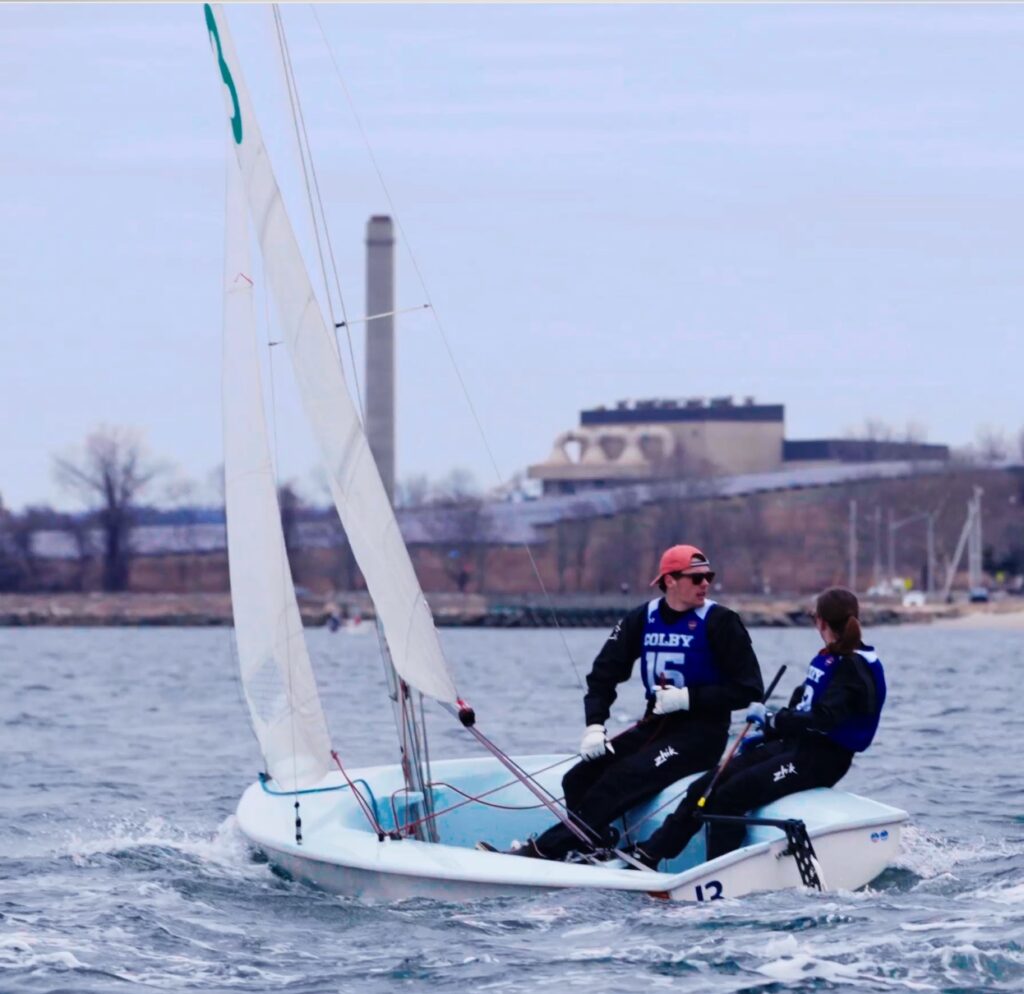
MIT won their home event over the weekend. After 33 total races on the Charles River only 1 point could discern The Engineers from the Boston College Eagles at the 82nd Boston Dinghy Challenge Cup. MIT charged after a slow start to take the lead after the 6th race of the regatta and never relinquished it thereafter.
Ty Ingram (‘18) and Sameena Shaffeeullah (’19) won A-Division for the home team with 50 points. Charles “Scotty” Sinks (‘18) and Lily McGrath (‘18) won B-Division for the Eagles after a tie-breaker with MIT’s Alexander Stewart (‘17) and Paige Omura (‘17). Wade Waddell (‘19) of BC with Emma Perry (‘19) won C-Division by nearly 30 points.
Written by Chris Klevan
Photos by © 2017 Rob Migliaccio, All Rights Reserved
Club Profile: Palm Beach Sailing Club
The Palm Beach Sailing Club is a private, not-for-profit organization formed in 1966.The objective of the club shall be to develop, encourage and stimulate interest in sailing in the Palm Beach County area, to promote fellowship and camaraderie among local and visiting sailors, and to offer sailing education and training to members and others.
News Flash: PBSC is Hiring a Full-Time Sailing Director!!
Mission
The objective of the club shall be to develop, encourage and stimulate interest in sailing in the Palm Beach County area, to promote fellowship and camaraderie among local and visiting sailors, and to offer sailing education and training to members and others.
Our History
The Palm Beach Sailing Club was founded in 1966 by sailors who wished to promote the sport in West Palm Beach. As the oldest club in the area, the PBSC offers its members many sailing related services and an active social calendar. The clubhouse is a waterfront residence built in the 1920s and offers a panoramic view of the Intracoastal Waterway and neighboring Palm Beach.
Membership
The Palm Beach Sailing Club offers its members a number of exclusive benefits. These include numerous social events each year, such as Christmas Holiday Party, the Halloween Party, and the popular end-of-the-month social. Small boat regattas and the club’s ever popular Wednesday Night Race Series remain a part of the PBSC’s seafaring tradition. The sailing instruction program introduces new fans to the sport every year. A wide variety of membership categories is available, all reasonably priced. We welcome you to find out more about the benefits of membership by contacting the PBSC.
Youth Sailing
PBSC only employs US Sailing certified instructors and counselors. Instructors and counselors are certified by the US Sailing Association complete with CPR and First Aid Certificates.
Summer Sailing Camp is available to children ages 7-16. Our 2017 Summer Camp starts June 5th and runs through August 4th. An additional Summer Camp week from August 7 through August 11 is available by invitation only. Summer Camp will be closed July 3 – 7.
Each sailor will receive a t-shirt with their registration. Sailing is a lifetime sport and many of our campers have advanced to become some of the best sailors in the country. Please fill out the registration form on the opposite side of this flyer and mail or fax it to the Palm Beach Sailing Club.
Your child will experience the joy of sailing and learning the essential elements of boat handling, seamanship, water safety and sportsmanship in a safe and fun environment.
Campers gain self confidence as they master the skills of sailing, learning lifelong lessons that build character, foster teamwork, and strengthen respect for self, others, and the marine environment.
Basic swimming skills are required. Camp will be held rain or shine and in the event of bad weather, basic skills and sailing – related activities will be taught indoors.
Youth Sailing Team
Our Youth Sailing Team meets during both the fall and spring school semesters. We refine the basic sailing skills that have been taught during camps and teach the racing rules and tactics of sailing in two fleets. For the younger sailors we have our International Optimist fleet and for the older sailors we have a fleet of Lasers. Both fleets are sailed around the world and in the Olympics.
News Flash: PBSC is Hiring a Full-Time Sailing Director!!
2017 S1D/Gill Coach of the Year Nominations Now Open!!
Greetings, sailing fans!!! We’re sending out an early call this year for nominations for the prestigious Coach of the Year Award. In true grass-roots fashion, we pick the ultimate winner only from nominees supplied by you, our readers. We are thrilled also to announce this year that Gill North America is our Exclusive Sponsor for this award, and will provide the winner with a well-deserved gift!
Sail1Design annually seeks your nominations for the Gill S1D Coach of the Year, for a coach that embodies the qualities (and more) listed in the article below. Sailors, this is your award! The Sail1Design staff chooses the winner only from our readers nominations! This is a great opportunity to recognize a coach that you feel makes a difference!
Please write a detailed nomination letter to [email protected] . Nominations close on 15 JUNE 2017
Past S1D Coach of the Year Winners
2016- Bill Ward
2015- Frank Pizzo
2014- Chris Dold
2013- Steve Hunt
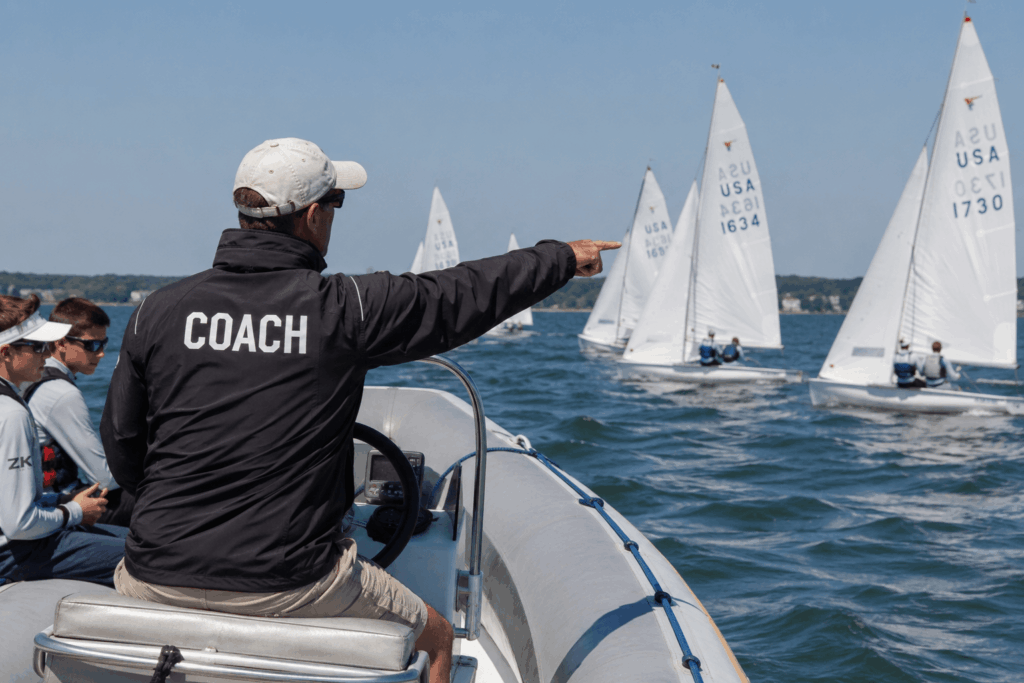
All good coaches, regardless of their chosen sport, share some important fundamental qualities that transcend technical knowledge, or specific x’s & o’s. In other words, whether it’s a basketball, tennis, hockey, football, chess, or sailing coach, there are certain key characteristics to good coaching, and none of these really requires technical knowledge of the sport they are in.
Here are some of those characteristics: logistics, organization, energy, leadership, passion, creativity, patience, dedication, motivational skill, humility.
I would bet that you could take a good coach, put him or her in a new sport, and that coach would find some success. Think about the best coach you ever had, and visualize that person in another sport, and you might see just how that person could adapt and still be a difference-maker.
However, we all know that great coaches not only possess these core qualities, but indeed they are also masters of the subtleties, rules, and technical chess moves of the sport they are involved in. Very often, great coaches are former players themselves, and often they are good, but not necessarily great players. In any event, it seems virtually certain that actually having been in the arena at some level, having been a true game player, is a necessary ingredient for a great coach.

So then, what an important advantage sailing coaches have, since the sport allows lifelong top-level competitive opportunities. While it would be impossible for a middle-aged football coach to live, first-hand, what his players go through on the gridiron, middle-aged sailors and coaches can stay current, and can compete right alongside the world’s best sailors, and even win world championships in sailing. Opportunities exist in team racing, match racing, and all types of one-design classes offer regattas, year-round. In this manner, sailing coaches have the ability to get inside the sport, at the highest levels, learn more, and feel the same things that their players go through out on the race course. The empathy gained here is a very powerful tool that great coaches employ when coaching.
Getting into the rhythm of a sailboat race, realizing first-hand the excitement and frustrations of the sport, preparing mentally for each race, “knowing when to tack”, these are all things that coaches must be able to talk to their players about, and talking to them about these things is so much more clear and present when done by someone who is actually good at them, and has done them recently at a high level.
For example, it was always easy for me to say to a team, “make sure when you are in FJ’s at the starting line to allow yourself more leeward room to accelerate since the foils are small and the boats need to go bow down first before they start lifting.” It was really easy to say. It was quite another thing to actually do it, and to go out on the starting line, in FJ’s, and practice what I preached. That was a LOT harder, and I drew a great deal of empathy with my players from that situation and recognized better ways to talk about it and to talk them through it, having been there myself. This is especially true in team racing, where coaches can see plays easily on the coach boat or on the drawing board, but it’s one thing to talk about a mark trap at Mark 1; it’s another thing altogether to go out and be able to execute it. Without being, or having been, in the arena, sailing advice and technical coaching can be somewhat hollow compared to other sailing coaches who know it first-hand and live what they coach.
So, when you look to your coaches for advice or to get to that next level, or if you are a interested in sailing in a college program, take a moment and check out the coaches resumes, just as they will most assuredly be checking yours. The list that makes coaches good coaches should be there for sure, but see if the coaches list how, or if, they stay current in their profession and have the passion to go out on the racecourse themselves. Great coaches usually always have a story, and very recent one, of a lesson learned at a regatta they sailed in themselves. They love to sail and get better, if only to become a better sailor and coach.
While there is a short list of coaches who choose to (and can) do it all, many top collegiate programs now share these coaching qualities by hiring an assistant or co-head coach, who is very often a recent college sailing alumnus and is active in dinghy racing and brings that empathy, right away, to the team. The head coach then ties everything together with experience, maturity, management, and knowledge of the game.

If you’ve ever noticed, baseball coaches actually suit up for games even though they certainly won’t be playing. This historically comes from the old “player-coach” model, and perhaps, this connects them with the game and the player more intimately. Sailing offers the unique ability for all ages to compete at the highest levels of the sport, and great sailing coaches take advantage of this, “suiting up” themselves and making themselves better at coaching by sailing competitively.
About Gill
Gill NA, with headquarters near Atlanta, GA is the exclusive importer and distributor of Gill-brand foul weather gear in North America including Caribbean, US and Canada. Gill is a worldwide apparel and accessories brand serving the marine industry with over three decades of experience . Gill specializes in high tech, breathable waterproof clothing. The company develops and markets a variety of performance-oriented, award-winning apparel and accessories for virtually every type of boating activity with product lines that include foul weather gear; interactive layering systems; footwear; gloves; bags; junior gear; scholastic gear and team wear.