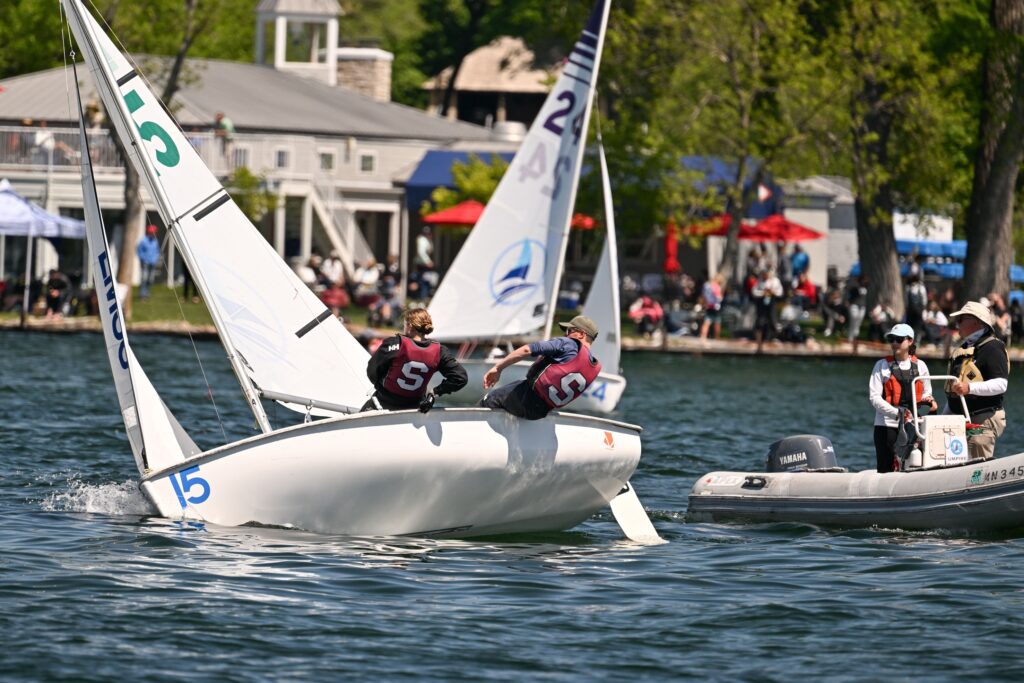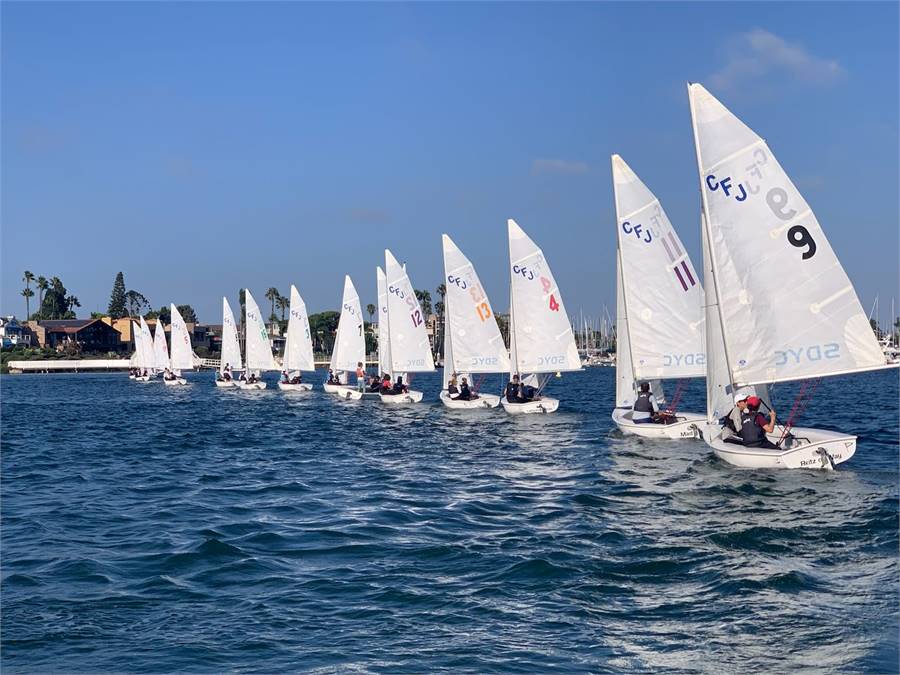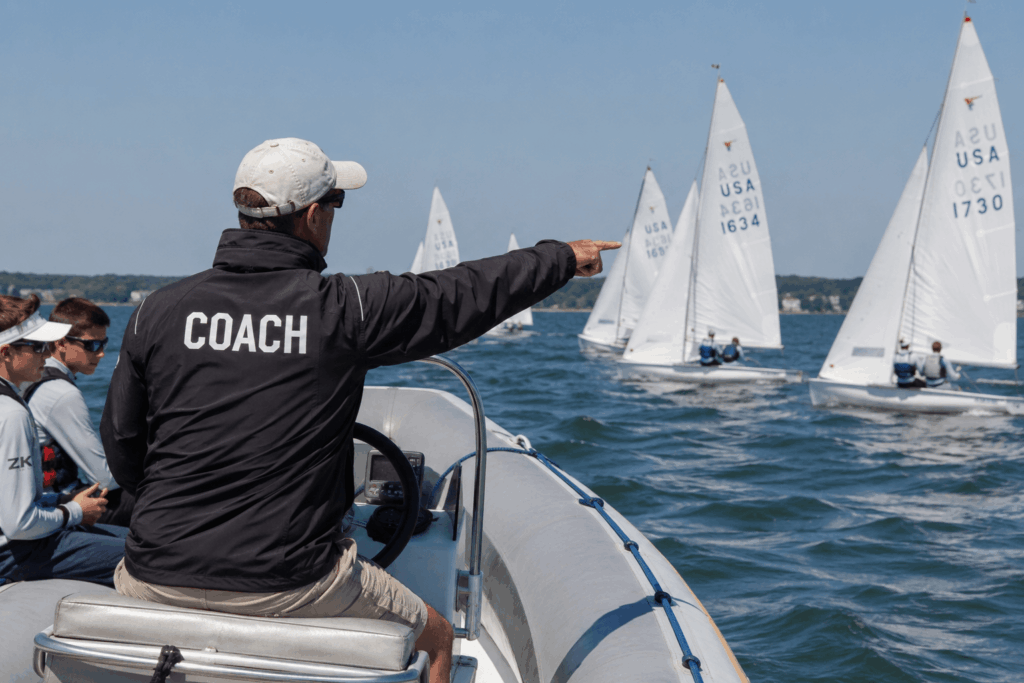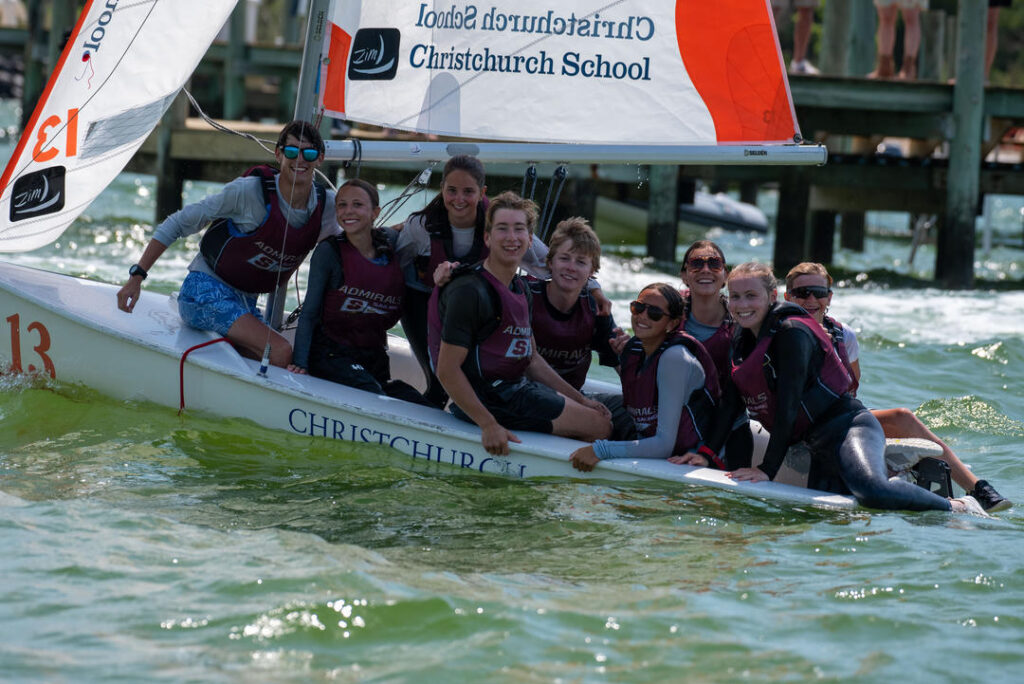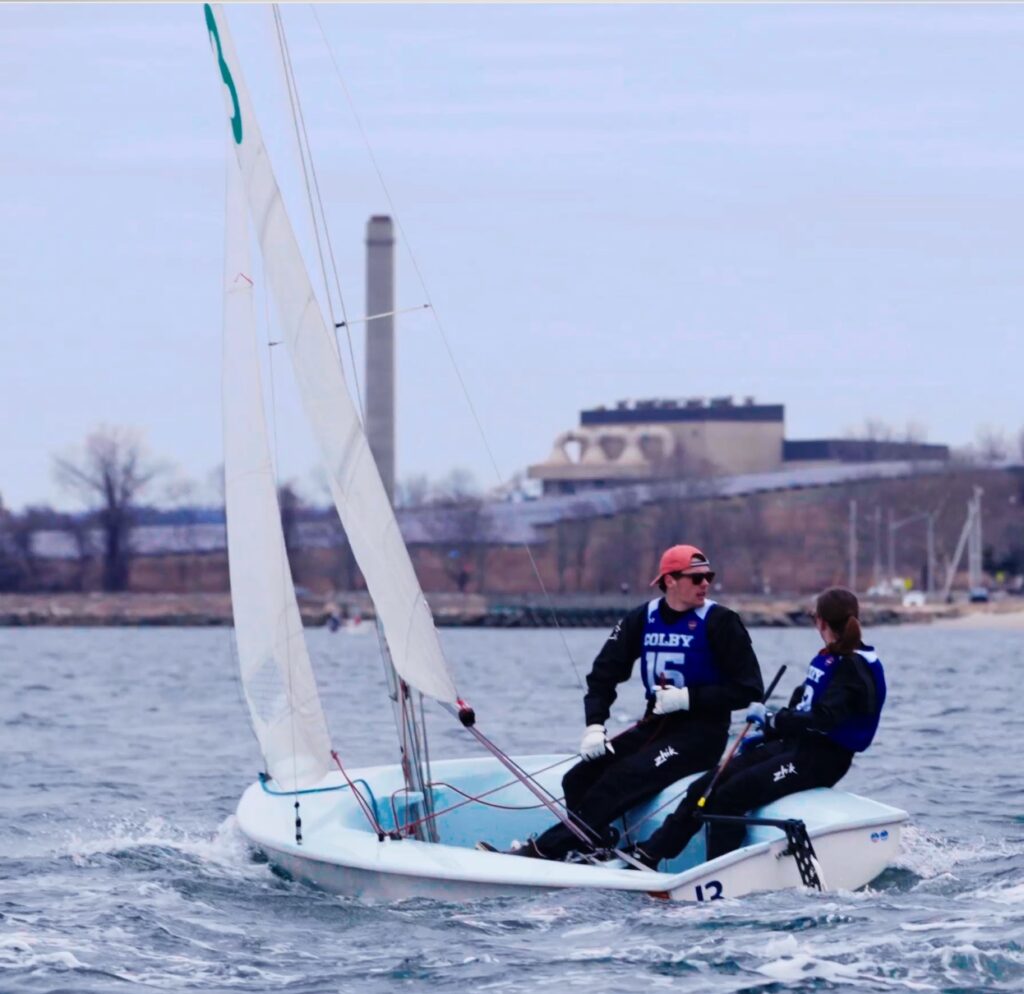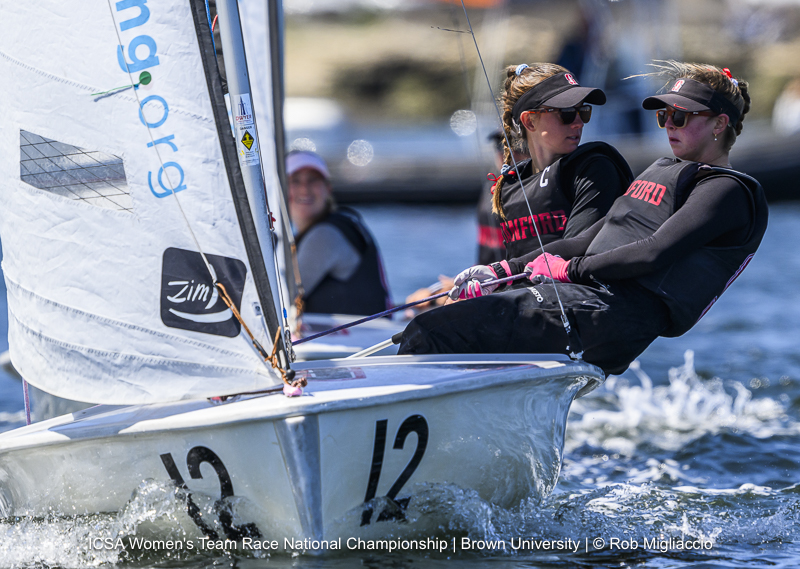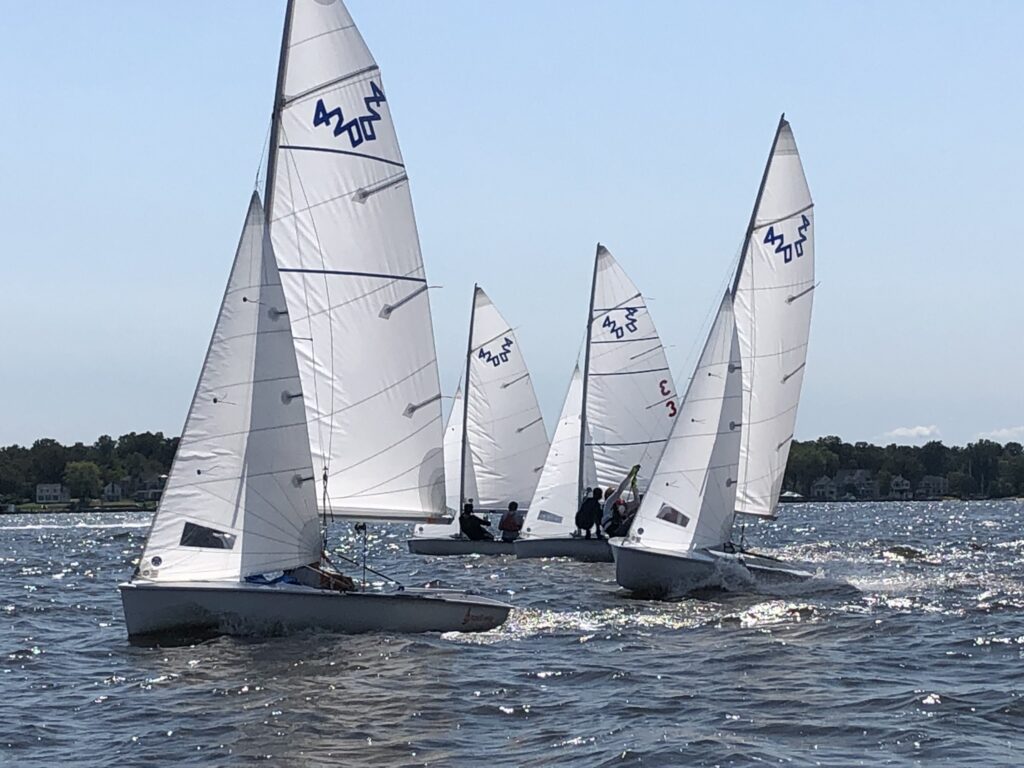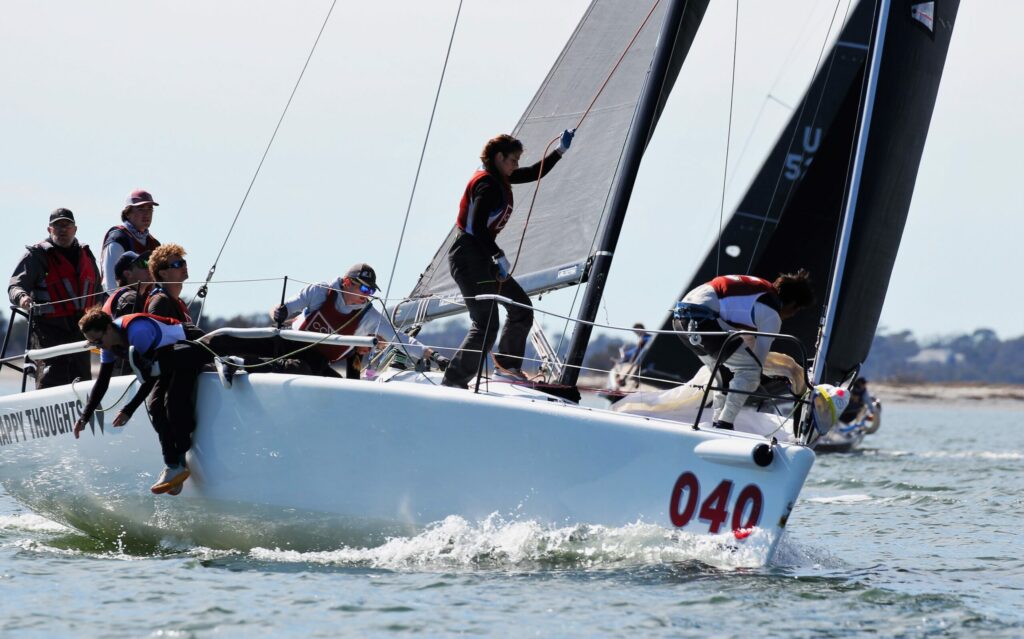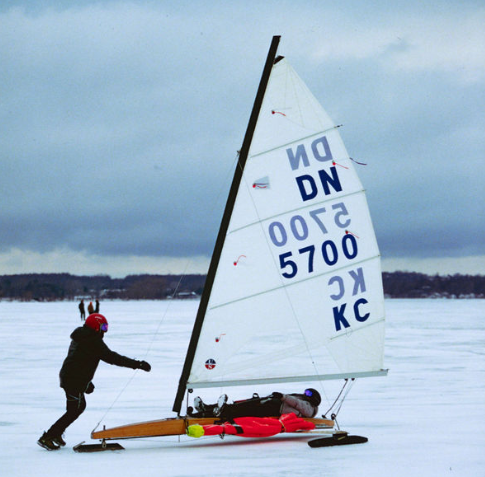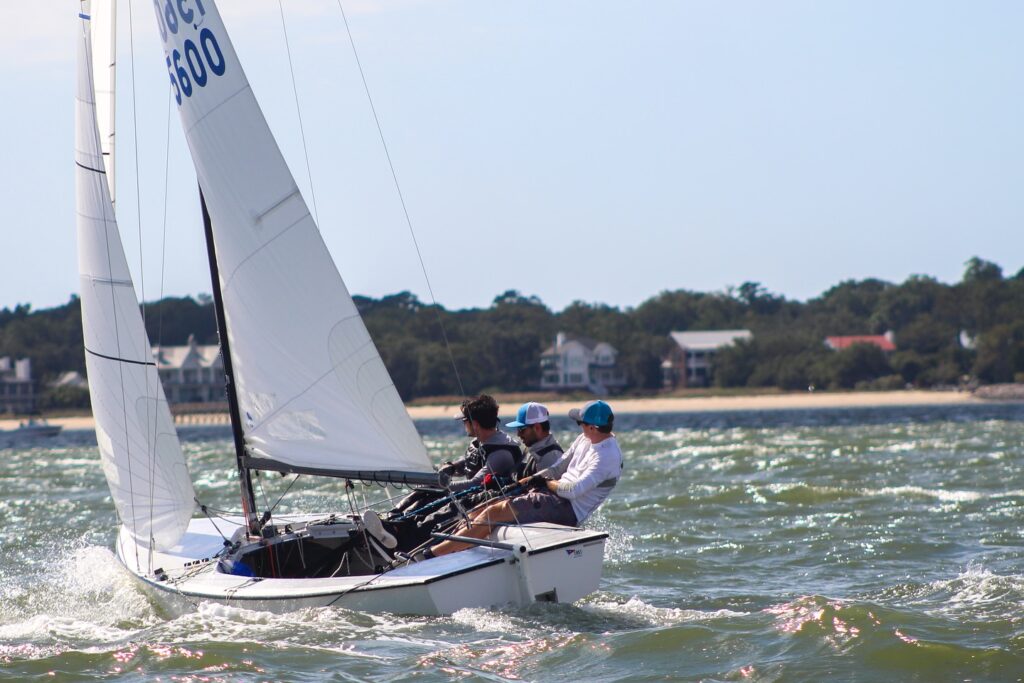
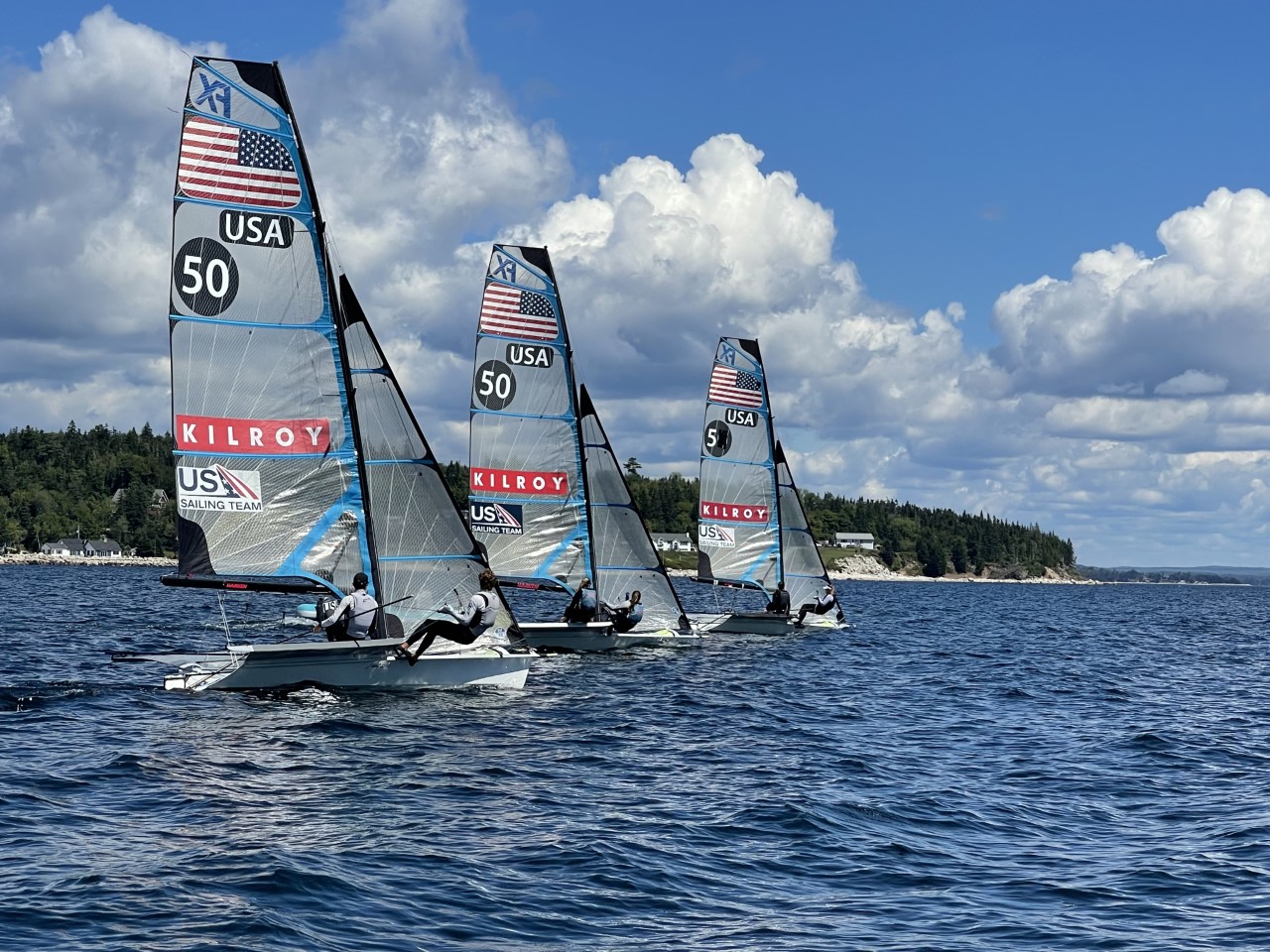
The International 420 Class is heating up in the United States as sailors pursue the higher performing version of the classic Club 420. Features of the International class include a tapered mast and mainsheet traveler in addition to the lighter faster hull design. The US Youth Championship hosted by Roger Williams University July 6-10, 2015 will feature the International 420 (i420). This year US Sailing has a record number of applications with over forty teams. The class has been doubling in size year by year and it seems that the US Youth are excited to test their skills in a higher performing race boat.
For years sailors in Europe have enjoyed the luxury of personalizing their mast and rig setup to best suit conditions and the team’s sailing weight.
That performance advantage is now available to sailors in the United States via Seldén Mast Inc. headquartered in Charleston, SC.
Seldén offers THREE rig packages which allow sailors to choose their ideal mast characteristics dependent on the weight of the team. These options are highly valuable as Seldén propelled nine of the top fifteen finishers at the 2014 European Championship event where 108 teams competed.

Seldén has been building masts since 1960 when founder Per Seldén first looked to replace his wooden dinghy mast with aluminum. Today Seldén now leads the way in producing top quality aluminum and carbon fiber rigs around the world for boats ranging in size and performance from the Optimist to large luxury yachts. In addition to masts they also have a complete range of deck hardware which makes them the only single company able to outfit an entire boat from the deck-up.
In the United States, top level collegiate programs including MIT, Coast Guard, Eckerd, Brown, Yale, and Christopher Newport look to Seldén to provide customized top performing 420 and FJ rigs to meet their unique needs.
For more information on the US Youth Championship Regatta see:
http://www.ussailing.org/racing/championships/youth/youthchamps/
For Seldén Mast Dinghy information or to purchase spars, rigging & deck hardware call Seldén Mast Inc. at 843-760-6278 or email [email protected].
One Design Class Profile: Sunfish
There may not be a more iconic or well-known sailboat than the Sunfish. Since 1952, hundreds of thousands of hulls have hit the water in bays, lakes, ponds and rivers around the world. One of, if not the, most popular boat ever built, the Sunfish has provided countless families with hours of summer fun on the water.

The Boat
Offered initially as a kit boat, the Sunfish grew from the Sailfish design by Alex Bryan and Cortlandt Heyniger. At 13’ 9” long, 4’1” wide and drawing 2’11”, the Sunfish weighs in at 120lbs and is easily transported by car top or trailer. It features a Lateen style rig and shallow v-shaped fully sealed hull. This makes the boat particularly beginner-friendly because despite fully swamping, it will not sink. Additionally the low-aspect Lateen rig helps the boat perform well in light air and off the wind.
Roger Williams University Head Coach Amanda Callahan has fully embraced the Sunfish class and thrived with top finishes at local, regional and national events, as well as qualifying for the 2015 Worlds. “After crewing in team racing for years, I was really looking to get back to driving,” says Callahan, “I’m 5’3”, and there aren’t a lot of affordable boats that I can skipper. I’m on the small side for a radial, and I wasn’t too excited about sailing against the Laser 4.7 crowd. I like that I can be competitive in the boat until 14 knots…”

While there is a strong Sunfish racing fleet, it is not the primary use for the boat. Of the 300,000+ boats that have been produced, there are only fraction (<2000) Sunfish class members. This is a testament to the flexibility of the platform. “On Sunfish you can raise your halyard up to get the boom way off the deck and bring 3 of your friends out on the water for a fun afternoon,” said Callahan on the recreational benefits of the Sunfish.
Class Association
Everyone everywhere sails the Sunfish. You are just as likely to find a racing fleet in Peru as you are to finding a relegated hull in a New England back yard. Internationally the Sunfish is raced across North America, South America and parts of Europe. Within the US, there are strong fleets in New England, Chicago, Texas, New York, California and the Gulf Coast.

Callahan got her Sunfish start in New England, “One of the members, Jack Willy, of the club where I grew up (Wessagusett Yacht Club), suggested that we (my friend Kate and I) try out the Sunfish. He lent us some boats for a couple of regattas down the Cape.” She now calls it her “retirement boat” (from competitive team racing) and hasn’t looked back.
Why Sail?
The Sunfish is a great boat for people of all ages and ability levels. “You can easily car top a ‘fish and go anywhere,” commented Callahan, ”the Sunfish was a perfect fit for me. Plus, the sunfish class is very supportive, especially my sunfish friends in NE.” She adds, “I would love to see more women get into the class. I was boat homeless for a while, and this class is my new home. Also, I know there are many college grads who don’t know where to turn to continue sailing, this is a perfect outlet.” Affordable and everywhere, the hundreds of thousands of Sunfish owners worldwide have to be on to something. It is an ideal platform for the casual sailor, the “retired” competitive racer, or “boat homeless” college grad.

Learn more about the Sunfish Class History
Laurie Jury on Command Coaching & Giving Feedback
By Laurie Jury
Editor’s Note- Sail1Design is pleased to present coaching technique and style from Laurie Jury. Laurie is a product of the esteemed Royal New Zealand Yacht Squadron’s Youth Training Programme, which he commenced at the age of 15. Match racing became his chosen discipline, pushing through the ranks to become Telecom New Zealand National Match Racing Champion in 2009 and, in 2010 his team won the Mumbai International Match Race. His team’s other sailing accomplishments include first places at the Nations Cup Grand Final, USA Grand Slam, Knickerbocker Cup, Oakcliff Match Race and the Qatar Match Race.

I recently spent a bit of time observing different coaches around the country. One thing I saw a lot of was “command coaching.”
What basically happens with command coaching is the coach drives next to a sailor and tells them exactly what to do: ‘ease the main’ , ‘hike harder’, ‘point lower’, ‘move forwards,’ and so on.
While there is nothing wrong with this (and it can be a fast way to get sailors up to speed) you have to know why you are doing it, and there has to be a reason for it.
I use command coaching a lot; additionally, most of the coaching I do is “impact coaching” at clinics. I am there for a few days to make a difference, and with command coaching, this goal can be achieved. But, this must be followed up with both submissive and cooperative coaching, and a lot of explanations.

Another reason to use command coaching is to improve the sailor’s confidence. If, in a two or more person boat, you can sail with them and tell them exactly what to do, they will do well and the sailors will gain more confidence. You can do the same from the chase boat in a single handed boat. Beware: this will backfire if they don’t do well, so you have to be confident that you will help their performance.

Command coaching can also be used it to demonstrate a skill to a sailor. This is normally followed by a lot of submissive coaching (i.e. practicing the skill on their own), then cooperative coaching, talking to the sailor about the skill and how they think they can do it better.
What I have been seeing a lot of is command coaching with no explanation, follow up, or reason. This is not good.
Classic example, ‘weight in jimmy,’ then the wind gets up, ‘weight up Jimmy’, then ‘hike jimmy’- I was pretty sure Jimmy was waiting for the coach to tell him where to sit and what to do. If every time this sailor goes training the coach tells him where to sit, he is not going to learn. So what should you do? Manipulate the environment, or create a drill to get the sailor to understand the skill.
For body weight make the sailor sail the boat flat – blow the whistle every time the boat heels for more than a certain time or put levels on boats and make the sailors keep the bubble in the middle. Explain to the sailor why sailing flat is fast; show them a video of themselves compared to the top sailors.
Giving Feedback
Feedback always needs to be positive, negative, positive – the classic “feedback sandwich”. It does not matter if you are coaching Olympic sailors, the best sailors in the world, or beginners. It is the same. There is an art to doing this, you don’t want to waste time and the worst thing you can do is be airy fairy and not precise with your feedback.

You should not give feedback that the sailors already know, so the first thing you need to do when giving feedback is ask the sailor what they thought, if they already know what the did wrong they really don’t need you to tell them, so don’t. If you are good at giving feedback the sailor won’t know you are doing the positive, negative, positive feedback sandwich, and neither will you; it will just be natural.
Example this is actual feedback transcript from one of the better optimist coaches
Coach: How would you say your tacking is? Really good or not very good?
Sailor: Really really bad
Coach: Really bad, if tacking is not your strong suit that’s maybe not the worst thing in the world, OK. Because you do quite a lot of tacking upwind, but tactics and starting are always going to be more important, what I am saying is, the most important thing is, if tacks are not your strong suit and there is a boat coming in like this, doing a crash tack in front of them just means he’s going to roll over top of you. OK, it’s all about boat handling, if a boat’s coming in on starboard and you are thinking your tacks aren’t that great I’m not going to be able to tack underneath here then maybe just dip him and get some more speed and tack out here ok.
Sailor: Yip
Coach: Yeah, you are doing a lot of crash tacking and it’s not working out for you ok
Coach: Alright, sweet
Maybe Better option
Coach: Hey what did you think about the race?
Sailor: It was going ok but my tacks are really bad
Coach: Hey yeah, but I thought you’re starting and speed was right up there with the best. When you tack turn the helm a bit slower, also you really don’t need to do so many tacks on the beat, remember you can dip boats as well. Before we go in we can practice some tacking together.
For this next race just remember two things-
- Slow the helm down in the tack,
- Think, do I need to tack or can I dip.
Keep up the good work, once you get these tacks sorted, you will smash these guys and we will have to move you up to the top group.

This is seriously important for young optimist sailors. When coaching in a regatta, no matter the level, you must always remain positive and consistent, with the focus being on how the sailor can improve. Be careful not to get into the trap of always pointing out what they are doing wrong.
Your job as a good coach is to figure out why the sailor might be doing something wrong, not just telling them every time they do it. What were they thinking when they crash tacked? Why don’t they want to dip boats? Can they tack well when not under pressure? How can we improve this?
Avoid asking leading questions i.e. ‘were your tacks really good or really bad’; when it was obvious they were not good. Ask questions if you actually want to know what they think, or if you are checking for to see if they understand.
Key points for feedback to sailors
- Positive, negative, positive – feedback sandwich. Don’t get emotional, you need to be consistent whether or not the sailor is having a good or bad day.
- Two or max three key points to focus on. Prioritise what will help the sailor right now and what you can talk to them about later.
- Don’t waffle on – keep it short and to the point.
Check out Laurie’s notes on coaching the Monsoon Cup
World’s fastest Optimist Sailboat to be Given Away for Free!
For Immediate Release- Brian Holloway – www.optistuff.com – [email protected]
Chattanooga, Tennessee-March 19th, 2015- Chattanooga, Tennessee-March 19th, 2015- McLaughlin Boat Works announced its 25th Anniversary PRO Racer Giveaway today. Widely considered the fastest and most durable Optimist in the world, the chance to win one of the prized PRO Racers is surely an opportunity not to be missed. The drawing, open to sailors ages 8-15, runs now through the end of the 2015 calendar year. Entry forms can be found online at www.optistuff.com.

With over 350,000 active boats, the Optimist sailboat is the largest fleet of sailboats in the world. More young sailors start in the Optimist than in any other boat. Those sailors have had tremendous success as well. Over 70% of the Olympic medal winners at the 2012 Olympic Games in London began their sailing careers in the Optimist.
“The Optimist is the single most important element in keeping sailing alive and healthy in the world today,” says Steve Sherman, CEO of McLaughlin. “From the tens of thousands of children who learn to sail each year will come the sailors, Olympians, instructors, coaches, and commodores of tomorrow’s yacht clubs.”

For 25 years, McLaughlin has been building and supporting the Optimist. They have pioneered improvements in speed, strength, and durability. The McLaughlin PRO Racer is the end result of over 75 years of combined experience building the fastest Optimists in the world. That experience has been proven again and again at Continental and World Championship Regattas. As the saying goes, “Sailors in the know, race a PRO.”
Club Profile: GoodWinds Dorado, Puerto Rico
Kitesurf, Windsurf and Sail with us! -Imagine yourself in a water sports center with world class wind and water conditions, nestled in a 5 star resort, surrounded by four award winning Golf courses… look no further, have it all with GoodWinds.

Goodwinds, is a family owned watersports management company operating since 2001 which started as a Mom & Pop kitesurfing school in San Juan. Now, Goodwinds is proud to offer the best watersports instruction and experiences in Puerto Rico, in the exclusive Dorado Beach Resort. Since the beginning Goodwinds has been helping students become safe kiteboarders, and now at Dorado Beach Resort Goodwinds offers a wide array of watersports programs and adventures to suit every heart.
With one of the most extensive water sports programs for kids and adults in Puerto Rico, Goodwinds offers short courses and experiences and also specialize on instructional and lengthier programs for those who wish to learn sailing, kitesurfing or windsurfing. Goodwinds at Dorado Beach Resort is the only watersports center in PR that is located on a beach solely dedicated to watersports, promising an un-crowded and safe setting for learning.

Goodwinds offers lessons and experiences to hotel guests that are staying within the Resort, and offers after school programs and summer camps to local residents of the Resort. The lesson program and instructor trainings have been designed by Olympic Windsurfer and Co-Owner of Goodwinds, Karla Barrera and husband Phil Morstad, who is Goodwind’s Head Instructor with years of teaching and competitive experience.
A unique instructor experience…Discover Puerto Rico:
Puerto Rico has a unique blend of exotic Caribbean island and modern-chic metropolis, while at the same time having the convenience, accessibility and safety of being part of the US. Also from the historic city of Old San Juan to lush hidden waterfalls in the rain forest; Goodwinds instructors enjoy plenty of time to play and discover the island.

It’s All GoodWinds! Goodwinds, is a family owned watersports management company operating since 2001. Formerly known as KitesurfPR, Goodwins, started as a Mom & Pop kitesurfing school in San Juan in 2001 and now we are proud to offer the best watersports instruction and experiences in Puerto Rico, in the exclusive Dorado Beach Resort. Since 2001, we have been helping students become safe kiteboarders, and now at GoodWinds we continue with our proven teaching methods. We always make sure that every student receives the special and customized attention that he or she deserves. We offer lessons for a wide range of types of experience: for the beginner with no water-sports experience, up to the well seasoned kitesurfer that wants to take his kitesurfing to the next level. From sailing to surfing, from paddle yoga to kite surfing, we have very unique watersports adventures to suit every heart.

NewsFlash: Goodwinds is hiring!! Check it OUT

NewsFlash: Goodwinds is hiring!! Check it OUT
Puerto Rico is blessed with consistent trade winds and our waters are always warm! Just Ideal!
In general: Our Winds and Waves throughout the year
- From November to April : on average 15-20 knots, with days blowing in the 25 knts. Small to Moderate chop in the inside bays, and on the outer reefs you can find waves almost everyday from waist high up to double over head when a big swell hits. Sunny with night rain showers. Winds picks up around 10-11am and drops around 5pm.
- February is one of the windiest month of the winter
- From April to August: on average 15-20 knots, with days in the 25 knts. Usually pretty flat; waves if any are small: knee to waist high.
- September and October: the most inconsistent months of year, since its the start of the hurricane season. However, your can on average kite about 1 out of 3 days. It is great for surfing though!

Things you should know:
- No wet-suit necessary
- Phil weighs 180 pounds and his quiver is 9M, 11M, 14M
- Karla weighs 120 pounds, and always manages to ride her 9M
- Best month for wave riding in the outer reefs: February
- Best month for flat water: July
Learn more about Goodwinds: http://www.kitegoodwinds.com/
Laurie Jury on Coaching: Monsoon Cup Match Race Coaching Notes
Editor’s Note- Sail1Design is pleased to present coaching technique and style from Laurie Jury. Laurie is a product of the esteemed Royal New Zealand Yacht Squadron’s Youth Training Programme, which he commenced at the age of 15. Match racing became his chosen discipline, pushing through the ranks to become Telecom New Zealand National Match Racing Champion in 2009 and, in 2010 his team won the Mumbai International Match Race. His team’s other sailing accomplishments include first places at the Nations Cup Grand Final, USA Grand Slam, Knickerbocker Cup, Oakcliff Match Race and the Qatar Match Race. Check out Laurie’s article on Command Coaching

Coaching at the Monsoon Cup in Johor Malaysia
By Laurie Jury- The Monsoon Cup is the final event on the World Match Racing Tour; it also has the largest prize purse in sailing 415,000 USD. I had been asked to coach the local Malaysian team at the event; this team had never won a race at the event in the last 10 years, and never really been competitive at the event. Malaysia, as the host country, automatic gets a wild card entry. The rest of the teams are top professional sailors on the World Match Racing Tour.
We had two weeks of training before the regatta and my plan was pretty simple, to focus on getting the basics right, and do them very well. I know that a team that sails the boat consistency well will always pick up a few wins and often make the quarter finals. It was too big a task asking to teach this team anything else in the short two weeks before the event.

First we had the final regatta of the Malaysian circuit; the team I was coaching had already won the circuit (the prize was a new car) so the result was not super important.
I used this regatta as a ‘process regatta.’ What this meant is I worked hard to shift the focus from winning races to sailing the boat well. In particular I employed a few key skills, and for this regatta they would be boat handling, and time on distance.
I scored the team at every hoist, drop and entry (time on distance), with 100% being as good as the top guys on the World Tour. This worked really well; the scores per race varied from 30-90%, but were improving constantly though the event.
After each race I would tell the team their score, and I could see they were focused on getting a better score for the next race. It didn’t matter if they won or lost- the funny thing is almost every time they had a good score they won, even if they had a bad start or hit a bad shift.
Why was this important? When teams are trying to win races they sail differently, they cover hard and use small advantages in boat speed and handling to win. This team won’t have these advantages at the Monsoon Cup; in fact, these will be disadvantages. Also, they back off on the boat handling if in front or long way behind- they hoist later, drop earlier, and are conservative in the entries. To win a race in the monsoon cup they needed to sail their boat at 100% and wait for the other team to make a mistake.

I also told them simply to capitalize on the lifts upwind and knocks downwind and generally ignore the other boat. There were a few reasons for this.
- First I wanted them to be able to sail around the course in the fastest manner possible, if they got in front of their opposition at the Monsoon this would be the only way the would win the race. If they started trying to match race against these seasoned professionals there was no hope.
- By doing this they would get a lot better understanding of the course area, because the other boat would almost always go the opposite way upwind, so we could find out which side was favoured.
The local regatta went pretty well and the team improved their boat handling and time on distance greatly though the event. They lost two races when they got the shifts wrong upwind.
On the last day they won every race by over 30 seconds. This wasn’t because they were starting well or sailing the shifts better, in fact they were behind in a lot of the races, but they focused on getting a high percentage boat handling score, as I had drummed into them. They always gained on the other boat and always came back to win the race.
The next three days we had a training camp with the world number 2 Ian Williams. For this we focused on prestarts. I broke the prestarts down in to a few key skills, and created a drill for each skill. I already had done this many times coaching match racing teams for the Olympics and Asian games.
I worked hard to make each drill as objective as possible, an example was holding the boat head to wind, this is a critical skill in match racing, we had a simple start/stop drill. The drill was to hold the boat head to wind until it starts going backwards five times in a row. A team on the world tour would maybe lose their bow once out of ten times. My team lost the bow 3 out 5 times when we started. We did this drill twice every time we went out, and every time we came in, 4 times a day. By the end of the training they were losing the bow on average 1 out of 5 times.
We did a similar progression and dril sequence for time on distance, speed builds, turn ups, and lead back times.
After 3 days of prestart training we had three days left before the regatta. I made two of these days very short 1.5 hour sessions, as the team was doing a lot of sailing. These last few days we focused on getting the small stuff right and perfecting the basics, as it was important to get the teams confidence up and to get them thinking about the right things, i.e. doing their job well.
I thought the regatta went pretty well. Part of the brief I had been given was that they wanted to win two races at the event; I didn’t really like this as a goal. For them to win two races another team would have to lose the race, not them win it, and two weeks coaching is not going to make up for years sailing professionally on the world tour. End result, they finished on -0.5 points after losing .5 of a point for a collision, on the score board the worst result ever.
Losing half a point really means nothing, every team on the tour will lose half a point at some stage. It’s just part of being competitive. That is exactly what this team was: they were competitive. They won the start, as in clearly ahead off the start line, in 4 out of 11 Matches; I don’t think they would have ever actually won a start before. They led around the top mark in four races and lost two close races on the last leg to the finish.
What let them down? Well, tactics was a major issue; with an experienced tactician they certainly would have won at least two, maybe a lot more races. When faced with match racing situations, they lost as soon as they had to engage the other boat.
But if they had of scored that same 90% in the boat handling that they were getting towards the end of the local regatta, they would definitely have won at least 2 and maybe 3 races. So at the end of the day, they didn’t keep that boat handling score at 90%, and this cost them their two races.
After the regatta I was asked what was needed for the team to make the top 8- I told them it was pretty simple: 100 days competitive racing a year, plus an expensive coach!
Check out Laurie’s article on Command Coaching
Club Profile: Devon Yacht Club
The Devon Yacht Club is a 99 year old private club in Amagansett, NY. It has a range of member boats- from lasers, sunfish, 420’s, optimist, Alerions and cruisers. In the season the club runs races most weekends weather permitting! The club hosts regattas and outside sailing events. Enjoy crewing on big boats for extra money. Giving Sailing lessons in your spare time, is also a great way to earn extra money!
Devon Yacht Club is hiring! Check out their openings HERE

Location: Amagansett, New York
Eastern Long Island – the playground for the rich and famous. Amagansett is about 2.5 hours from Manhattan (plenty of train and bus services available). The Atlantic Ocean is just a couple of blocks south of Main Street, so your free time here could be spent enjoying the beach. There are many restaurants, hotels and outdoor/beach activities to keep you busy. We are the town next to Montauk, the hottest spot in the Hamptons!!!

Club Profile: Eau Gallie Yacht Club
News Flash: Eau Gallie Yacht Club has an opening for a Waterfront Director/Harbormaster
Centered around a deep water marina that accommodate yachts up to 55 ft., the Eau Gallie Yacht Club is situated at the mouth of the Banana River in a safe harbor adjacent to the Intracoastal Waterway. Eau Gallie Yacht Club is located on the east coast of Florida near the town of Melbourne (100 Datura Drive, Indian Harbour Beach, FL 32937). A full time harbormaster is on hand to assist you with your boat as well as map out routes to your favorite getaway.

Discover a variety of dining experiences. Lunch and dinner are served in the main dining room overlooking the marina. The best aged beef and the freshest seafood are on the menu six days a week. The Sunday buffet is a culinary extravaganza, food sculptures, ice carvings, exotic delicacies, incredible food, prepared by our own award winning chefs.
Our banquet rooms can serve up to 200 people for weddings, socials, card parties or business gatherings. The ambiance of the Club is the perfect setting for these special occasions.
Friends gather, business decisions are made, vacation plans are settled, all while enjoying your favorite beverage in the warm surroundings of the lounge. Complementary snacks are on hand and meals are served in the lounge.

The club offers members an impressive agenda of outdoor activities. Supervised pool activities as well as swimming lessons are scheduled for the children and a lifeguard is on duty daily during the summer months.
There are six clay tennis courts, lighted for night play. Our tennis pros are available for lessons or that occasional tip. Tournaments are scheduled and a wide variety of programs for adults and children are designed for our members. A full service pro shop is located next to the courts.
Boating activities are an essential part of the yacht club. We offer safe boating instruction for children. Precision Sailboats are outfitted, and ready for fun sails through the local waters. Regattas, weekend cruises, and other boating activities are planned periodically.

Our dedicated staff, from food and beverage servers, tennis instructors, the harbormaster, the valet parkers to the general management all consider it a privilege to serve our members and their guests. Members of the Eau Gallie Yacht Club enjoy all of the Club’s unique amenities and also have guest privileges at all 35 members of the Florida Council of Yacht Clubs.
News Flash: Eau Gallie Yacht Club has an opening for a Waterfront Director/Harbormaster
Profiles in Pro Sailing: Peter Johnstone, Boatbuilder
By Airwaves Writer Tyler Colvin

In the boat building industry, the name Johnstone is about as close to a royal family as you can get. Ever since the first J/24 Ragtime was cast in the garage of 1975 by Rod, the family has dominated the boat building scene. Boat building has continued to stay in the family, with a board of directors made up of Johnstones, as well as a myriad of individual projects, including Peter Johnstone’s well-known Gunboat International.

The company that grew from the garage project, J/Boats, was in its infancy when Peter Johnstone was just 12 years old. When asked about how he got his start, his reply was, “Osmosis. Nightly dinner discussions with the family take over your thoughts at a young age.” He caught the bug early, learning to sail with his sister. “My older sister was very supportive of my sailing when I got started at age 7. She encouraged toughing it out on many difficult early days in a Sunfish as a tiny kid.” This was the beginning of what has been a storied sailing career, earning All-American sailing honors while at Connecticut College. He would go on to win multiple class championships and make several world record attempts.
Stemming from his love of the water and his family obsession with the boat building industry, Peter himself has played a big part in the advancement of modern boats. His first venture, Johnstone One Design, introduced the world to the retractable bowsprit on the One Design 14, revolutionizing sport boat design. Since then he has been involved with numerous other companies, including Sunfish Laser (pre-Vanguard Boats), Escape Sailboats and EdgeWater Powerboats.

“I love sailing. I love boats. And I love boat yards. Once you have done complex yacht projects, the rest of life seems pretty boring. It is not so much a job. It is a mission and an affliction,” he says, “It feels like I was placed here to push for new market segments and expand the capabilities and reach of sailing.” Indeed few have had even nearly the success he has had in the industry, and perhaps it is because his drive to be the best is unequaled.
In 2001, frustrated by the lack of a performance cruising catamaran on the market, Johnstone set out to create his own. He wanted a combination of comfort, enjoyment and the ability to do hundreds of miles a day without sacrificing the other criteria. From this the 62’ Tribe was born. Again, Johnstone revolutionized the industry. Tribe performed beautifully and Gunboat International was born.

The industry standard for luxury catamarans, Gunboat has grown and changed over the years, but not without some pitfalls. “The industry is very cyclical. The fall of Lehman Brothers set us back 6-8 years. Recessions hit hard. You have to take the punches, pick yourself up, dust off, and set back at it.” He has stuck with it over the years and is reaping the rewards.

Despite getting a jump on the competition growing up in the First Family of boat building, Johnstone has earned multiple victories along his career path; revolutionizing the industry several times. He attributes his accomplishments to hard work and persistence, quoting, “Rudyard Kipling’s poem, “IF”, captures the life of a boat builder well. If that poem sounds attractive, then you are cut out for the challenges. If it doesn’t sound good, go elsewhere!” Positivity is a big contributing factor as well, and he offers sage advice for those starting out in the sailing industry: “Be willing to do anything at first. Be positive and gung-ho. Energy and motivation are always prized traits even if the work experience is not there yet.”

Gunboat International is based out of Wanchese, NC, and regularly posts openings in their workforce to the Sail1Design Career Center! If you are interested in getting your start in the industry, be sure to monitor the job postings for any new openings they, or other companies, may have.

Sailing Pinnies from World Cup Supply
World Cup Supply, a US Sailing MVP Member Benefit Partner, is proud to showcase its popular sublimated sailing pinnies. Worn by elite high school, collegiate and yacht club race and team programs and improved for 2014, World Cup Supply pinnies are an excellent way to increase visibility, show coordination while being safe and comfortable. You can visit our new Pinnie Design Guide, request a custom order quote and learn more at http://www.worldcupsupply.com/product/lycra-water-sports-bib-dye-sublimated/ or call 800-555-0593.

More about WCS:
Founded in 1991, World Cup Supply is a respected supplier of sporting event supplies. Located in Fairlee, Vermont the company has earned a reputation as an industry leader by providing the highest quality and innovative products.

Selden US Reports from the RYA Dinghy Show!
Selden Mast US is a Sail1Design team member and sponsor. Please check out these videos, and learn about exciting developments in UK youth and dinghy sailing, including new boats, classes, and sailing gear!
“Earlier this month we went over to the UK to check out the Suzuki RYA London Dinghy Show and made a few videos featuring some of the boats and products as well as interviewing some of the top youth sailors we found.” This is the largest dinghy show in the world.
INTRODUCTION VIDEO:
In the video below, we learn more about MULTI-HULL SAILING, especially the Spitfire Cat, the UK’s twin-trapeze youth trainer cat:
UK Youth Catamaran Class Information: http://www.youthcat.org.uk/
FULL PLANING MONOHULLS
YOUTH TO ADULT PROGRESSION: AERO & FEVA
FAVORITE NEW GEAR AT THE LONDON RYA DINGHY SHOW
Sailing Conditioning 101
By Airwaves Writer Tyler Colvin
Often times in sailing, races are won and lost in the weight room. Physical conditioning has come to the forefront in recent years as being just as important as developing boat handling skills. In fact, much boat handling can’t be properly practiced or executed without the proper conditioning base. This applies as much to keelboat sailing as it does dinghy racing, with emphasis on slightly different muscle groups.
As a US Sailing Level 3 Race Coach, Collegiate Coach and NSCA Certified Personal Trainer, I am in a unique position to provide sailing specific workouts. This weekly series will be mainly aimed at High School and College aged dinghy sailors and can be conducted without any equipment. Any questions can be directed to me at [email protected]. Upon request I can also provide personalized workouts depending on your or your teams needs.
Disclaimer: As with any workout program, please consult your physician if there are any questions regarding your ability to exercise.
Week 1: Building Blocks
This circuit based workout concentrates on functional strength and muscular endurance. Core strength is paramount in dinghy sailing, especially on windy days. In this Week 1 circuit we will work on full body strength using bodyweight exercises, requiring nothing but a stopwatch, water and an open place.
Warm Up:
-10-15 minutes. Go for a run, ride the bike, stair climber, something to get the hear rate elevated and a quick sweat going.
Exercises x20, 3 times through
–Lunge: alternating left/right, each step should be long enough so that your front knee is at a 90-degree angle and back knee is touching the ground. Think about dropping your hips down instead of getting your weight over the front of your toe (on your front foot).
–Push up: From your knees or on your feet, keeping your back straight, lead with your chest into the ground until your elbows are at right angles.
–Mountain Climbers: From push-up position, alternate bringing your knees towards your chest.
–Body weight squat: Standing with legs slightly more than shoulder width apart, drop your hips back like you are sitting down in a chair.
Work Out: Do each exercise for 1 minute with a 10 second pause in between. 2 minute rest in between each set, cycling through 3 times.
–Plyo Squats: Similar to the bodyweight squat, at the top jump as high as you can, landing into a squat.
-Full Sit Ups: laying flat on your back, hands over your head, sit up and touch your ankles.
-Push Ups: From your knees or on your feet, keeping your back straight, lead with your chest into the ground until your elbows are at right angles.
-Line Hops: If you have a line, great, if not, imagine one. Jump back and forth across this line, speed does not matter just continual motion for the full minute.
-Jump Rope OR Burpees: Burpees: starting in pushup position, go down, come up, bring both feet in towards the chest in one motion, jump up in the air and reach towards the ceiling.
Core: Each exercise x20 (except plank), 3 times through
–Plank (30 seconds): In pushup position, settle onto your elbows. Back should be straight with no arch in the lower back. Glutes are tight as are the abs.
-Alternating Leg Lift V-Up: Laying flat on your back arms and legs out straight, reach your right arm and left leg up and touch them above your belt. Try to get your shoulder blade and opposite hip off the ground. Alternate.
-Alternating Superman: Laying on your stomach with your arms and legs out stretched, raise your opposite arm and leg while keeping them straight.
-Russian Twist: Sitting on your tailbone, raise your legs off the ground several inches. Twist your upper body back and forth touching the ground on either side.