By Airwaves writer Julia Brighton, awesome photos by Priscilla Parker
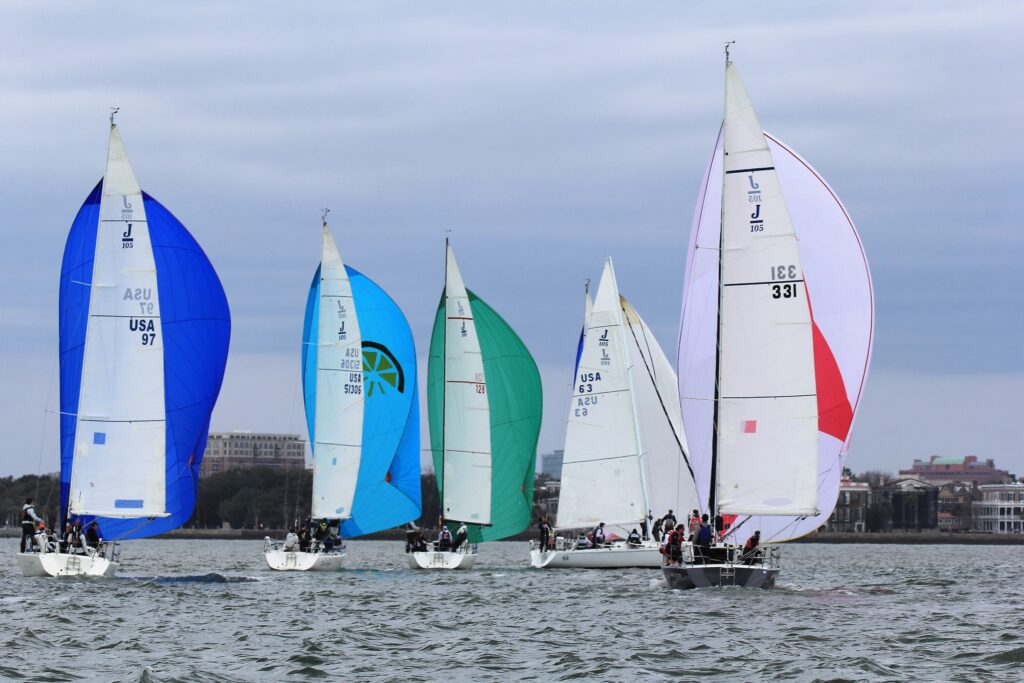
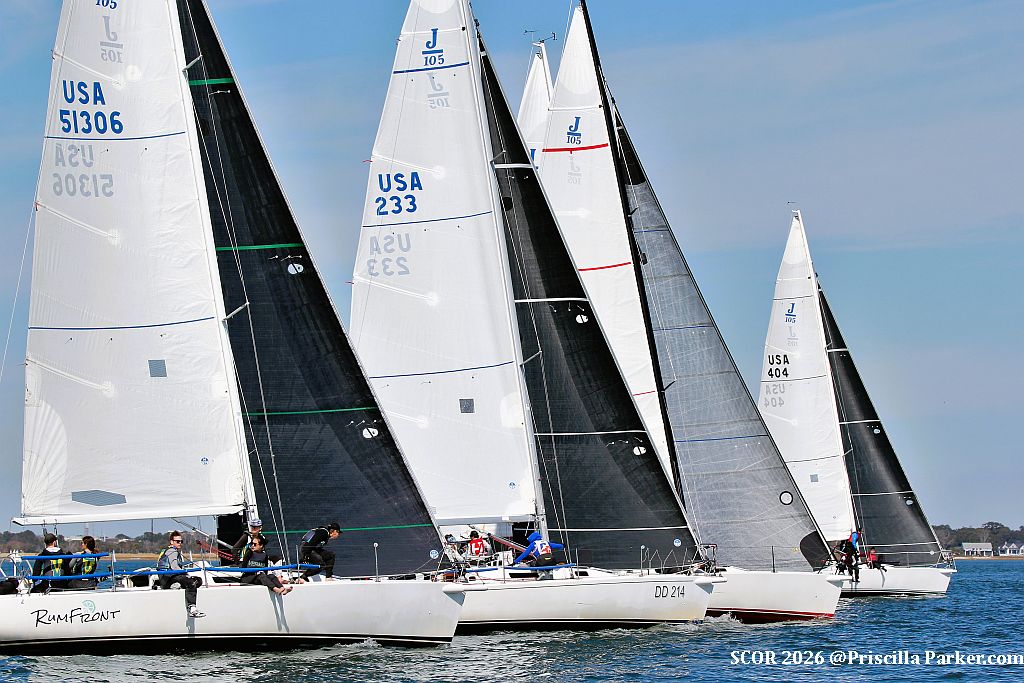
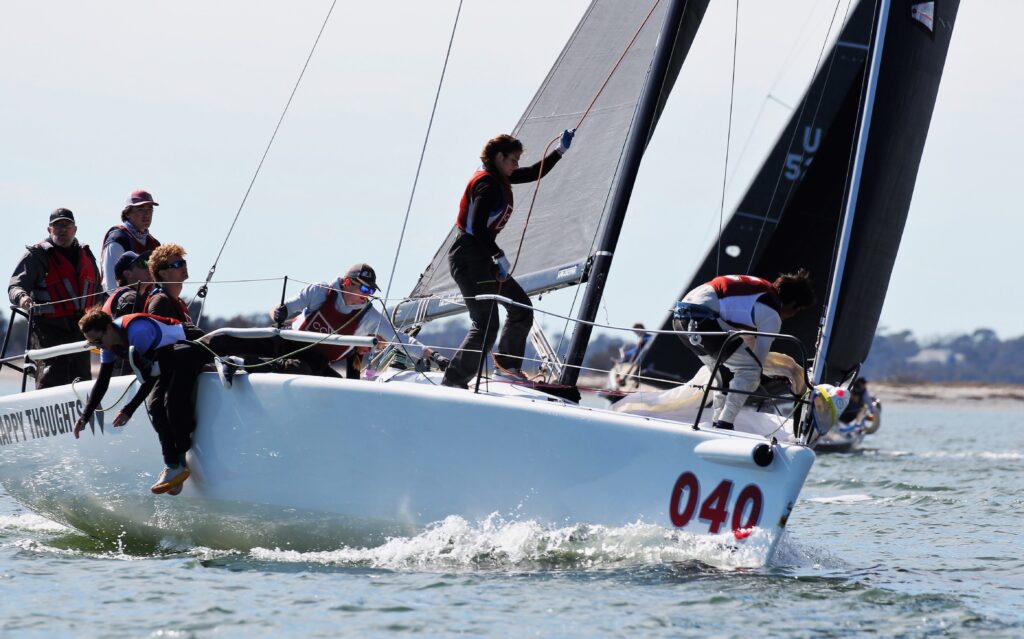
During the weekend of February 14–15, nearly thirty college sailing teams from across the country gathered in Charleston, South Carolina, to compete in the Southern Collegiate Offshore Regatta (SCOR).
Ned Goss, the Varsity Offshore Coach at the College of Charleston, spoke emotionally about how much collegiate offshore sailing has grown since the regatta was launched in 2014 by Tripp Fellabom with the help of George Scarborough and Frickie Martschink. Looking out at the room, he reflected on the event’s early days and the steady progress it has made over the past decade. What began as a small gathering has developed into a major regatta that now attracts teams from across the country.
Offshore sailing is working to establish a stronger presence within collegiate sailing. For many sailors, big-boat racing represents the next step after graduation. Because of this, some sailors and coaches argue that offshore racing should hold equal weight alongside traditional dinghy competition at the college level.
In addition to SCOR, there are other major collegiate offshore regattas held each year: the Great Lakes Intercollegiate Offshore Regatta (GLIOR) in Chicago, Illinois, the Intercollegiate Offshore Regatta (IOR) in Larchmont, New York, and, in Fall 2026, the Pacific Coast Intercollegiate Offshore Regatta (PCIOR) in Seattle, Washington will be added to the circuit. With these regattas drawing competitive fleets from across college sailing divisions, momentum continues to build. Supporters hope to expand offshore opportunities even further, ultimately establishing a collegiate offshore national championship.
As offshore sailing grows, it raises an intriguing question: might we one day see offshore-specific All-American honors, such as Bowperson, Trimmer, or Driver, awarded alongside the traditional All-American Skipper and Crew recognitions in dinghy sailing?
While collegiate offshore sailing is making the case for greater recognition, it is regattas like SCOR that serve as a strong argument. Over two days on Charleston Harbor, teams demonstrated exactly why offshore racing deserves a larger stage.
Here’s how SCOR played out, day by day:
Day 1: The opening day of the 2026 Southern Collegiate Offshore Regatta brought a packed schedule of racing for every fleet. Teams in the J/105 and Sportboat divisions completed five races each, while the J/22 fleet sailed four. The Race Committee positioned the course southeast of Middle Ground, where Charleston Harbor offered prime conditions, including a consistent easterly breeze of 6–10 knots.
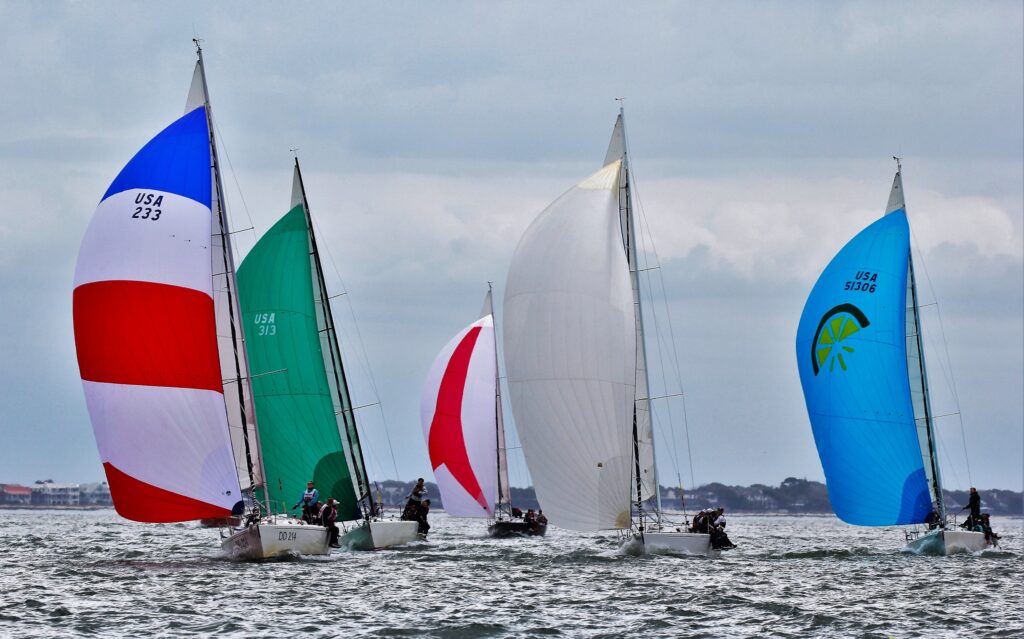
Current played a major role throughout the day. A powerful ebb tide shaped the first two races, making current management critical to success. By the third race, the tide transitioned to a moderate flood, favoring crews that quickly adapted their strategy to the shifting water.
Day 2: With heavy winds and afternoon thunderstorms in the forecast, Day 2 of SCOR featured a single distance race sailed in a south-southeasterly breeze of 10–15 knots against a powerful ebb tide.
The course sent teams all over Charleston Harbor, beginning with a beat toward James Island, followed by a reach around Fort Sumter, then a run up toward the Ravenel Bridge, before finishing with a final beat back to the Carolina Yacht Club.
Find the full results HERE
Results:
Overall Highest Winning Percentage: College of Charleston – J/105 Class
Sportboat Class A
- College of Charleston
- Brown University
- University of Rhode Island
Sportboat Class B
- Miami University
- University of Michigan
- North Carolina State University
J/105 Class
- College of Charleston
- Harvard University
- Cal Poly Maritime Academy
J/22 Class
- University of Michigan
- University of Tennessee – Knoxville
- College of Charleston
About Julia Brighton, Airwaves writer
Julia Brighton grew up in North Carolina but spent her summers sailing in Scituate, Massachusetts, where her connection to the water began. She is currently an Environmental Studies major at the University of Vermont and serves as Treasurer of the UVM Sailing Team, competing in both women’s and coed events. Julia sailed on the varsity sailing team at Choate Rosemary Hall, building a strong foundation in team racing and competitive sailing. She has also worked with coastal photographer Kat Hanafin of The Nautical Collection, contributing written content and assisting with business operations and client communications. Outside of college sailing, Julia works as a race coach at Cohasset Yacht Club, where she enjoys mentoring young sailors and fostering both competitive skills and a lasting respect for the marine environment.
Leave a Reply