By Airwaves writer Taylor Penwell
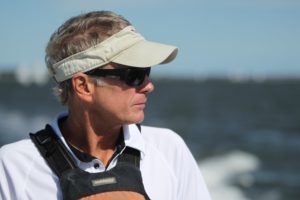 Greg is a former All-American collegiate sailor, acclaimed sail maker, and the Director of Sailing for the College of Charleston Cougars who recently won the 2017 College Sailing Team Race and Coed Nationals. An accomplished sailor himself, Greg has won 21 North American and National Championships in seven different classes. A native of Columbus, Ohio, he earned his All-American status at Ohio Wesleyan and soon after went on to a successful career in sail making for 34 years. Greg owned his own loft, Fisher Sails before joining North Sails in 1991 where he handled many One-Design classes. In 2010 Greg became the College of Charleston’s Director of Sailing. Under his guidance as director, the Charleston Cougars have won 3 Fowle Trophies, 9 different nationals, and produced 25 All-American sailors.
Early Life
When did you start sailing?
Both my brother Matt and I started pretty young- we were like 5 or 6 when we started crewing for our Dad in his Lightning.
What drew you to competitive sailing?
We were very fortunate to have a super supportive family when it came to sailing. My Dad actually gave up his own sailing so he could really help us focus on ours. We had our own Lightnings at 11 and 12 (yes it raised a few eyebrows!) and our Dad took us to a bunch of regattas- both Junior events and Lightning- all through the summers.
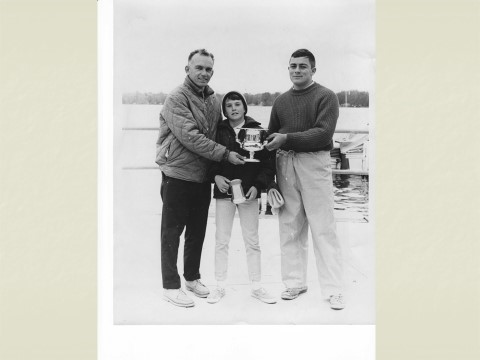
He never really pushed us hard but gave us every opportunity to sail as much as we wanted so we could really enjoy the sport- which we did. Our club in central Ohio- Buckeye Lake- was very competitive and enthusiastic in those days. There was a strong one design racing focus as well as great passion for youth sailing/racing. Members of our club, and of course our parents, would all go to the major Junior regattas to cheer us on. We were super lucky.
Tell us about your college career. What did you take away from it?
College Sailing is when I really grew attached to the sport and realized it was more to me than just a hobby. I learned a great deal in college about the value of boat speed and sailing conservatively. I also appreciated the value of practice and coaching. Most important, I made friends- true quality people- who I still enjoy sailing and hanging out with today!
Sail Maker
How did you get into the sail making industry?
 In my early college years, I worked summers for a one design boat builder in Cleveland. We built a bunch of Snipes and Lightnings and I l really enjoyed it. But it was my Dad who suggested I just check out sailmaking before I commit to boatbuilding full time. I moved to Newport, RI and started working for Bill and Doug Shore of Shore Sails. They were not only talented sailmakers and made some very speedy sails, they were also truly customer oriented. They really made sure their customers knew how to use their sails and get the most from them. I was really taken with sailmaking. I loved the fast pace, the technical aspects and most of all I loved the thrill of watching and helping our customers use our sails and sail fast! I had found my career that I would enjoy for over 34 years! I learned a bunch from Bill and Doug.
You started your own sail loft, Fisher Sails. What was it like to have your own sail loft?
I moved back to Ohio and opened one of Bill Shore’s first franchises in 1978. In 1986 I was ready to give it a go on my own and dropped the franchise and started Fisher Sails. We focused on just one design sails and really worked that niche. It was quite a learning experience that involved the running of a small business as well as designing and building sails. At one point we had upwards of 15 people working on the floor. We enjoyed a good run in those days and one year our sails even help win 14 different One Design Nationals! What a thrill!
In 1991 you joined the North Sails team and were there until the year you became the CofC Sailing Director, what was it like to work for one of the biggest sail making companies in the world?
Working for North Sails was, an incredible experience for me. When North Sails bought Fisher Sails in 1991 they were just beginning to roll out the first 3DL sails. It was exciting to watch the passion for the technology and desire to build the coolest, fastest sails. It would have been easy to become totally engrossed with just building the finest product but there was always a strong group in the company who appreciated and made sure that customers were always well cared for too. I was given a lot of free reign and encouraged to sell one design sails as I thought most effective. I really loved helping our customers take the sails, learn them, sail fast, and have a great time. We had so many great people and resources in our One Design Group that all complemented one another. There were incredibly talented designers, wise business people, strong marketers and all good sailors who loved the sport. Most of those guys in the One Design team are still there!
What did your job at North Sails entail?
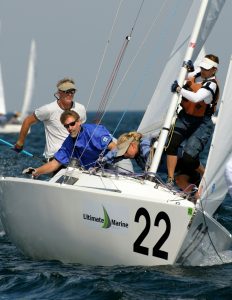 In the One Design Group, we all worked together to take care of an incredible number of classes. Each of us was assigned a number of classes (I think I was responsible for about 10-12) and we had to work with our designer to make sure the sails were fast and easy to set up. We wrote the tuning guides and put together our class specific clinics. We worked with our marketing gang in providing content for ads and newsletters. And of course, we travelled to regattas and clinics usually 3 out of 4 weekends. I think at the height of my career I would sail 5 or 6 Nationals and a similar number of Midwinter Championships. It was a quick pace but super rewarding. I was especially lucky as my wife Jo Ann sailed with me in nearly every regatta. I still don’t know how she kept her job as a speech pathologist but we sure had some great times racing and travelling together!
College of Charleston Director of Sailing
How did you find yourself as the College of Charleston Director of Sailing?
I really wasn’t looking for a career change. But one day out of the blue, Jim Allsopp a vice president at North said “hey, I know a position I bet you’d really like and you should check out”. Jim’s son Cole was on the team at the College of Charleston and Jim said the college was looking for a new director. Once I got over the fact that a vice president at North suggested I consider another career I surely checked it out! My daughter Martha had attended and enjoyed the College as well and of course the success and reputation that the College of Charleston Sailing Program had long achieved was impressive to say the least. Jim was right. Once we visited Charleston we felt the  southern hospitality and loved the town and the College. The respect from the community the C of C Sailing program had earned was amazing, and well deserved. We surely miss Annapolis and all our friends but it’s been fun having them come visit and seeing them when up in Annapolis at regattas.
It was a real honor to be offered the Director of Sailing at C of C. We moved to Charleston in October 2010
The job is different from being a sail maker, what are some of the challenges you’ve found in this position?
Being the Director of Sailing at C of C was quite different from being a sailmaker. The administrative details are an important part of my daily duties and shouldn’t have been a surprise. Fundraising is a critical focus for any sailing program and I am fortunate for the support of our Development Office here at the College. The team feel was like that at North and I learned to really enjoy that part of my job. Though I still love to teach sailing and coach we have 3 excellent full time coaches and my real focus is to ensure they have all they need to be as effective as possible. They work hard and are great leaders. But I still love to make it to practice and watch the team sail. I still offer some ideas on boat speed when I can!
What is your involvement in recruiting sailors to come to CofC?
Our coaches Ward Cromwell, Mitch Hall and Ned Goss do a great job maintaining a watchful eye on the talent in high schools around the country. And when these kids come visit the college we all work to ensure they see all we’re proud of and offer. Usually the recruit rides in the coach boat with Ward or Mitch and sometimes stay with a team member so they really get an idea of what a “day in the life” is like. While we all work together in recruiting, it seems my greatest value is to be able to relate with the parents. Many I’ve met or even sailed against over the years. 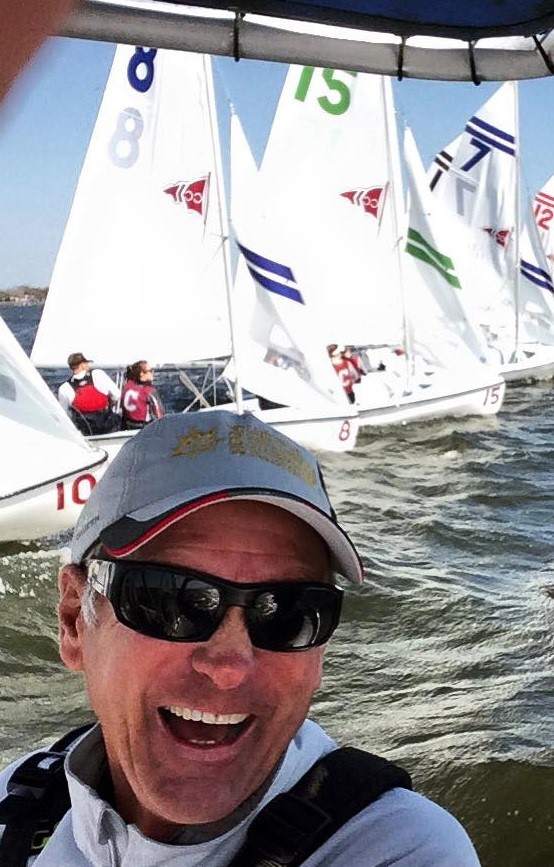
What are some of your favorite highlights since you’ve been the Sailing Director?
We’ve been very fortunate and have enjoyed a lot of great times these past 6 1/2 years.
Winning 3 Fowle Trophies, 9 different Nationals and watching several of our sailors compete in Rio has been a thrill. We have had over 25 All-Americans. It’s been rewarding for our program to have such a successful offshore team. To be able to develop our Community Adaptive Program and help offer opportunities for Veterans and others who might not be able to sail has been super special. We host a few of our local high school teams’ practices at our center and it’s exciting to watch them enjoy and improve. All of us- our coaches, our staff and even our teams really want to contribute to the growth of sailing in Charleston.
What is your greatest satisfaction from being the Sailing Director?
Without question, the greatest reward for me is when our sailors actually grow to enjoy the sport even more than when they started at the College of Charleston. It’s great to see them improve, sail faster and of course win. But if they enjoy the whole process, the sport and want to continue on with it once they graduate-now that is really special and I feel like we’ve really contributed to their future!
The College of Charleston hosted the 2017 College Nationals, tell us about that experience hosting the event.
Well, that was a bit of a project. We took it on last September when the original host couldn’t hold it. We thought 8 months would be plenty of time to prepare but we needed every day to get it set up! But we had a great deal of support (especially from the USS Yorktown staff who provided spectating from the flight deck of the WWII aircraft carrier) and as a result it came off well. The sailing conditions were generally really good and provided the teams a little bit of everything…and for sure a good bit of current! But with over 330 sailors and 850 spectators and 11 days of sailing-it was indeed a big event. I was especially proud of our team and how hard they worked to ensure all the details were handled on land as well as the water and it was successful. But for sure for our sailors to sail so well and finally win 2 of the three Nationals and ultimately the Fowle was a thrill for all of us!
What do you have to say about your CofC team who won the Team Race and the Co-Ed National titles?
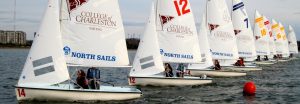 I couldn’t have been more proud…proud of our coaches who paced the team to encourage them to truly peak at the right time, proud of all our team and how they were literally on the dock tirelessly cheering and supporting their teammates on the water, proud of all the talented sailors who raced all the events and how they maintained the passion throughout the marathon event right to the last weather leg of the last Co-ed race. I have never witnessed such confident (but not arrogant) determination as in the last day of the event. To come back from starting the day in 4th to solidly winning the Nationals and in just 5 hours of racing was something I’ll never forget. What a team.
What makes a college program become top level?
In my humble opinion it is all about the passion at all levels. There needs to be support from the college itself. There must be fine boats, equipment and the facility that allow the team to progress. The coaches need to be hungry to help guide their sailors. And while I think the desire in the coaches can help fire up the team, the sailors themselves are who really the most passionate about their sailing, their schoolwork, their health and being able to navigate it all. They must enjoy the process of training, travelling and competition. I think building an environment that encourages your sailors enjoy all that goes with being a member of a top-level team is what makes the difference.
How do great sailors set themselves above the competition?
I think great college sailors work hard to avoid distraction in their day to day life. They know what is most important- or most important to them- and they work really hard to keep their eye on the ball. They also pace themselves and make sure they’re not burning themselves out- and recognize when their passion is being tested.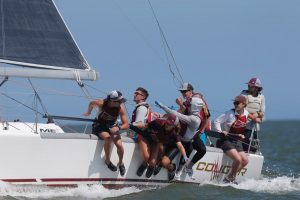
They are fast sailors and know how to keep their boat in the right gear most of the time. They’re conservative sailors and don’t try to win a regatta in one race or the first race…again they recognize the pace and usually it takes a bunch of races to come out on top in an event. They’re excellent, consistent starters. But they’ll rarely be leading half way up the first beat…. but they’ll rarely be deep as well. They’re avid learners and always enthused to master new skills…and look for help to make it happen. It’s also rare to see a true champion who’s not a great sportsman or sportswoman as well. Like with their life skills, they work hard to keep it all in perspective.
When you are not sailing or running the colleges sailing, what do you enjoy doing?
My wife and I enjoy following our 12-year-old daughter around in her gymnastics competitions. Of course, we’re hoping she’ll one day get pumped abut sailing and racing like us. We’re working hard, but cautiously to give her the opportunities so she’ll hopefully fall for it. She has an Optimist, an Open Bic and has sailed with us in a few Lightning regattas (we still enjoy our own racing from time to time) …but so far, no luck…but stay tuned!
But we also enjoy just cruising around Charleston in our little powerboat and checking out all the different little bays, rivers, intercostal waterways. What a cool place!
Blog
Team USA Wins Optimist World Team Racing Championship…. Again!
Press Report: July 17, 2017
USA Retains Grasp on Team Racing World Title for Second Year
Story courtesy of Optiworld
Pattaya, Thailand – Team USA beat Team China in a dramatic, hard-won, winner-takes-all ‘Sail Off’ in the team racing portion of the Optimist World Championship 2017, retaining its hold on the IODA Challenge Cup team racing trophy for the second year in a row.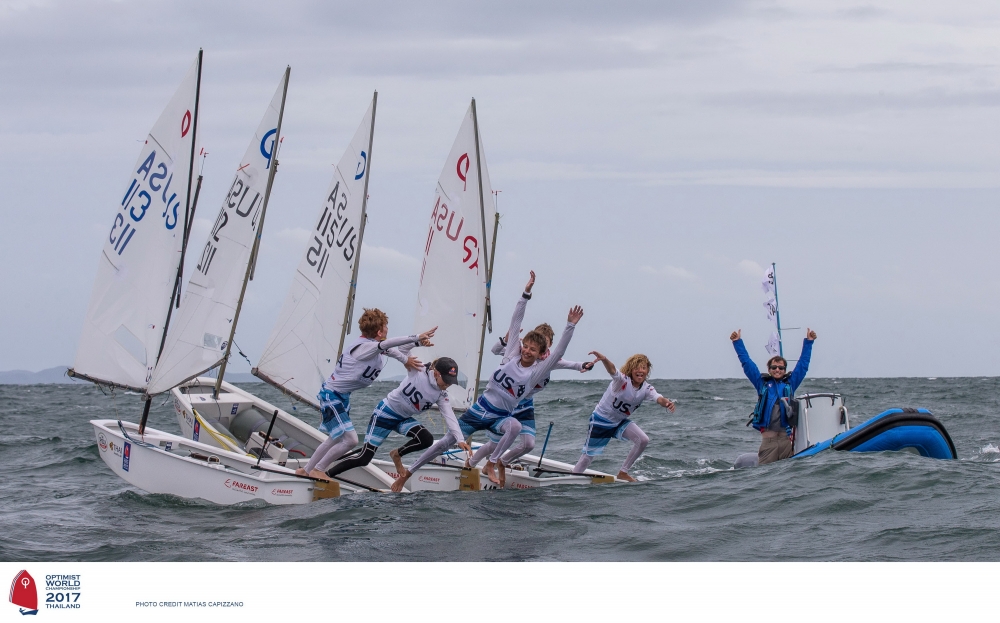
In high winds of 13-18 knots, huge swell, and choppy seas, the Americans set off in the morning alongside 15 other teams, each determined to do their best on the final day of the team racing championship.
“It was going to be challenging. All the teams are excellent. We knew that going into the day,” said Justin Callahan, Team USA’s sailor spokesman and the only remaining member of last year’s winning team.
The day opened with a series of flights which ensured each of the top 16 teams had a chance to race twice before being eliminated if they lost twice. Team USA skillfully bested Ireland, Germany, Thailand, and Singapore in turn to earn the first assured place in the final Sail Off.
In contrast, the Chinese had to duel with six teams to secure their spot in the finals. Ironically, in their second race, they were beaten by the Malaysians, but, in the showdown for the second seat in the Sail Off, they found themselves up against Team Malaysia again, this time besting them and sending them to shore with bronze.
The final Sail Off was a best-of-three race series, the first race won by Team USA, the second by Team China. This made the third race a ‘must win’. As the race committee, described it, the deciding race was a “great race”, the winner unclear until the very end.
 As Justin described it, “We were first, second and third at Mark 3 in the final race, but then things got a little messy”. After an incident with a Chinese sailor who pushed the limits of what is allowed in team racing, Justin found himself in sixth position. He managed to gain ground, and, as he put it “somehow, right at the finish, we pinned them back and finished first, second and third. It was a very close finish.”
On the water observers described a lot of shouting by sailors and whistle blowing by umpires as rules were broken and sailors called each other out, all part of the drama of team racing, in which competitors may push or hold their opponents back in what might otherwise be considered unsportsmanlike behavior.
Team USA had no complaints about the high intensity of the action on the water, however. As Justin said, “The umpiring was amazing. They were calling all the right calls. We got flags when we knew should have got flags.”
Asked what the team’s secret to success was, he did not hesitate. “Chemistry. Synergy on the team,” he said.
“Training. Training in team racing,” answered the team’s coach, Lior Lavie, who credited silver medalists Team China as excellent in the event.
“Their devotion to excellence in sailing,” added Paul Callahan, country representative, president of the US Optimist Dinghy Association, a two time Paralympian, and, most importantly today, proud father to Justin and his twin brother Mitchell, who both qualified for Team USA on their own merits.
Other members of the team – Stephan Baker, Liam O’Keefe, and Charlotte Leigh – were beaming ear to ear at the end of the day as well.
The team’s only issue now is how to get the large IODA Challenge Cup back to the USA, the box they carried it over in damaged. We trust event organizers will be able to find a replacement.
On Tuesday, the individual world championships series continues with fleets split into four based on their rankings after six earlier this week. The Americans can expect to do battle with the Chinese again in the coming days. Four members of Team USA and three of Team China are in the gold fleet.
The 2017 Optimist World Championship, which has a record-breaking 281 sailors from 62 countries participating, is organized by the Royal Varuna Yacht Club with the endorsement of the Yacht Racing Association of Thailand and the Junior Sailing Squadron of Thailand under the International Optimist Dinghy Association. It is supported by strategic partners including Pattaya City, the Sports Authority of Thailand and the Thailand Convention and Exhibition Bureau. Co-sponsors include The Pizza Company, Apollo (Thailand), Thai Airways, and True Corporation.
“It was going to be challenging. All the teams are excellent. We knew that going into the day,” said Justin Callahan, Team USA’s sailor spokesman and the only remaining member of last year’s winning team.
The day opened with a series of flights which ensured each of the top 16 teams had a chance to race twice before being eliminated if they lost twice. Team USA skillfully bested Ireland, Germany, Thailand, and Singapore in turn to earn the first assured place in the final Sail Off.
In contrast, the Chinese had to duel with six teams to secure their spot in the finals. Ironically, in their second race, they were beaten by the Malaysians, but, in the showdown for the second seat in the Sail Off, they found themselves up against Team Malaysia again, this time besting them and sending them to shore with bronze.
The final Sail Off was a best-of-three race series, the first race won by Team USA, the second by Team China. This made the third race a ‘must win’. As the race committee, described it, the deciding race was a “great race”, the winner unclear until the very end.
As Justin described it, “We were first, second and third at Mark 3 in the final race, but then things got a little messy”. After an incident with a Chinese sailor who pushed the limits of what is allowed in team racing, Justin found himself in sixth position. He managed to gain ground, and, as he put it “somehow, right at the finish, we pinned them back and finished first, second and third. It was a very close finish.”On the water observers described a lot of shouting by sailors and whistle blowing by umpires as rules were broken and sailors called each other out, all part of the drama of team racing, in which competitors may push or hold their opponents back in what might otherwise be considered unsportsmanlike behavior.
Team USA had no complaints about the high intensity of the action on the water, however. As Justin said, “The umpiring was amazing. They were calling all the right calls. We got flags when we knew should have got flags.”
Asked what the team’s secret to success was, he did not hesitate. “Chemistry. Synergy on the team,” he said.
“Training. Training in team racing,” answered the team’s coach, Lior Lavie, who credited silver medalists Team China as excellent in the event.
“Their devotion to excellence in sailing,” added Paul Callahan, country representative, president of the US Optimist Dinghy Association, a two time Paralympian, and, most importantly today, proud father to Justin and his twin brother Mitchell, who both qualified for Team USA on their own merits.
Other members of the team – Stephan Baker, Liam O’Keefe, and Charlotte Leigh – were beaming ear to ear at the end of the day as well.
The team’s only issue now is how to get the large IODA Challenge Cup back to the USA, the box they carried it over in damaged. We trust event organizers will be able to find a replacement.
On Tuesday, the individual world championships series continues with fleets split into four based on their rankings after six earlier this week. The Americans can expect to do battle with the Chinese again in the coming days. Four members of Team USA and three of Team China are in the gold fleet.
The 2017 Optimist World Championship, which has a record-breaking 281 sailors from 62 countries participating, is organized by the Royal Varuna Yacht Club with the endorsement of the Yacht Racing Association of Thailand and the Junior Sailing Squadron of Thailand under the International Optimist Dinghy Association. It is supported by strategic partners including Pattaya City, the Sports Authority of Thailand and the Thailand Convention and Exhibition Bureau. Co-sponsors include The Pizza Company, Apollo (Thailand), Thai Airways, and True Corporation.
Fitness for Foiling
Foiling boats are the next big thing in sailing. Foiling has been around for years, but recently foiling has made a big step in sailing especially with the America’s Cup that just finished up. Maybe you even had a chance to see the video of the foiling opti! In February, we had a class profile on the new boat the Waszp, which is making foiling more accessible to everyone who wants to give it a try.
As you know fitness in sailing is so important for bettering your performance on the water. So what about fitness for foiling? To be able to foil it takes many skills, but you especially need to make sure your fitness is at a top level. In the spring when I headed out on the waszp I learned what fitness skills I needed to improve on to become better at foiling. It takes speed, agility, strength, balance, aerobic capacity, and endurance to be able to sail these foiling boats. If you had a chance to follow the America’s Cup you saw how hard those guys are working on those boats. Check out this great article on what goes into their training: The kickass total-body conditioning workout of Oracle Team USA, America’s top sailing squad.
So how can we train to get into top shape for foiling? Check out below a total-body workout that will help you get into top shape for your next foiling adventure. Also, check out the moves in the video.
Foiling Workout:
-Warm up with Dynamic Stretching (5 minutes)
Core Activation:
Agility Ladder: Out In’s x 2
Single Leg Burpee (30 seconds)
Shoulder Taps (30 seconds)
Agility Ladder: Out In’s x 2
Repeat 2x No Rest
Workout:
Ski Abs (1 minute)
Agility Ladder: Hip Switch Drill x 2
Split Lunges (1 minute)
Agility Ladder: Hip Switch Drill x 2
Sprint 70 yards
Repeat 3x with 60 seconds rest between sets
Squat Jumps (1 minute)
Agility Ladder: One Leg Hop x 2
Burpee with push up (1 minute)
Agility Ladder: One Leg Hop x 2
Sprint 70 yards
Repeat 3x with 60 seconds rest between sets
-Cool Down with Foam Rolling and Static Stretching
For more information on fitness for sailing contact [email protected]. Also check out Sailorcise on Facebook, Twitter, and Instagram for daily tips on fitness, nutrition, and sailing.
Revitalizing a Class: The US-UK Youth Etchells Challenge
 By Airwaves Writer Mac Dickson
The Class
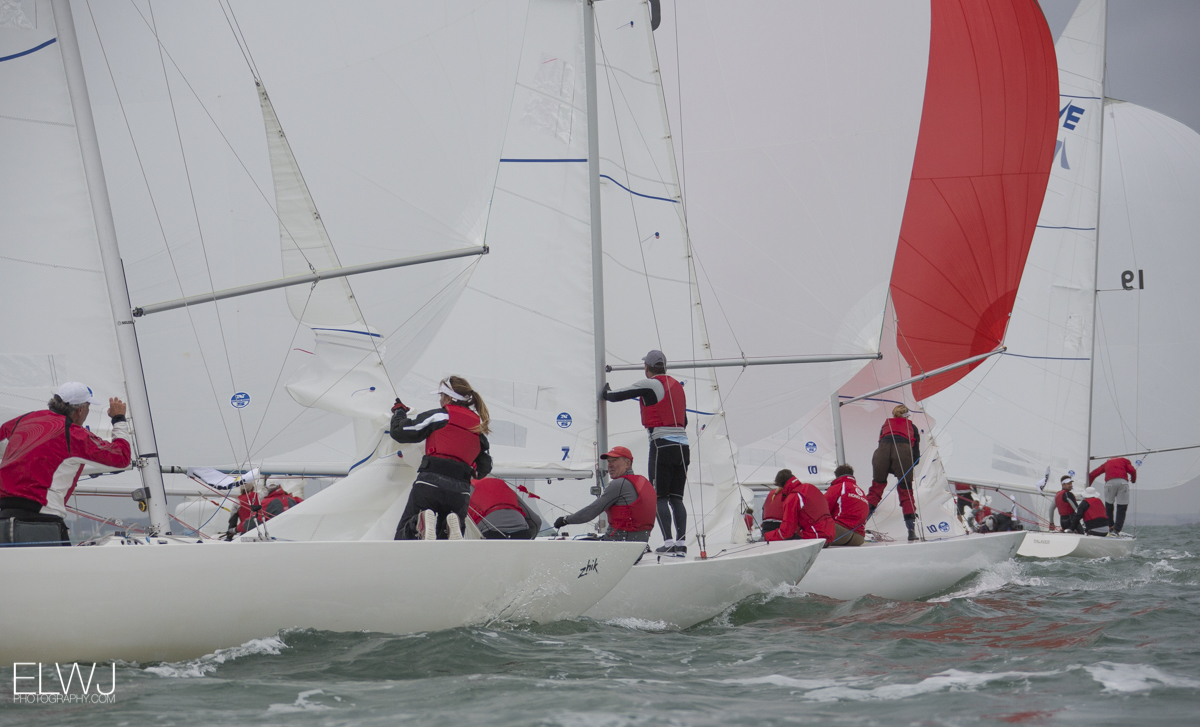
The Etchells class has maintained a celebrated and decorated reputation since Skip Etchells designed his first twenty-two-foot racing sloop in 1965. Born in 1911, Skip lived through both World Wars and the Great Depression. He spent a much of his life designing Stars and later Lightning’s in New England. The Etchells family has a noteworthy sailing pedigree. Skip won the Star Class World Championship as a helmsman in 1951. His wife and crew, Mary, remains the only female world champion in the Star class to date. Skip’s extensive racing experience and success made him the ideal boat builder. Following his move to Stamford in 1965, Skip designed a new boat that would become the International Etchells Class.
The design, according to skip, was “a very simple rule, very good for the imagination: 22 feet on the waterline, 4’6” draft, 3,700 pounds displacement, and only 310 square feet of actual sail area. A wholesome, heavy-weather boat was clearly invited, we thought (Etchells.org).”
Today, the Etchells is a thirty-foot sloop that has maintained over fifty active fleets for the past thirty years. The vessel is crewed by three to four people, and remains comfortable and competitive. It boasts a low wetted surface hull which allows it to sail in even the lightest of breeze. The Etchells class has adhered to a one-design principle. The construction of the boats is not only governed by the strong, effective class association but also the ISAF.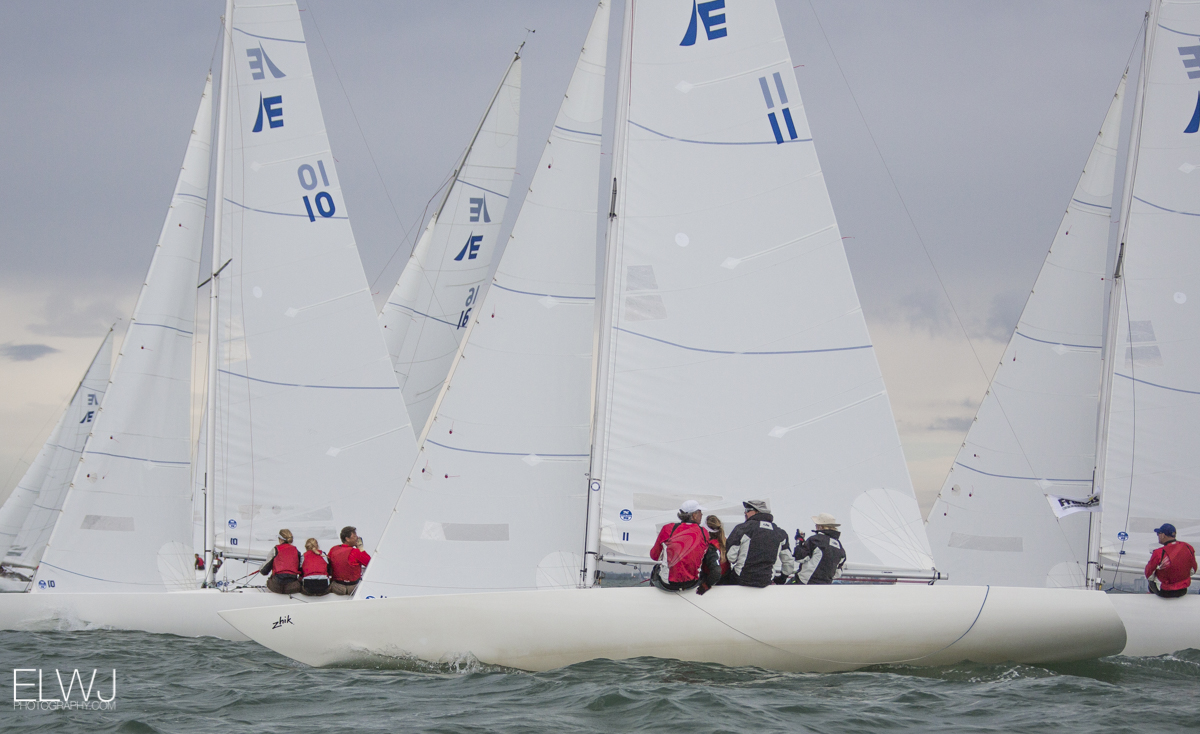
The class boasts high levels of competition in all levels of racing. The top Etchells sailors often have ten or more years in the class, and an even deeper history in other boats. However, in recent history there has been a noticeable lack of younger-generation racers in the class. The first-annual US-UK Youth Etchells Challenge came about this year in an effort to change that.
The Challenge
The challenge was issued by the Cowes, UK Etchells fleet over the winter after discussions at the 2016 World Championship and the annual Etchells series in Miami, according to Senet Bischoff. It included invitations to one, or two US Youth teams to compete in the an annual Etchells invitational regatta taking place in Cowes, UK: the Gertrude Cup. The event will see very high competition from twenty teams, including the UK Youth entry.
The US Etchells fleet was quick to jump at this opportunity and promptly made an announcement in search of the right sailors in early April. Although they were only challenged to send one boat, they received so much interest from youth sailors and Etchells class members that the final group for the Gertrude Cup will be two boats and a team manager. The team was selected through applications due on the first of May to sailors not older than twenty-five. The application required a statement of how participation in the challenge would foster the applicant’s development as a competitive sailor. The selection committee consisted of three well-known names in the Etchells world: Senet Bischoff, Michael Gavin, and 2017 national champion Steve Benjamin. “We were seeking sailors that had interest in learning and broadening their sailing experience… and a team that had a balance of dinghy and keelboat experience, as well as experience at different positions in the boat,” says Bischoff. The committee has since selflessly dedicated much of their own time and resources to this team through providing boats, fundraising, coaching, support, and much more.
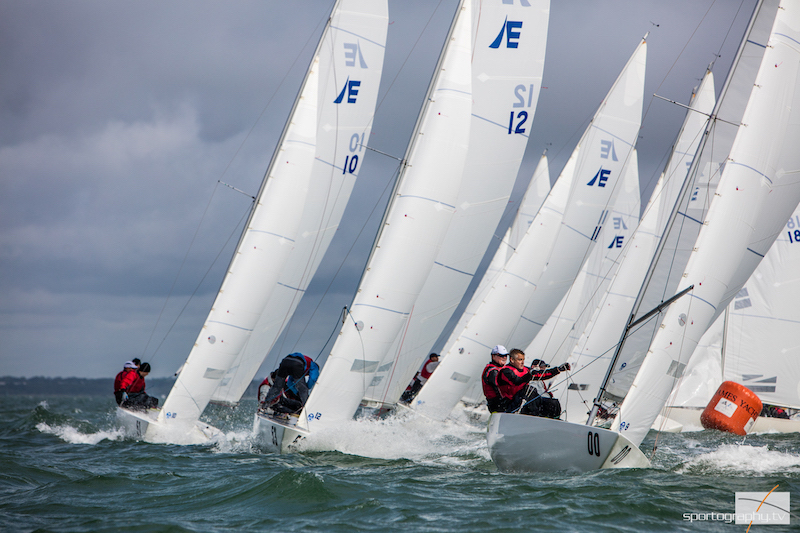 In a respectable, gracious manner, the British hosting authority agreed to supply a boat and accommodations for one US team and reserve a second entry for an additional US Youth Team. The US plans to follow suit at a major event in the states in 2018, potentially the North American Championship. A new class trophy, dedicated to the annual challenge, will be awarded to the highest-placing youth team at the Gertrude Cup.
The Team
The basic criteria for applications to the team, as outlined in the announcement, included: “a sailing résumé, contact information, availability from May to July, birthday, height, weight, and a statement of how participation in the Youth Challenge will contribute to your development as a competitive sailor.” After sorting through numerous applications, the committee decided on a final team of nine sailors within the age requirement of 18-24. The sailors that constitute the selected team range from the minimum to maximum ages and boast an impressive array of sailing experience. Through the committee, the team has access to two competitive boats to train in. Their agenda for the summer consists of practice weekends and four major US Etchells events leading up to the coveted Gertrude Cup. The majority of the team, sans the two skippers, has no prior experience in the class.
The members of the team are very excited about the three-month campaign. Captain and Skipper Connor Needham stated that, “the opportunity that presented itself to have a scheduled, outline for the summer; competing in multiple events in a class that’s very well known for its high level of competitiveness; getting to a point of being able to compete in a major event like the Gertrude Cup at the end of July,” is what especially drew him to the challenge.
 While the unconventional, raw Etchells Youth team is confident in their abilities, they understand that they have their work cut out for them and they’re determined to get where they need to be. The events on their schedule will bring the stiff competition that they need to get them ready for the big goal in the UK. “The top-end boats have sail-designers on the boat, they have sail makers on the boat, they have professional main-trimmers, they have guys that have been looking at it for 20 years. Something that I’ve learned is that I haven’t sailed against someone in the class that hasn’t sailed the boat for shorter than 10-15 years,” explains Needham, “It’s one of those boats where you need to learn by making a lot of mistakes, and those mistakes come through competing at events and learning from the other guys.”
They are coming into this challenge fully aware of the steep learning curve of the technical, competitive Etchells class. Despite their lack of experience in this particular boat, they are all valuable assets in their own unique respect. What is it about these kids, mostly brand new to the boat, that gives them a shot? Ed Lebens, a Long Island Sound Native, believes that “the range of skill sets, skill levels and sailing experience all coming together in one class and one team,” will be able to push them to be successful and competitive in the class. The thing that really makes this program special is their passion for learning from each other. “Everybody has come to this team with a common goal of learning a lot and trying to get to the top. Nobody’s stuck up with ego, and everybody’s learning from each other and making the most of the team,” asserts mid-bowman Key Becker. The team had their debut in full force this past weekend as they competed in the Atlantic Coast Championship at Shelter Island Yacht Club, Needham’s home Club. They were coming off of two practice weekends at the venue, eager to race and continue to grow their skills. The team raced two boats skippered by Connor Needham and Marly Isler and earned 5th and 9th place finishes, respectively. These results are very impressive for the tough fleet of 24 boats that competed. Check out each sailor’s individual profiles below:
Key Becker
- Age: 19
- Home Yacht Club Affiliation: American Yacht Club
- Education: College of Charleston
- Etchells Class Experience: Minimal
- Sailing Background: Mixed offshore and inshore big boat sailing generally on more high-performance boats.
- Team Role: Mid bow
Brooks Daley
- Age: 18
- Home Yacht Club Affiliation: Noroton Yacht Club
- Education: Darien High School, graduate
- Etchells Class Experience: None before challenge
- Sailing Background: Lots of local dinghy sailing as well as a ton of big boat experience
- Team Role: Bow
Marly Isler
- Age: 23
- Home Yacht Club Affiliation: San Diego Yacht Club / Yale Corinthian Yacht Club
- Education: Yale University
- Etchells Class Experience: Extensive, Fleet 13
- Sailing Background: I raced 420’s, skiffs, and Etchells’ internationally before becoming a member of the Yale University Sailing team where I sailed on the match race and women’s circuit. I was captain my senior year and majored in American Studies with a focus in Architecture and Environmental Studies. I’m now working at Latham & Watkins law firm in Washington, D.C. and use practically all of my vacation days to continue to sail; competing in team races, long distance races, and short-course regattas.
- Team Role: Skipper
Gordon Gurnell
- Age: 18
- Home Yacht Club Affiliation: Essex Yacht Club
- Education: St. George’s School
- Etchells Class Experience: None before the challenge
- Sailing background: Started in Opti’s. Progressed to C420’s and have sailed the circuit 3 times. I race big boats on distance races like the Ida Lewis Distance Race and the Vineyard Race. I also sail in the American Yacht Club spring and fall series’ and Block Island Race Week. I race big boats – mostly on Swan 42’s and Swan 45’s. I campaigned last year for 2016 Melges 24 Worlds. I competed in the Red Bull Foiling Generation, which is on the more high-performance side of the sailing I have done. During the winters, I frostbite in Laser’s on the Connecticut River. I sail for St. George’s school which makes for a very intense season.
- Team Role: Main and spinnaker trimmer. I go back and forth from the 2nd role and the 3rd role in the boat.
Hannah Polster
- Age: 21
- Home Yacht Club Affiliation: Severn Sailing Association
- Education: Graduated from Boston University with a degree in Mechanical Engineering
- Etchells Class Experience: none
- Sailing Background: I grew up in Annapolis, MD sailing at SSA (Severn Sailing Association) racing Opti’s and 420s. The past 4 years I attended Boston University majoring in mechanical engineering and was a member of the sailing team. I sailed both the women’s and coed circuits, sailing A division for women’s and B division for co-ed. As a junior, I was captain of the women’s team and then captain of the co-ed team senior year. I received the honor of Women’s All-American Honorable Mention in 2016 and Women’s All-American in 2017.
- Team Role: mid-bow on Connor’s boat, mostly calling tactics. I am also the team treasurer.
Connor Needham
- Age: 25
- Home Yacht Club Affiliation: Shelter Island Yacht Club
- Education: Roger Williams University ’14, BS Mechanical Engineering
- Etchells Class Experience: Competing for 4 years
- Sailing Background: Since high school I have competed in regattas in various positions in boats such as: Lasers, 420’s, various Collegiate Dinghies, Melges 20’s, Etchells’, Swan 42’s, Farr 30’s, X40’s, Summit 40’s, J70’s, J109’s, J111’s. I graduated from RWU in 2014 and continued my contribution and activeness in the sailing community through coaching in college and competing in the off season. I started out as the head coach at Middlebury and was shortly after hired to coach at Boston University. I have competed in various Etchells regattas since 2014 as a skipper which includes the Louis Piana Cup, Sidney Doren Memorial Regatta, Biscayne Bay Series, Etchells Midwinters, Etchells LIS Championship, the NYYC Annual Regatta and a Summer Series which I most recently won with a fleet of 14 boats including well known skippers such as: Jay Mills, Scott Kaufman and Jay Cross. I was elected to race in the NYYC Invitational Cup in 2014 and 2016 where our team was 1 position short of qualifying in 2014. This summer I will also be competing in the Swan 42 Worlds.
- Team Role: Skipper, Captain
Ed Lebens
- Age: 20
- Home Yacht Club Affiliation: Seawanhaka Yacht Club
- Education: Currently a junior at RWU, majoring in Finance.
- Etchells Class Experience: Practice crew for Steve Benjamin, no racing experience
- Sailing Background: Born and raised sailing on Long Island Sound, initially sailing Optimist’s, Club 420’s, and Laser’s before moving onto Collegiate Sailing as well as bigger and faster boats such as Farr 40’s, J105’s, J70’s, and Etchell’s. Represents Roger Williams in collegiate sailing.
- Team Role: Main trimmer
Bram Bakman
- Age: 18
- Home Yacht Club Affiliation: Noroton Yacht Club
- Education: Rising freshman Tufts University ’21
- Etchells Class Experience: None prior to challenge
- Sailing Background: I420 circuit
- Team Role: Bowman
James (Jimmy) Kennedy
- Age: 22
- Home Yacht Club Affiliation: Beachwood Yacht Club
- Education: Roger Williams University ’17, Marketing major
- Etchells Class Experience: First event in the boat: 17th at 2017 Nationals
- Sailing Background: I grew up sailing from a young age. At about 7, my parents put me in a junior program at the Beachwood Yacht Club located on the Toms River. While there I competed in Opti’s, Sunfish, Laser’s and Club 420’s. Moving into high school, I competed for as a crew and skipper at Toms River High School South from 2009 – 2013. In the summers, I competed in the BBYRA; sailing E Scows, Laser’s, and A Cats. Moving forward, I attended Roger Williams University very eager to sail. While there, I sailed as skipper and crew in FJ’s, 420’s, Zim 15’s, Navy 44’s, J70’s, and several other dinghies. As a recent graduate of Roger Williams University, I am sailing as much as possible competing on E Scows, Etchells’, J70’s and in several Team Racing events.
- Team Role: Main and Spinnaker trimmer
The Mission
The US-UK Etchells Youth Challenge has a clear goal: growth of the sport through expanding the horizons of youth sailors. There is a huge gap between sailors who grew up immersed in the community with opportunities falling in their lap from every direction and those who have to make their own way. The latter is much more difficult. Sailors who grow up outside of the high-level bubble are not often seen competing at big, competitive events outside of the dinghy world like the Melges 24 Nationals, J70 North Americans, Annapolis to Newport, etc. This program making a clear, decisive effort to change that. “Being somebody that’s graduated from college,” comments Hannah Polster (Boston U. ’17), “and not being super involved in sailing outside of the realm of dinghy sailing and college sailing, it’s a huge opportunity for people to get into new classes of boats and kind of get further involved in sailing outside of the academic world; something that, coming into my senior year, I didn’t really know how to deal with post-college. It definitely gives me a lot of opportunities, and as it continues I think it will be a huge help for other people when they graduate.”
Many college sailors are under the impression that the “big-time” sailing route they are limited to after finishing school, or if they take time off of school, is an Olympic campaign. This challenge is a new way for sailors to represent their country, compete internationally, and gain skills from prime competition without the financial or time requirements of an Olympic run. “It’s really cool for the people who don’t want to put in the [semester] that it takes to get an Olympic medal. It’s a class, where you can have a life and work your butt off and still compete in the top events, and still stay involved in the sailing community,” states Skipper Marly Isler.
This initiative can largely be credited to the committee that made it happen. “I think we all owe something to Steve, Senet, and Michael for putting this together,” notes Becker, “They’ve all supported each one of us individually. Those three are a huge part of this and they don’t get mentioned enough.” Steve Benjamin, the driving force behind it all, recently won the 2017 Etchells National Championship. He is focused on his own campaign and is in definite contention for the World Championship, yet he is spending a large amount of his own time and resources to bring youth sailors into the sport and class that he loves. “That’s a really cool thing he’s doing, and a very selfless thing,” Isler fondly remarks.
It takes people like Steve Benjamin, organizations like the Etchells class, alliances like that of the US and the UK, and driven competitors like this team to take the sport we all cherish so deeply to the next level. The Sail1Design team is looking forward to following what these kids accomplish and keeping our readers updated. Stay tuned, and go USA!
2017 Block Island Race Week Results & Report
 By Isak Peterson
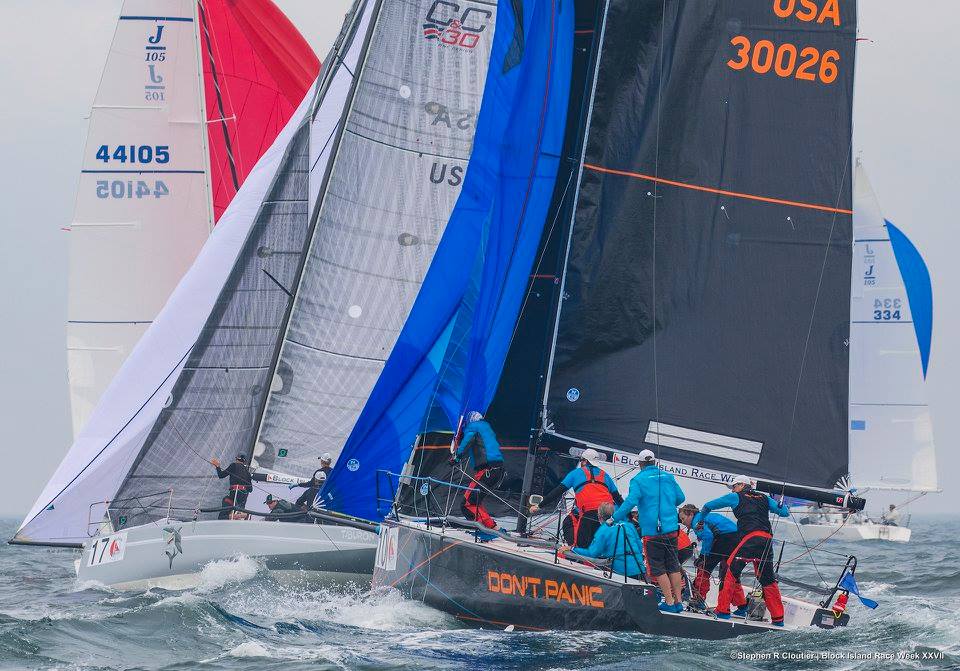
Block Island Race Week / Storm Trysail Club / Block Island, RI / June 18-23, 2017
This regatta served as the:
- IRC North American Championship, Three Divisions
- J44 North American Championship
- C&C 30 North American Championship
- J109 North American Championship
- J88 East Coast Championship
- J105 East Coast Championship
- PHRF East Coast Championship, Four Divisions
- P0erformance Cruising and Multihull Divisions
Block Island Race Week started off slow due to fog and low visibility that postponed competition for all of Monday and most of Tuesday. The race committee was able to sneak in the first race on Tuesday afternoon and the second and third races on Wednesday.
In the IRC 2 division, Ker 50 ‘Temptation’ earned some of the most consistent scores in the fleet. “We were lucky to have conditions that favored Temptation.” noted Skipper Art Santry, as he reflected on the success of races 1 and 2. “This boat is hard to stop in 20 knots of breeze. Add in great crew work from 15 good guys and it really makes a difference.” The crew of Temptation included students from Oakcliff Sailing Center, a non-profit sailing development program in Oyster Bay, New York.
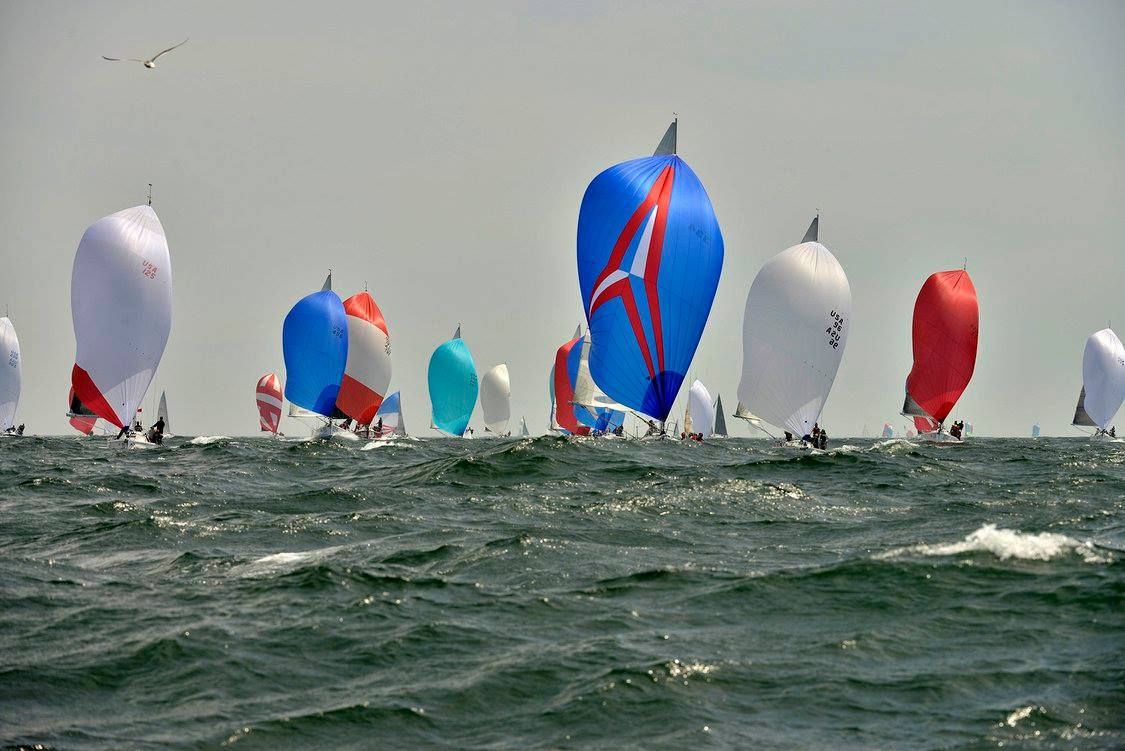 Wednesday afternoon brought a new challenge to the race week competitors in the form of an around Block Island distance course that would count as race 3. Temptation earned another first place point in the IRC 2 division. “Our tactical position never put the crew in a difficult sail handling condition. The crew work put us in a high speed mode around the course,” said Bill Rudkin, Tactician for Temptation.
Navigator Suzy Leech stressed the importance of layline calls in the distance race. “The keys to navigating the around Block Island course were all about laylines, which were to set marks – not Government marks. I was nervous that a few calls would be off because of the fog” As the fleet bore off around the north end of the island, thick fog made it tricky for sailors to locate marks of the course and the finish line. (Leech) “Thankfully the Gods were smiling on us and took us around nicely!”
Block Island Race Week is a biennial event hosted by Storm Trysail Club. Below are the results for the one design fleets:
- Kenai, J44 North American Champion
- Xtreme2, C&C 30 North American Champion
- Loki, J109 North American Champion
- Jazz, J88 East Coast Champion
- Good Trade, J105 East Coast Champion
For full results: https://www.yachtscoring.com/event_results_cumulative.cfm?eID=2954
results: https://yachtscoring.com/event_results_cumulative.cfm?eID=2954
Photos (2) courtesy of Block Island Race Week Facebook page @blockislandraceweek
Profiles in Pro Sailing: Victor Diaz de Leon
By Airwaves Writer Taylor Penwell
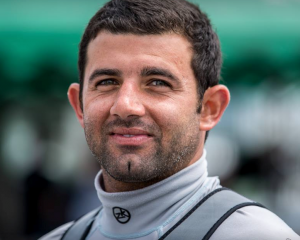 Victor Diaz de Leon is one of the best professional sailors in the upcoming generation. Originally from Venezuela, Victor has excelled in his career in college sailing and now professional sailing aboard podium finishing programs in the J70, Megles 24, and Etchell classes. In addition to these classes, Victor is an accomplished Moth sailor. He was nice enough to take the time out of his busy worldwide racing schedule to answer some questions about himself and his racing.
Where are you from Victor?
I am from Puerto La Cruz, a small town by the sea in Venezuela. I was born and raised there. I lived a very fortunate life growing up, playing in the ocean every day and always sailing, fishing or windsurfing.
How did you start sailing?
 -I started racing sailboats when I was 6 years old on my Father’s 30ft racer cruiser. I absolutely loved the adrenaline of racing and the tension on board. My mom never came on board for regattas to avoid “getting a divorce” she always said, haha. When I was seven years old my dad got me an Optimist and I quickly became obsessed with the sport and racing. It became my life.
What were the first boats you sailed?
I sailed optimist, sunfish and Lasers growing up in Venezuela. I had the fortune of having an amazing sailing coach and life mentor, Umberto Costanzo, an Italian immigrant. He was in his mid 80s while I was a teenager. He never came out in the water with us. Not once. Instead, he would explain the physics, tactics and sailing concepts on land so then we could go experiment with the theories on the water, while he watched from shore. Then we would have a meeting after practice and share our thoughts on what discoveries where made that day. 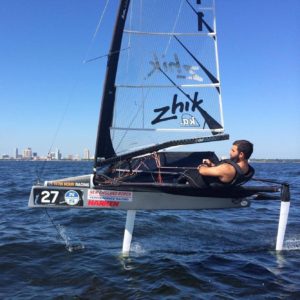
Tell us more about your mentor Umberto Costanzo.
He was an amazing guy with many stories and talents. He emigrated from Italy after fighting in World War II, was a mountain ski slalom world champion, an architect, a painter, sculpture, writer, entrepreneur and sailor. You could compare him to a Leonardo Da Vinci. He was tough and strict. A fan of the strong in spirit. For example, we had no dollies to move our boats because carrying them by hand made us stronger and become better teammates among sailors. When no one else came to train, it meant that I had to get my boat from the wooden racks to the beach 50 yards away. I would carry the hull on my back and then rig at the beach. From there I could carry my boat all rigged up on my thighs. It was empowering and gave me a feeling of invincibility. Those were the glory days of my youth.
When and why did you come to the U.S.?
When I graduated high school at 17 years old, my parents decided to send me away so I could learn English in the US. Unfortunately, they were forced to come as well because Venezuela was no longer safe. Crime, corruption, and political chaos made for a very dangerous place. When we left it felt like my life was stolen away from my family and me. My hometown, my friends, and the many things I enjoyed were far away.
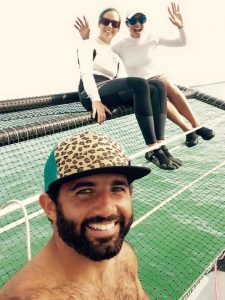 We were located in Washington D.C. We had some relatives who were very kind and helped us settle. My family and I started making a new life. My parents and brother moved to Miami after two years where the weather and culture felt closer to home. My family and I are very thankful for how welcoming this country has been and for all the opportunities it has provided us with.
How did you pick St. Mary’s College of Maryland?
I went to English school, then community college and finally St. Mary’s college of Maryland were I started sailing again. The proximity to D.C encouraged me to visit St. Mary’s and once there I instantly loved it.
How did college sailing make you a good sailor?
Going to college in the U.S was an amazing experience. I made many friends and got to sail almost everyday. College sailing gave me the opportunity to sail against great sailors and work with top-notch coaches. Racing so often with such evenly speed matched boats helped me better understand the importance of starting and boat-to-boat tactics.
How did you start pro sailing? What kind of work goes into Pro Sailing?
Through one of my summer jobs coaching optimists in Long Island I met Scott Kaufman, an Etchells owner. We started racing together and soon became very close friend. He is now like a second dad to me. Racing in the Jaguar series I met Willem Van Waay, who is now my best friend. He saw my enthusiasm and quickly took me under his wing. Little did I know that you could make a living out of sailing. Willem introduced me to this possibility and offered to help. We raced together for a 2 years so I got to learn from one of the best Pros in the industry. Learned  important new skills, work ethic, etc. I learnt that being a successful professional sailor takes a strong desire to win along with having a friendly personality;) The more you win, the more jobs you get. But winning takes preparation: making your boat perfect, testing different sails, creating repeatable settings, practicing enough hours as a team, analyzing other programs successes, thinking outside the box, etc. All this takes time and a constant drive to improve one’s self.
What are some of your favorite career highlights so far?
I am excited for having the opportunities I have had in my career so far. From sailing with the best tacticians, sailmakers, drivers and trimmers in the industry, to being the guy in charge of my own team and running the show. We were second in the 2014 J70 worlds in Newport with “Catapult”: Joel Ronning, Bill Hardesty, Willem Van and myself, I was doing the bow. In last years J70 Worlds, we came third on “Africa” with Jud Smith, Alec Anderson and Ed Wright. But this time I was the tactician. It was a bitter sweet feeling as we were leading the Worlds the first two days, but sharing the podium and putting a serious fight against your older teammates/mentors felt great. Some of last year highlights include 3rd place j70 worlds and 8th place Melges 24 World’s with myself being the tactician for both events. I was 9th place in my first Moth Worlds. 1st place in Etchells North American’s as trimmer. As I am excited about how my career has evolved, I have my sights on winning something big like a World Championship. It has been my dream since I was very young. I look forward to the future and chasing my dreams.