Club FJ (Flying Junior): Youth Trainer Extraordinaire, by Airwaves writer Tyler Colvin
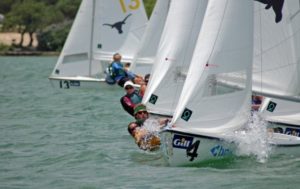
Recognizable to many youth sailors who grew up on lakes, ponds, or on the west coast, the Club Flying Junior (CFJ) is often used instead of C420s in youth sailing and collegiate programs. Originating in the mid 20th century in the Netherlands, it has spread to many clubs across the United States. The CFJ’s characteristics have made it a very popular on the west coast and on inland sailing venues.
The Boat: CFJ, Light Air Machine
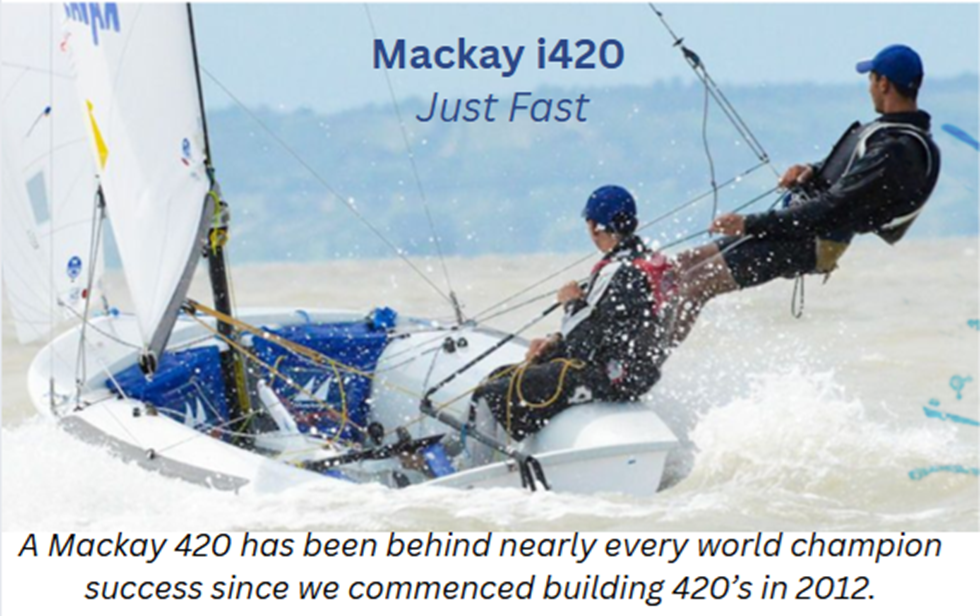
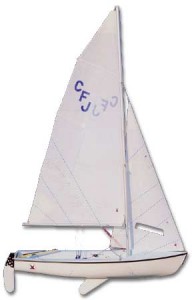
The CFJ is a light, maneuverable boat at 13 feet long, 4 feet wide and weighing in around 220 lbs. Slightly shorter, narrower and lighter than the C420, the CFJ is designed to go upwind, fast. Narrow bow entry and a more rounded hull shape than the C420 means better upwind feel at the sacrifice of the ease of planing. A three-sail boat, the CFJ has a smaller main, larger jib and smaller spinnaker than the C420. The main sail is trimmed from the traveler bar in the cockpit and instead of having a mainsheet bridle to change trim angle, there is a traveler, which can be slid to windward or leeward. Additionally, jib trim angle can be adjusted from sliding jib block cars.
With only several thousand hulls in the water (as opposed to the nearly 8000 C420) internationally, the 2014 US National Championship saw a 53-boat fleet from mostly California based programs. In 2013, the World Championships in Germany had 57 boats from European countries.
Set Up and Sailing: Upwind Groove
While not nearly as much data exists for CFJ tuning as does for the C420, reliable tuning guides can be found from several sources (https://sail1design.com/wp-content/uploads/2014/08/NorthSails_FJTuningGuide.pdf) and here (https://sail1design.com/wp-content/uploads/2014/08/FJTuningGuide.pdf). Similar to the C420, mast rake and tension affects power in the rig and is adjusted from the chain plates and jib halyard tension respectively. Mast butt position is adjusted slightly to help the mast tip get forward or back.
Upwind the CFJ is lively and quick. It likes to point and drives off the large jib much more so than the C420. Traveler should be adjusted so that when the main is centerline, the top batten is parallel, or as close as possible, to the boom. This means traveler up in light air and back down towards the center as the wind increases. Jib trim is a very dynamic process in the CFJ. Car position should be adjusted so that the telltales both break evenly.
Because of its weight and hull shape, the CFJ responds well to boat handling and smooth maneuvers. It is very susceptible to side slip if not kept flat, which puts a premium on crew position. Because of the relatively wide transom, getting combined weight forward in lighter conditions is very important to break the suction that can occur. Driving the CFJ requires a light hand and a willingness to point to keep it in the optimum upwind “groove”.
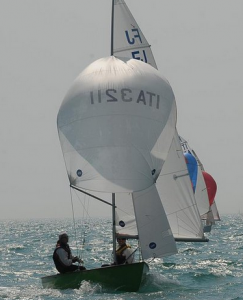
Off the wind the CFJ will plane on main and jib alone, however for deep downwind sailing the spinnaker is used. Similar to the C420, the CFJ spinnaker is launched from a bow basket and flown by the crew. It is very important to keep the spinnaker round and full in order to maximize the sail shape.
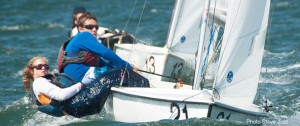
Class Association: International Recognition
The CFJ class would be shortchanged if recognition of its international status was denied. The International Flying Junior Class Association (http://ifjo.org/) services the needs of this internationally raced one design class. Coordinating national, regional, continental and world championships, the class association has its hands full with the litany of participants from all of the major European countries as well as the United States and several others.
All one-design classes do not necessarily enjoy international class status. The C420 is not an international class, owing that honor to its close relative the International 420 (I420). International appeal means events can have a wide range of sailors from all over the world. It also means that events can require a bit of travel. Having a relatively small number of hulls (compared to the C420, Optimist, or Laser) in a large number of places can mean travel headaches for some wishing to compete on the regional or world stages.
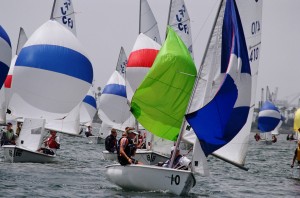
Why the CFJ?
Talk to many collegiate sailors and they may tell you that they prefer racing the CFJ to the Collegiate 420. Talk to many west coast and European sailors and they won’t know anything else. Either way, the point is that the CFJ provides fast, exhilarating sailing in a responsive and nimble dingy unlike anything else its size. From junior sailors to college All-Americans, something must be right about the boat to keep them coming back for more.
To learn more about the c420, read our class profile!
Blog
The Dinghy Shop Fall Optimist Series: Can't Get Better Than This
Sailing Continues!
Want to keep sailing? Junior sailing ends in August, but that doesn’t mean that you have to stop. There’s a lot of great racing ahead at the Dinghy Shop in Amityville, NY.


Beginning September 7th, the Dinghy Shop will again open its beach to host the largest youth sailing series in the nation: The Dinghy Shop Fall Series. For seven consecutive weekends kids from all over the Northeast will come to race on the Great South Bay. Whether they are seasoned Red fleeters or just started this summer, the series is open to all and has tons of opportunities. If you want to keep going, come out and sail the 17th Fall Series. Instead of raking leaves, rake masts!

The Dinghy Shop Fall Optimist Series, now in its 17th year, starts Sunday September 7th through October 19th, with harbor start at 1 pm. Optimist skills clinics are available each Saturday from 10 am-4 pm. Preregistered sailor can leave their hull at the center. You can register online at www.dinghyshop.com. Preregistration ends 8/31/14.
REGISTRATION PAGE
Laser sailors race every Saturday. The Laser Fall Series starts September 13 and runs through October 18. Harbor start is 12:00.
Dinghy Shop Inc / 334 S. Bayview Ave / Amityville NY 11701 / www.dinghyshop.com / Tel: 631-264-0005


Meet the US Sailing Team Sperry Top-Sider – Team Haeger/Provancha

By Airwaves writer Martha Pitt
Do you know who is representing the USA in the Olympic sailing classes? You should! Meet the US Sailing Team Sperry Top-Sider, the 43 athletes who have dedicated much of their time, energy, money and lives to compete at the elite level and campaign to go to the Olympic and Paralympic Games in 2016 in Rio de Janeiro.
Bronze Medals at SWC Hyeres (c)US Sailing Team Sperry Top-Sider/Will Ricketson

Featured this month: Annie Haeger and Briana Provancha, #1 ranked US Women’s 470
Annie Haeger (East Troy, Wisco.) and Briana Provancha (San Diego, Calif.) began their 470 campaign while they were at Boston College together, and after graduating in 2012 committed to their Olympic goals full time. Since then they have been climbing the international rankings, peaking at #1 in 2013 and currently ranked #4 in the world. The duo have been training hard both domestically and around the world with US coaches and foreign training partners, and have been tearing it up at international competition. Their 2014 competition schedule peaks in September at the Olympic Class Combined Worlds in Santander, Spain where they hope to qualify the USA in the Women’s 470 class for the 2016 Olympics.
I was able to talk to them for a bit about their campaign, their experiences that have gotten them to this point, and what it means to them to be a part of the US Sailing Team.
Sail1Design: What made you two decide to campaign together?
Annie Haeger: Briana and I meet during a youth worlds in 2007 while both on the podium. Briana won Gold for the US in the 29er while I received the silver in the radial. I knew how driven and talented she was as a sailor and it seemed fate that we ended up at [Boston College] together! After she chased her dream of becoming an Olympian her Junior year sailing in a 470 for a couple months, I knew I wanted to follow her and do the same. I had always had laser radial dreams, but came to the realization that the 470 was a better fit. The rest is history!
Briana Provancha: We went to BC together and each had Olympic aspirations. We were great friends in college and it seemed like an awesome fit with each of our roles in the boat.
S1D: What does it mean to you to be on the US Sailing Team Sperry Top-Sider?
BP: I am proud to be American and to be able to represent my country all over the world doing what I love; it is such a special thing to be a part of.
AH: Having the American Flags and US Sailing Team stickers on our sails is an indescribable feeling. I am so proud to be representing our country on the international scale and to have the support system of the team itself!

S1D: What are some of your favorite things about being on the USST STS, and how has being on the team changed you as a sailor?
AH: I think the collaboration and support that the team gives you are some of my favorite things about US Sailing Team Sperry Top-Sider. During team camps, great minds in our sport come together in one room giving advice and sharing all of their knowledge. Open floor forums allow for information sharing and accelerated learning for all teams! I think being on the US Sailing Team has changed my perspective about not only representing Team Haeger/Provancha, but also the United States. I feel honored to be a part of something bigger than me, representing our country internationally and hopefully at the Olympic Games.
BP: As each year goes by, I learn more about myself and continue to grow as a person and I am proud of the person I am becoming while being a part of this team. Plus, I love messing with [Communications Manager] Will Ricketson!

S1D: What has been the most challenging aspect about campaigning and/or your campaign?
AH: Probably the most challenging aspect would be the amount of travel and fundraising required. During competition months during the summer, Briana and I are constantly living out of our suitcases often not settling down in one spot for more than two weeks. Though we are extremely lucky to be able to travel to many amazing spots abroad, being nomads takes a toll on relationships and energy levels!
BP: When someone asks me where “home” is, I say, “Well, I get my mail sent to San Diego, so there I guess”. Living out of a suitcase and always being on the go is definitely a lifestyle to get used to and is one of the most challenging parts for me.

S1D: Who have been the most influential people in your sailing career?
AH: My father has been by far the most influential person in my career. He not only introduced me to the sport but also has been my biggest support system throughout mine and Briana’s campaign so far. Whenever I need to bounce an idea off of someone, I know he will be all ears and steer me in the proper direction!
BP: [Boston College Sailing Coach] Greg Wilkinson and Boston College Athletics. They taught me how to be an athlete and not just a sailor.
S1D: Who are your favorite teams to sail against?
AH: The best teams to sail against are those who are competitive on the water but are still respectable and friendly off the water. Briana and I have made a good connection on and off the water with the Dutch team. It is always nice to be able to grab dinner with a team that you have just been competing at such a high level against.
BP: The 470 Women’s fleet overall is surprisingly very friendly off the water, which makes the racing more fun. On the water though, it is always a fight and I love the battle. I enjoy racing teams who are going to bring their A game.
S1D: What advice would you give other sailors who are interested in Olympic sailing?
BP: Learn to overcome the fear of being unsuccessful.
AH: Have something on the side of sailing that you enjoy! The first year of the campaign I often found myself thinking about sailing at most points during the day which lead to burn out. Having something off the water where you are able to put your energy post training or event will ensure that you are able to give it your all on the water.

S1D: So what do you like to do when you aren’t sailing the 470?
AH: I am super arts and crafty! Right now I am actually working on a scrap book from our travels.
BP: I enjoy cooking, spending time with my family and I’d be lying if I didn’t say keeping up with the Kardashians.
S1D: Do you have any rituals or superstitions relating to your sailing?
AH: The one ritual that I can think off the top of my head is our Parajos. We acquired our self-nicknamed Parajos during our first Palma last year in 2013. The morning that we arrived into the port from the ferry from Barcelona many members of the USST STS decided to stop and grab some breakfast before our housing was available. While we were sitting down in this cafe, an older gentleman (around 75) took great interest to our English and began speaking about us in Spanish to his friends. Growing up in San Diego and taking Spanish for many years, Briana was able to easily communicate with Miguel (as we later found out his name was) and I could see him falling in love. Miguel decided to sit at our table for about an hour speaking only with Briana making fun of the rest of us around the table. While we were winding up breakfast, Miguel asked us to wait for a second as he ran out to his car. He grabbed a painting that he had made the week before depicting two birds sitting in a tree and gave it to Briana as a gift. He asked us to come back and visit him at the cafe, which we did two more times before we had to get into what we call “regatta mode”. The Parajos have now become our good luck charm traveling with us to every venue! The one time we left them inside our car before an event, our car almost got towed. From that point, our ritual was as soon as we are settled into our housing Briana picks out the Parajos perch where they stay for the entire event.
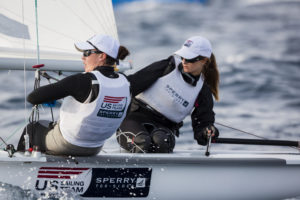
S1D: Does your boat have a name?
AH: We have two boats at the moment both having meaningful names to Briana and me. “No Gucci” lives in the US and was our first boat on the 470 circuit! The name reminds us that we need to first learn how to sail the boat before dealing with all the fine-tune details of the 470. It is easy for some sailors to get sucked into boat work and tweaking that may not be as important as going out and actually sailing! Our boat that is our competition boat in Europe is named “10%”. This name is derived from an old saying for our Boston College Sailing Team that 90% of sailing is looking good. Though the name comes from an inside joke, it also reminds us that we needed to start the technical details of the 470.
S1D: What do you guys talk about on the boat when you aren’t talking about sailing?
AH: Sometimes during postponements, we will pick animals and see which ones would win in a fight… For example, who would win in a battle? Camel or donkey? I don’t know how this speaks to our maturity level, but it keeps us entertained for HOURS.
BP: [Another battle example:] A hippo or an eagle? Sometimes when we train, we talk in accents to each other. British, Red Neck and Asian are a few of our favorites.
S1D: If you were to reincarnate as an animal in your next life, what do you think it would be and why?
AH: 100% an eagle. I may be slightly biased because of the whole Boston College thing, but they are such amazing animals! They are a symbol of the US, seem very regale and are just boss animals. Not that I have thought about this question a lot before…
BP: Definitely something in the ocean, probably a dolphin. They are smart, good communicators and spend their day jumping through waves!

S1D: If there was one thing that you would like the readers of this article to know about you (that they don’t already know), what would it be?
AH: I am dyslexic which makes on-boat communication more difficult for Briana! The poor thing cannot depict what is happening in terms of right and left since I am not able to tell the difference between the two, in high pressure situations.
BP: I was my high school class Valedictorian.
S1D: What has been your favorite place to sail in international competition? Similarly, what has been your favorite place to travel to or visit?
AH: My favorite place to compete thus far is Lake Garda, Italy. I sailed there a couple of times way back when I was competing in my opti and would LOVE to go back and show Briana the area. The venue is a glacial lake which enables you to sail up directly to the massive cliffs! The hiking and biking around the area is spectacular which is right up my alley. Breeze works like clockwork there, coming in strong late in the afternoon. What can you ask for a better venue than great sightseeing, breeze and food??
BP: My favorite place to compete is Palma de Mallorca, Spain, minus the sand. We also got to spend a day in Rome. That was amazing!
S1D: What is your game plan for the next 2 years leading up to Rio?
AH: Our game-plan is to keep checking boxes off our list. The 470 is such a technical boat with many combinations of gear changes that seems quite daunting when starting out. Taking each day step by step and goal setting to be efficient as possible will hopefully lead us to our goal!
BP: We are working closely with Dave Ullman, our new coach and we are taking it one step at a time. Rio is still a long way away and we plan to focus on short-term goals, while still keeping the big picture in mind.
For more information on Team Haeger/Provancha, visit their webpage www.teamhp470.com
Follow the US Sailing Team Sperry Top-Sider on Facebook, Twitter, and Instagram through the USST Social Media Hub, where you can also sign up for the team’s newsletter The Medalist http://ussailingteam.uberflip.com/h/
About the US Sailing Team Sperry Top-Sider
The US Sailing Team Sperry Top-Sider is managed by the United States Sailing Association (US Sailing), the national governing body for the sport of sailing and sailboat racing. The top boats in each Olympic and Paralympic class are selected annually to be members of the US Sailing Team Sperry Top-Sider. US Sailing helps these elite athletes with with financial, logistical, coaching, technical, fitness, marketing and communications support. The title sponsor of the team is Sperry Top-Sider; other sponsors include Harken and Team McLube. Yale Cordage is a team supplier. The US Sailing Center Miami is an Olympic training site. Oakcliff Sailing and Clearwater Community Sailing Center are US Sailing Team Sperry Top-Sider training centers. Chubb Personal Insurance sponsors US Sailing’s National Team Tour, a nationwide presentation program for US Sailing Team Sperry Top-Sider athletes.
The United States Sailing Association (US Sailing), the national governing body for sailing, provides leadership, integrity, and growth for the sport in the United States. Founded in 1897 and headquartered in Portsmouth, Rhode Island, US Sailing is a 501(c) (3) non-profit organization. US Sailing offers training and education programs for instructors and race officials, supports a wide range of sailing organizations and communities, issues offshore rating certificates, and provides administration and oversight of competitive sailing across the country, including National Championships and the US Sailing Team Sperry Top-Sider. For more information, please visit www.ussailing.org/olympics.
Photo credits:
Hanging in the boat park (c)US Sailing Team Sperry Top-Sider/Will Ricketson
Sailing World Cup Hyeres, France (c)US Sailing Team Sperry Top-Sider/Amory Ross
Team HP at the Princess Sofia Trophy (c)US Sailing Team Sperry Top-Sider/Mick Anderson
Looking Up at College Sailing: What's it Really Like?
GETTING BEHIND THE BROCHURES…
By Airwaves writer Emma White
Over the past few years I attended several talks during clinics and regattas in which college coaches discuss and answer questions on collegiate sailing. Although I appreciate and learn from these informative sessions, I often wondered about the experiences and perspectives of the collegiate freshmen on the coaches’teams. What do they think? Are their experiences consistent with the coaches’comments? So, to learn more, I surveyed a number of rising collegiate sophomores who sail on top 20 teams to ask about their freshmen college experience.

What I found most interesting was the rigor of their weekly schedule. Here are some other findings you may find intriguing:
Most college freshman practiced 3-4 times a week, and studied 4 hours each day. No one studied more than five hours and no one studied less than one hour each day. Most sailed in more than 6 regattas their freshman fall and spring sailing seasons.
My survey also probed some deeper areas to draw out more about the freshman experience. For example, despite the close relationships high school and junior sailors may form with their teammates, most college freshmen sailors found their college team much closer and tightly knit. They reported that college teammates work well together and everyone is collaborative. Teams are often described as a family and within that family, each class is especially close. One sailor mentioned that while practices are competitive, meetings off the water focus on team dynamic and collaboration of the team. An example of team collaboration is upperclassmen reaching out to underclassmen to help them improve. These comments confirm the college coaches’emphasis on team chemistry often mentioned during the college panel discussions. Another interesting difference the sailors suggested is the competitive college team atmosphere on the water helps everyone improve, and while tensions may rise on the water, they immediately disperse off the water. In comparison, in high school sailing tensions that are high on the water tend to loom over the team off the water as well.
Thinking back to the college coaches’panels and different coach styles and presentations, I asked the sailors to share the most important thing learned from their college coach during freshman year. The responses spanned a wide range, but all underscore the important and lasting impact of a college coach:
- “The importance of team over the individual”
- Improve something everyday, you should always have a goal for practice
- One student was sick both semesters, and this individual learned the importance of taking care of one’s health before sailing
- Making the transition from junior sailing, with many boats competing at a time and long courses, to college sailing with 18 boats competing at a time and short courses is difficult. College coaches help sailors smoothly make that transition and adjust tactics and strategy.
- Each practice is precious time on the water and you should be pushing yourself (and other teammates)
- Life is split into three categories: sailing, social, and academics…you can only choose two

I also asked about the transition for high school to college, and the challenges of sailing with a new talented team. Some sailors found it hard to not start in all of the regattas, they had to learn to appreciate the virtue of patience before competing. Acknowledging the bigger picture of the team’s success is more important. As expected, the fleet is much more competitive than at the high school or junior sailing level. Circling back to the ⅔rule on sailor mentioned in the previous question, other sailors offered their similar input by mentioning the difficulties of managing school and a social life around a time demanding sailing schedule. However, some sailors mastered “maintaining a healthy balance of sailing, school, and activities outside of sailing”which led them to feel more satisfied with their college experience because they also enjoyed campus life. Finally, sailors felt pressure of representing their team and college with dignity.
Last, I asked the freshman sailors what tips and advice they would offer this year’s incoming college freshman sailors:
- Learn as much as possible from the upperclassmen (specifically seniors)
- Time management is critical
- Tough days are inevitable, so you have to remain positive and look forward to good days ahead
- Be as open minded as possible and prepared to adjust to a new level of racing
- Some teammates might underestimate you because you’re a freshmen, but remember that you’re still an integral part of the team
- Become as close as possible to your teammates, especially the seniors
- Be a leader and work hard
- In terms of exercise, focus on endurance training for all muscle groups and core workouts that pinpoint hiking muscles
I hope you found the college freshman perspectives as interesting and informative as I. Thank you to all the rising sophomores who completed the survey, good luck next year at school!

Lightning 2014 North American Championship Final Results
| Bow | Sail Number | Yacht Name | Yacht Design | Skipper/Crew | Race 1 |
Race 2 |
Race 3 |
Race 4 |
Race 5 |
Race 6 |
T O |
Total | |||||
| Lightning NA Championship Racing | |||||||||||||||||
| One Design Division | |||||||||||||||||
| Championship Bue Fleet | |||||||||||||||||
| 1. | 25 | USA 15181 | What Kinda Gone | Lightning | Greg Fisher Fisher / Jo Ann Fisher / Zeke Horowitz | 13 | 14 | 5 | 10 | 10 | 6 | [14] | 44.0 | ||||
| 2. | 89 | USA 15381 | Buffalo Bill | Lightning | Michael Zonnenberg / Michael Booker / Adam Ceely | 10 | 3 | 8 | 7 | 18 | 29 | [29] | 46.0 | ||||
| 3. | 28 | USA 15545 | PatStrong | Lightning | David Starck / Debbie Probst / Sarah Paisley | 25 | 9 | 32 | 6 | 2 | 5 | [32] | 47.0 | ||||
| 4. | 99 | USA 15380 | 15380 | Lightning | Rob Crane / Kelly Crane / Brenda Crane | 7 | 5 | 28 | 20 | 8 | 7 | [28] | 47.0 | ||||
| 5. | 80 | USA 15166 | Jules Rule | Lightning | Jody Lutz / Jay Lutz / Julianne MacDonald | 28 | 2 | 13 | 14 | 19 | 2 | [28] | 50.0 | ||||
| 6. | 21 | USA 14950 | USA 14950 | Lightning | Ed Adams / Ben Cesare / Nancy Haberland | 8 | 7 | 18 | 27 | 6 | 11 | [27] | 50.0 | ||||
| 7. | 93 | USA 15412 | 15412 | Lightning | Tim Scanlon / Sam Williams / Bernie Roesler | 23 | 28 | 1 | 5 | 14 | 9 | [28] | 52.0 | ||||
| 8. | 29 | USA 15499 | 15499 | Lightning | Jody Starck / Ian Jones / Skip Dieball | 12 | 18 | 2 | 22 | 1 | 36/BFD | [36] | 55.0 | ||||
| 9. | 81 | CHI 14947 | Adeus | Lightning | Pablo Herman / Luis Felipe Herman / Mathias Robertson | 14 | 16 | 16 | 8 | 26 | 1 | [26] | 55.0 | ||||
| 10. | 87 | CAN 14895 | 14895 | Lightning | Adam MacDonald / Abby Bennett / Sam Jones | 35 | 1 | 11 | 18 | 13 | 13 | [35] | 56.0 | ||||
| 11. | 71 | CHI 11011 | Ojo de Lince | Lightning | Alberto Gonzalez / Trini Gonzalez / Cristian Herman | 3 | 6 | 26 | 4 | 20 | 36/BFD | [36] | 59.0 | ||||
| 12. | 52 | BRA 15333 | CBVM | Lightning | Claudio Biekarck / Gunnar Ficker / Eduardo Melchert | 5 | 19 | 17 | 24 | 5 | 14 | [24] | 60.0 | ||||
| 13. | 1 | USA 15390 | 15390 | Lightning | Todd Wake / Kristine Wake / Neal Fowler | 2 | 10 | 25 | 1 | 24 | 30 | [30] | 62.0 | ||||
| 14. | 34 | USA 15449 | Dazzler | Lightning | Allan Terhune, Jr / Marguerite Kohler / Nicole Breault | 1 | 21 | 6 | 19 | 30 | 15 | [30] | 62.0 | ||||
| 15. | 57 | CAN 15495 | Lightning | Larry MacDonald / Maggie MacDonald / Joy MacDonald | 26 | 12 | 14 | 23 | 3 | 10 | [26] | 62.0 | |||||
| 16. | 51 | USA 15385 | Ultimate Pressure | Lightning | Billy Martin / Alfred Hopkin / Janel Zarkowsky | 18 | 8 | 33 | 2 | 17 | 24 | [33] | 69.0 | ||||
| 17. | 105 | USA 15391 | 15391 | Lightning | Geoff Becker / Parker Mitchell / Eileen Welch | 17 | 4 | 23 | 21 | 11 | 17 | [23] | 70.0 | ||||
| 18. | 2 | CHI 14794 | El Doctorado | Lightning | Felipe Robles / Pablo Lorca / Andres Guevaa | 19 | 17 | 30/SCP | 3 | 12 | 20 | [30] | 71.0 | ||||
| 19. | 9 | USA 9 | Gandolf | Lightning | Thomas Allen / Shelby Allen / Mandy Hofmeister | 29 | 22 | 7 | 31 | 15 | 3 | [31] | 76.0 | ||||
| 20. | 10 | USA 14777 | I’d Rather Be Lucky | Lightning | Eric Oetgen / Will Jeffers / Laura Doupnik | 22 | 26 | 3 | 34 | 7 | 21 | [34] | 79.0 | ||||
| 21. | 30 | USA 15502 | Lightning | Jed Dodge / Bill Dodge / Bobby Dodge | 9 | 27 | 31 | 16 | 4 | 28 | [31] | 84.0 | |||||
| 22. | 55 | USA 15382 | Money for nothing | Lightning | Mark Sertl / Cory Sertl / Christine Maloney | 6 | 23 | 20 | 29 | 9 | 26 | [29] | 84.0 | ||||
| 23. | 50 | USA 15507 | Veggie sub | Lightning | Ched Proctor / Meredith Killion / Rob Style | 27 | 31 | 12 | 12 | 23 | 12 | [31] | 86.0 | ||||
| 24. | 39 | USA 15496 | The Cat | Lightning | Marvin Beckmann / Victor Diaz de Leon / Danielle Septembre | 24 | 15 | 4 | 32 | 25 | 19 | [32] | 87.0 | ||||
| 25. | 76 | USA 15164 | Mo | Lightning | Robert King / Sarah King / Owen MacDonald | 16 | 35 | 15 | 9 | 27 | 23 | [35] | 90.0 | ||||
| 26. | 33 | USA 15387 | White Lightning | Lightning | Ben Spector / Jeff Aschieris / Sam Stokes | 11 | 34 | 30 | 13 | 31 | 8 | [34] | 93.0 | ||||
| 27. | 14 | USA 14619 | More cowbell | Lighthing | Walter Colantuono / Theresa Colantuono / Parker Colantuono | 32 | 13 | 10 | 11 | 34 | 27 | [34] | 93.0 | ||||
| 28. | 45 | USA 15445 | 15445 | Lightning | Matt Fisher / Tobi Moriarty / Dan Moriarty | 20 | 24 | 24 | 26 | 22 | 4 | [26] | 94.0 | ||||
| 29. | 24 | ECU 14163 | Calico | Lightning | Julio Velez / Juan Andres Santos / Rafael Quintero | 4 | 33 | 29 | 17 | 28 | 18 | [33] | 96.0 | ||||
| 30. | 41 | USA 15464 | Girl Trouble | Lightning | Keith Taboada / Russell Schon / Chris Schon | 15 | 29 | 21 | 28 | 16 | 31 | [31] | 109.0 | ||||
| 31. | 54 | USA 15251 | The Second Mirror | Lightning | Tanner Probst / Jenna Probst / Maya Weber | 33 | 11 | 22 | 15 | 32 | 32 | [33] | 112.0 | ||||
| 32. | 16 | USA 14866 | Something Good | Lightning | Bill Mauk / Jim England / Michele Sumpton | 21 | 30 | 35 | 25 | 21 | 16 | [35] | 113.0 | ||||
| 33. | 8 | USA 15480 | Dr. Nefario | Lightning | William Faude / Jared Drake / Lauren Jones | 30 | 25 | 9 | 33 | 29 | 22 | [33] | 115.0 | ||||
| 34. | 3 | COL 15519 | Magnifico | Lightning | Gustavo Tamayo / Rafael Tamayo / Javier Delgado | 34 | 20 | 34 | 35 | 33 | 25 | [35] | 146.0 | ||||
| 35. | 49 | USA 15556 | None | Lightning | James Crane / Larrry Bone / Pete Bone | 31 | 32 | 27 | 30 | 35 | 36/BFD | [36] | 155.0 | ||||
| President’s Cup Green Fleet | |||||||||||||||||
| 1. | 62 | USA 15535 | Pauw | Lightning | William Brown / John Faus / Matty Schon | 18 | 7 | 17 | 1 | 1 | 2 | [18] | 28.0 | ||||
| 2. | 44 | USA 15536 | Nautalytics | Lightning | Justin Coplan / Danielle Prior / Timothy Crann | 34 | 12 | 11 | 5 | 8 | 1 | [34] | 37.0 | ||||
| 3. | 79 | USA 15240 | Brown Eyed Girl | Lightning | Steve Constants / Dave Constants / Mike Constants | 10 | 21 | 2 | 6 | 2 | 17 | [21] | 37.0 | ||||
| 4. | 86 | USA 15456 | I Can’t Bear It | Lightning | Joshua Goldman / Valerie Tardif-Holly / Karl Allen | 2 | 18 | 10 | 10 | 11 | 12 | [18] | 45.0 | ||||
| 5. | 84 | USA 15420 | Holy Smoke | Lightning | Ryan Ruhlman / Tesse Ruhlman / Nick Turney | 19 | 13 | 18 | 8 | 3 | 3 | [19] | 45.0 | ||||
| 6. | 58 | USA 14680 | Berry 111 | Lightning | Edwin Roseberry Jr. / Erin Gregory / Julian Fraize | 1 | 15 | 3 | 19 | 10 | 26 | [26] | 48.0 | ||||
| 7. | 27 | USA 14176 | 14176 | Lightning | Ernie Dieball / Jacqueline Dieball / Bryan Bahler | 11 | 2 | 5 | 16 | 15 | 15 | [16] | 48.0 | ||||
| 8. | 26 | USA 14922 | Bad Boys | Lightning | Jack Huntsman / Don Schon / Paul Krzenski | 20 | 11 | 9 | 3 | 12 | 14 | [20] | 49.0 | ||||
| 9. | 47 | USA 15484 | Checkmate | Lightning | Mark Schneider / Lucinda Schneider / Jake Ellis | 4 | 8 | 13 | 18 | 9 | 24 | [24] | 52.0 | ||||
| 10. | 37 | USA 14938 | Total Recall | Lightning | David Stix / Amy Simonsen / Andy Camarda | 22 | 6 | 6 | 4 | 16 | 23 | [23] | 54.0 | ||||
| 11. | 72 | CAN 15493 | Daily Affirmations | Lightning | Richard Walsh / Tina Walsh / Alex Cox | 21 | 1 | 4 | 28 | 26 | 4 | [28] | 56.0 | ||||
| 12. | 85 | USA 14901 | Vollebak | Lightning | Ian Schillebeeckx / Roselyne Hazard / Marc Schillebeeckx | 3 | 10 | 26 | 14 | 14 | 18 | [26] | 59.0 | ||||
| 13. | 91 | USA 14480 | PRJ | Lightning | Caroline Patten / Tyler Menninger / Nick Farina | 32 | 5 | 33 | 13 | 6 | 7 | [33] | 63.0 | ||||
| 14. | 94 | USA 15121 | ish | Lightning | Jim Barnash / Chad Atkins / Kelly Jordan | 27 | 9 | 16 | 33 | 7 | 5 | [33] | 64.0 | ||||
| 15. | 97 | CHI 15355 | No desesperez | Lightning | Cristobal Perez / Alfred Sherman / Constanza Gallyas | 7 | 24 | 14 | 17 | 36 | 8 | [36] | 70.0 | ||||
| 16. | 56 | USA 14298 | Banana Slicer | Lightning | Nick Sertl / Katja Sertl / Mike Marshall | 31 | 4 | 1 | 20 | 28 | 21 | [31] | 74.0 | ||||
| 17. | 59 | USA 15511 | Atom | Lightning | Jim Allen / Bryan Milne / Cheryl Day | 28 | 14 | 21 | 11 | 20 | 11 | [28] | 77.0 | ||||
| 18. | 38 | USA 15475 | The Skip’s Hammer | Lightning | Jeff Coppens / Robert Martin / Tom Goddard | 8 | 3 | 30 | 30 | 33 | 9 | [33] | 80.0 | ||||
| 19. | 60 | USA 14175 | None | Lightning | Edward Duffy / Ian Sandersen / Johanna Schon | 15 | 16 | 24 | 29 | 19 | 6 | [29] | 80.0 | ||||
| 20. | 92 | USA 4870 | no name | Lightning | Rob Robinson / Paige Robinson / Kevin Robinson | 9 | 23 | 8 | 23 | 23 | 22 | [23] | 85.0 | ||||
| 21. | 98 | USA 15075 | WTF | Lightning | Maegan Ruhlman / Abby Rowlands / Mark Wiss | 36 | 27 | 15 | 9 | 22 | 13 | [36] | 86.0 | ||||
| 22. | 64 | USA 14249 | 14249 | Lightning | George Sipel / Chris Snyder / Caroline Sundman | 29 | 17 | 20 | 2 | 27 | 25 | [29] | 91.0 | ||||
| 23. | 107 | USA 15417 | No Name | Lightning | Peter Godfrey / Connor Godfrey / Kayleigh Godfrey | 6 | 26 | 22 | 27 | 24 | 19 | [27] | 97.0 | ||||
| 24. | 22 | USA 15255 | Nicodemus | Lightning | Richard Hallagan / John Steiner / Hendrix TenEyck | 25 | 19 | 7 | 25 | 21 | 28 | [28] | 97.0 | ||||
| 25. | 66 | USA 15158 | TooKlos | Lightning | Peter Orlebeke / Kimberly Orlebeke / Cole Orlebeke | 5 | 22 | 25 | 22 | 32 | 38/DNS | [38] | 106.0 | ||||
| 26. | 12 | USA 15015 | sLitely Cantakerous | Lightning | John Werley / Bertie Werley / Doug Wake | 33 | 37 | 29 | 31 | 4 | 10 | [37] | 107.0 | ||||
| 27. | 6 | USA 15457 | Spaceman Spiff | Lightning | Rob Ruhlman / Abby Ruhlman / Dave Werley | 24 | 25 | 12 | 21 | 25 | 38/DNS | [38] | 107.0 | ||||
| 28. | 65 | USA 14120 | Nickels Boat Works | Lightning | Will Tyner / Colin kirby / Sara Fox | 30 | 34 | 36 | 7 | 18 | 20 | [36] | 109.0 | ||||
| 29. | 35 | USA 15211 | Bandit | Lightning | Larry Frost / Watt Duffy / Paul Barnes | 23 | 28 | 34 | 12 | 38/DSQ | 16 | [38] | 113.0 | ||||
| 30. | 100 | USA 15085 | The Townie | Lightning | Lenny Krawcheck / Marcus Moehlman / Mac MaKenzie | 14 | 30 | 37 | 26 | 13 | 38/DNS | [38] | 120.0 | ||||
| 31. | 32 | USA 15430 | Horse w No Name | Lightning | John McCree / Rachel Dey / Bobby Flack | 13 | 33 | 28 | 15 | 31 | 38/DNS | [38] | 120.0 | ||||
| 32. | 61 | USA 15137 | 15137 | Lightning | Steven Adamski / Laurie Reinen / Mike Laing | 12 | 20 | 31 | 34 | 34 | 31 | [34] | 128.0 | ||||
| 33. | 40 | USA 15543 | NBW Racing | Lightning | Ryan Flack / Emily Simon-McManus / Tom Vickers | 16 | 31 | 23 | 36 | 29 | 29 | [36] | 128.0 | ||||
| 34. | 15 | USA 15306 | USA 15306 | Lightning | Callender Herman / Jeanne Herman / Ben Herman | 38/OCS | 29 | 19 | 35 | 17 | 30 | [38] | 130.0 | ||||
| 35. | 36 | USA 14644 | Creature of Habit | Lightning | Michael Huffman / Peter Huffman / Meg Huffman | 26 | 32 | 27 | 24 | 30 | 27 | [32] | 134.0 | ||||
| 36. | 4 | USA 15064 | 15064 | Lightning | Jason Bemis / Kip Hamblet / Caiti Dust | 35 | 36 | 32 | 32 | 5 | 38/OCS | [38] | 140.0 | ||||
| 37. | 83 | USA 15146 | Big Meanie | Lightning | Gary Sowden / Grant Hilger / Drew Hilger | 17 | 35 | 35 | 37 | 35 | 32 | [37] | 154.0 | ||||
| Governor’s Cup Yellow Fleet | |||||||||||||||||
| 1. | 103 | USA 15276 | NA | Lightning | Peter Jones / Leeanne Jones / Kendra Jones | 10 | 1 | 5 | 2 | 25 | 9 | [25] | 27.0 | ||||
| 2. | 74 | USA 14994 | Lake Effect | Lightning | Daniel Reichelsdorfer / Michou Reichelsdorfer / Bailey Dolson | 5 | 22 | 14 | 5 | 1 | 7 | [22] | 32.0 | ||||
| 3. | 53 | USA 15208 | Debbie’s the Best | Lightning | Abbie Probst / Becca Jordan / Katie Braungart | 6 | 2 | 7 | 10 | 13 | 10 | [13] | 35.0 | ||||
| 4. | 102 | USA 15473 | PBR Streetgang | Lightning | Chris Hamilton / Terry Hamilton / Mitch Hall | 8 | 24 | 6 | 9 | 2 | 12 | [24] | 37.0 | ||||
| 5. | 75 | USA 14880 | Pegasus | Lightning | Craig Pomeroy / Abbey Pomeroy / Jim Kemmerling | 9 | 9 | 11 | 30 | 8 | 4 | [30] | 41.0 | ||||
| 6. | 70 | USA 15364 | Legs | Lightning | Gerry Paoli / Carson Menges / Ian Moriarty | 1 | 16 | 1 | 14 | 11 | 15 | [16] | 42.0 | ||||
| 7. | 20 | USA 15365 | Las Vegas | Lightning | David Watts / Robert Watts / Dan Vought | 16 | 5 | 21 | 13 | 7 | 2 | [21] | 43.0 | ||||
| 8. | 73 | USA 14860 | Cupcake | Lightning | Jim Ward / Jayme Ward / Jay Mueller | 28 | 11 | 4 | 1 | 36/DSQ | 1 | [36] | 45.0 | ||||
| 9. | 78 | USA 14548 | Painkiller | Lightning | Jon Guth / Paul Whitesides / Jenn Millar | 17 | 8 | 17 | 8 | 10 | 5 | [17] | 48.0 | ||||
| 10. | 42 | USA 15315 | Quest | Lightning | William Cabrall / Raeyane Farrell / Noah Bartelt | 7 | 32 | 12 | 3 | 18 | 11 | [32] | 51.0 | ||||
| 11. | 63 | CAN 14743 | Flat Bottom Girl | Lightning | Peter Hansen / Shereen Hansen / Suzanne Hansen | 19 | 6 | 3 | 23 | 6 | 25 | [25] | 57.0 | ||||
| 12. | 68 | USA 15213 | Coyote (supergenius) | Lightning | Jeff Schmahl / David Schmahl / Michael Schmahl | 15 | 7 | 15 | 6 | 16 | 26 | [26] | 59.0 | ||||
| 13. | 19 | MEX 15450 | N/A | Lightning | Aroldo de Rienzo / Joaquin Bargallo / Mari Vivas | 3 | 28 | 2 | 18 | 15 | 23 | [28] | 61.0 | ||||
| 14. | 104 | USA 15406 | Zazu | Lightning | Whitney Kent / Megan McMahon / Ian Walter | 33 | 3 | 9 | 19 | 28 | 3 | [33] | 62.0 | ||||
| 15. | 17 | USA 15546 | 15546 | Lightning | Philip Lange / Alister Thomson / Alexandra Lange | 12 | 14 | 23 | 7 | 36/DSQ | 14 | [36] | 70.0 | ||||
| 16. | 18 | USA 15515 | Hooch 5am Jr. | Lightning | Christopher Princing / Jennifer Princing / Jaime Vanderhovel | 4 | 30 | 24 | 4 | 21 | 22 | [30] | 75.0 | ||||
| 17. | 77 | USA 15206 | Los Ninos de la Luna | Lightning | William Hofmeister / Mike Osborne / Becca Hofmeister | 18 | 27 | 36/DSQ | 20 | 5 | 6 | [36] | 76.0 | ||||
| 18. | 23 | USA 15474 | 15474 | Lightning | Rob Linden / Casey Ray / Meghan Linden | 24 | 4 | 30 | 12 | 36/RAF | 8 | [36] | 78.0 | ||||
| 19. | 31 | USA 14060 | Sloop Dogg | Lightning | Nicholas Troche / Kevin Petrikas / Stephanie Rosenbaum | 20 | 13 | 10 | 27 | 22 | 13 | [27] | 78.0 | ||||
| 20. | 11 | CAN 15508 | People Skills | Lightning | Lorrie Walsh / Tina Corness / Terry Cano | 13 | 29 | 27 | 16 | 4 | 19 | [29] | 79.0 | ||||
| 21. | 43 | USA 15309 | 15309 | Lightning | Edward B. Wagnon / Stewart Fossceco / John McClain | 25 | 10 | 13 | 32 | 14 | 17 | [32] | 79.0 | ||||
| 22. | 95 | USA 15250 | Wright | Lightning | Timothy Wright / Andy Wright / Max Cahn | 11 | 15 | 36/DSQ | 31 | 9 | 18 | [36] | 84.0 | ||||
| 23. | 5 | USA 15360 | Siezure | Lightning | Clarke Newman / Deanna Newman / Ralph Bilnoski | 29 | 25 | 16 | 21 | 3 | 24 | [29] | 89.0 | ||||
| 24. | 7 | USA 15000 | Jack’s Boat | Lightning | Tim Werley / Katie Werley / Samantha Maras | 21 | 17 | 20 | 17 | 19 | 16 | [21] | 89.0 | ||||
| 25. | 106 | CAN 14878 | Sparkle | Lightning | Ross Bailey / Brian Cox / Caleb Vander Ploeg | 2 | 31 | 18 | 29 | 17 | 30 | [31] | 96.0 | ||||
| 26. | 46 | USA 15119 | Squito | Lightning | Eric Larson / Lori Jost / Joel Lemihiew | 14 | 18 | 19 | 22 | 29 | 29 | [29] | 102.0 | ||||
| 27. | 101 | USA 14900 | HIS | Lightning | Gary Hurban / Joan Hurban / Gary Hoffer | 30 | 19 | 8 | 26 | 30 | 21 | [30] | 104.0 | ||||
| 28. | 88 | USA 14857 | Mermaid | Lightning | Doug Steffenson / Brandon Holton / Jonas Andersson | 27 | 12 | 26 | 33 | 23 | 20 | [33] | 108.0 | ||||
| 29. | 13 | USA 15301 | Stone Cold | Lightning | Mike Knop / Denise Cornell / Erin Schanen | 26 | 21 | 29 | 11 | 26 | 28 | [29] | 112.0 | ||||
| 30. | 96 | USA 14760 | Fins | Lightning | George Siegle / Ann Siegle / Ashley Logan | 31 | 23 | 22 | 28 | 12 | 27 | [31] | 112.0 | ||||
| 31. | 82 | USA 15130 | Vann Bros | Lightning | Chris Vann / Karen Park / Dave Lutian | 23 | 20 | 25 | 25 | 20 | 36/DNS | [36] | 113.0 | ||||
| 32. | 69 | USA 13851 | Motley Crew | Lightning | Stuart Webster / J.R. Kendall / Alexander Lavelle | 32 | 26 | 28 | 15 | 27 | 32 | [32] | 128.0 | ||||
| 33. | 48 | USA 14234 | Crabby Mom | Lightning | Paul Bartelt / Beth Bartelt / Jason Diener | 22 | 33 | 31 | 24 | 24 | 31 | [33] | 132.0 | ||||
| 34. | 90 | USA 15228 | Blue Two | Lightning | David Thompson / Norm Jarvis / Lori England | 34 | 34 | 32 | 34 | 31 | 33 | [34] | 164.0 | ||||
| 35. | 67 | USA 15512 | Flying Circus | Lightning | Mark Allen / Beth Groesbeck / Steve Varnum | 36/DNS | 36/DNS | 36/DNS | 36/DNS | 32 | 36/DNS | [36] | 176.0 | ||||
2014 US Youth Sailing Championship Final Results
C-420
Club 420 (36 boats) (top)
|
LASER
Laser (18 boats) (top)
Series Standing – 9 races scored
Information is provisional and subject to modification
Regatta results last updated: Thursday, August 14, 2014 1:31:36 PM CDT
Click on race number to view detailed race information.
Pos,Sail, Skipper, Yacht Club, Results, Total Points
1. 199769, Malcolm Lamphere, Lake Geneva Yacht Club, 1-5-1-1-1-4-2-1-[19/DNF]- ; 16
2. 188663, Erik Weis, Lauderdale Yacht Club, 2-1-5-5-2-1-1-9-[19/DNF]- ; 26
3. 199338, Marshall McCann, Texas Corinthian Yacht Club, 10-[19/BFD]-6-2-5-2-3-8-2- ; 38
4. 203961, Will Dana, San Francisco Yacht Club, 9-11-4-3-3-3-5-2-[14]- ; 40
5. 190435, Richie Gordon, Cedar Point Yacht Club, 6-6-2-8-7-6-9-[11]-4- ; 48
6. 196283, Nathan Fields, Old Dominion University, 4-[19/DNF]-3-7-10-12-12-4-3- ; 55
7. 204106, Thomson Butcher, Texas Corinthian Yacht Club, 8-7-9-4-8-7-[13]-7-7- ; 57
8. USA 190409, Bryce Andreasen, Eastern Yacht Club/Pleon Yacht Club, 13-[15]-12-6-6-8-7-14-6- ; 72
9. 200191, Matthew Long, Santa Barbara / Cabrillo Beach Yacht Club, 5-13-[19/BFD]-12-19/DNF-5-14-6-1- ; 75
10. USA 207223, Brandon Kirby, Lauderdale Yacht Club, [16]-2-8-13-15-10-4-13-12- ; 77
11. 199127, Adam DiDomizio, Sail Sand Point, 12-8-[16]-14-11-9-10-5-10- ; 79
12. 192015, Ty Baird, St Petersburg Yacht Club, 3-14-11-9-12-[17]-17-3-11- ; 80
13. 187293, Alex Moody, San Francisco Yacht Club, [15]-9-13-11-4-15-6-15-13- ; 86
14. 185862, Steven Leuck, Mission Bay Yacht Club, 14-4-10-10-[19/DNF]-11-16-17-8- ; 90
15. 196150, Stephen Long, Santa Barbara Yacht Club, 7-3-7-15-13-[19/BFD]-8-19/DNF-19/DNF- ; 91T
16. 201255, Wade Wagner, Chicago Yacht Club/ Ft. Lauderdale Yacht Club, 11-12-15-[16]-9-14-15-10-5- ; 91T
17. 184618, Kyle Comerford, Annapolis Yacht Club, 17-10-14-[18]-14-16-11-16-9- ; 107
18. 196075, Sean Burke, Hobart and William Smith Sailing Team, [19/OCS]-16-17-17-19/BFD-13-19/DNF-12-19/DNF- ; 132
LASER RADIAL
Radial (30 boats) (top)
Series Standing – 9 races scored
Information is provisional and subject to modification
Regatta results last updated: Thursday, August 14, 2014 1:39:16 PM CDT
Click on race number to view detailed race information.
Pos,Sail, Skipper, Yacht Club, Results, Total Points
1. 204424, Scott Rasmussen, Lauderdale Yacht Club, [31/BFD]-7-5-7-8-4-2-1-2- ; 36
2. 187757, Drake Lyon, Bayview Yacht Club, 10-1-3-4-3-11-6-3-[29]- ; 41
3. 195889, Patrick Shanahan, St Petersburg Yacht Club, [31/RET]-11-6-1-7-5-1-2-9- ; 42
4. 200213, William Marshall, FAST sailing foundation, [31/BFD]-2-1-2-2-1-10-12-19- ; 49
5. 200615, Max Guerriero, Texas Corinthian Yacht Club/Gulf Coast Youth Sailing Assc., 3-4-12-6-[26]-10-7-4-18- ; 64
6. 190253, Nic Baird, Saint Petersburg Yacht Club, [31/BFD]-3-2-8-20-9-5-7-15- ; 69
7. 195876, Jack Marshall, FAST Sailing Foundation, 11-12-8-3-1-7-17-[31/BFD]-16- ; 75T
8. 194504, Alec Chicoine, Lauderdale Yacht Club, Hoover Sailing Club, 4-5-9-12-[31/BFD]-15-8-18-4- ; 75T
9. 197571, Liam McCarthy, St. Petersburg Yacht Club, 2-9-11-16-24-6-[31/BFD]-5-6- ; 79
10. 189813, Lindsey Baab, San Francisco YC/St. Francis YC, 7-19-19-13-[21]-12-4-6-3- ; 83
11. 199339, Ford McCann, Texas Corinthian Yacht Club, 1-6-14-[31/BFD]-10-20-19-9-8- ; 87T
12. 199123, Colin Brego, St Thomas Yacht Club, [16]-15-13-5-11-14-3-15-11- ; 87T
13. 185935, Cooper Weitz, California YC/San Francisco YC/St. Francis Yacht Club, [31/BFD]-17-4-15-6-3-26-25-5- ; 101
14. 199544, Paul Didham, San Diego Yacht Club, 15-8-[28]-10-14-8-9-16-22- ; 102
15. 190468, Lawson Willard, San Francisco YC/St Francis YC, 13-14-15-19-18-18-11-[20]-1- ; 109
16. 194042, Hanne Weaver, Seattle Yacht Club, Royal Vancouver Yacht Club, [31/BFD]-16-10-31/BFD-5-13-18-8-13- ; 114
17. 201274, Greiner Hobbs, Davis Island Yacht Club, 9-22-20-24-4-2-16-19-[30]- ; 116T
18. 206614, James Pulsford, Lauderdale Yacht Club, 14-10-7-9-13-19-[28]-21-23- ; 116T
19. 187293, Jack Barton, San Francisco Yacht Club, [31/BFD]-13-21-20-22-23-12-10-7- ; 128
20. 181238, Isabella Loosbrock, Chicago Yacht Club, 8-[29]-26-21-16-22-20-11-14- ; 138
21. 195892, Sophia Reineke, LAUDERDALE Yacht Club, 5-24-18-11-25-21-25-14-[26]- ; 143
22. 196858, Simone Staff, California Yacht Club, [31/BFD]-18-16-22-17-17-15-31/BFD-10- ; 146
23. 197122, Andy Burns, DIYC, 12-25-27-14-19-[28]-14-24-12- ; 147
24. 199385, Riley Legault, Lauderdale YC, 6-[27]-22-18-9-27-27-23-20- ; 152
25. 197044, Carly Broussard, Lakewood yacht club, 20-20-23-23-12-[24]-21-17-17- ; 153
26. 195637, Kyle Larsen, Sequoia YC /San Francisco YC /Peninsula Youth Sailing Found., 18-23-25-26-15-30-13-[31/BFD]-27- ; 177
27. 200400, D’amy Steward, Coronado Yacht Club, 19-26-24-[27]-27-25-24-13-24- ; 182
28. 199511, Emma Drejes, Santa Cruz Yacht Club, 21-28-[30]-25-23-29-23-22-21- ; 192
29. 196855, Wills Johnson, Newport Harbor Yacht Club, 17-[30]-29-28-28-16-22-26-28- ; 194
30. 206065, Ellie Shaw Ungar, Seattle Yacht Club, Royal Van Yacht Club, [31/BFD]-21-17-17-31/BFD-26-31/BFD-31/BFD-25- ; 199
29er
9er (8 boats) (top)
|
International 420
International 420 (9 boats) (top)
Series Standing – 9 races scored
Information is provisional and subject to modification
Regatta results last updated: Thursday, August 14, 2014 12:41:59 PM CDT
Click on race number to view detailed race information.
Pos,Bow/Sail, Skipper, Yacht Club, Results, Total Points
1. 02 / 54067, Chris Keller/Peter Schneider, Riverside Yacht Club/Lisot, 1-2-2-2-4-2-[10/OCS]-2-4- ; 19
2. 09 / 53965, James Westerberg/pierce ornstein, Riverside Yacht Club/ LISOT, 4-6-1-4-1-3-[10/OCS]-1-3- ; 23
3. 07 / 54069, Kristopher Swanson/Alexander Ron, San Francisco Yacht Club, [10/OCS]-4-3-1-2-1-3-3-8- ; 25
4. 03 / 53629, Christine Klingler/Victoria Thompson, Larchmont Yacht Club, 3-1-5-7-5-4-[10/OCS]-4-1- ; 30
5. 10 / 55143, Macey McCann/Lenox Butcher, Texas Corinthian Yacht Club, 2-[7]-4-5-3-6-4-6-5- ; 35
6. 04 / 53961, Matthew Logue/Jack DeNatale, Riverside YC / LISOT, 5-[9]-6-6-6-9-2-5-2- ; 41
7. 08 / 55148, Ryan Vittimberga/robert gordon, Houston Yacht Club, 7-3-7-[10/DNF]-10/DNS-7-1-8-6- ; 49
8. 01 / 55146, Reese Guerriero/Robert Nicholls, Texas Corinthian Yacht Club/Gulf Coast Youth Sailing Assc., 8-5-9-3-8-5-[10/OCS]-9-7- ; 54
9. 06 / 55147, AnaClare Sole/Sophia Sole, Texas Corinthian Yacht Club, 6-8-8-8-7-8-5-7-[9]- ; 57