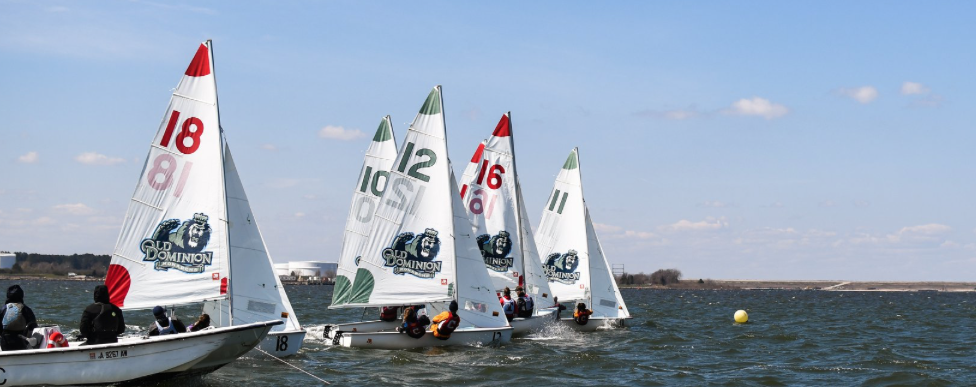
Written by Chris Klevan, Photos: ODU Sailing Facebook
March 26, 2018#5 Yale University won the Friis Team Race, held at Roger Williams University. Last weekend’s premier team race event in New England featured the NEISA elite. Despite the depth of talent, two teams were able to pull in front late in the regatta. Both Yale and #1 Roger Williams University separated themselves from the field but drama was not lost as rights to the regatta crown came down to the final race. Yale, for the second straight week, went undefeated in the top-6, final round robin and this time, the elite sailing late stole the regatta from the home team. Yale finished with 12 wins and 2 losses, while Roger Williams finished with 11 wins and 3 losses.
Yale sailed the event with 4 skippers, Malcolm Lamphere, Nicholas Biard, Shawn Harvey and Nicolas Hernandez. While Malcolm Lamphere and Nic Baird, Yale’s most experienced skippers, sailed the event in entirety, youngster Shawn Harvey and Junior, Nick Hernandez split races. Five crews served for the Bulldogs throughout the event. Senior KB Knapp, Graceann Nicolosi ‘20, Kira Woods ‘19, Sonia Lingos-Utley ‘21 and Nicholas Marwell ‘21 are clearly a competent group as superior crew work is a prerequisite to succeed at the highest level of college team racing, let alone finish 12 and 2 at a top tier interconference event.
Roger Williams sailed mostly with their typical starting lineup. Skippers Mack Bryan, Martim Anderson and Connor Harding have spent the entire spring season working together and this seems to be the case moving forward. On the crew front, notably, Senior Rebecca Anderson was missing from the fold. Hallie Repeta ‘19 subbed in for the missing Anderson while Jen Agell ‘19 and Michael McBrien ‘18 assumed their normal roles in front of the two other RWU boats.
The duel between Yale and Roger Williams at the top of NEISA should be an exciting one to watch for the rest of the season.
Boston College finished tied for 3rd at the event, with a record of 8 wins and 6 losses. Dartmouth College also finished third, in their first appearance since early March. After the top 2 spots in NEISA, it is anyone’s guess who the conference’s other representatives will be, if the Friis was any indicator, it will be a battle.
Former George Washington and Dartmouth head coach, John Pearce served as the Chief Judge for the event. Pearce had this to say of the regatta, “Very impressive sailing in the extreme conditions. Cold and wind on Sunday provided enough gnarliness to keep it interesting. The sailors should walk away thinking, ‘If I can make it through this, I can make it through anything.’”
Pearce continued, “The boat handling out there is impressive. These kids are so good at sailing these simple boats. Especially, Martim [Anderson] of Roger Williams who really impressed with some smooth, buttery boat handling.” John Pearce now serves as the Youth Director for US Sailing.
#13 Navy finished first overall at the Aaron Szambecki Team Race, hosted by Old Dominion University. While the Mid Atlantic’s top 2 teams, Hobart and William Smith and Georgetown were absent for the event, #11 Stanford and #4 Charleston filled in with what seems to be their top squads.
Navy finished with a record of 12 wins and 3 losses, narrowly edging Stanford (11 and 4). This was the best performance, so far, for both teams.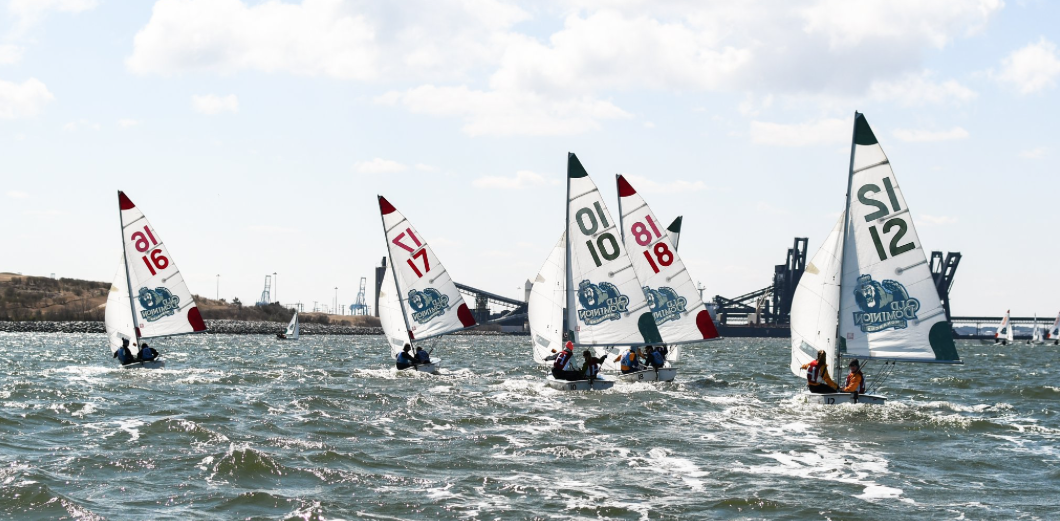
“Winning a major regatta like the Szambecki at this time of the year is a very big deal for us,” said Navy Assistant Coach, Dillon Paiva. “This means we will not need to sail the Team Race Challenge Easter weekend and can give the team the week off. This win allows our team to keep the momentum up while still having a weekend of rest before our conference qualifier.”
Navy sailed a combination of Peter Hogan ‘18, Kelly Milliken ‘21, Maxwell Brill ‘20, Emma Remis ‘20, Parker Loftus ‘20, Kent Mathes ‘20, Gary Prieto ‘18, Ana Mier ‘19 and Parker Loftus ‘20. Like NEISA, the competition for the last 2 spots in MAISA (after HWS and Georgetown) looks to be dramatic.
St. Mary’s finished 3rd with a 10 and 5 record.
Notably, College of Charleston finished with a lackluster 8 win and 6 loss record despite sailing with their best team in conditions that the Cougars should be comfortable with. This is the second straight week Charleston has finished in a position that has raised some eyebrows. Like Stanford, they are all but a lock to qualify out of their respective conference. Furthermore, as experts have stated, Charleston started last season with a similarly slow start and finished with a National Championship. However, the team is slightly different this year, others seem poised to usurp the crown and, maybe most importantly, nationals will be sailed at ODU, away from the comfort of home for the defending champions.
Elsewhere in MAISA, #2 Hobart and William Smith dominated at the Admiral Moore Team Race where the other top contenders failed to make an appearance. HWS showed the nation just how tight they can be, finishing with 17 wins and 0 losses, winning almost half of their races in a 1-2-3 or a 1-2-4. On top of that they spent some of regatta incorporating Kyle Easton ‘20 who seems like next year’s replacement for senior, Greiner Hobbs.
This move showed that they aren’t just a force this season, but perhaps will be a player for years to come. Beyond Easton, the normal group sailed the event, Greiner Hobbs, Hector Guzman ‘20, Charles Miller ‘19, Lindsey Kloc ‘19, Haley Okun ‘18 and Maya Weber ‘20 are continuing to gain confidence and continuity leading into conference championship season.
#3 Yale won the Joseph R. Duplin Women’s Team Race hosted by Tufts University. A type of event growing appropriately more common, the women’s team race regatta was extremely competitive throughout. Yale won a three way tiebreaker over the home team, Tufts and the Dartmouth Big Green. All three finished with a record of 9 wins and 4 losses. In a trend that does not appear to be unique to their coed squad, Yale finished the event extremely strong, with a 4-1 record in the final-6 round robin. Both Dartmouth and Tufts were the opposite, starting the event 7-1 and finishing 2-3.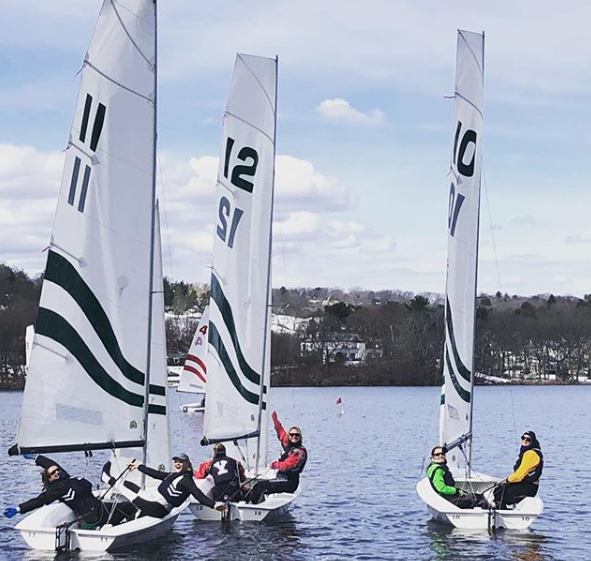
“It is great to see that we are prioritizing women’s development in team racing,” said Dartmouth Assistant Coach, Ali Blumenthal. “This regatta shows that the ladies can play the top level of our game. Our Lady D’s are excited about the future of women’s team racing.”
Yale sailed Casey Klingler ‘18, perhaps the most accomplished female team racer in college, with Caroline Colwell ‘18, Christine Klingler ‘20 with Catherine Mollerus ‘21 and Louisa Nordstrom ‘20 with Claire Huebner ‘18. Yale is one of the strongest women’s team in the nation and a favorite to repeat as national championships. If there were a women’s team race nationals, they would likely also be the favorite to win.
Photos taken from the Yale Sailing Instagram account and the ODU Sailing facebook page
Blog
2018 29er Midwinters East Results & Report
Miami, Florida, March 16-18, 2018– Twenty-three 29er teams raced the 29er Midwinters East Regatta, hosted by the US Sailing Center Miami, last weekend. Even with the pressure of this selection event, the 29er fleet was able to switch off and enjoy the warm, dry mornings under AP socializing with one another and making new friends. US Girls team Berta Puig and Bella Casaretto (Miami, FL) earned the regatta win easily, winning 5 of 10 races.
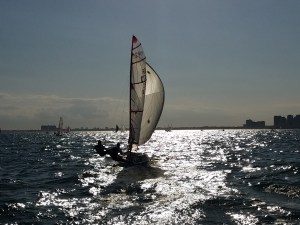 This three-day, 10 race series was a showdown of light air skills and strategic execution with wind in the 5-10 knot range. PRO Carol Ewing and her team did a super job with square courses and minimal down-time on the water. They also minimized general recalls by recording 21 OCS or BFD scores.
Charlie Hibben and Nicholas Hardy, from Massachusetts, scored a 2, 1, 2 in the last 3 races to eke out 2nd overall. Hibben and Hardy were lying 3rd for most of the regatta as various other teams challenged them. Ripley Shelley and Severin Gramm (3rd overall) were in contention to win the regatta after they won the 8th race but couldn’t find top gear in the final races. The Californian teams of David Eastwood and Sam Merson and the Joslin brothers also looked strong at different times but could only manage 5th and 9th overall respectively.
The Canadian and Caribbean sailors added the MWE to their spring break training camps and were well represented. The Virgin Island’s Youth Worlds Team of Taylor Hasson/Steven Hardee, and Lucy and Kate Klempen was there along with another team from the Virgin Islands, and the Canadians were there in force, fully a third of the fleet. Canada’s Audrey Staples and Caterine Krikorian-Kunz brought their A-game to this event, finishing 7th.
The North American fleet is growing steadily, and it is exciting to see top representation and skills from our core 29er regions like Florida, New England and California. The next event on the 29er schedule is the Midwinters West, this coming weekend in San Diego.
Top 5 finishers
- Berta Puig & Bella Casaretto (FL) 24 pts.
2. Charlie Hibben & Nick Hardy ( MA) 38 pts.
3. Ripley Shelley & Severin Gramm (FL) 45 pts
4. Brooke Sachoy & Jana Laurendeau (MA) 49 pts.
5. Ryan Eastwood & Sam Merson (CA) 52 pts.
2018 S1D Optimist Spring Clinic Debrief, Notes & Video
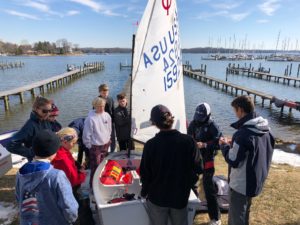 This spring’s clinic was great! Despite cold temps, we saw a lot of improvement out there, and we hope that everyone learned at least one valuable thing. Our Optimist coaches Jordan, Sam & Maddie, former Opti stars themselves, were impressed with sailing, and appreciated the fact that we had a very attentive group. These 3 young coaches were very successful on the Optimist circuit at the national and international level, and continue to do great things in
  the sport of sailing. They very much enjoyed a chance to give back a little bit, and I hope this was valuable for our clinic attendees. We are planning our Fall Clinic already, and hope to see you again. If you have any feedback or ideas on how things went and what we can do better, please let me know.
Saturday, we began the clinic with a lengthy dry-land rigging session with our Optimist stars. shared the secrets and rigging tips that made them so successful. On the water, we had a nice light/medium northerly and worked very hard on shifting gears in the Optimist. The box drill worked out really well, and we saw great improvement in sailors ability to shift gears, mark-to-mark, in the Optimist. Lunch de-briefs provided a great time to look at video and study sail trim and technique. We then had a mini-fleet race regatta of 5 races, and the competition was incredibly tight, with 7 of the 9 competitors finishing at least one race in the top 2!!! Wow!!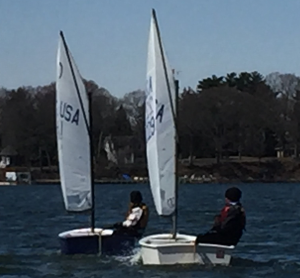
Sunday was windy and cold. After spending some time on heavy weather boat tuning, we headed out to do the triangle drill, stressing clear air, fleet position changes, and boat tuning. Sailors did an incredible job and showed marked improvement. We then went in for lunch and more video analysis from the mornings training session.
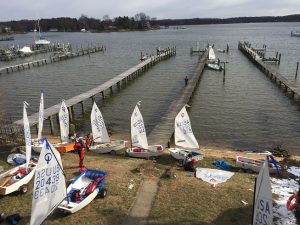 In the afternoon, after going over team race strategy & tactics, we had an incredible team race tournament, right off the dock with parents watching only 30 feet away from the action!! It went down to race 7, with Team Blue winning the best-of-seven series 4-3!!
My general takeaways:
- Study. You need to understand the mechanics of the Optimist rig, how your sail was designed, how it should be rigged and trimmed. Once you do, then improvise and learn what works better for you. This is time consuming, but worth it. Build your own tuning guide!
- Prepare. For regattas, always spend time preparing your hull, rig, lines, and foils. Never enter a race with an unprepared boat. Fix items BEFORE they become a problem, and keep up with new rigging/spar/sail/foil trends.
- Sailing Observations:
- almost everyone needs to work on weight trim gear shifting. Too many times I saw sailors too far back in the boat, and not moving in wind strength changes
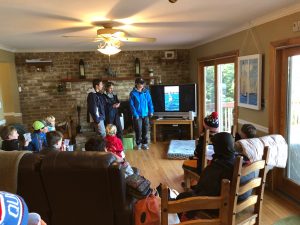
- tuning. LOTS of improvement here, especially during the square drill, but still more improvement needed. You need constantly to re-think your sails tune as the wind strength and course (upwind/downwind) changes.
- clear air. Too many times boats were content to sail in bad air; work hard to free your air up!
- Focus always. Make sure you finish the race, and the day, with the focus with which you started. This is often aided by having the correct sailing gear/clothing, the right nutrition and hydration.
- almost everyone needs to work on weight trim gear shifting. Too many times I saw sailors too far back in the boat, and not moving in wind strength changes
Saturday Tacking
Saturday Race Commentary
Saturday Race Commentary 2
Saturday Race Start
Box Drill #1
Box Drill #2
Box Drill #3
Sunday Upwind Practice
Sunday Triangle Drill
Sunday Stadium Team Race!
Healthy Way To Start The Day: Green Smoothies
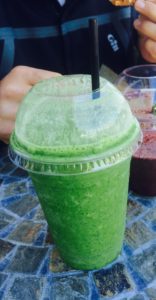 Every morning I start my day off with a green smoothie. Some of you may be thinking, gross I don’t want to drink something green! However, despite the color, they taste great, and they provide your body with many health benefits! These health benefits help you to stay healthy and happy to boost your sailing performance and daily life. Green smoothies are fun and easy to make, and its a breakfast or snack you can take on the go. What are we waiting for, let’s learn all about the health benefits and how to make your green smoothie today!
Health Benefits:
Boosts Fruit and Vegetable Intake (especially veggies):
Fruit and vegetable intake is something that most people struggle to meet every day. Peoples diets are especially lacking vegetable intake. We need to make sure we are meeting these requirements to get all the essential nutrients we need so we can perform our best out on the water. By adding a green smoothie to your diet, you can help to increase your intake of fruits and vegetables helping to provide you with your daily requirements. By adding a green smoothie to your diet, you can help to check off one or more servings of your veggie intake for the day!
Increases Energy:
If we want to perform our best out on the water we need energy! A green smoothie in the morning or midday can provide you with the energy boost you need. They provide your body with vitamins, minerals, antioxidants, and other nutrients your body needs. Smoothies are made with natural and whole foods, and they combine fruit and vegetables this helps to balance sugar content which in turn provides your body with long-lasting energy.
Boosts Nutrition:
Depending on what you decide to put into your smoothie the vitamins, mineral, and antioxidants provided will vary. However, most green smoothies are an excellent source of various nutrients. By blending fruits and vegetables together it helps to improve the digestibility of the foods, making it easier for your body to absorb all the nutrients these foods have to offer. When we absorb more nutrients, we help to enhance our overall performance in sailing and daily life.
Boosts Your Immune System:
If we want to compete at the top level we need to be healthy! No sick days for sailors! By increasing your fruit and vegetable consumption, you are helping your body to stay in optimal health. The vitamins, minerals, and antioxidants help to protect your body against disease. You can also add in specific ingredients that are immune-boosting, for example, citrus fruits and ginger. If you are traveling this can be a great way to keep your body healthy and ready to compete!
Improves Digestion:
As we already mentioned green smoothies are easy to digest. Since the food is blended your body doesn’t have to work as hard to digest, and unlike juices, smoothies contain whole foods, so they provide your body with fiber. This makes smoothies an excellent option for people on the go looking for something light but filling. Having a smoothie before an early morning training session can help to give your body fuel without weighing you down.
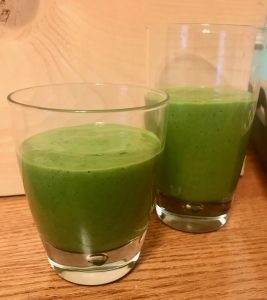
Now that you heard about all the benefits of the green smoothie what are you waiting for, let’s get smoothie making! There are a ton of different green smoothies recipes out there to try. I like to keep my recipes simple and easy to make. Check out below my recipe for the Good Start Green Smoothie. Hope you enjoy!
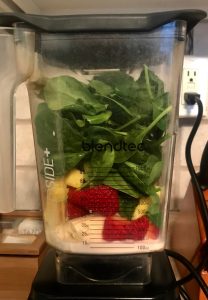
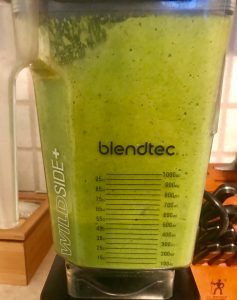
Good Start Green Smoothie Recipe
makes 1 large or 2 medium smoothies
Ingredients:
-1 medium banana
-1/2 cup pineapple
-1/2 cup strawberries
-1 kiwi
-1/2 cup almond or coconut milk
-2 cups spinach
-optional ingredients: 1 tbsp peanut butter, 1 tbsp flaxseed, 1 tbsp chia seed, 1 tbsp turmeric
Directions:
1. Place all ingredients in a blender and blend until smooth.
2. Enjoy!
For more information on fitness and nutrition for sailing contact [email protected]. Also check out Sailorcise on Facebook, Twitter, and Instagram for daily tips on fitness, nutrition, and sailing.
ICSA Team Race Rankings #2, 22 March 2018
The season is heating up, and here are our ICSA Team Race Rankings, #2 for spring 2018. These rankings are brought to you by Dynamic Dollies and Reliable Racing. College Sailing team racing is on! Roger Williams U. maintains their grip on the #1 ranking with another impressive week of team racing, while other teams shuffle spots. Charleston slips a bit, while Hobart makes a big jump to #2, with Yale & Georgetown remaining in the top 5.
Top 5
1. RWU
2. Hobart/William Smith
3. Yale
4. Georgetown
4. Boston College (tied)
See the full rankings along with our college coach panel insight HERE
#1* Roger Williams University wins Graham Hall; #2 Boston College wins St. Mary’s Women’s; #18 Harvard win SNETR
Written by Chris Klevan
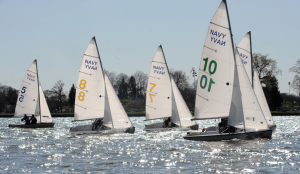 Photo taken from Navy Sailing Facebook
March 19, 2018– Last weekend #1 Roger Williams University won the Graham Hall Team Race, hosted by the United State Naval Academy. Once deemed the spring season opener, due to its placement on the college sailing schedule, the Graham Hall remains as the first big-time team race of the season. Today, it serves as a double point-earning regatta for the newly formed Mid Atlantic Team Race League as well as the first opportunity for the best of MAISA, the South Atlantic and New England to get together on the same body of water. Moreover, the Naval Academy runs some of the best regattas on the circuit.
Unfortunately, this year, the conditions forced a truncated version of the epic regatta. Typically the 16 teams sail each other each once, a round robin. That round is then followed by a “gold/ silver,” top-8 and bottom-8 rounds, two half round robins completed simultaneously followed by a championship round, usually a final four. This format is identical to the ideal format at the ICSA Team Race National Championship and is part of the reason this regatta tends to be so exciting.
Roger Williams started strong, dropping only 2 races in the first 15 sailed, one versus #5 Hobart and Williams Smith College and another surprising loss to University of Virginia to open their event. However, despite a strong start, the Hawks, who have been dominant to start the season, were looking up at an undefeated, 15-0 Hobart and William Smith.
When conditions were flat, HWS was tough to beat. “When we were behind in the first round, it was typically in the 2,3,6 combo, trying to beat the 1,4,5,” said HWS Head Coach, Scott Ikle. “We knew what we needed to do and we executed.”
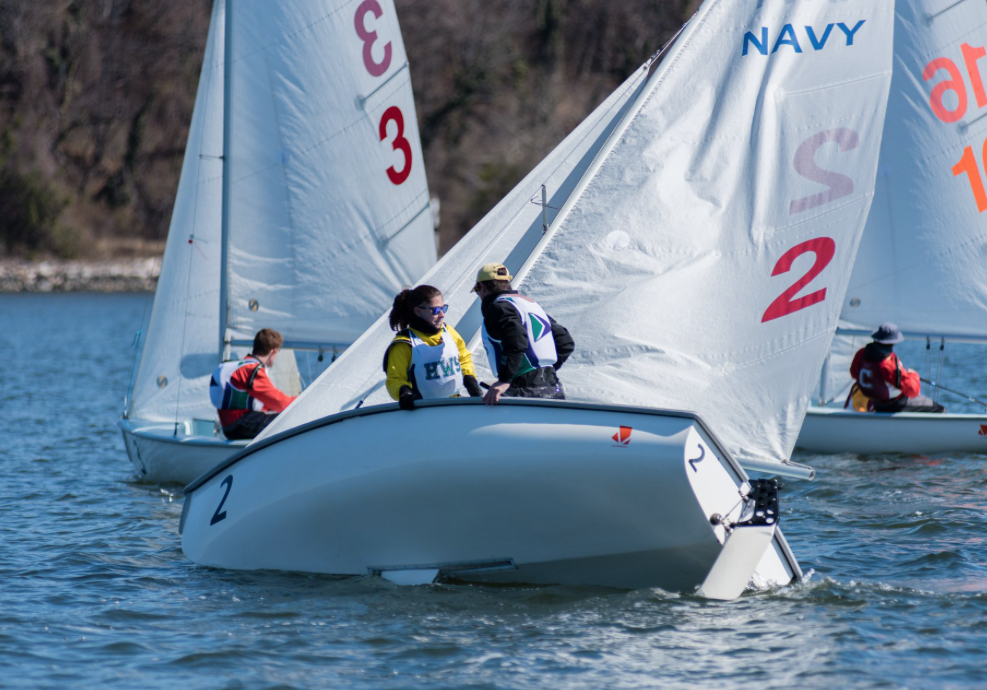
Photo by Belle Strachan
After an extremely strong fleet race season in the fall, it is widely known that HWS has two of the best in the game today. Hector Guzman ‘20 with Maya Weber ‘20 is one of the fastest boats in the nation. In Guzman and Weber, coupled with the experience of College Sailor of the Year darkhorse, Greiner Hobbs ‘18 with Haley Okun ‘18, HWS also has two of the best boats on the team race circuit. The key to this team’s championship bid looks to be Charles Miller ‘19 and Lindsey Kloc ‘19. Kloc has already established herself as one of the best in the front of the boat, Miller is more of a question mark due to inconsistency. You need 3 great boats to compete this year and, though still early, Roger Williams has shown that is exactly what they have.
Martim Anderson ‘18 with Rebecca Anderson ‘18 and Mack Bryan ‘18 with Jennifer Agell’19 are as fast as any other two boats on the water. Connor Harding ‘19 and Michael McBrien ‘18 are now well versed in the subtle art of beating another boat and are the perfect compliment to the two aforementioned speedsters. The lessons this team learned throughout the offseason, including last summer, have prove critical for putting together performances capable of winning major regattas.
Despite falling behind in the first round, including a rare loss to UVA, Roger Williams seemed unphased and finished strong, 4-1 in the round of 6. HWS went 1-4 in the same round.
“In the round of 6 we did not get off the starting line nearly as well,” stated Ikle. “On top of that, we were spinning a lot. Against those top teams, if you’re getting beat off the starting line and are looking at a break-away 1-2 due to penalties, you’re not going to win many races.” HWS finished with a record of 16-4 while RWU snuck past them at 17-3.
#4 Yale finished in 3rd at 15-5, with a perfect 5-0 final 6 round. Do not sleep on this team! Coming off a spring break where recent Yale Alums flock to Florida to battle with the current team, this still young team, may just be coming into their own. Backed by perhaps one of the best team racers in college, 2-time champion, Malcolm Lamphere ‘18 and College Sailor of the Year contender, Nic Baird ‘19 this team is capable of beating anyone- they proved just that at the Graham Hall. Commenting on Yale’s embarrassment of riches, former College Sailor of the Year and Yale Alumni, Graham Landy said, “That kid Sean Harvey is going to be good by the end of the spring. I bet Malcolm [Lamphere] is the best team racer in college. He’s got some skills.”
Notably, #2 Georgetown and #3 College of Charleston did not sail as well as we have come to expect at Navy, especially Charleston who finished the regatta with a 12-8 overall record. The Cougars sailed with the same six sailors throughout the event. Despite filling the voids left from last year’s championship team with capable hands in Augie Dale ‘19 and Katherine Lounsbury ‘20, it is clear there is still work to be done to return the 3 boats in Maroon and White to the level they found at the end of last spring.
Like they say, the other teams have coaches too. The following weeks should prove pivotal in the development of the teams vying for the 10 East Coast spots at the Team Race National Championship held at Old Dominion University, May 26-28.
*Team Race Rankings taken from the Sail1Design College Team Race Rankings published March 9, 2018.
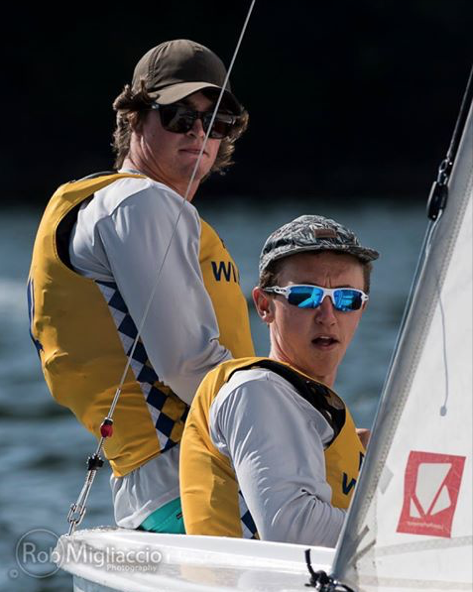 Photo by Rob Migliaccio
#2 Boston College won the St. Mary’s Women’s Interconference held at St. Mary’s College of Maryland. Squeaking out a 3 point victory over the #4 College of Charleston Cougars. The Eagles put together a team effort in the win with a 5th place finish by Isabella Loosbrock ‘19 and Emma Perry ‘19 in the most competitive A-Division we have seen yet this young season. The regatta win, however, was punctuated by an impressive B-Division victory by Sophia Reineke ‘21 and Lily McGrath ‘18.
With the continued improvement of Lossbrock and Reineke, it is hard to predict how good the Eagles can be on the women’s circuit. The standard, however, is the Yale women’s team. Though the Bulldogs finished 4th and 27 points behind the lead, they did so without their top women’s sailor, Casey Klingler, a senior this year. It was impressive to see the depth of the Yale team sailing sophomores Louisa Nordstrom and Christine Klingler sailing A and B respectively. Coupled with senior Kb Knapp and freshman, Catherine Mollerus in the front. The performance of such a young team bodes well for Yale in the future.
Finishing second at the event, close behind the lead was the College of Charleston women. Who, before Boston College showed up, had been atop the women’s scene early in the spring. Also a team effort, both Charleston boats finished in the top three of each division, Alie Toppa ‘20 with Annabel Carrington ‘19, only 3 points off the lead, again held by Coast Guard’s Dana Rohde ‘18 and Maddie Ekin ‘20.
#5 Brown University finished 3rd overall with 98 points.
#18 Harvard University won the Southern New England Team Race hosted by Connecticut College. The Crimson finished with a record of 14-4. The conditions were sporadic, according to the regatta report, featuring “SW-NNW with about 3 knots to 22 knots of breeze,” during racing on Saturday. Sunday was less puffy but more chilly. One, 10-team round robin was completed on each day resulting in a total of 18 races sailed for each team.
Harvard was extremely solid throughout the weekend, going 7-2 on each day. #8 MIT finished second at 13-5 and #19 Boston University finished tied with the home team, Connecticut College for third place at 12-6.
Though this regatta was deemed an interconference regatta, it was filled almost exclusively by NEISA schools. The schools competing are those vying for the last spot or two allotted to New England as it seems like a foregone conclusion that, based on recent successes and a history of excellence on the team race circuit, the first two spots will be claimed by Roger WIlliams and Yale. Boston College seems like the likely choice to claim the 3rd spot in NEISA, but they have a lot of turnover from last year, and therefore harder to forecast. It’ll be interesting to see how they fair in the coming weekends after a win in MAISA last weekend.
All NEISA teams competing at the SNETR, Harvard, MIT, BU, Conn College, Bowdoin, Brown, Tufts and Coast Guard will all be looking to steal some wins from the perennial favorites with hopes of claiming one of the remaining, highly coveted spots. The big question mark remaining is #13 Dartmouth, who has yet to make an appearance this spring.
Meanwhile, in MAISA, like NEISA, two of the 4 spots granted will likely be claimed by Georgetown and Hobart and William Smith. The teams that will take the final 2 spots are much harder to predict. Due to the parameters of their team race league, it seems like the MAISA Championship, the Prosser Trophy will feature, HWS, Georgetown, George Washington, Navy and St. Mary’s- all competing for the top-4 and a trip to nationals. Old Dominion, Kings Point, SUNY, Fordham and Cornell will all be contending for the last pre-qualifying spot next weekend and later, will be duking it out for the 2 spots granted to the MAISA Championship by the MAISA Team Race Challenge, held at Cornell.
Watching these teams develop over the coming weeks will be very interesting as the gains made in the near future will help give us an idea of who will be representing each conference come May.