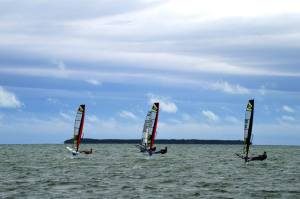
 Looking for a new boat, and not only a new boat but a foiling boat? A boat that is fast, fun, durable, and affordable? The Waszp may just be it! Similar to the Moth the Waszp offers sailors with a more durable and affordable boat. Just recently at the end of January, the first Waszp regatta took place in the US. This regatta was part of the Winter Series that the Moth class has held at the Upper Keys Sailing Club for the past couple years. Since the US Waszp class is brand new the president of the US Waszp class Reed Baldridge thought this winter series would be a great stepping stone for the class. The regatta brought 8 sailors with Waszp’s all around the country, it was not only a great regatta but a great learning and brainstorming session for this new class.
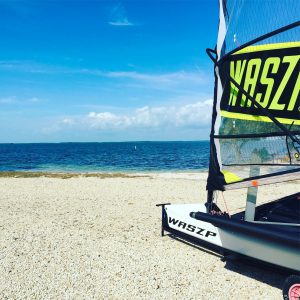 The Boat:
The Waszp is a one design foiler, that was created by Andrew McDougall, designer of the world beating Mach 2 foiling Moth. Recently, it was just named 2017 Best One-Design by Sailing Worlds Boat of the Year Awards. The Waszp and the Moth are similar in their concepts, but for a couple reasons, the Waszp hits a market of different dinghy sailors. First, the Waszp is half the price of the Moth, you can buy a brand new Waszp in the US for $12,500. Unlike the Moth the Waszp is a one design class. With the Waszp you have adjustable wing angles allowing you to adjust for your skill and for storage. The Waszp comes with retractable alloy foils making it an easy boat to launch. With a free standing rig, you can rig up quickly and have a much easier time getting back into the boat after capsizing.
The Regatta:
Day 1 (Friday, January 27):
The eight sailors were greeted with a light breeze, 5-8 knots. All the sailors varied in their Waszp experience. You had some sailors who had  been sailing the Waszp for a couple of months where for some of the sailors it was their first time in the boat. Day 1 was frustrating as it was light with marginal foiling conditions. However, everyone in the class helped each other out as they learned throughout the day. John Wallace had good speed and took the day with a 2, 1.
Day 2 (Saturday, January 28):
The breeze was great at 8 am so before the racing got started some of the sailors made their way out on the water to get some foiling practice 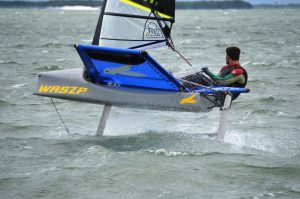 in. Slowly the breeze died off to 5-8 knots again once the racing got started at 11 am. Some sailors were able to get foiling for a little bit, but it was another day of tricky racing. Matt Goetting, “The angles were so crazy on both the upwind and downwind that it didn’t pay to be foiling.” Another slow moving day, but the group was able to get 4 races in with Connor Blouin taking the lead, followed by John Wallace, and Peet Must. The group all headed out after sailing to the local tiki bar where they all chatted about everything from foiling to fruity drinks.
Day 3 (Sunday, January 29):
The breeze was on! The group showed up to 25-30 knots but then dying down to 18-25 knots. It was an exciting day of racing for the group. The speed and angle differences with the Moths made things interesting on the water. Reed Baldridge, “I was actually amazed at how close the top marks were, it reminded me of laser races with the top boats within boat lengths of each other.” The name of the game downwind was staying upright, which proved to be a difficult one in the breeze. Only a few breakdowns for the day, but all in all it was the most exciting day of racing getting in three races to finish the regatta. Connor Blouin took the win, with a total of 11 points, Peet Must in second with a total of 18 points, and John Wallace in third with a total of 19 points.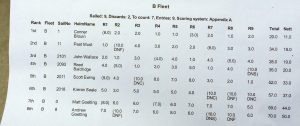
The second series to be held February 17-19th and the third and final on March 31-April 2nd.
Then the weekend of May 20th-21st the Waszp Atlantic Coast Championships will be held at Toms River Yacht Club. More info to come! Contact your local Waszp dealer today to get a boat by the Atlantic Coast Champs.
The learn more about the Waszp check out the website: http://www.waszp.com and Like International Waszp United States Class Association on Facebook for updates on the class in the US. This is only just the beginning for this new exciting class!
Blog
Correct Muscles Imbalances Now For A Better Sailing Season Later
Ever notice that you are slumped over or your posture doesn’t seem right? Well, this happens when your alignment is out of whack, creating muscles imbalances. The technical way to define a muscle imbalance would be as an alteration of muscle length surrounding a joint. However, for terms that are better understood a muscle imbalance occurs when one muscle is stronger than its opposing muscle causing compensations to occur.
Why do these occur? There are many reasons that muscles imbalances occur one significant factor is our constant overuse of certain muscles especially in a sport like sailing. For example, in sailing with hiking you are using a lot of core muscles during this action, and your shoulder muscles aren’t used as much. So after a long season of sailing, you could develop upper crossed syndrome which is characterized by a forward head and rounded shoulders. By knowing what muscles imbalances we have and using corrective exercises we can prevent any injuries that could occur and alleviate any pain we may be having. Today you will learn about 3 common postural distortion patterns and how to fix them for a better sailing season.
1. Pronation Distortion Syndrome: This can be defined as flat feet and internally rotated knees or knock knees.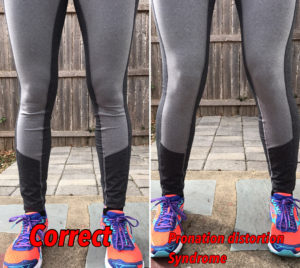
The muscles that are short or tight and need to be stretched:
-Gastrocnemius (Calf muscle)
-Soleus (Calf muscle)
-Peroneals (Outside of the calf)
-Adductors (Inner thighs)
-Iliotibial Head (IT band, outer thighs)
-Hip Flexor Complex
-Biceps Femoris (Hamstring)
The muscles that are lengthened or weak and need to be strengthened are:
-Anterior Tibialis (Shin)
-Posterior Tibialis (Calf)
-Vastus Medialis (Inner Quadriceps)
-Gluteus medius/maximus (Butt)
-Hip External Rotators
Injuries that can occur:
-Plantar Fasciitis
-Shin Splints
-Patellar Tendonitis
-Low-Back Pain
How to fix:
1. Start with foam rolling the tight and overactive muscles. Key areas to focus on would be the calfs, IT band/TFL, hamstrings, and adductors. Hold on tender spot for 30-60 seconds, or longer if necessary.
2. Next step is to lengthen the tight muscles with static stretching. Key areas to stretch would be calfs, TFL, hamstrings, and adductors. Hold each stretch for at least 30 seconds and repeat for 2 sets.
3. Next, we need to strengthen the underactive or weak muscles. You can strengthen your calf muscles by doing single-leg calf raises, and you can strengthen your gluteus maximus by performing floor bridges (hold for 5 seconds for 1 rep). Do 15 reps of each exercise for 2 sets.
4. Finally, finish with an integrated exercise to help improve overall movement quality. Do a multiplanar single leg balance reach for 15 reps and 2 sets.
Check out the video for guidance on all the moves above.
2. Lower-Crossed Syndrome: This can be defined as an arched lower back.
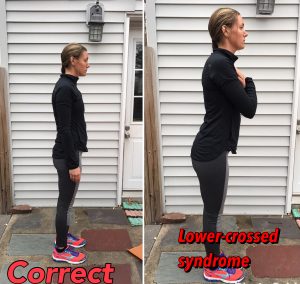 The muscles that are short or tight and need to be stretched:
-Gastrocnemius (Calf muscle)
-Soleus (Calf muscle)
-Hip Flexor Complex
-Adductors (Inner thighs)
-Latissimus Dorsi (Lats/ back muscles)
-Erector Spinae (Back muscles)
The muscles that are lengthened or weak and need to be strengthened are:
-Anterior Tibialis (Shin)
-Posterior Tibialis (Calf)
-Gluteus medius/maximus (Butt)
-Transversus Abdominis (Abs)
-Internal oblique (Side Abs)
Injuries that can occur:
-Hamstring complex strain
-Anterior knee pain
-Low-back pain
How to fix:
1. Start with foam rolling the tight and overactive muscles. Key areas to focus on would be the hip flexor complex, thighs, and calfs. Hold on tender spot for 30-60 seconds, or longer if necessary.
2. Next step is to lengthen the tight muscles with static stretching. Key areas to stretch would be the ones you just foam rolled. Hold each stretch for at least 30 seconds and repeat for 2 sets.
3. Next, we need to strengthen the underactive or weak muscles. To strengthen your gluteus medium/maximus you can use floor bridges (hold for 5 seconds for 1 rep). To help to strengthen your abs you can use bird dogs. Do 15 reps of each exercise for 2 sets.
4. Finally, finish with an integrated exercise to help improve overall movement quality. Use a plank hold for 15 seconds then rest repeat 15 reps and 2 sets.
Check out the video for guidance on all the moves above.
3. Upper Crossed Syndrome: This can be defined as a forward head and rounded shoulders.
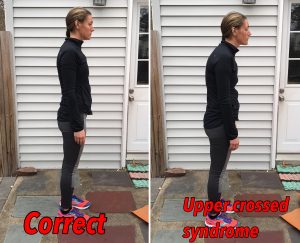 The muscles that are short or tight and need to be stretched:
-Upper Trapezius (upper back/neck)
-Levator scapulae (neck)
-Sternocleidomastoid (neck)
-Scalenes (neck)
-Latissimus Dorsi (lats/back muscles)
-Teres Major (back)
-Subscapularis (shoulder)
-Pectoralis major/minor (chest)
The muscles that are lengthened or weak and need to be strengthened are:
-Deep cervical flexors (neck)
-Serratus anterior (shoulder)
-Rhomboids (shoulder)
-Mid-trapezius (shoulder)
-Lower-trapezius (shoulder)
-Teres minor (rotator cuff)
-Infraspinatus (rotator cuff)
Injuries that can occur:
-Headaches
-Biceps tendonitis
-Rotator cuff impingement
-Thoracic outlet syndrome
How to fix:
1. Start with foam rolling the tight and overactive muscles. Key areas to focus on would be the upper trapezius, levator scapulae, and latissimus dorsi. Hold on tender spot for 30-60 seconds, or longer if necessary.
2. Next step is to lengthen the tight muscles with static stretching. Key areas to stretch would be the ones you just foam rolled. Hold each stretch for at least 30 seconds and repeat for 2 sets.
3. Next, we need to strengthen the underactive or weak muscles. To strengthen your shoulder muscles you can do floor cobras (hold for 5 seconds for 1 rep). Then to strengthen your deep cervical flexors you can use chin tucks (hold for 5 seconds for 1 rep). Do 15 reps of each exercise for 2 sets.
4. Finally, finish with an integrated exercise to help improve overall movement quality. Use a superman exercise hold for 5 seconds repeat 15 reps and 2 sets.
Check out the video for guidance on all the moves above.
We all have muscles imbalances that need to be corrected. By correcting these imbalances sooner rather than later we will improve our sailing out on the water, and avoid any injury in the future. The off-season is a perfect time to fix these problems so when you get back to sailing your body will be ready to perform at a top level. These tools can help you on your way to fixing your muscles imbalances, but I do recommend seeing a personal trainer for a more individualized plan. Fix your muscles imbalances today for better sailing later!
For more information on fitness for sailing contact [email protected]. Also check out Sailorcise on Facebook, Twitter, and Instagram for daily tips on fitness, nutrition, and sailing.
J-Boats to Hold First U.S. J/70 Youth Championship
Win a FREE J/70 for your Sailing Club!
 (Newport, RI)- The first annual U.S. J/70 Youth Championship will take place concurrent with the J/FEST New England Regatta from August 11th to 13th on beautiful Narragansett Bay. The event will be hosted by the famous crew at SAIL NEWPORT, Newport, Rhode Island and hosted at their extraordinary facility at Fort Adams State Park.
Interest has been strong from various youth teams across the country; with crews already gearing up for the J/70 Midwinters in St Petersburg, FL, hosted by St Petersburg YC and also the Helly Hansen San Diego NOOD Regatta, hosted by San Diego YC in San Diego, CA.
The goal of this event is to help develop and build leading-edge junior keelboat sailing programs across America. The winning club of this event will get “free” usage of a fully equipped International J/70 one-design class sailboat, with sails and trailer, provided “free of charge” by J/Boats, to the winning sailing club and its membership for twelve months.
The U.S. J/70 Youth Championship (USJYC) is open to eleven (11) Youth Teams representing US Sailing recognized Sailing Clubs or Organizations. Sailing clubs may enter more than one youth team per event, but may only qualify one team for the USJYC championship in Newport, RI.
The 11 Youth Teams will compete on eleven brand new J/70 Class sailboats with class sails (main, jib, spinnaker) that comply with J/70 Class rules. The boats will be identically rigged and tuned at “base settings” that are recommended by the sailmaker.
In order to qualify for the eleven slots, youth teams must qualify for entry by being the top scoring Youth Team in the J/70 Class at one of the following Regattas:
- Feb 24-26 J/70 Midwinters- St. Petersburg, FL
- Mar 09-11 Bacardi Miami Sailing Week- Miami, FL
- Mar 17-19 Helly Hansen San Diego NOOD- San Diego, CA
- Apr 20-23 Sperry Charleston Race Week- Charleston, SC
- May 05-07 Helly Hansen Annapolis NOOD- Annapolis, MD
- Jun 03-04 Cedar Point One-Design Regatta- Cedar Pt, CT
- Jun 09-11 Helly Hansen Chicago NOOD- Chicago, IL
- Jun 16-18 J/70 Great Lakes- Cleveland, OH
- Jul 07-09 The Newport Regatta- Newport, RI
- Jul 15-16 St. Francis Sportboat Regatta- San Francisco, CA
- Jul 27-30 Helly Hansen Marblehead NOOD- Marblehead, MA
Here is the USJYC Notice of Race. For more U.S. J/70 Youth Championship information, please contact J/Boats at “[email protected]” or refer to the website- http://www.jboats.com/j70-youth-championship
The Religion Known as Frostbiting
 Please tell us about your experiences frostbiting in the comments section below.
By Airwaves High School Reporter Paige Hoffman
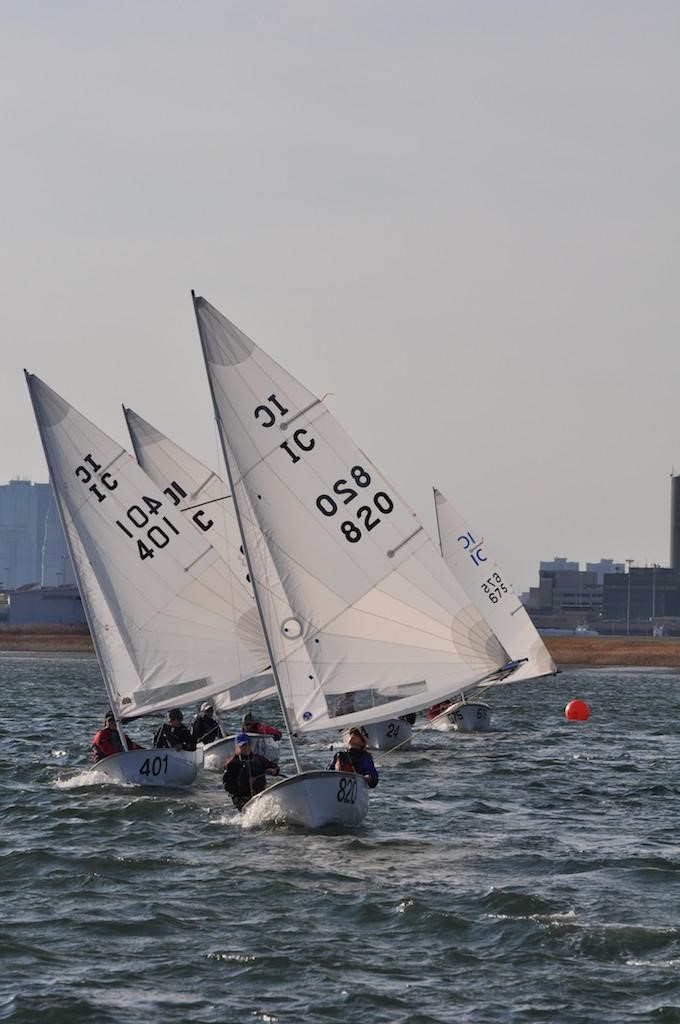
Frostbiting: Are you up for the challenge? With about another month left of off-season before high school sailing gets started up in the Northeast, some of just can’t wait to get back on the water. Luckily for New England sailors, there are countless options for winter sailing for those of up that are up for it. Unfortunately, I have not able to try my hand at any frostbiting this year because I came down with pneumonia, but I was able to learn a lot about it by researching clubs in my area.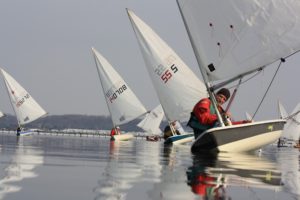 Many college sailors in Boston haven’t even had an “offseason”, opting to brave the cold and sail at the Winthrop Frostbite Sailing Club. The club offers racing in Winthrop, Massachusetts, not far from the city. Racing is offered on Lasers, Rhodes 19s and Interclubs, with the Interclubs being generally the most popular with college sailors because they are double handed and most similar to the dinghies used in college and high school sailing. They are older and more primitive looking than a 420 or an FJ, with a Cat Rig rather than familiar Sloop Rig we are all used to.
 It’s very easy to get involved with sailing at Winthrop Frostbite Sailing Club, you can simply show up any Sunday at 1pm between November and April and the staff at the club will help get you set up with a boat. If you’re feeling really committed, you can also sign up for a whole season.
 There are lots of other options available for sailors interested in Frostbiting in New England. Barrington Yacht Club, in Barrington Yacht Club, offers sunfish sailing from 1pm to 3pm on Sundays. Best of all, they offer a major discount for high school and college sailors ($60 for a season pass, $8 for a daily pass).
Bristol Yacht Club in Bristol, Rhode Island, also offers a good deal for junior sailors, frostbiting and storage of boats, which is offered for Lasers and RS Aero class boats, is free! The club hosts races every Saturday. Last year, they sailed 15 Saturdays with an impressive 88 starts for the season.
The ultimate frostbiting club in New England might just be Frostbite Yacht Club in Essex Connecticut. They have perhaps the most diverse classes of boats available, with racing offered in 420s, Ideal 18s, JY15s, Etchells, Lasers and Scows. As long as the river at the venue is not frozen, racing is offered in both fall and spring series.
The common theme with all of these clubs is that if you are interested in frostbiting, they make it easy for you to get involved. If you feel like you might be up to trying it, why not? While your teammates are brushing the dust off this spring, you will jump right back into spring sailing without missing a beat from the extra practice. It’s an easy and fun way to get an edge over sailors who haven’t been on the water since the fall, and requires very little commitment, so there is still plenty of time for school and other winter sports.
Please tell us about your experiences frostbiting in the comments section below.
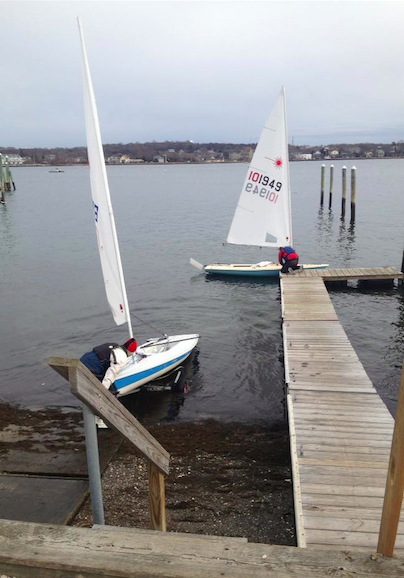 Lasers being launched at Bristol Yacht Club
About the Author:
Paige Hoffman, Northeast/High School Sailing Airwaves Reporter
 Paige started sailing at age ten at Duxbury Bay Maritime School. By age twelve, she was competing in Optis and transitioned to 420 sailing when she was fourteen, becoming a member of the Duxbury High School sailing team as a freshman in high school and racing through club programs at Duxbury Bay Maritime school in the fall and summer seasons. In the summer, she works as a Junior Sailing Instructor at Duxbury Bay Maritime School, teaching younger sailors the fundamentals of sailing. In 2016, she helped her team win the Mass Bay League Team Race Championship and was named co-captain of her team for the 2017 spring season.
Whitecap Composites, Inc. : Press Release and Q & A
PRES S RELEASE:
Whitecap Composites is pleased to announce that we have been granted a builder’s license from the Club FJ Class Association. A boat had been sent to the US Sailing Center in Long Beach, CA for measurement. It was also sailed in a number of regattas to evaluate its performance.
We look forward to being involved in the future of the class for many years to come.
Whitecap Composites Inc.
Whitecap Composites, Inc. is a team of passionate sailors, racers, and boat builders. They began their business back in 2011 when they were approached by a number of institutional coaches who felt collegiate racing would benefit from boats with improved structural integrity, a higher level of consistency, and a more performance-oriented feel. Whitecap Composites has the flexibility to incorporate any custom requests into their boats as they have learned that individual groups use their boats differently.
Currently, Whitecap Composites builds collegiate boats including the collegiate FJ, 420, Tech Dinghy, and the Lark. Now, with this new builder’s license, they will be building Club FJ’s. We talked with Paul Zimmerman from Whitecap Composites for a little Q and A on this new venture.
Why did Whitecap want to start building Club FJ’s?
First, we would like to clarify the difference between the Club FJ and the Collegiate FJ. The Club FJ must adhere to a specific set of class rules which define physical measurements, overall weight, and construction materials. Whereas the collegiate FJ can include features specific to a customer’s requirements and can be built to withstand a higher rate of collisions that the boats are subjected to in a college environment.
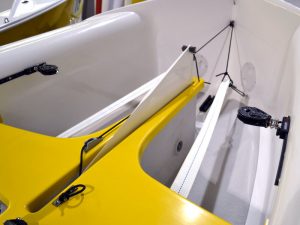
Now to answer your question, Whitecap Composites was initially approached by a number of schools to develop a lighter, stiffer, and more 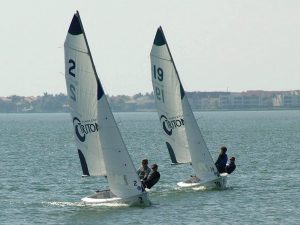 durable FJ that would stand up to the heavy use that college sailors put them through. Additionally, they wanted a boat that would last for 10 years. We set out to accomplish this by engineering a composite laminate and using a construction process that would achieve this goal. The process we chose was resin infusion using vinyl-ester resins. By infusing the boats we eliminate the possibility of air in the laminate, and we can strictly control the weight tolerances of boats within a fleet. Vinyl-ester resins are less prone to water damage than polyester resins and are also more forgiving, and less brittle. Also, by utilizing the infusion process and the specific laminate that we use, repairs to the boats from collisions are much easier to perform.
We felt that the West Coast market which predominantly sails the Club FJ could also benefit from what we had developed for other fleets in the country. So we applied what we learned with the Collegiate FJ to meet the specifics of the Club FJ class rules which addresses weights, hardware locations, and construction materials. The Class Association was very receptive to the possibility of a new builder and accepted our request to present a boat for their consideration.
Are you going to do anything different to make the Club FJ stand out from other boat builders?
In addition to the technical aspects, we wanted to provide a service that was attentive to the needs of schools and programs that require a quick response to all aspects of delivering new boats, including service after the sale was made and the boats were delivered. The number one goal is to keep the boats on the water sailing and not out of service.
Are there any clubs, teams, sailing centers interested in buying Club FJ’s from you already?
 We currently have Collegiate FJ’s at many schools and programs. Since just recently being granted a builder’s license from the Club FJ class association a few weeks ago, there has been quite a few request for quotations. We have already sold some boats to the San Juan Sailing Foundation in Washington State.
For more information on Whitecap Composites check out their website: http://www.whitecapcomposites.com/index.php And for questions regarding the new Club FJ’s they will be building Contact Paul Zimmerman at [email protected]
2017 DN World Championship Report & Results
On January 20th, 108 sailors from eleven different countries still had no idea where in the Western United states they would race the 2017 DN World Championship, set to begin in two days.
“Welcome to Iceboat racing!”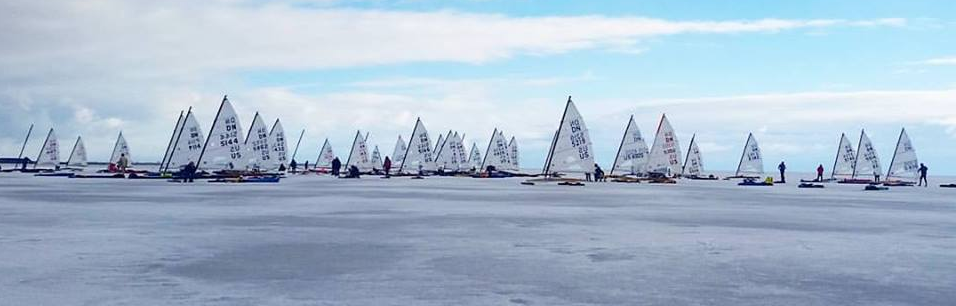
An unseasonably warm weather pattern overtook the Midwest and turned most of the frozen lakes in the region to mush a week before the event was set to begin. Most iceboaters pray for a late January rain, we call it the Great Zamboni, but nobody likes to see three days of rain and seven days of temperatures in the mid-forties before a big event. Warm rainwater creates huge holes in the ice and turns the surface into a slushy, wet mess. It’s the equivalent of racing F1 cars on sandy track littered with potholes big enough to pull off tires. DNs thrive in a frictionless environment, but when pushing through soft ice, things get real slow, real quick.
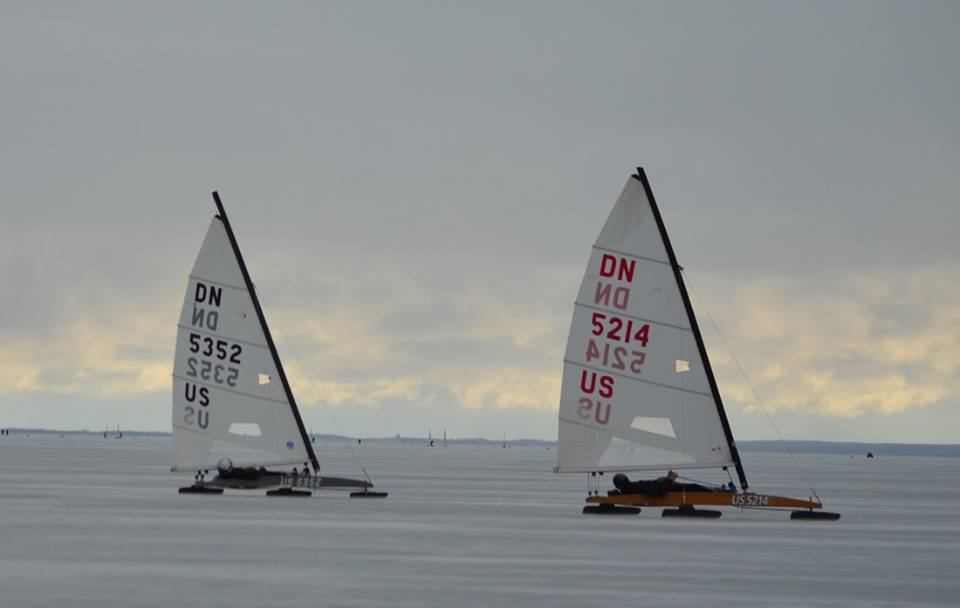 By the 20th, competitors recognized that the most probable location for the regatta would be near Madison, Wisconsin but could be as far north as Lake Superior. Sailors on the Eastern Side of the United States started their drive West while competitors flying in from other countries waited for news in their stateside hotel rooms. Regionally, dozens of sailors were frantically test sailing all the lakes in the region looking for any sheet of ice that could accommodate 50 boats flying around a one mile long course at 50 mph. The temperature was still pretty warm so event coordinators pushed the first day of racing back 24 hours. The hope was that a forecast below freezing that night could harden up what ice there was. By noon the 21st, event coordinators called the event on for Lake Kegonsa, just south of Madison. The fleet was on the move!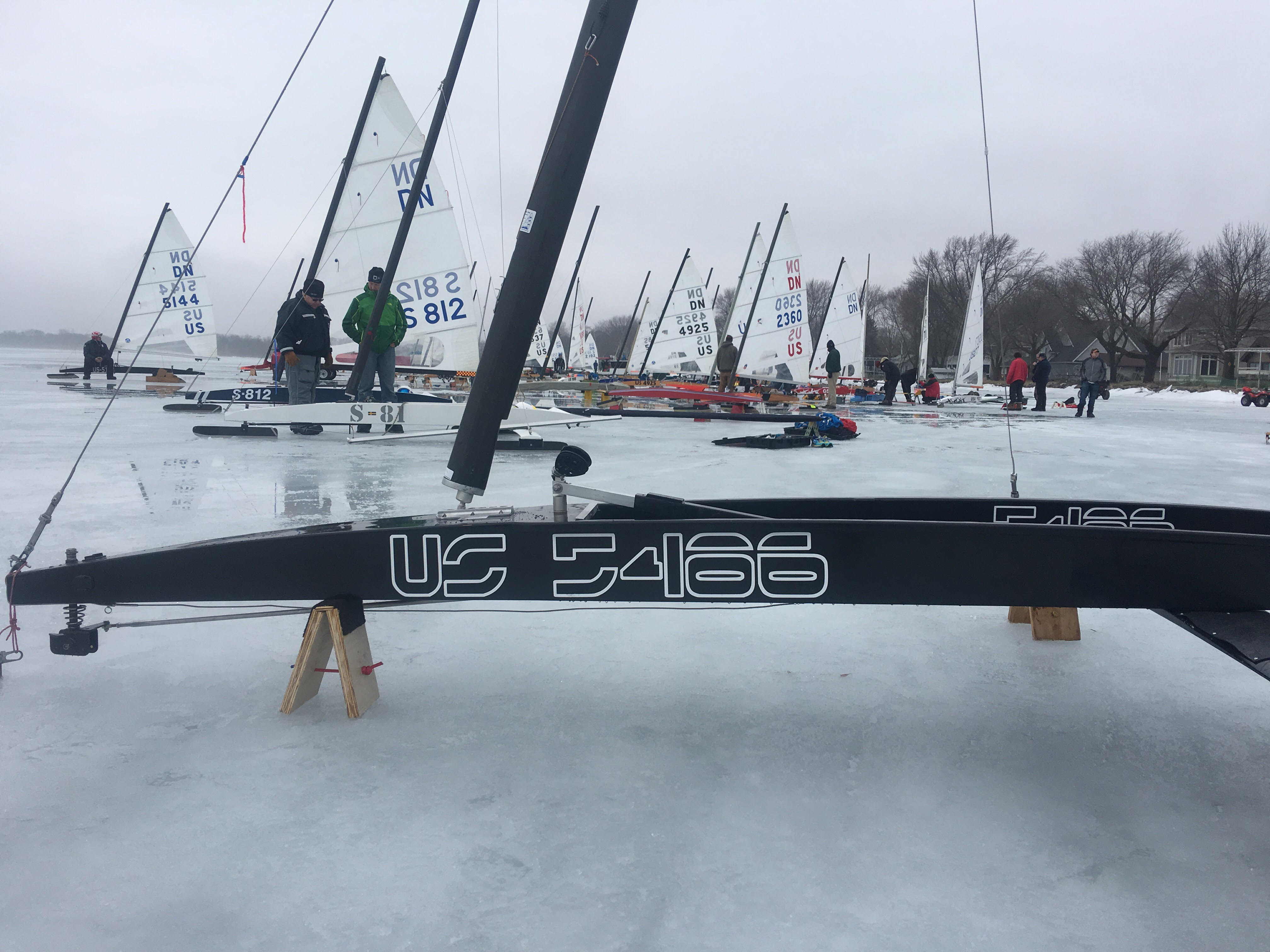
If you find yourself unfamiliar with the humble little DN (Detroit News), don’t worry. Most of the sailing community hangs up their sails for the winter and finds something warmer to do. For those of us that iceboat, we often find ourselves referring to summer racing as a way to pass time until we can get to ‘real’ sailing. The DN is a wooden, 12ft long, 100-150lb, DIY developmental class designed to hurtle a sailor around the ice at speeds up to 60mph (2-4 times the average windspeed). This community of competitors is filled with some of the most technically minded sailors in our sport. Names like Harken, Struble and Gougeon (West System Epoxy) permeate the sport’s history. Each home-built boat has its owner’s unique interpretation of go-fast techniques much like the Moth, 505 or A-class cat fleets. Sailors spend hours honing the runners (skates) to achieve optimum profile for the ever-changing ice condition. They constantly adjust settings to make the boat bend and respond to changing conditions. Unlike soft-water boats, where you can adjust most settings on the fly, DN racers only have a mainsheet and tiller once they leave the starting blocks. If the boat is set up too stiff it can be a wild ride, if you play it safe and sail the boat loose, you find yourself lacking enough power to keep up. It is without question the development-based culture of this design and thrill of the speeds that keeps sailors coming back year after year. Why else would somebody travel thousands of miles (from as far as Russia) to freeze their butts off on a frozen lake for a chance, and I stress the word chance, to get a couple races in?
The night of the 21st, sailors collected at a local DN racer’s business for a meet and greet, skippers meeting and the ceremonial singing of National Anthems. Sailors laughed and cheered as competitors sang their hearts out in a show of pride and community. It was refreshing to see such camaraderie between sailors from such vastly different cultures and communities.
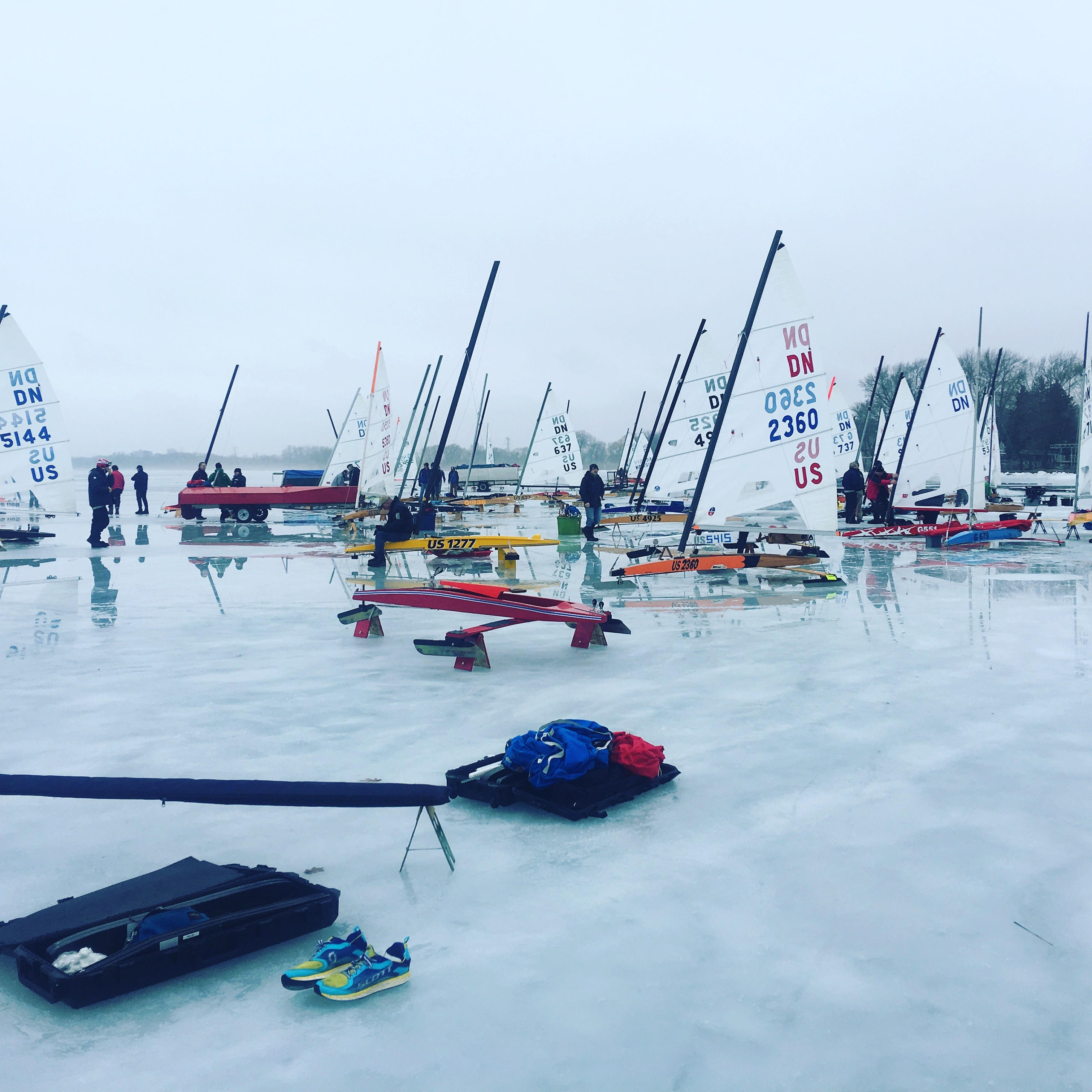 The morning of the racing brought a flurry of commotion while competitors prepped for the day’s events. Some were still arriving from their travels while others were frantically testing their equipment for that last ounce of speed. Some sailors dragged multiple sets of runners and sails out to the course, others ran as simple a program as they could. The Ice had hardened significantly from the day before but 30% of the course was still covered by sticky patches of slush and there were marked holes everywhere. The breeze wasn’t forecasted to breach seven knots and after some laps around the course it became clear that this was to be a tough regatta.
The first three races of the day were qualifiers for Gold, Silver and Bronze fleets. Those whi have a lower international rank have to sail hard to qualify for Gold fleet. After everyone is seeded the race officials initiate scored racing. The regatta is considered complete at three Gold races with no more than seven races per fleet to be sailed during the event. A forecast of light air and potential snow over the next three days meant that there was little time to fix boatspeed problem. Each sailor knew the winners could very well be decided by the end of the day.
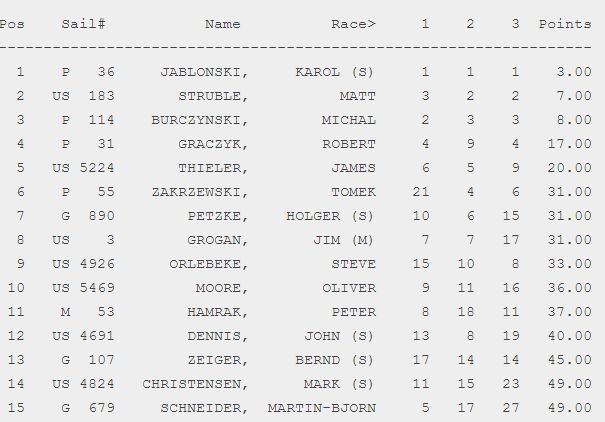
The first race of the day was sailed in sub-optimal conditions for high speeds. In six knots of breeze the Gold fleet left the line for a three lap race in intense, challenging conditions. Those that spent the extra time with their alignment and runner selection immediately showed speed. Sailors that were able to sail around the slush (much like big waves) and keep the boat going were able to stretch their legs and extend. The rest of the fleet piled into the first mark as best they could but a huge, soggy patch at the windward mark made transitions to the downwind challenging. Boats that could carry speed through the turn would make gains on the downwind, those that tacked short of the layline paid a terrible price. Carol Jablonski, from Poland, was first around the windward mark and he never looked back. The ten time world champion put together the perfect picket fence and ended the day with a four point lead on Matt Struble. Silver fleet sailed in similar conditions, but the top sailors in each race swapped a significant amount more than was usual. A local sailor, Tim Sugar, was able to string together two wins in race three and four ending the day tied for first. Bronze fleet sailed most of their races in the lightest winds of the day splitting the fleet into those who could get top ten finishes and those who couldn’t. By the end of the third race, Chad Coberly held a three point lead on second place before the sun got too low to continue racing.
The second day of the event was forecasted to be quite light and in a rare show of skill, the weathermen were right. Sailors walked their boats out to the starting line and waited for any sniff of breeze to try new settings. A sucker puff would show up every hour or so and cause a flurry of movement, but by 3:30pm it became clear sunset was going to be the only event of the day. Sailors packed up and made the long walk back to the staging area, pushing or pulling their boats along. The fleet derigged in the pits and sailors walked around sharing beers and jokes. You can’t bring this fleet down.
The forecast for day three was punctuated by a thick coat of rain and snow, followed by more light air. During the night, Madison saw 4-6 inches of heavy snow as the fat lady belted out her best. There would be no suitable lake in the Madison area and little possibility of race-worthy ice in the greater Midwest. Event organizers sent racers to several different lakes on the outskirts of the weather system to test sail whatever they could find. Meanwhile, competitors packed up and traded stories at a local bar that became the event’s unofficial home base. By mid-day, it was clear that no lake within one day of travel was suitable for further racing and it was announced that the 2017 DN World Championships was concluded. Not one person expressed dissatisfaction and you could see, it was smiles all around. The heart of an iceboater hopes for the best but accepts the worst. Each race sailed was fair and well-run; the fleet was happy.
Congratulations to Carol Jablonski for winning Gold Fleet for the 11th Time, Tim Sugar for 1st place in Silver fleet and Chad Coberly for a convincing win in Bronze Fleet. Full results HERE
Two days later the same fleet of sailors, including most of the international competitors, descended on Peshtigo, Wisconsin to do it all again for the 2017 DN North American’s. Nothing can crush the spirits of these sailors. The ride is too good, the community is too strong and there is always better ice around the corner.
Results, pictures, video and more information on the Class or event can be found on the DN North America website NA.IDNIYRA.org