The Teams That Stayed in Phase All Season: 2026 ICSA Team Race Nationals Breakdown
The 2026 College Sailing Team Race Nationals wrapped up this week down in New Orleans. For anyone who followed along with the S1D rankings all season, the podium finishers in both fleets were likely not shocking. Find the results for Women’s HERE and the results for Open HERE, but our event recap is down below.
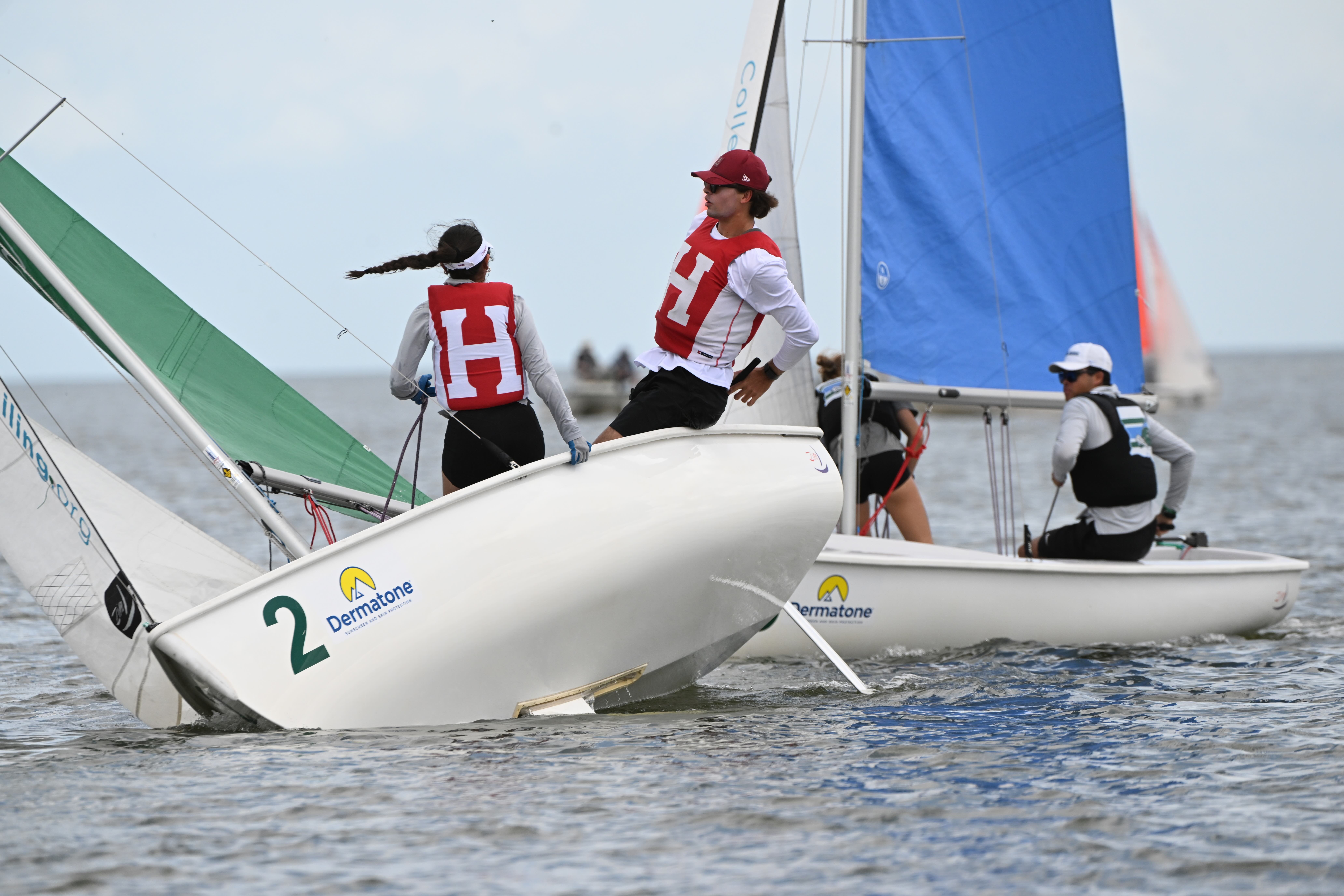
Harvard defended their Open Team Race National Championship title with a commanding performance, finishing with an impressive 22–3 record. They were able to perform in a regatta that saw everything from shifty, puffy breeze and chop to a light and unstable final four. Congratulations to Harvard’s team of Justin Callahan ’26, Mitchell Callahan ’26, Robby Meek ’27, Christina Chen ’27, Rosella Irfan ’27, and Jacob Posner ’29. Stanford finished second, Roger Williams third, and Dartmouth rounded out the final four.
On the Women’s side, Stanford brought home their third straight National Championship in a regatta that started with a storm delay before giving way to solid team race conditions. The Cardinal were nearly untouchable—Ellie Harned ’26, Kit Harned ’27, Sophie Fisher ’26, Piper Blackband ’28, Vanessa Lahrkamp ’26, and Alice Schmid ’27 finished with a dominant 21–1 record, their only loss coming to second-place Yale. Brown finished third, with Harvard in fourth. It was a strong showing from the Ivy League.
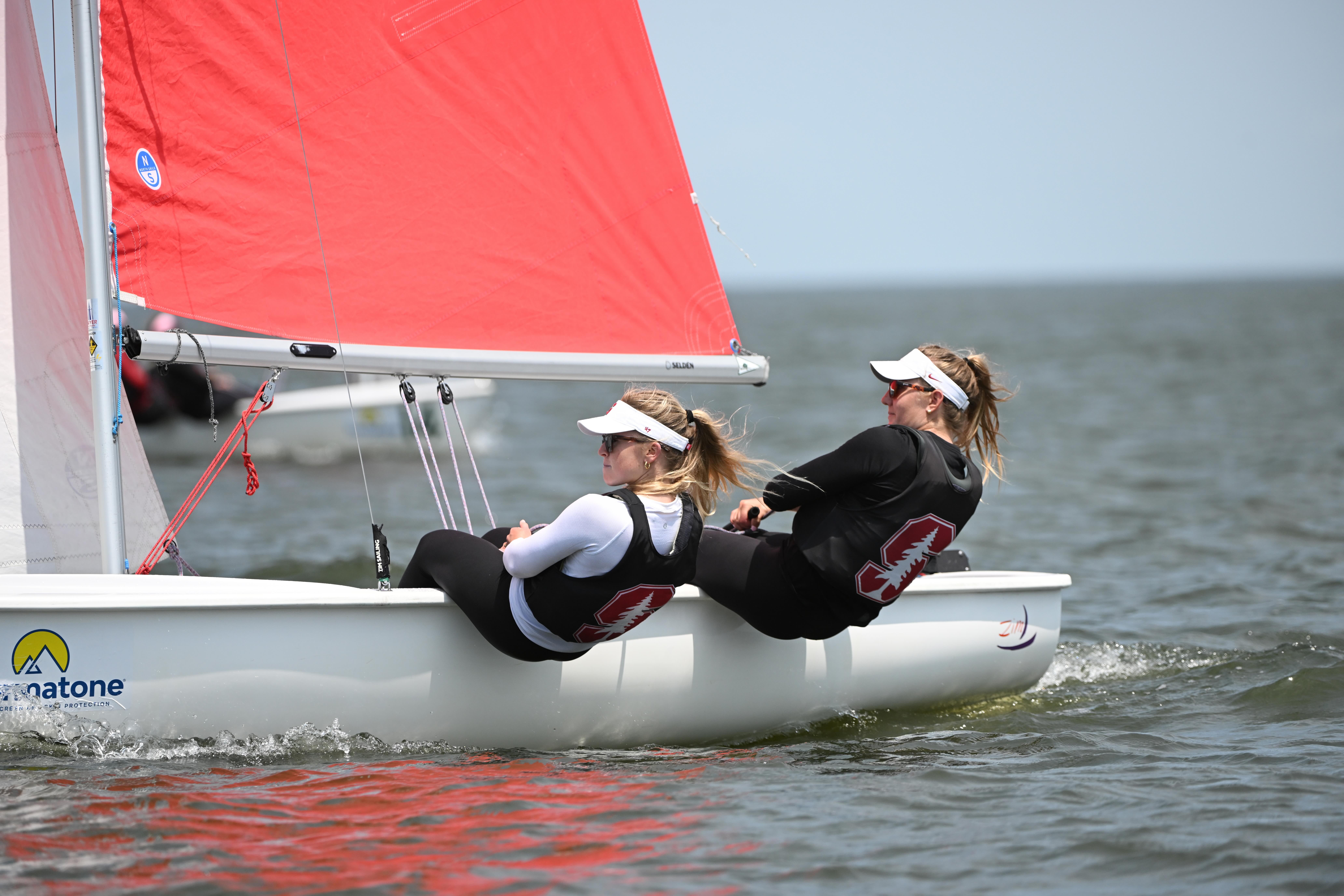
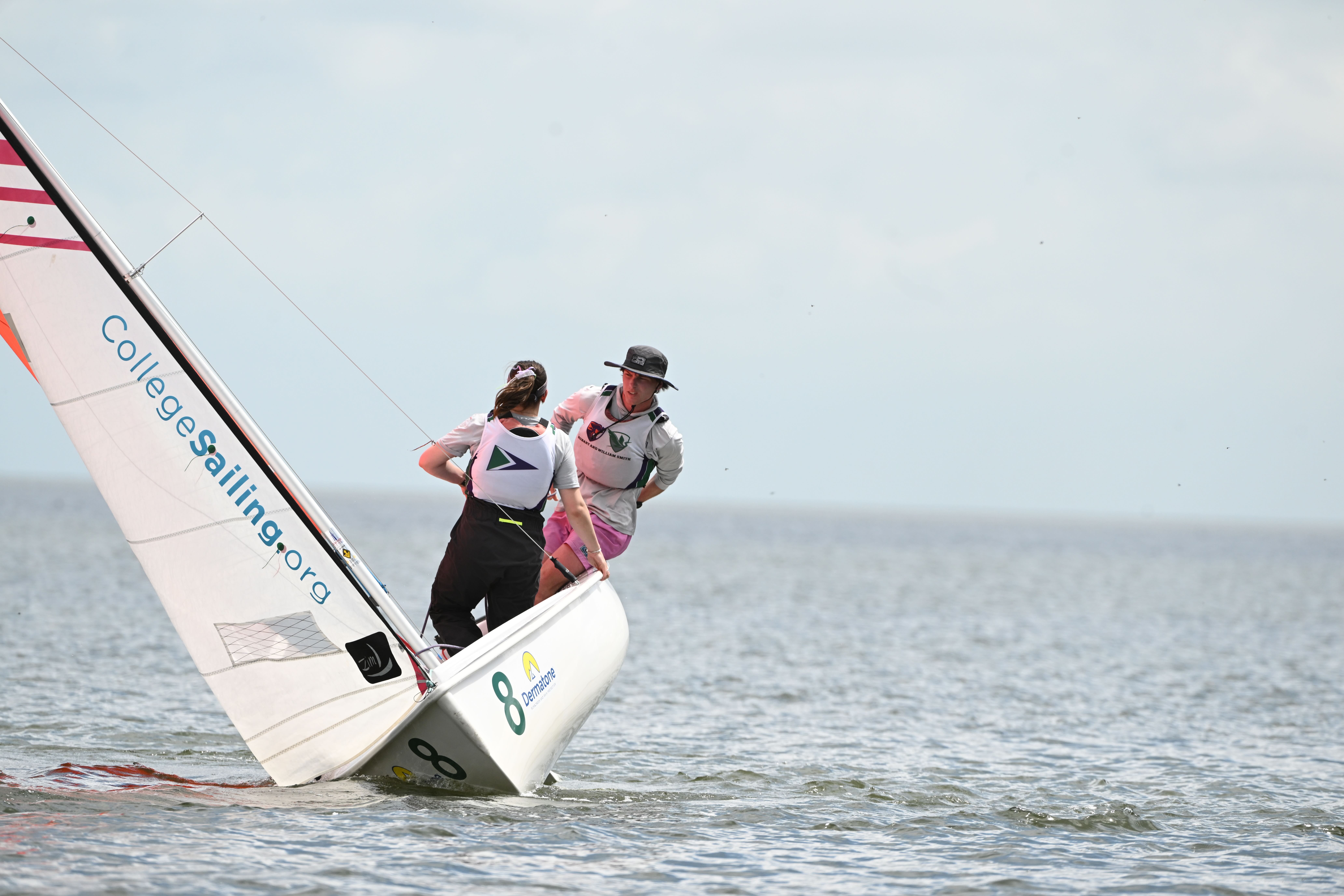
From Sail1Design, congratulations to all of the competing teams, and a special nod to the graduating seniors.
It’s worth taking a look at how the fleet actually tracked over the season. So naturally, I made a spreadsheet and a few graphs.
In both of these first charts looking at ranking positions over time, there’s not a lot of chaos. The top of the fleet stayed pretty stable all spring, and Nationals mostly just confirmed it. Harvard never left the top two. Stanford and Roger Williams were locked in right behind them. Even Dartmouth had been hanging around the top group the whole time. There aren’t any real outliers or major last-minute jumps. Instead this season was marked by small shifts within a group that was already established.
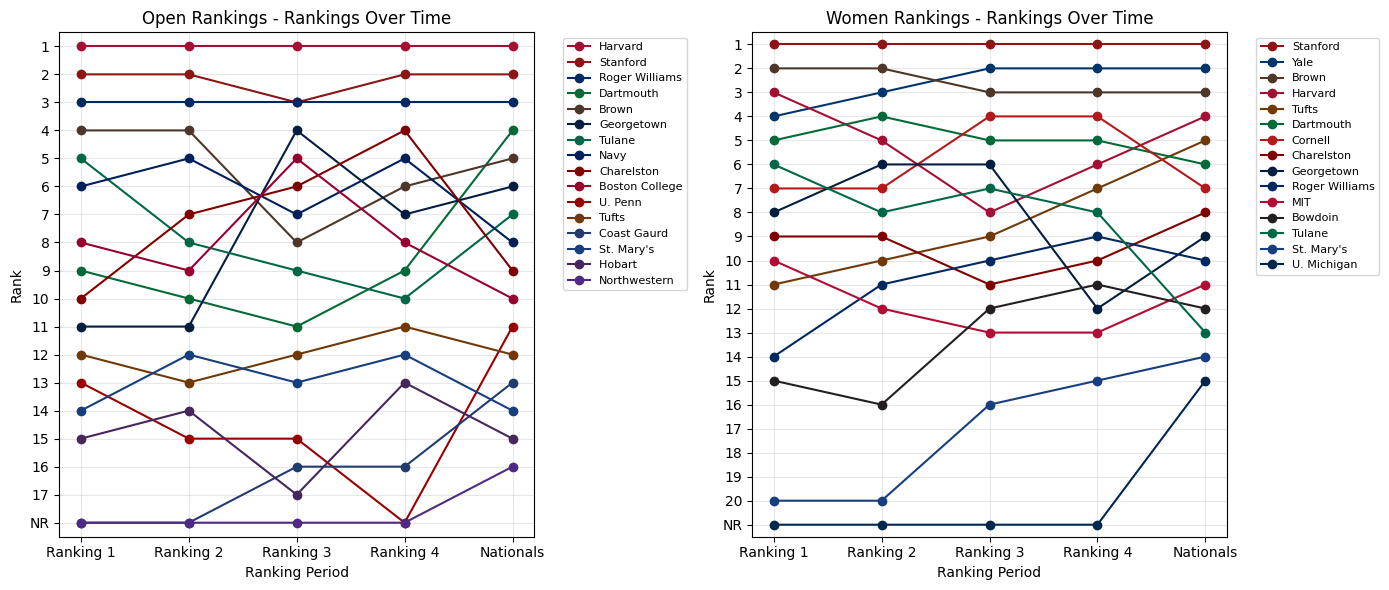
The graphs track each team’s position across the four S1D rankings and Nationals.
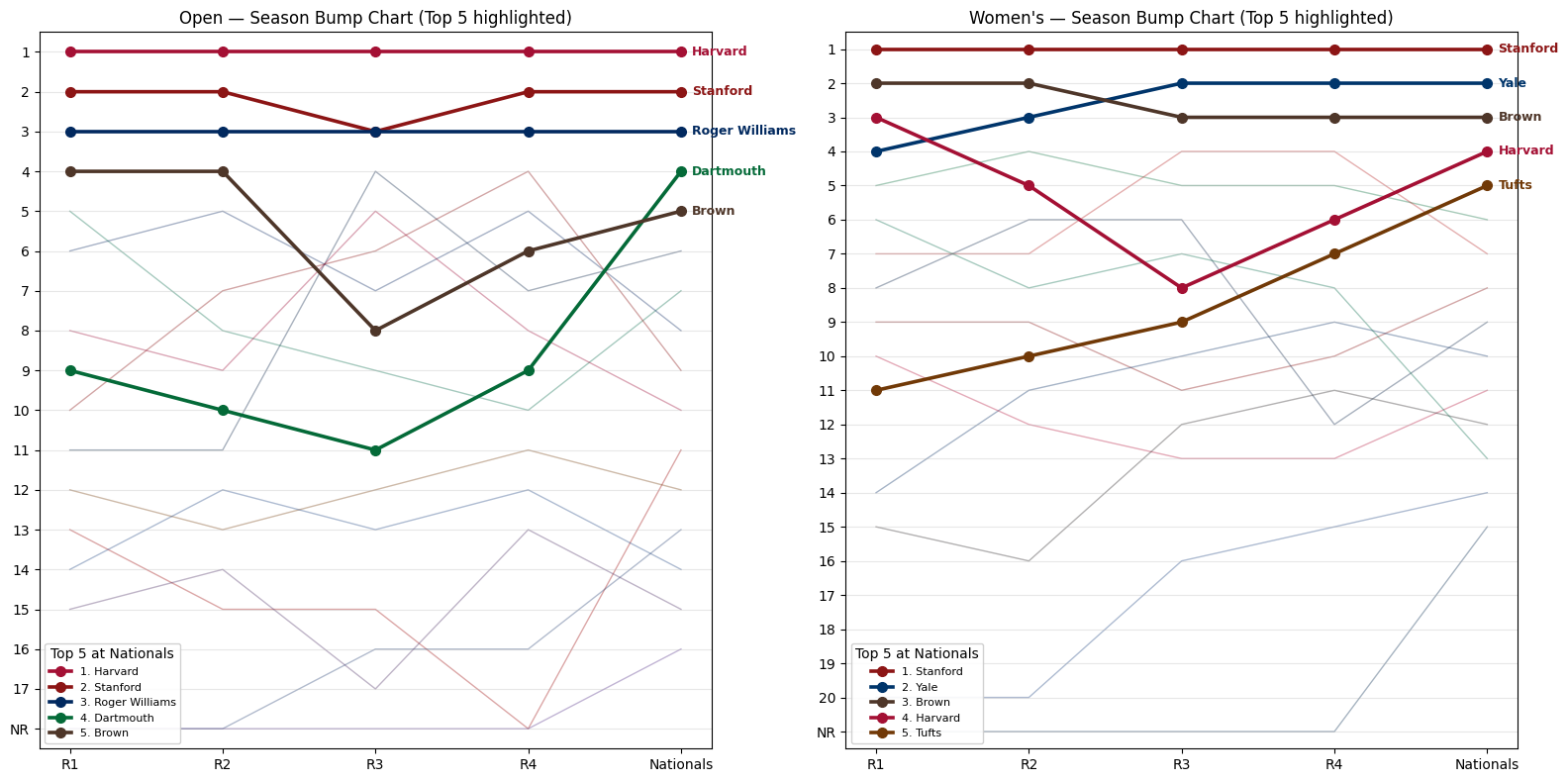
Each line tracks a team ranked inside the top five over the course of the four S1D rankings and Nationals, showing how positions changed within that group.
On the women’s side, it’s even cleaner. Stanford sat at the top the entire time and never got pushed off it. Yale and Brown were right there all spring as well, and the final podium reflects that pretty directly. There’s a bit more movement in the middle of the fleet, but at the top, it’s steady.
The graph highlighting the top five shows how hard it was to break into that group this season. The teams that started in the top three largely stayed there, while there was more movement in the fourth and fifth spots. Dartmouth stands out as a team that outperformed where they had been slotted late in the season. On the women’s side, both Harvard and Tufts showed they were capable of more than their ranking suggested, stepping up relative to where they had been placed heading into Nationals.
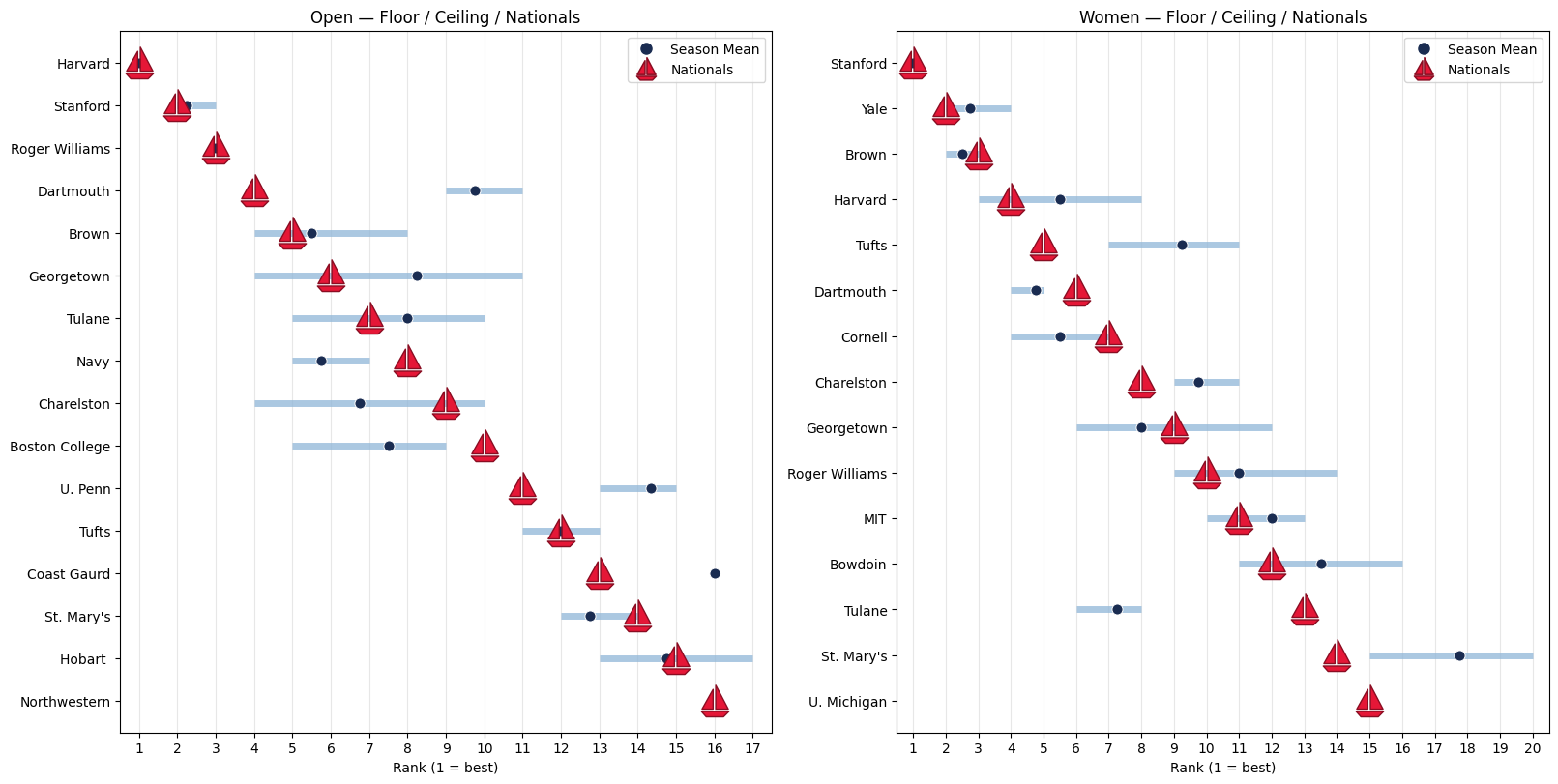
Each bar shows a team’s range of rankings across the season (floor to ceiling), with their final Nationals finish overlaid.
The floor/ceiling graph shows the spread of where a team was ranked by S1D over the season (with the exception of a few teams that fell out of the top 16 or were only ranked once). It gives a sense of how teams were perceived throughout the spring and how that compared to where they ultimately finished when it counted.
In the Open fleet, Dartmouth, Penn, and Coast Guard all finished above what their typical range might have suggested. On the women’s side, Tufts and Charleston stand out in a similar way. At the same time, there are teams whose finishes fall closer to the lower end of their range, or below it, pointing to a gap between expectation and result.
Finally, looking at the rankings themselves, the last two rankings in the open fleet and the last three in the women’s fleet had the top three teams accurately locked in. The predictive power graph shows how closely each ranking aligned with the final results. Across both fleets, every in-season ranking shows a strong correlation with Nationals, with no major drop-off from early to late in the season.
This reflects the work of the panel of coaches who put together these rankings each week—Coach Annabel Carrington (College of Charleston), John Mollicone (Brown), Chris Klevan (Stanford), Charles Higgins (Tulane), and Brendan Feeney (Fordham)—who deserve a big thank you.
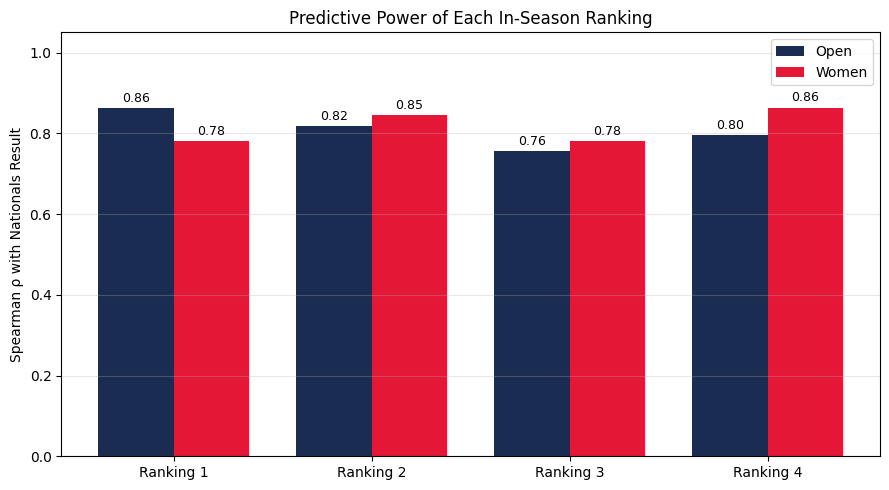
Spearman correlation between each S1D ranking and final Nationals results, measuring how closely rankings matched actual finishes.
One thing is for sure: the rankings will be back next year, and now we know what they can do. If you have early predictions, leave them in the comments below. As for next year, we’re left wondering if Harvard and Stanford are touchable, if the Ivy League can be stopped, and whether the selection process holds up, or gets tested again.
With team race season wrapped up, attention now turns to Fleet Race Nationals. The 2026 College Sailing Fleet Race Nationals are being held in sunny St. Pete from May 15th to 22nd, with the women’s event happening first. You can keep an eye on live results using Techscore, but we’ll have a write-up after the event.
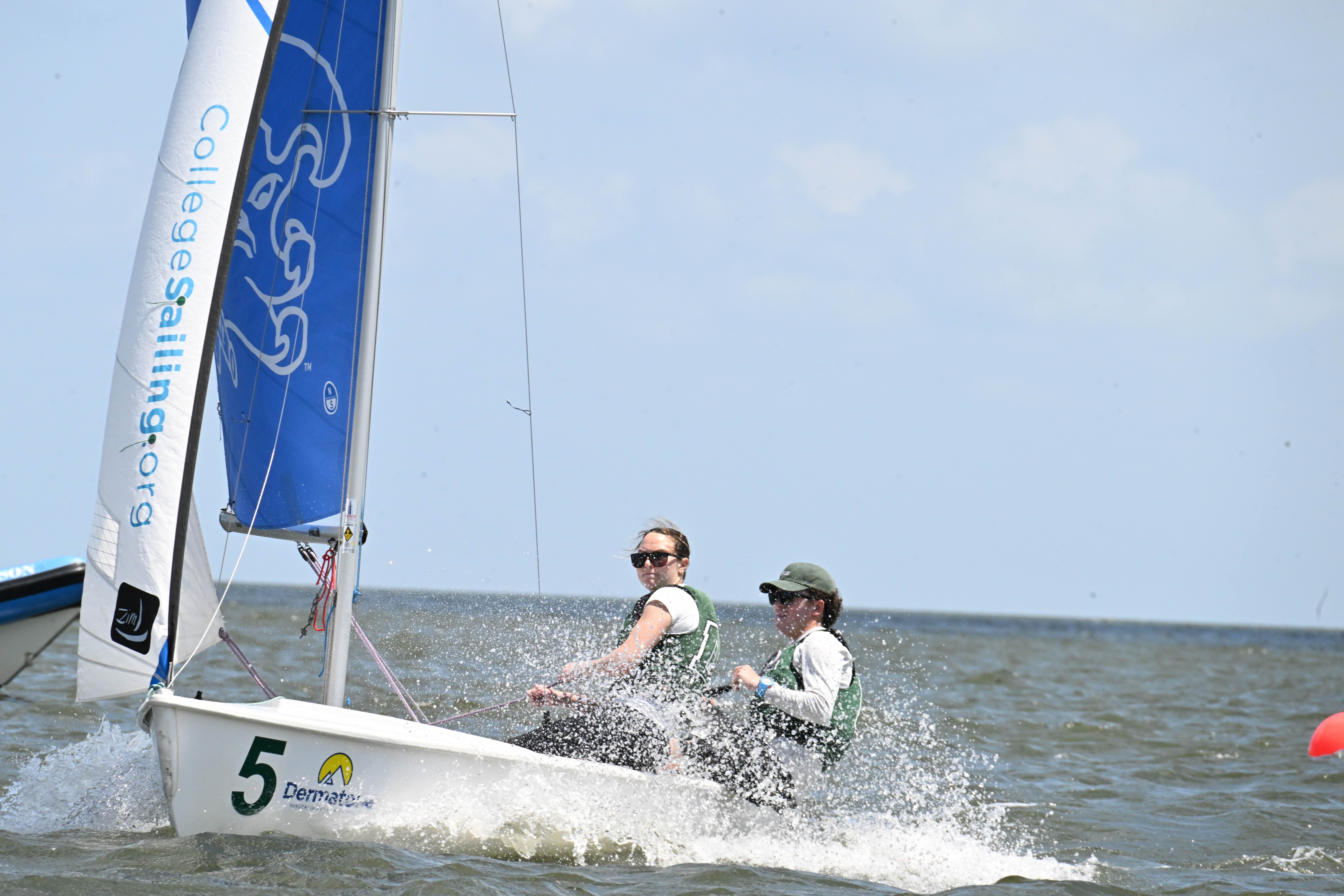
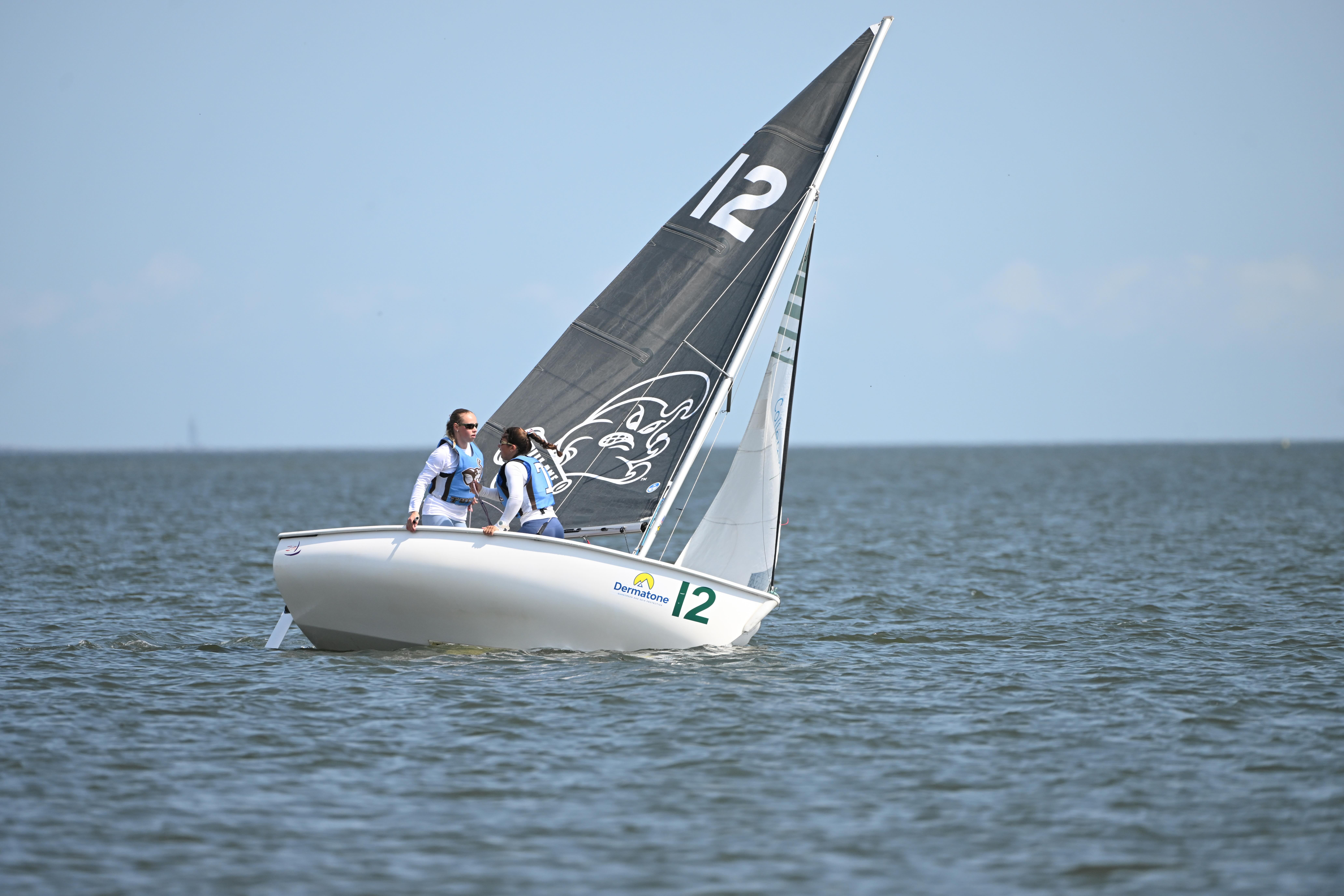
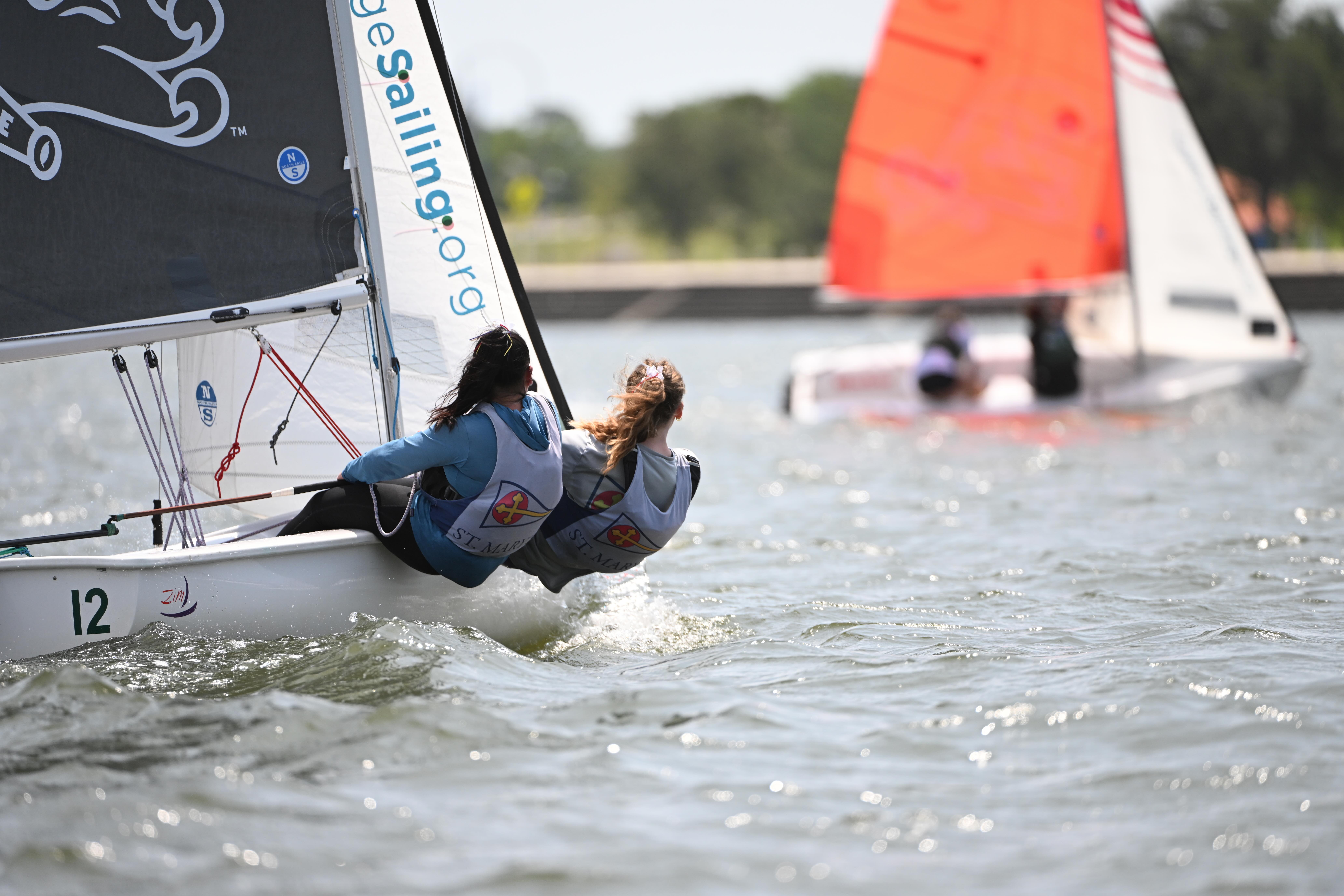
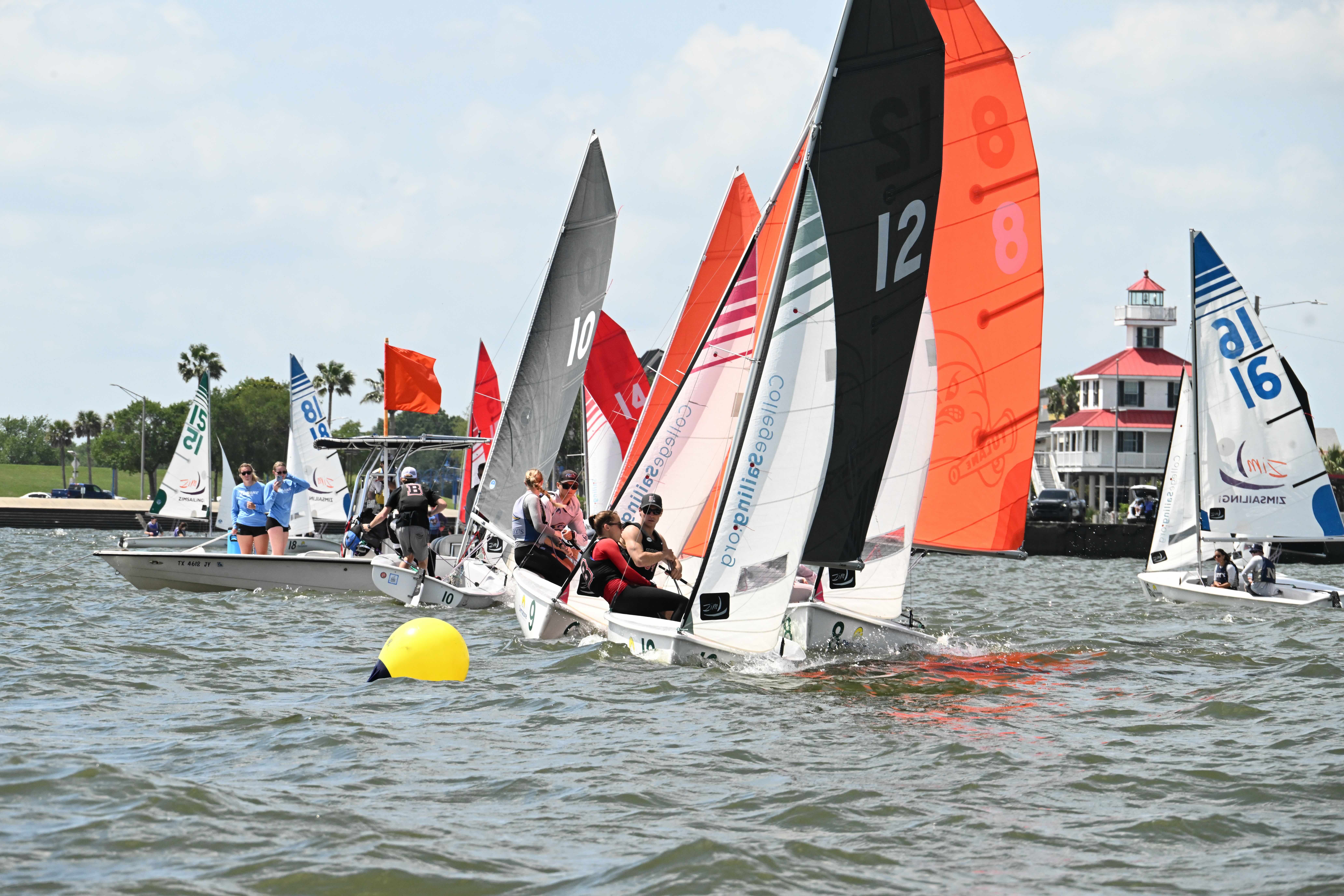
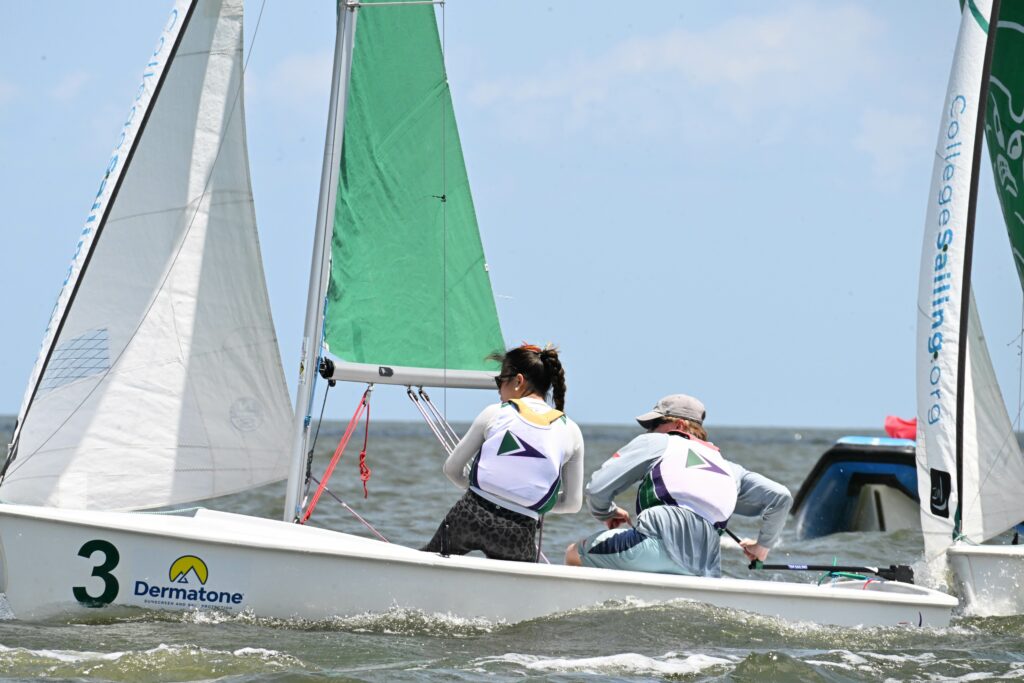
Photos from the ICSA Team Race Championship and used here are credited to Parker Waters. You can find the rest of the gallery HERE.