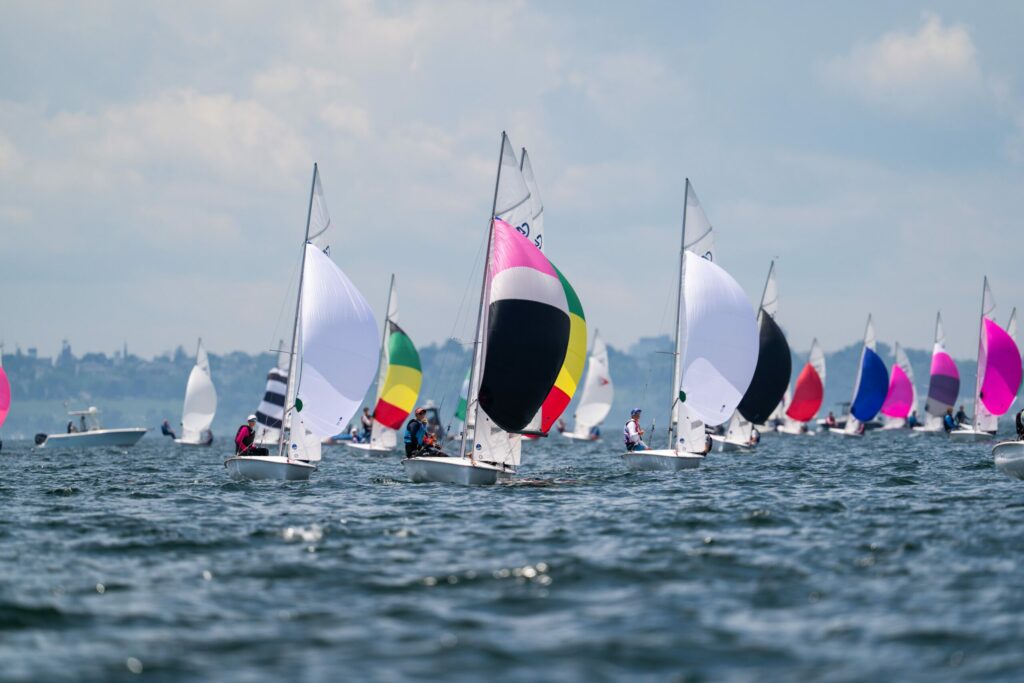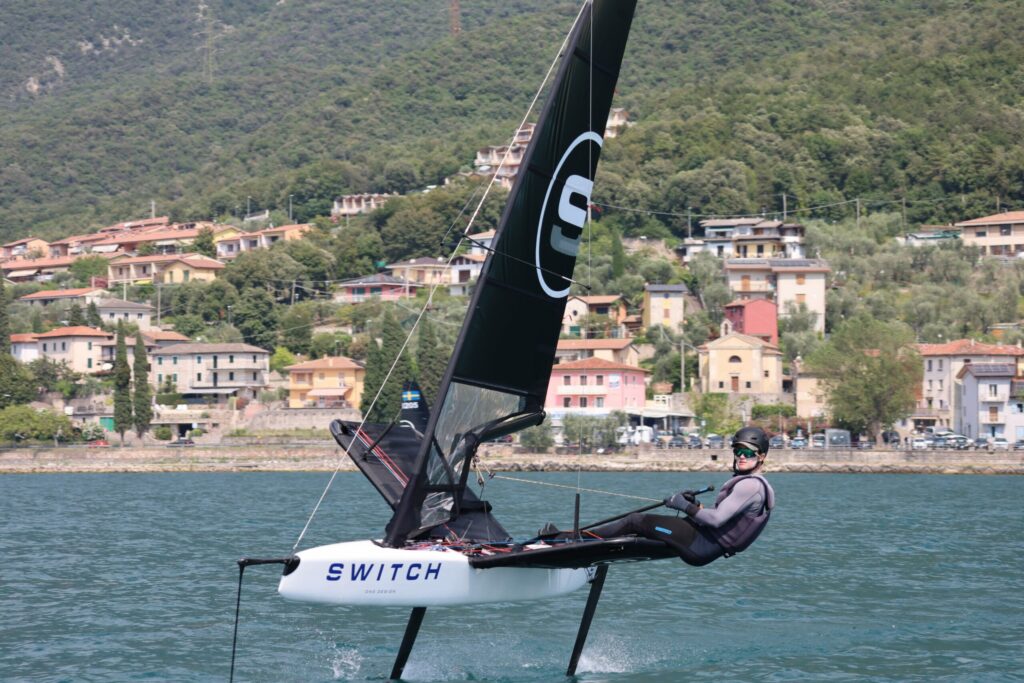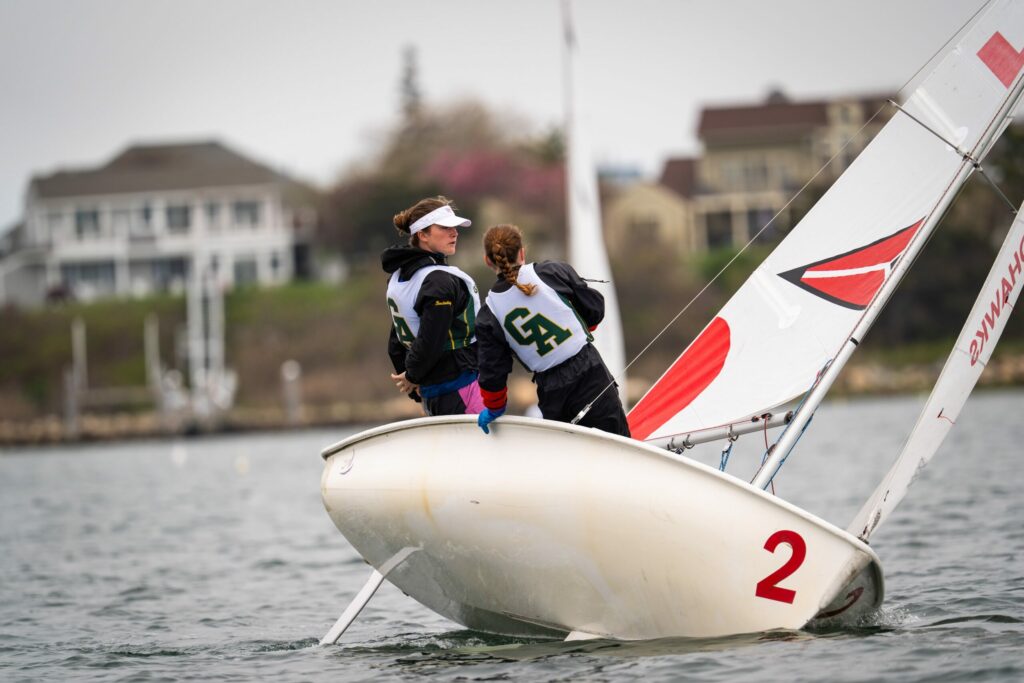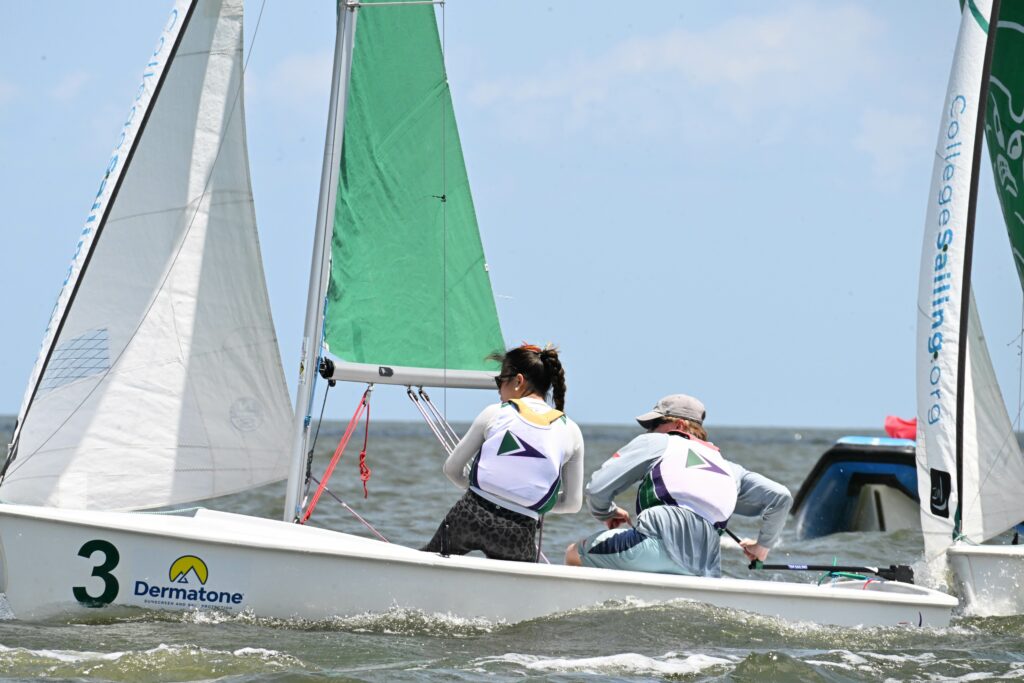
The final Sail1Design rankings are here, and as always, they’re backed by a panel of coaches who have been watching this fleet all season. Big thanks to them for making this possible.
If you want a clear picture of how teams stack up heading into Team Race Nationals, this is it. Racing kicks off this week in New Orleans, hosted by Tulane and the Southern Yacht Club.
These rankings give you a clear picture of the field heading into Nationals this week. The selection process? Not as clear.
Harvard finishes the season ranked No. 1, followed by Stanford and Roger Williams, with College of Charleston moving up to fourth in the final Sail1Design Open rankings. The natural question: are these our final four?
Charleston’s position here is worth noting. They were ranked sixth in the previous edition and now sit fourth. In a ranking system built on observation alongside results, that kind of movement usually means one thing: they’ve changed how they’re sailing relative to the fleet.
Navy, Brown, Georgetown, and Boston College are next. The last minute bump from Charleston could be an indicator that really any of these top teams could be a contender when racing starts this week.
Navy, coming off a win at the MAISA Conference Championships, is a particularly interesting case. As ranker Chris Klevan put it: “Are they waiting to peak at the right time?” That uncertainty pretty much defines this part of the rankings, for all teams.
Women’s Rankings
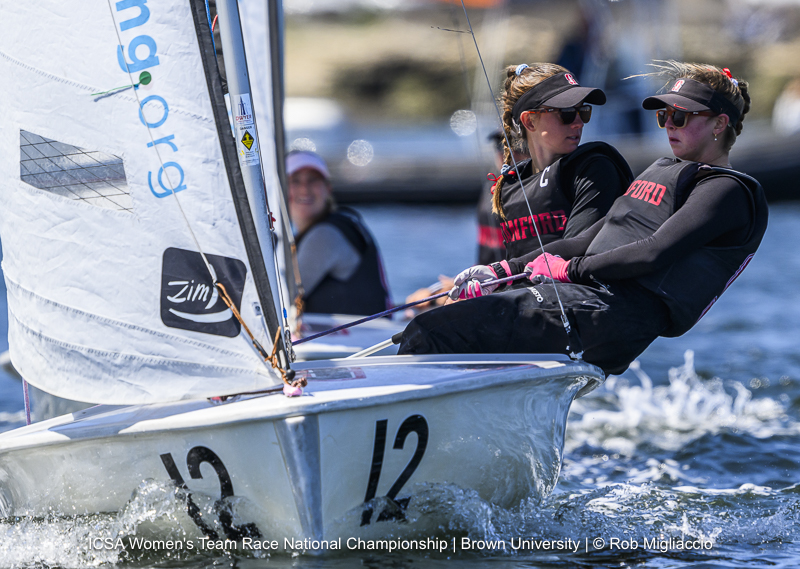
On the women’s side, defending champions Stanford sit at the top of this final edition of the S1D rankings looking solidly set up for another run at the title.
Yale comes in at Number 2 in this edition. Klevan, who is both the Stanford coach and a ranking panel member, pointed specifically to the Bulldogs’ strength in light air. If Nationals turns into a light-air regatta, that could tighten things quickly.
Brown sits third, with Cornell in fourth as the top-ranked team out of MAISA. Cornell’s conference championship performance backs that up. They went undefeated, finishing with 16–0 record.
Dartmouth is ranked fifth and has held a top-five spot all season. Harvard sits sixth, followed by Tufts in seventh and host team Tulane in eighth.
Like the Open fleet, there are multiple teams with a realistic shot at making the final four. It’s going to come down to who puts it together at the right time.
How Nationals Berths Are Decided
Before any of that plays out on the water, the bigger question is how the teams heading down to NOLA for the 2026 Team Race Nationals were selected in the first place.
Unlike the S1D rankings, which reflect input from active coaches, the Nationals lineup is determined by an ICSA selection committee, alongside automatic bids from conference champions. According to the ICSA, the committee is tasked with selecting “the most competitive field” based on “exemplary performance throughout the season,” explicitly not considering geography or results from previous seasons.
From the College Sailing Instagram
On the women’s side, this year’s committee consisted of Derek Deskey, Miranda Bakos, John Pearce, Kelsey Shakin, and Gwynnie Dunlevy. The open division committee included Marley Mais, Thomas Barrows, Nic Baird, Clay Johnson, and Rose Edwards.
For the 2026 nationals, that process has come under more scrutiny than usual.
On April 15, ICSA announced the selected teams for both Open and Women’s Team Race Nationals.
In the Open division, Navy (MAISA), Northwestern (MCSA), Harvard (NEISA), Stanford (PCCSC), College of Charleston (SAISA), and Tulane (SEISA) earned automatic berths by winning their conference championships. With 16 total berths and six taken by automatic qualifiers, the selection process fills out the remaining spots. That structure can lead to some tough outcomes. This year, teams like Yale (ranked 14th in our final edition) and Miami (ranked 15th) will not be racing.
The Controversy
The women’s fleet is where things get more complicated.
In the initial release, Cornell (MAISA), Michigan (MCSA), Yale (NEISA), Stanfor (PCCSC), College of Charleston (SAISA), and Tulane (SEISA) earned automatic berths, with six additional teams selected to complete the 12-team field.
Following that announcement, ICSA President Greg Wilkinson issued an update regarding the selection process (full statement below).
In that statement, the ICSA Executive Committee acknowledged an undisclosed “deep university affiliation” involving one of the selectors after the field had already been announced. While the committee maintained that the original selections were “fair, logical, and without bias,” it still chose to expand the field to include additional teams from the final round of deliberations. With one team declining, the championship will now be sailed with 15 teams.
That decision raises a few immediate questions.
If the process produced the right 12 teams, why add more? And if other teams were close enough to be included after the fact, why weren’t they in from the start?
At a minimum, it suggests the margin between “in” and “out” was anything but clear.
To see how that explanation landed, I went to the comments on the Instagram announcement. The reaction landed somewhere between confusion and outrage.
One user, @mateo_rod.riguez, wrote:
If the selection process was found to be unbiased upon review, then shouldn’t the selected teams remain unchanged? … Saying the selection was unbiased but then still expanding the field is contradictory imo.
That sense of contradiction came up repeatedly. User @augiedale commented:
Rules are meant to be followed not bent. This seems like a slap in the face to the multitude of teams that have been on the bubble the past few years.
Others were more direct. @silenth805 put it simply:
If the process was fair to begin with, then why add teams? Where is the integrity?
There were also a few comments pointing out a potential upside. @diegoscbr noted:
about time Open and Women’s have the same number of berths
While expanding the fleet brings the divisions in line numerically, it also raises a practical question: with the Women’s event still scheduled for two days, can the same level of competitive fairness be maintained for a larger field that would typically be scheduled over three days?
Beyond the official post, the conversation carried into other parts of the sailing community. One of the more visible responses came from @guardians_of_the_monohull on Instagram—a satirical account, self-described as the “New York Times of Sailing,” known for blending humor with pointed commentary.
Their post leaned into the speculation already circulating. In response, one of the selectors clarified in the comments:
Clarification — ICSA Executive Committee changed the selections to add additional teams. Selection Committee did not.
From the College Sailing Instagram
That distinction matters. The original selections and the later expansion appear to have come from different parts of the process, even if they now exist as a single outcome.
As for questions about conference representation, particularly how this could have or should have opened the door for more MAISA teams, the selection criteria are clear: berths are meant to be awarded on merit, not distributed across conferences. Whether that standard is always applied cleanly is a separate conversation, and one that will likely follow from this situation.
Some of the reaction has also focused on where teams sat in the Sail1Design rankings versus where they landed in the final field. Those comparisons only go so far, these rankings are intentionally independent of the ICSA selection process and aren’t meant to directly determine berths.
Still, when rankings, selections, and late changes all intersect like this, it becomes harder to separate perception from process.
The field is set. Expanded, debated, and now final.
Open Team Race Nationals begin April 23rd, with the Women’s event starting April 26th. From here, it’s straightforward: results get decided on the water. That said, the lead-up hasn’t gone unnoticed.
If you want a closer look at how teams stack up heading in, view the final Sail1Design rankings HERE.
As always, the conversation doesn’t stop here. If you have insight, opinions, or context that should be part of the conversation, drop a comment below or reach out at [email protected]. We will be watching how this plays out.
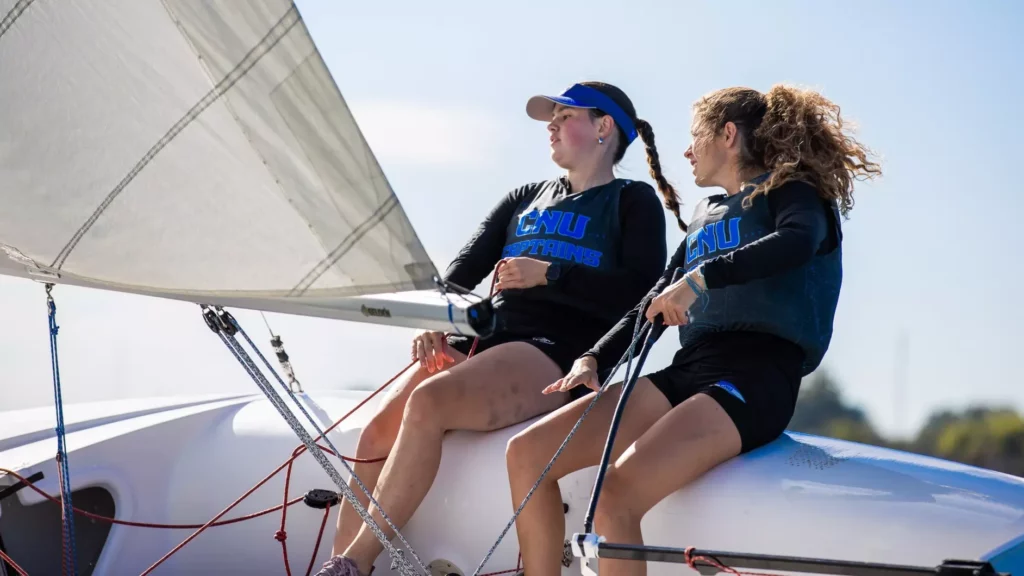
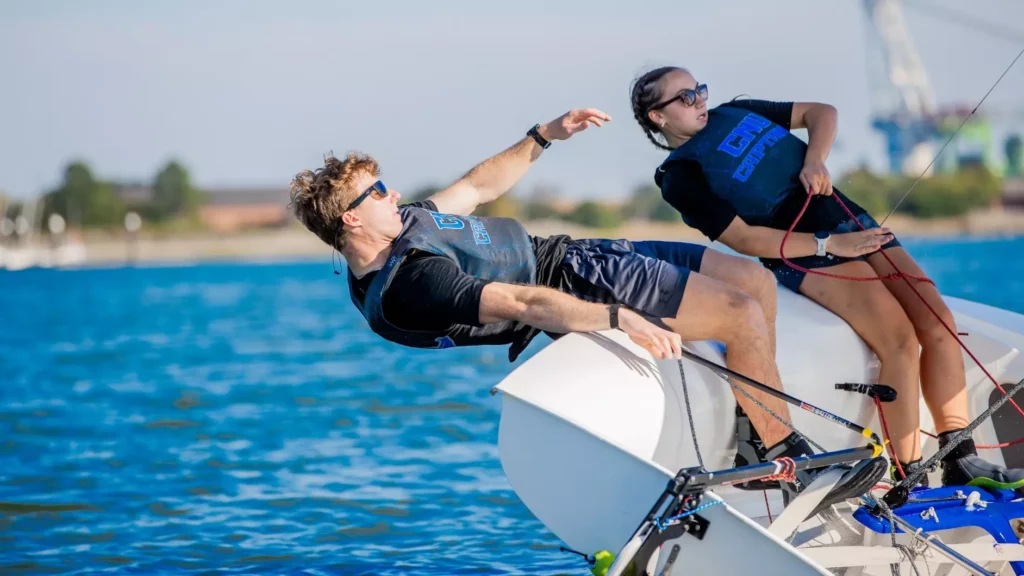
If you saw the results of the William and Mary Spring Open, which took place over March 28-29th, you would have seen the Christopher Newport University Captains at the top of the leaderboard. The team posted 65 points across A and B divisions to beat 2nd place University of Virginia with a 10 point lead after 10 races. It was the kind of result teams work toward all season, built on hours of practice and consistency across both divisions. However, the timing tells a different story.
Just days earlier, the University announced it would discontinue its sailing program at the end of the academic year, ending more than fifty years of competition. For the sailors, the season now unfolds under a different reality.
The decision, described as “difficult”, will bring an end to a program that has been deeply a part of the University’s identity. In a statement, University leadership cited a “full consideration of alternatives” and a need to align resources with institutional priorities.
Sailing at CNU dates back to the early 1970s as a club team before gaining varsity status in 1980. Over the decades, the program established itself as a consistent presence within the Middle Atlantic Intercollegiate Sailing Association (MAISA), producing competitive results and developing well-rounded student-athletes.
In recent years, that success has continued. The team earned back-to-back appearances at the ICSA Women’s National Semifinals in 2024 and 2025, while also producing All-Academic honorees and solid finishes across conference competition.
The decision to cut sailing also lands with a certain level of dissonance. Christopher Newport’s identity is closely tied to its nautical roots. The University’s teams compete as the Captains, a name and brand built around maritime tradition. For many connected to the program, that connection makes the announcement harder to reconcile.
The announcement defines the future of the program. For the sailors currently on the team, it has already reshaped the present.
I got the chance to connect with Josh Bendura ’26 about what the past weeks have been like for the team and what the program has meant to him over his four years at CNU.
A Richmond, Virginia native, Bendura grew up sailing out of Fishing Bay Yacht Club, competing along the East Coast in Optis before transitioning to the ILCA circuit. Sailing was a constant throughout his childhood, ultimately shaping his college decision.“CNU was one of the only schools in Virginia where I could compete on a varsity sailing team,” he said. “And a place where I felt like I would be more than just a number.” Over four years, Bendura found both a competitive outlet and a close-knit environment that, in his words, he “would certainly choose again.” He points to the demands of the team as shaping not just his work ethic, but his identity. “It has felt like not just a college sports team to me, but a family and a home at CNU.”
Since the announcement, that sense of stability has been shaken. “To be honest, it’s been hard,” he said. While Bendura notes that, as a senior, he is less directly impacted than underclassmen, the abruptness of the decision has been difficult to process. “It’s really heartbreaking to see all of the work the team and myself have put in disappear in an instant.” What stands out most to him is not just what is ending, but what will no longer continue. “I felt like I’ve been trying to help build a program that would create success for years to come beyond me. Knowing that the younger sailors won’t be able to continue that legacy feels terrible.”
The response from the sailing community has offered a sense of perspective. “The support we’ve received has been nothing short of amazing,” Bendura said. “It truly means the world.” Even as uncertainty surrounds the future of the program, his connection to the sport remains unchanged. With plans to continue racing beyond college, Bendura emphasized that sailing is something he hopes to stay involved in for life.
As the situation continues to evolve, the future of CNU Sailing remains uncertain. What is clear, however, is the level of investment in ensuring that programs like this are not lost quietly.
In conversations with organizers working closely with the CNU sailing community, I’ve learned that the focus right now is clear: turn support into action.
One of the most immediate ways to help is by reaching out directly to university leadership. Supporters are encouraged to send thoughtful, constructive emails that express why the program matters and, where possible, offer ideas or resources. Those involved emphasize that volume matters, and that consistent, solution-oriented outreach can help demonstrate both the level of support and the potential for a path forward.
There is also a push for tangible support. This can include financial contributions, sponsorship opportunities, industry connections, equipment support, or creative ideas that help address program costs. Specific, actionable offers are especially valuable at this stage.
Contact information for university leadership will be included at the end of this article.
Support for the current sailors extends beyond the decision itself. At S1D, we encourage members of the broader sailing community to keep the team members in mind — whether that means offering crewing opportunities, staying connected, or simply showing up in support.
Alumni are also being asked to help quickly organize and strengthen the network. Anyone who sailed at CNU, or knows someone who did, is encouraged to reach out to Justin Ailsworth ‘04 ([email protected]).
For now, the Captains are still racing, working to put together results that reflect everything the program has built over decades. What happens next will depend not just on the decision already made, but on the response that follows.
Sail 1 Design will continue to follow this story as it develops and share updates as information becomes available.
If there’s something happening in the one design sailing world you think deserves attention, we want to hear it. You can reach out to [email protected].
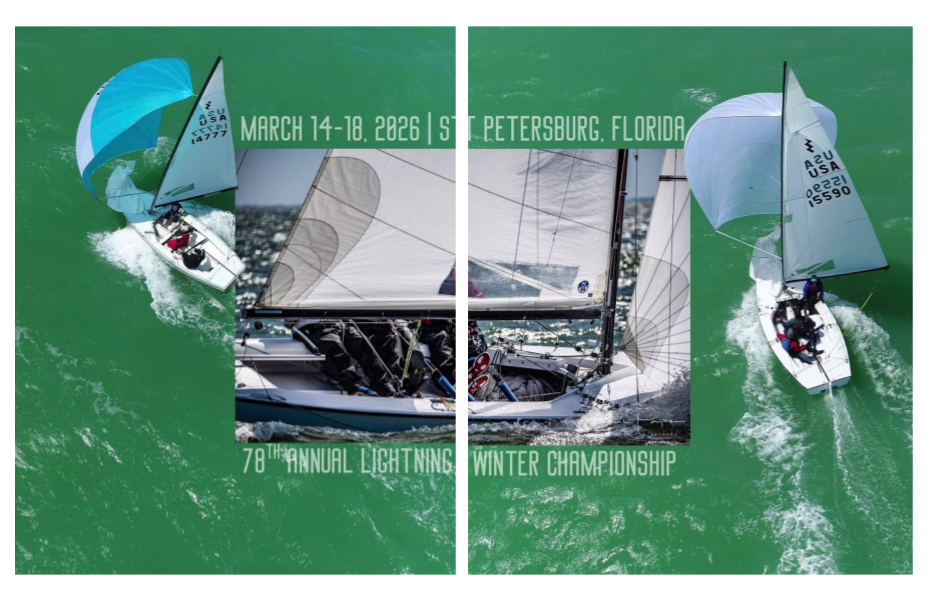
Between March 14–18, 2026, the Lightning Class descended on St. Petersburg, FL for the 2026 ILCA Winter Championship. Always a well-attended event, the promise of warmer weather drew 34 teams to the line—over 100 sailors in total! It’s a strong showing for the class and a testament to the depth and competitiveness of the fleet.
Six races were completed over the four-day regatta. The opening day saw no racing, as light air was followed by incoming storms. Racing got underway on Day 2, with one race sailed in a strong southwesterly breeze. Current was a major factor on the course, adding another layer to an already demanding day.
Day 3 brought a shift to a northerly breeze, paired with surprisingly cold temperatures. In St. Pete, this direction often delivers shifty, dynamic racing, and the fleet completed three races in those conditions. The final day saw a north-northeasterly breeze, still shifty and still well into double digits, with two more races to close out the regatta.
Diving into the results, Team Black River (32 pts), skippered by Jody Lutz with crew Jay Lutz and Derek Gauger, rounded out the top five. They opened the regatta with an impressive second-place finish and stayed consistent, holding onto strong results throughout the event.
Finishing fourth was Team Black Pearl (28 pts), skippered by Tanner Probst with Maya Weber and Dylan Farrell. Despite a tough 21st-place finish in Race 2, their remaining scores kept them firmly in contention at the top of this competitive fleet.
Taking bronze was David Starck, president of the Lightning Class, sailing with Jenna Probst and Tom Starck on Team PatStrong (17 pts). A consistently competitive team, their string of top-10 finishes secured them a spot on the podium.
Taking silver was Team Danilu (15 pts), skippered by Augie Diaz alongside sisters Elizabeth Starck and Katherine Starck. The team won Race 3 and maintained consistently strong finishes throughout the breezy regatta.
I caught up with Elizabeth, who sailed middle for the team, to hear more about their keys to success. She pointed to the conditions as a defining factor, with all three racing days seeing breeze over 15 knots and averaging closer to 20. Current played a role every day, and much of the fleet’s focus was on avoiding being pushed over the line early or overstanding marks. Understanding how the current direction relative to the wind and course needed to be a constant conversation.
Inside the boat, Elizabeth shared that they were “really focused on adjusting for the changes in breeze.” Notably, they kept their rig slightly looser, despite the bigger puffs, to stay powered up through the lulls. Ultimately, she emphasized that success came down to execution: “hiking hard, staying tuned to the shifts, and crossing when you could.”
At the top of the fleet, taking home gold was Team Daileon (14 points), skippered by Mark Mendelblatt with Carolina Mendelblatt and Lara Dallman-Weiss as crew. The St. Pete native put together an impressive series, winning Races 1 and 6 and finishing with just 14 points overall to narrowly edge out Team Danilu for the top spot.
With all racing taking place in sustained breeze, the 2026 Lightning Winter Championship delivered a regatta that tested both endurance and execution in breeze. Across the fleet, it seems that success came down to managing current, staying in phase with the shifts, and keeping the boat moving.
A big thank you to Elizabeth Starck for taking the time to share insight into the conditions and Team Danilu’s approach on the water. Special congratulations to her, Katherine Starck, and Augie Diaz on a strong second-place finish. Well done to all the teams for a strong showing of sailing in the breeze.
You can find the results HERE and a breakdown of the top 10 below.
Want Sail1Design to cover an event? Send requests to [email protected]
Top 10 Overall – Lightning Winter Championship
Daileon — Mark Mendelblatt — 14 pts
Danilu — Augie Diaz — 15 pts
Team PatStrong — David Starck — 17 pts
The Pearl — Tanner Probst — 28 pts
Black River — Jody Lutz — 32 pts
Blue Weenie — Ryan Davidson — 35 pts
Washed Up — Luke Ramsay — 45 pts
Act IV — Joshua Goldman — 47 pts
9 — Thomas Allen — 51 pts
Sleepy Joe — Joe Starck — 52 pts
Top 10 Masters Division – Lightning Winter Championship
Welcome to our High School Sailing Spotlight series. In this series, we highlight sailing programs from across the country that compete in the Interscholastic Sailing Association (ISSA). From programs with long-standing competitive traditions to emerging teams, each profile takes a closer look at the schools and provides key information about their sailing programs. You can find ISSA regatta results on the HS Sailing TechScore.
Located in Middletown, Rhode Island, St. George’s School sails on the waters of Newport Harbor, practicing out of Fort Adams State Park. St. George’s is an independent coeducational boarding and day school serving students in grades 9 through 12 and offering a college-preparatory academic program.
St. George’s maintains one of the oldest high school sailing programs in the United States. The sailing team trains in the school’s fleet of FJs and Z420s and competes in both the fall and spring season.
The team competes within the NESSA (New England Conference), the regional conference of the Interscholastic Sailing Association that oversees scholastic sailing across New England. Like most programs in the region, St. George’s competes in both the fall and spring scholastic sailing seasons.
According to head coach Ben Greenfield, the program places a strong emphasis on building a competitive but collaborative team environment. Practices are designed to push sailors to improve alongside one another, often creating a level of intensity that mirrors or exceeds regatta conditions. As Greenfield explains, “the best way to get really good at a sport is to play with, and against, those who are better than you,” a philosophy reflected in a team culture that encourages sailors to compete daily while supporting each other’s development.
For sailors and families preparing to enter the world of high school sailing, Greenfield emphasizes the importance of adaptability. While many skills from other sailing backgrounds translate well, the short-course nature of scholastic racing often requires adjustment. He notes that the most successful sailors are those who are able to recognize which of their existing skills apply and where they may need to improve in order to meet the demands of high school competition.
Over the years, the team has consistently competed at the highest levels of scholastic sailing, qualifying for national championship events and maintaining a strong presence in New England competition.
Selected Recent Results (as of posting in 2026)
7th — 2025 Mallory Trophy
4th — 2025 Baker Trophy
3rd — 2025 NESSA Fleet Racing Championship (O’Day Trophy)
You can find the Open rankings HERE and the Women’s Rankings HERE.
COPYRIGHT 2025 ROB MIGLIACCIO
Open Rankings
For this edition we welcomed Coach Annabell Carrington from the College of Charleston to our rankings panel, which already consisted of John Mollicone (Brown), Chris Klevan (Stanford), Charles Higgins (Tulane), and Brendan Feeney (Fordham).
On the open side of things, Harvard still sits confidently at the top and has repeatedly been called “the team to beat.” The defending champions just claimed their second win at the Liam O’Keefe Team Race with a 7–0 record. Extremely impressive results. Extremely hard to beat.
No team race ranking is complete without Roger Williams in the mix. Feeney put it best saying, “When I think master-of-the-fundamentals in sports I think of Roger Federer on the court and Roger Williams on the Digital N. From starting, to communication, to boathandling this team makes it their mission to be at or very near the top” of the fleet.
Rounding out the top three in this second edition of the rankings is Stanford. Mollicone noted the team’s recent regatta success saying, “Same team as last year that finished 4th at Open Team Race Nationals. Perfect 10-0 at the Nelson Roltsch at Tulane last weekend against solid Navy, Tulane, and Charleston teams” while Feeney even went so far as to propose them as the possible “fastest team in the country.”
Brown slots in at number four, with the entire panel agreeing that this team is solidly placing itself in the same league as the other top three teams. Do we already know who our final four at nationals will be?
Navy is currently ranked as the top team from MAISA. Carrington notes their strong returning sailors, while Mollicone is expecting great things but is looking to see how the team stacks up within MAISA at the Marchiando.
Charleston from SAISA and Tulane from SEISA are holding their own in the rankings, sitting 7th and 8th respectively. Tulane will even get the benefit of nationals on their home waters this spring.
From MAISA, St. Mary’s is currently ranked 12th, but we’ve seen them improve greatly as the season goes on, especially as teams visit for spring break practices. Another MAISA team, Hobart and William Smith, is making its climb back toward a nationals berth, with Higgins noting that results in the coming weeks will prove just how good this team can be.
Overall, in this second edition of the rankings we can see that the top four teams are distinguishing themselves early on, but for the rest of the fleet there is still a lot in play.
COPYRIGHT 2025 ROB MIGLIACCIO
Women’s Rankings
In the women’s fleet it is no surprise that the Stanford women are sitting at the top. Mollicone wonders if this team will “lose a single race this season,” and frankly, so do we.
Brown holds the number two spot and, with a strong open team to practice against, our panel is confident this team will continue to build as the season progresses. With a strong group of returners, their top team finished 2nd in the recent Harvard Women’s Team Race.
Yale is ranked third with Carrington calling them, “a fast group with new starters coming in hot”. Mollicone said, “Despite turning over all of their starting skippers from the past 4 years, they are reloaded and were able to win their first event of the season.”
Georgetown and Cornell sit back-to-back (6th and 7th respectively) in the rankings and will likely battle it out to be MAISA’s top team. This Georgetown team is coming off a win at the ODU Women’s Team Race.
Charleston is looking like the top team from SAISA ranking 9th, but coaches are waiting to see how they perform when they head north for the Dellenbaugh.
There is a lot more sailing to come in the women’s team race calendar, and more interconference events will start to establish what we can expect as teams begin setting their sights on New Orleans.
Expect the next ranking in about two weeks. There are several events (many of them interconference) coming up in the next 2 weekends. These results could very well shake things up before the next edition of the rankings drops.
Stay tuned! Team race season is just getting started.
Check out our pre-season/week 1 breakdown HERE. Photos are from Rob Migliaccio can be found HERE.
The 2026 ILCA North American Gulf Coast Championships were hosted by the Sarasota Sailing Squadron from February 28th to March 1st. Across the ILCA 4, 6, and 7 fleets, 105 sailors showed up ready to battle it out. With very few races completed, the regatta appears to have been a test of consistency.
The ILCA 4 fleet delivered some of the tightest racing of the weekend, with just a single point separating each of the top three sailors. Bennett Lamb (SPYC) closed out the event with a win in Race 4 to secure third overall with 17 points. Just ahead, Charles Julien (Tuuci Racing) ended the regatta with 16 points. But it was Pablo Munoz Montes (Tuuci Racing) who claimed the title with 15 points, and notably without winning a single race.
With 43 sailors on the line, the ILCA 6 fleet completed just three races over the weekend. Just like the other fleets, so few races means no drop races. Elisa De Becker (KBYC) secured third place with 15 points, keeping all her scores inside the top 10. Che Liu (ABYC/Tabor Sailing) claimed silver with 12 points, highlighted by a race win and consistent front-of-the-fleet finishes. Sander Block (Coral Reef Yacht Club / Tuuci Racing) edged out the fleet with 11 points to take the championship. Like the ILCA 4 winner, his strength was consistent results. His worst finish was a seventh, and avoiding double-digit scores made the difference in a three-race series.
Jackson Bjorklund (Tuuci Racing) earned bronze in the ILCA 7 fleet with 18 points. Landon Stahl (ABYC/KBYC) put together a solid series to take second overall on 16 points, including a race win and three steady top-five results. At the top of the scoreboard, however, Cole Fanchi (Lauderdale Yacht Club) created separation. With just 11 points across four races, he never finished outside the top four.
Even with only three or four races completed, events like this are incredibly valuable. They give sailors the chance to put training into action, test decision-making under pressure, and learn how to manage a series. Whether the lesson is about consistency, starting strategy, or bouncing back from a tough race, every weekend adds experience.
Congratulations to all of the finishers! See the top 10 finishers below or full results HERE.
Photos are from Jennifer Joy Walker. The gallery can be found HERE.
You can find the Open rankings HERE and the Women’s Rankings HERE.
COPYRIGHT 2025 ROB MIGLIACCIO
Open Rankings
For this edition we welcomed Coach Annabell Carrington from the College of Charleston to our rankings panel, which already consisted of John Mollicone (Brown), Chris Klevan (Stanford), Charles Higgins (Tulane), and Brendan Feeney (Fordham).
On the open side of things, Harvard still sits confidently at the top and has repeatedly been called “the team to beat.” The defending champions just claimed their second win at the Liam O’Keefe Team Race with a 7–0 record. Extremely impressive results. Extremely hard to beat.
No team race ranking is complete without Roger Williams in the mix. Feeney put it best saying, “When I think master-of-the-fundamentals in sports I think of Roger Federer on the court and Roger Williams on the Digital N. From starting, to communication, to boathandling this team makes it their mission to be at or very near the top” of the fleet.
Rounding out the top three in this second edition of the rankings is Stanford. Mollicone noted the team’s recent regatta success saying, “Same team as last year that finished 4th at Open Team Race Nationals. Perfect 10-0 at the Nelson Roltsch at Tulane last weekend against solid Navy, Tulane, and Charleston teams” while Feeney even went so far as to propose them as the possible “fastest team in the country.”
Brown slots in at number four, with the entire panel agreeing that this team is solidly placing itself in the same league as the other top three teams. Do we already know who our final four at nationals will be?
Navy is currently ranked as the top team from MAISA. Carrington notes their strong returning sailors, while Mollicone is expecting great things but is looking to see how the team stacks up within MAISA at the Marchiando.
Charleston from SAISA and Tulane from SEISA are holding their own in the rankings, sitting 7th and 8th respectively. Tulane will even get the benefit of nationals on their home waters this spring.
From MAISA, St. Mary’s is currently ranked 12th, but we’ve seen them improve greatly as the season goes on, especially as teams visit for spring break practices. Another MAISA team, Hobart and William Smith, is making its climb back toward a nationals berth, with Higgins noting that results in the coming weeks will prove just how good this team can be.
Overall, in this second edition of the rankings we can see that the top four teams are distinguishing themselves early on, but for the rest of the fleet there is still a lot in play.
COPYRIGHT 2025 ROB MIGLIACCIO
Women’s Rankings
In the women’s fleet it is no surprise that the Stanford women are sitting at the top. Mollicone wonders if this team will “lose a single race this season,” and frankly, so do we.
Brown holds the number two spot and, with a strong open team to practice against, our panel is confident this team will continue to build as the season progresses. With a strong group of returners, their top team finished 2nd in the recent Harvard Women’s Team Race.
Yale is ranked third with Carrington calling them, “a fast group with new starters coming in hot”. Mollicone said, “Despite turning over all of their starting skippers from the past 4 years, they are reloaded and were able to win their first event of the season.”
Georgetown and Cornell sit back-to-back (6th and 7th respectively) in the rankings and will likely battle it out to be MAISA’s top team. This Georgetown team is coming off a win at the ODU Women’s Team Race.
Charleston is looking like the top team from SAISA ranking 9th, but coaches are waiting to see how they perform when they head north for the Dellenbaugh.
There is a lot more sailing to come in the women’s team race calendar, and more interconference events will start to establish what we can expect as teams begin setting their sights on New Orleans.
Expect the next ranking in about two weeks. There are several events (many of them interconference) coming up in the next 2 weekends. These results could very well shake things up before the next edition of the rankings drops.
Stay tuned! Team race season is just getting started.
Check out our pre-season/week 1 breakdown HERE. Photos are from Rob Migliaccio can be found HERE.
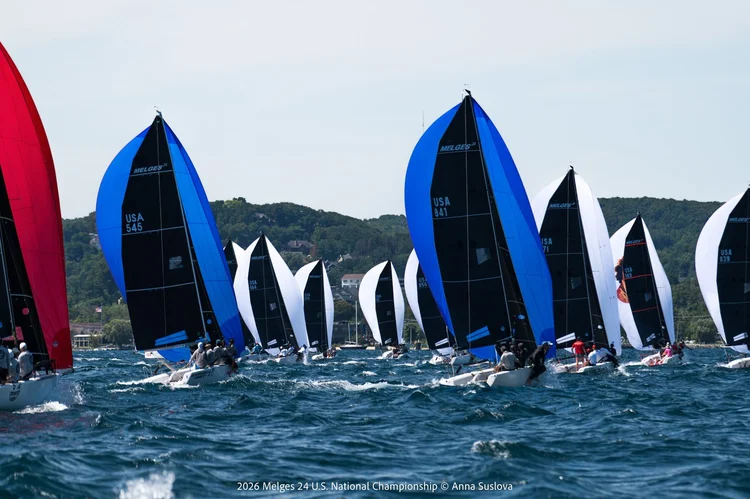
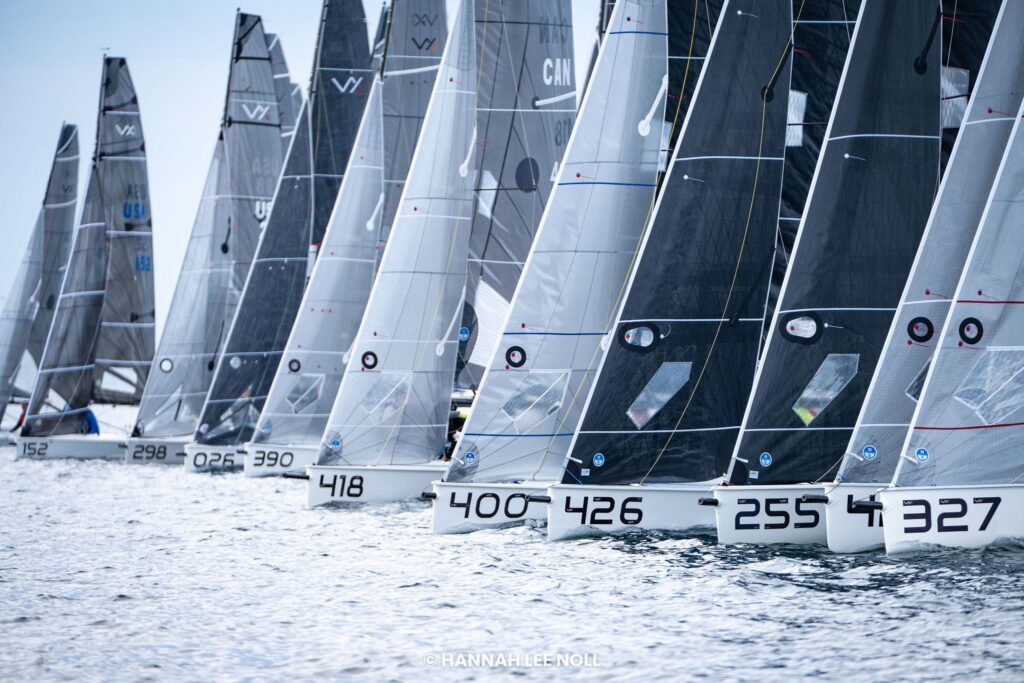
The 2025 Melges 24 North American Championship wrapped up in Miami, Florida after three days of competitive racing at the end of January, delivering a fitting finale to the 2025 season. With nine races completed in a wide range of conditions, this is the type of regatta where consistency and discipline can be rewarded.
Day 1 set the tone with warm temperatures, sunshine, and solid racing conditions. The opening races immediately showcased the depth of the fleet, as the first four races (3 races completed on Day 1) were each won by a different team, underscoring just how tight the competition would be throughout the event.
On Day 2, the fleet was met with light air. Racing eventually started after a delay and course relocation in search of steadier breeze. One of the most highlighted storylines of the day came from Zenda Express, who recovered from an OCS to finish second in the race. This comeback stands out in a fleet where racing is tight, with this team’s perseverance paying off.
Day 3 delivered classic “champagne” Miami sailing—warm, sunny, and steady 8–10 knot breezes—providing the perfect stage for the championship’s conclusion. Zenda Express seized the opportunity, closing out the regatta in dominant fashion with back-to-back bullets in the final two races as they secured the overall win.
Team Zenda Express, crewed by Harry Melges, Colleen O’Brien, Ripley Shelley, Alan Terhune, and Will Heurth, claimed the North American title with 25 net points, finishing with a commanding lead over Pacific Yankee in second with 32 points. Mavi rounded out the podium in third with 35 points.
In the Corinthian division, Troublemaker topped the category with 86 points, finishing 11th overall, just outside the top ten in a fleet stacked with professional talent.
With varied conditions and tight racing, the 2025 Melges 24 North American Championship was a fitting and exciting close to the season.
Find the full results HERE and a breakdown of the top teams below.
Want to learn more about the Melges 24 class? Find the S1D Class Profile HERE.
Photos taken by Hannah Lee Noll can be found HERE.
From January 17–19, 2026, fifteen C420 team race squads gathered in Miami to compete for the Liam O’Keefe Trophy at the C420 Team Race Midwinters. This year marked the highest attended edition of the event to date and the second time the Liam O’Keefe Trophy has been awarded. The O’Keefe Trophy is awarded in memory of beloved and truly talented sailor, Liam.
The event followed a double round-robin qualifying format before splitting into a Gold Fleet (top six teams) and Silver Fleet (remaining nine teams), using the same 3v3 team racing format commonly seen in college sailing. Sailors faced a wide range of conditions over the weekend, with rain and delays ultimately preventing the Gold and Silver Fleet stage from being fully completed. Even so, an impressive 140 races were sailed.
When the racing wrapped up, Team Apex emerged victorious with 19 total wins. Congratulations to team members Estella Morris, James Pine, Nathan Pine, Gabriela Mascarenhas, Danielle Lynch-Smith, and David Coates on a well-earned win. ClarkFleet 1 finished close behind in second place with 16 wins, while Show Ponies rounded out the podium with 14 wins.
At this level, picking up one or two wins can significantly alter the leaderboard. The tight margins in the results underscore the importance of consistency over the course of a regatta.
The depth of competition at the top of the fleet suggests that many of these sailors are well positioned to continue developing in team racing, with a number of them likely to make an impact in the college sailing scene in the years ahead.
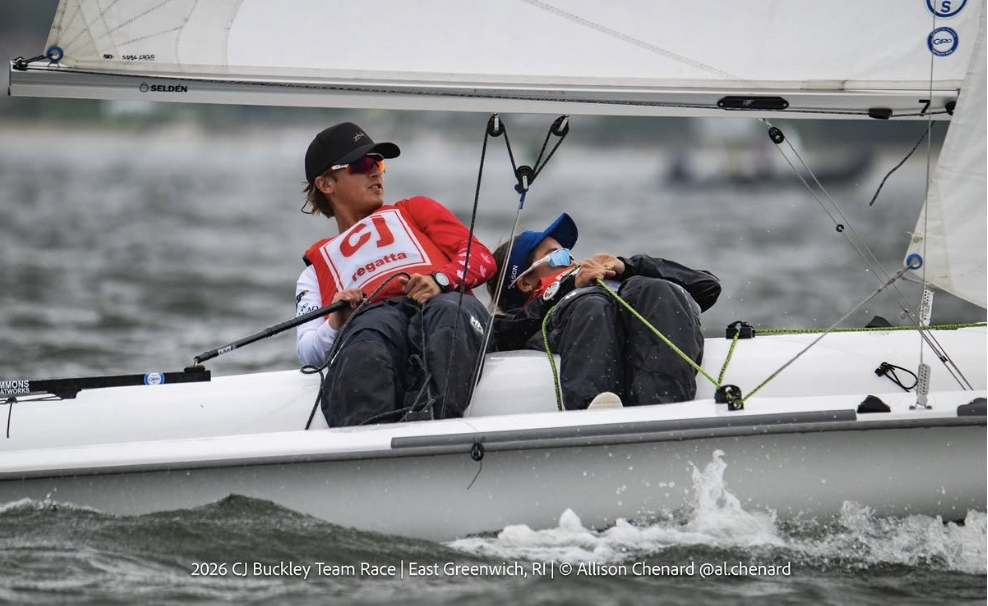
Full results can be found HERE. Photos by Allison Chenard are available HERE.
The 2026 Miami Snipe Invitational brought together a 37-boat fleet for a competitive weekend of racing. The fleet sailed in light-to-medium southeast conditions on Saturday followed by a shifty northwest breeze on Sunday. The changing breeze demanded adaptability and rewarded teams who could limit mistakes and perform across a deep fleet. Seven races were completed over the weekend enabling each team to drop one finish from their scoreline.
Shawn Harvey and Noble Reynoso (37 pts) claimed the overall win after maintaining steady results throughout the series. Grace Howie and Taylor Scheuermann (39 pts) finished a close second, remaining firmly in the hunt all weekend. Ivan Shestopalov and Marisleysis Cedeño (41 pts) completed the podium in third, staying consistent in a regatta where small gains and losses could add up quickly.
Just off the podium, Carter Cameron and Lorena Fundora (47 pts) finished fourth, while Peter Foley and Rees Tindall(55 pts) rounded out the top five.
Racing was exceptionally tight, with swings from the top of the fleet to deep scores. Finding and protecting a lane off the line proved critical, and mark roundings were often chaotic as the fleet compressed in lighter air. Numerous Miami Snipe coaches were on the water throughout the weekend, giving sailors immediate feedback and helping newer teams get up to speed quickly.
The Miami Snipe Invitational continues to stand out as an effective entry point for younger sailors into the Snipe class. Events such as this one and the Women’s Western Hemisphere and U.S. Women’s National Championshipspair high-level competition with strong coaching support and accessible charter opportunities.
As competitor Elizabeth Stark noted, “Kathy Tocke ran a smooth, well-organized event, and the sailors and supporters who provided sails and charters, especially Augie Diaz, helped push the Invitational to a higher standard. This made the racing both fair and truly competitive.”
The 2025 ILCA District 13 Championship, hosted by the St. Petersburg Yacht Club was extremely well attended this year. The event continues its long-standing reputation as one of the biggest and most competitive regattas on the youth one-design calendar. The event drew 120 ILCA sailors to St. Pete and the waters of Tampa Bay, including a strong turnout from outside District 13. This reinforces why this regatta consistently delivers such high-quality, hard-fought racing.
Starting with the ILCA 7 class, Zachary Brown (Barclay Sailing/ Lakewood YC) put out a commanding performance netting 9 points over the 4 races completed. His consistent top 5 finishes were able to carry him to victory. Next up was Asher Zittrer (LYC) finishing with 16 points. Finally, the top three was closed out by Dave Chapin (Lake Eustis Sailing Center).
In the ILCA 4, an impressive 45 boats were registered. Charles Julien (Tuuci Racing) took the win but was closely followed by Grant Chin (Brant Beach YC/ Key Biscayne YC). Pablo Munoz Montes (KBYC) was the final podium finisher with 22 points.
In the largest class, the ILCA 6, Jason Folvig (Lauderdale YC) finished in first with 10 points. He had a 15 point lead over the next finisher Leonardo Terzani (KBYC) who accumulated 25 points through the 4 races. There was another big points gap between second and third as Landon Stahl (ABYC/KBYC) took home third with 34 points.
Due to only 4 races being completed there was no drop race given. This should remind sailors and coaches to treat every race like it counts. When every point stays on the scoreline, the basics matter more than ever. Sailors are rewarded for practiced boathandling, clean mark roundings, and fighting for each boat at the finish. In competitive fleets like these, performance can be greatly influenced by the small, well-executed moments that accumulate over the course of the event.
Check out the full results HERE, and keep an eye on our events CALENDAR to see when the ILCA fleets hit the water next.
Several one-design classes have been experimenting with event formats aimed at lowering barriers and building participation. The Snipe Class put that idea into practice by embedding an accessibility-focused event structure within the Women’s Western Hemisphere and U.S. Women’s National Championships, held November 14–16 on Biscayne Bay.
The regatta ran two scoring tracks: the Hemisphere Cup using all three days of racing, and the U.S. Women’s Nationals using only the Saturday–Sunday results.
To keep barriers low, organizers offered reduced entry fees ($160 for both events; $125 for Nationals only), $100 charters for qualified Snipe sailors, and affordable housing options including a shared Airbnb and free stays with Miami families. The format successfully attracted newer and younger competitors.
Competitor Min Min Kelley highlighted the impact, noting “one of the great things about this event was the approachable entry fee and the very affordable charter fee, something that would personally hold me back otherwise.” She added that the accessibility made it “a perfect opportunity to get into the class,” and said she looks forward to “future events to perhaps get back into skippering and hopefully continue sailing more Snipes.”
Hemisphere Cup (3 Days)
Argentina’s Mariela Salerno and Adriana Quiroga won the Hemisphere Cup with 29 points. Their scoreline rewarded consistency across the full three-day series and kept them just ahead of the American teams chasing from behind. Finishing one point back, Aine McLean Fretwell and Ximena Escobar (USA) were steady throughout the weekend and remained in striking distance until the final race, ultimately taking second overall with 30 points. In third place, Tracy Smith and Lorena Fundora (USA) rounded out the podium on points. The pair delivered a solid series and held their position among a competitive U.S. group in the top half of the fleet.
U.S. Women’s Nationals (2 Days; U.S. teams only)
Aine McLean Fretwell and Ximena Escobar claimed the U.S. Women’s National Championship with 13 net points over the two-day series. Their strong finishes on both days secured a comfortable lead. Just two points behind, Gracie Howie and Katja Setl finished second with 15 points. Their later performance tightened the gap and kept pressure on the leaders throughout the final races. In third, Tracy Smith and Lorena Fundora posted 21 points to complete the U.S. podium, adding another solid result to their weekend of racing.
Congratulations to all of the competitors! You can find all of the results HERE.
By pairing competitive racing with intentionally accessible event design, the 2025 Women’s Western Hemisphere and U.S. Nationals showed how the Snipe Class can lower barriers without sacrificing strong competition. The combination of reduced costs, affordable charters, and community-supported housing makes events like this especially valuable for recently graduated, post-college sailors who are “shopping” for a class before committing to buying a boat.
This demographic is looking for fleets that are competitive, engaging, and welcoming. If one-design classes want to attract the next generation of sailors, formats like this offer a clear blueprint for how to do it well.
Between January 3–5, the Snipe fleet will be back in action with the U31 Invite in Miami, another strong example of events designed to attract and retain younger sailors in the class.
Want to see more upcoming regatta dates? Check out our EVENTS CALENDAR!