News Flash: GHYC is Hiring a Full-Time Waterfront Director!! Great Harbor Yacht Club, situated on picturesque Nantucket harbor, offers its members exceptional recreational opportunities and dining options while making sure to immerse our members in Nantucket’s unique locale. GHYC offers a full complement of activities for our members and their guests to enjoy. Between the Clubhouse, waterfront facilities, state-of-the-art tennis & swim complex and fitness center & spa, GHYC offers something for every recreation and Nantucket enthusiast. As Nantucket’s newest and most extraordinary club, Great Harbor Yacht provides our members and their guests with unparalleled access to the water, offering the most beautiful waterfront Clubhouse and dining rooms on Nantucket, marine facilities, tennis and swim complex and a state-of-the-art fitness center and spa.
Nantucket island, 30 miles out to sea, has a rich maritime history. Soon after the English settlers arrived in 1660, off shore whaling began. From the mid 1700’s to the late 1830’s Nantucket was considered the whaling capital of the world, with as many as 150 ships making port in the Harbor.
When the whaling era ended, Nantucket was rediscover as the perfect destination for the new American tradition of summer vacations. Today, Nantucket is considered a world class resort island. News Flash: GHYC is Hiring a Full-Time Waterfront Director!!
Sailing Fitness: The Importance of Proper Stretching
Stretch It Out
Stretching, we all have done it, but have you thought of doing it before going sailing? If you have that’s great, your one step ahead of everyone else! If you haven’t, why not? Sailing is a sport just like any other, however, we see many sailors forgetting this very important step of getting ready. Stretching is essential in helping your body get ready for the workout about to come your way as well as make injuring yourself less likely. I am here to guide you on the importance of stretching before and after sailing, and the best stretches you can do for better performance on and off the water.
So why stretch for sailing? In sailing just like any other sport you are using your muscles. So before heading out on the water it is essential to get the muscles you are about to use warmed up. Most of the time sailors are heading out sailing in the morning when their muscles are still tight. By stretching those tight muscles you can avoid injury while out on the water for a regatta or practice. Stretching has also shown to help improve athletes performance during competition. Just as it is important to add stretching to your routine before heading out sailing, it is also just as important when you get off the water. Stretching after sailing will help reduce muscle fatigue, increase your flexibility, and help improve your circulation. Now that you can see why it’s important to stretch before and after a sailing session lets check out the different stretches you can do, and what is best for before and after sailing.
First lets start with the different types of stretches out there.
- Self Myofascial Release or Foam Rolling: This form of stretching is done by rolling a piece of foam on different trigger points on your body. You are massaging away restrictions to your muscles to improve your soft-tissue extensibility.

- Static Stretching: This is done while your body is at rest. You use different movements to lengthen your muscle to an elongated position and hold it for at least 30 seconds.
- Active-Isolated Stretching: During this stretch you are moving your joint through a full range of motion. Hold each stretch for 2 seconds then repeat for 5-10 repetitions.
- Neuromuscular Stretching or Proprioceptive Neuromuscular Facilitation: This stretching involves a Sports Performance Professional moving your limb until the first resistance barrier.
- Dynamic Stretching: This form of stretching is using your force production and body momentum to go through a full range of motion.
So of these five stretches what is the best for before and after sailing?
Before Sailing: Most people may turn to static stretching as being the best before any physical activity. However, static stretching has been shown to decrease athletes performance if used before competition. The best form of stretching before heading out on the water or any sport is dynamic stretching. Dynamic stretching is the best for several reasons; it activates the muscles you are going to be using, it helps improve your range of motion, and it has shown to enhance your performance during activity.
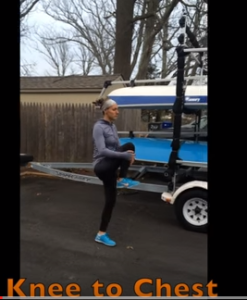 Check out the list of my favorite dynamic stretches then check out the video of these stretches below:
- Walking Straight Leg Kicks
- Knee to Chest
- Lunge with a Twist
- Hip Stretch with a Twist
(Perform these stretches by having a starting point go in that direction for 20-30 feet, then turn around and repeat that same stretch. Then go on to the next dynamic stretch.)
After Sailing: After you finish up your day sailing you should also do some stretching. This is where static stretching, active-isolated stretching, and foam rolling come in. All three of these can be used or combined to help reduce muscle fatigue, increase your flexibility, and help improve your circulation.
Check out my list of my favorite after sailing stretches:
- Hamstring Stretch
- Hip and Thigh Stretch
- Active Side Lunge
- Shoulder Stretch
- Tricep Stretch
- Foam Rolling of Legs and Back
Adding stretching to your routine will not only make your body thank you, but you will see your sailing performance improve. Stretching before you go sailing is an easy way to warm your muscles up for the workout to come and avoid injury. When you stretch after sailing you help your body reduce muscle fatigue, increase your flexibility, and help improve your circulation. Add stretching to your before and after sailing routine NOW for better performance out on the water! Check out the stretching video below for a better understanding of how to do the above stretches.
For more information on fitness for sailing contact [email protected]. Also check out Sailorcise on Facebook, Twitter, and Instagram for daily tips on fitness, nutrition, and sailing.
Club Profile: Park City Sailing (Utah)
 When the town of Park City is mentioned it brings to mind the 2002 Olympic Games, 3 world class ski resorts and an eclectic funky community. Just outside of the town and under the slopes of the Deer Valley ski resort the State of Utah constructed the Jordanelle Reservoir within a State Park. This created a 6 square mile body of water at 6200’ in elevation. South east of the reservoir is Provo Canyon and the city of Provo. The summer heat in the valley creates a reliable thermal breeze and the combination has become the ideal setting for Park City Sailing.
News Flash: Park City Sailing is Hiring!!
It turned out that Park City is the home of a large number of sailing refuges who relocated to live a unique mountain town lifestyle. With the creation of the Jordanelle the pieces began to fall into place during the summer of 2008. The rest is history.

Park City Sailing sails at the Jordanelle State Park – between Park City and Heber City, Utah. The lake is about a 10 minute drive from downtown Park City. The lake is 6 square miles at 6200’ elevation. The Jordanelle was created in 1995 as a future water supply for Utah.
The laser fleet sails out of the Personal Watercraft Ramp (PWC) area – there’s a 40′ storage container and fenced area for laser storage. The Jr. Sailing Program operates out of the Beach House.
The Park City Sailing Association’s fleet has grown each season. From a borrowed power boat in our first summer 2008 the membership has worked tirelessly to raise funds to develop a fleet that will permit us to expand our sailing programs to met the wide needs of our community.

8 x Elliot 6m’s in 2013
During the spring of 2013 PCSA received a donation of a fleet of 8 Elliot 6 Meter boats. The donor was the Sailing Educational Association of Sheboygan (SEAS). The Elliots are identical to the boats used during the 2012 Olympic Games in London. So far the fleet was been used to support Wounded Warrior programs as well as a Thursday Night Racing Series.

1 x Rhodes 19
Through the generosity of one of our families, PCSA received a donation of a Rhodes 19. This sturdy 19 footer became a popular family boat as she is stable and very comfortable. She also sits on a mooring to keep her user friendly for intermediate sailors.

2 x J22 Sailboats
In the summer of 2011 we acquired our first J22 keelboat which permitted us to establish both our Charter Sailing Program and our Adult Sailing Program. Due to the popularity of both programs we acquired our second J22 keelboat for the 2012 season. The J22’s also permit us to host special day and weeklong sailing camps for other summer youth programs in our community.

13 x Optimist Dinghies
Our Junior Sailing Program is supported by our 13 club owned Optimist sailing prams. The “Opti” was selected by our Board due to its ideal trainer characteristics as well as the fact that in any given year there are over 150,000 Optis being sailed in over 100 countries. In addition to our club owned boats, there are 8 privately owned Optis in our program.

6 x Club 420’s
For the 2012 season we acquired four Club 420 sailboats. These 14 foot two person boats are ideal for teenagers and they are one of the most frequently raced boats on the inter-collegiate circuit. Our 420’s are rigged with a trapeze and spinnakers that provide both a physical and advanced experience for the intermediate young sailor. In 2014 we acquired 2 more Club 420’s to support our expanding program with group such as the University of Utah and the Park City High School Sailing Club.

50+ Lasers sailing on the Jordanelle
Our adult sailing members privately own 42 Laser Class Olympic sailing dinghies. The majority of these boats are stored in our secured facility on either racks or owner provided dollies. The spars and sails for the Lasers are stored in our 40’ cargo container, which is 100 yards from our paved launching ramp.

PCSA’s 17′ Boston Whaler + Others
Our primary race committee and safety boat is a 17 ‘Boston Whaler Montauk. Complementing it are our two smaller power boats which are a two 13’ Boston Whalers and a 11′ Boston Whaler. These fast and unsinkable boats support our Adult Racing Program as well as our Junior Instructional Programs. News Flash: Park City Sailing is Hiring!!
Club Profile: Tarrantine Yacht Club of Dark Harbor
 The Tarratine Club of Dark Harbor was founded on September 2, 1896 in Islesboro, Maine for the purpose of “promoting boating, golfing and kindred interests.”
Now more than 100 years later the club maintains its traditions and high standards along with excellent golf, tennis, sailing, tots and dining facilities.
A distinctive culture has grown out of the clubs’s long history. The qualities most important to members include congeniality, low-key atmosphere, family orientation, friendliness and small size.
Simple and unpretentious club facilities are key to maintaining this culture.
Tarrantine Club of Dark Harbor is Hiring for 2016!!
The Tarratine Club of Dark Harbor – located in Islesboro, Maine, a 14-mile long island in the heart of picturesque Penobscot Bay – seeks to hire several sailing instructors for its 2016 Junior Sailing program.
Founded in 1896, the club enjoys a strong tradition of racing and recreational sailing, as well as tennis and golf. The club currently operates five classes of boats: Turnabouts, Optimists, 420s, Herreshoff 12s and the renowned Dark Harbor 20, a classic 30’ racing sloop designed by Sparkman & Stephens that is unique to the Tarratine Club.
 These are full-time, seasonal positions, including occasional evenings and weekends, reporting to the club’s Sailing Master. Instructor responsibilities include:
- Day-to-day instruction in the junior sailing program including all levels of sailing and seamanship instruction;
- Day-to-day coaching in the afternoon racing program including inter-club and intra-club series racing;
- Supervising and mentoring the Club’s teenage Junior Instructors;
- Occasional weekend Race Committee duties; and,
- An interest in racing Herreshoff 12s and Dark Harbor 20s when not occupied by teaching responsibilities.
Candidates should be mature, enthusiastic sailors with strong backgrounds in instruction and racing. Participation in a structured 420 racing program (college, high school or summer club racing team) featuring weekly practices and regattas will be preferred. A demonstrated ability to teach sailors with varied skills and interests is required.
The club offers a competitive salary, housing, shift lunch, and the potential for a year-end merit bonus.
To apply, visit here.
Company Profile: Stiletto Catamarans
 Stiletto Catamarans Are More Than Just A Boat !
Stiletto is not just a boat. To us, its an icon of a way of life. Not only did Stiletto Manufacturing founder, Jay Phillips, start a 30 year charter and performance sailing career with a Stiletto Day Sail Charter Business, but he and his wife sailed a Stiletto right up to their beach wedding on North Captiva.
Stilleto Manufacturing is HIRING full-time Multihull Captains & Coaches
Brothers, Ron and Andy Nicol have been with Stiletto from the beginning working in the original FORCE engineering team and later buying the brand. Together, they have been supplying refit Stiletto Classics and parts to Stiletto owners for nearly 35 years.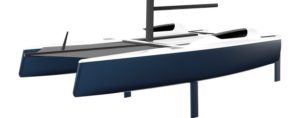
COMMITTED TO PRODUCE PERFORMANCE BOATS AND PERFORMANCE SAILORS
The exhilarating Stiletto has bred some of the best sailors in the sport today such as Brad Reed, Tucker Thompson, and Dave Calvert. Stiletto believes that our mission is not only to produce attainable fast sailboats but to help make great sailors. That’s why teaching is such an important part of our brand.
 COMMITTED TO INNOVATION
As much as we believe in educating the next generation of sailors, we commit to staying on the cutting edge of technology. When Stiletto was first introduced, it was the lightest, fastest boat on the market. We’re committed to maintain this same level of excellence and innovation with any new Stiletto Models.
We aim to be responsive to customer inquiries, and support the owner community by facilitating regional events, publishing regatta information, and promptly responding to parts and warranty needs for the new Stiletto X Series. As a continued commitment, Stiletto Manufacturing aims to further the innovation on all models by publishing great owner-contributed ideas, upgrades, and modifications here on SailStiletto.com within the Wildjibe Newsgroup and Yachtrodding Blog.
Stilleto Manufacturing is HIRING full-time Multihull Captains & Coaches
Exciting News From Selden Mast!
Rollin’ a Fatty It’s no mistake that today’s boat builders offer furling masts on nearly all models. Cruising sailors choose the configuration because of the ease of use when it’s time to set our douse the main sail. Rolling the main along the long edge means less work for the crew and less time to transition between sailing and non-sailing modes.
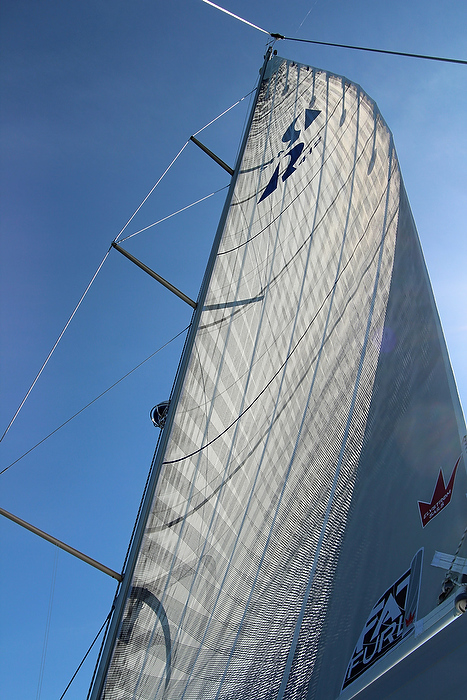 The tradeoff has been that with in mast furling, the sails are less able to utilize a powerful leech profile. If the 2015 Annapolis Boat Show is any indicator, it would seem most savvy cruisers choose the convenience of using their main sail often over the slightly higher performing conventional sail profiles.
“In mast furling has been available for years but sailors are always torn between the convenience of in mast furling and the performance of a conventional main sail. Now you can have it all!”, said Scott Alexander of Seldén Mast USA with a grin. He continued, “It’s really because of the sail Elvstrom has built and the way we build our rigs. Both are top performing products and by putting them together, now performance furling main sails are reality. It’s in the details. For example, Seldén is the only mast builder that suspends the main sail luff rod at the top of the mast to create a tensioning effect. We’ve built our masts this way for years, but now the payoff is a furling mast that performs so well that it can handle the higher performance Elvstrom sail. Now you can have in mast furling convenience with the performance of a conventional rig”.
It seems now we may be welcoming a time when sailors no longer have to choose between convenience and performance, but instead can enjoy both due to the exceptional performance of the Seldén furling mast and Elvstrom FatFurl performance main sail.

Photos courtesy of Elvstrom Sails, UK on a Hallberg-Rassy yacht.
More information can be found at the Seldén and Elvstrom sites:
Selden Mast: www.seldenmast.com
Elvstrom Fat Furl: http://www.elvstromsails.com/cruising/main-sails/furling-main/fatfurl-in-mast
Zim Sailing Expands!
 Huge news! Actually 24,000 square feet of news! After 7 years on Cutler street Zim Sailing has moved to double the space and now our manufacturing has joined the rest of the company under one roof. We have also added thousands of dollars of gear to make our retail store a one stop shop for all your sailing needs. We have the most extensive inventory of Gill, Magic Marine and Neil Pryde to go along with our abundance of parts.
One Design Class Profile: Viper 640
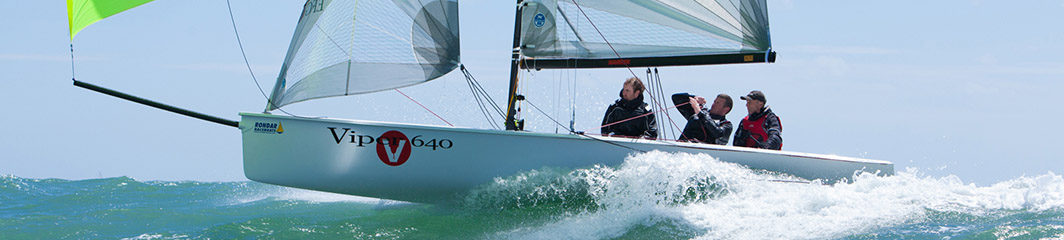 By Airwaves writer Brendan Healy
The Viper 640 Class will celebrate its 20th anniversary this year, and even after two decades on the water, the class is experiencing more growth than ever before. Both the number of events hosted by the class and the attendance levels per regatta are on the rise, making 2016 a very promising year for the class. With its first ever unofficial world championships, labeled the “International Championships” scheduled for mid-November in Bermuda, and already 51 boats registered, now is certainly the time to check out this exciting little sport boat.
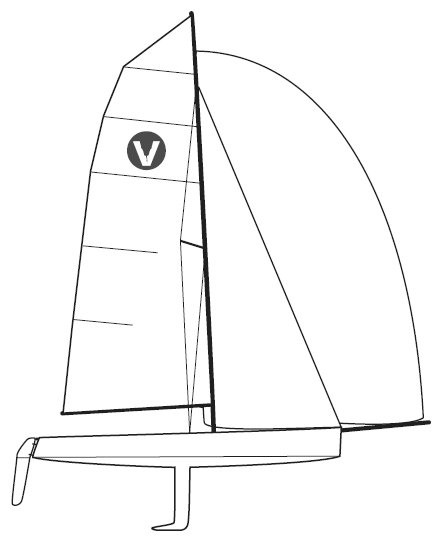
The boat was designed by Brian Bennett in 1996 as a 3 to 4 crewed affordable sport boat for the amateur and experienced sailor alike. It’s simple to rig and tune, and yet is athletically challenging to sail, making it an awesome platform for the weekend warrior to hit the road, as well as for the experienced “pro” teams to grind it out at championship level events. 
The class enjoys a relatively packed schedule with events all over the country (as well as internationally), at both the local and national level. This past year’s North American Championship was the most heavily attended regatta in the class’s history with 53 boats on the starting line. Hosted by the Larchmont Yacht Club in mid-October, this event saw a full range of conditions over the 4 days of sailing ranging from near drift conditions to upwards of 30 knots mid-regatta. In addition to 2015’s successful NAs, the Viper also hosted its second annual Winter Series, with over 25 boats at each event. The series consists of three regattas (one in December, January, and February), and is hosted by the Sarasota Sailing Squadron on the Gulf Coast of Florida. A unique format, in which each boat may drop 30% of their cumulative scores, makes it possible (although difficult) for the overall winner to compete in only 2 out of the 3 regattas. The squadron does a phenomenal job of hosting the fleet with a very laid back atmosphere at the boat park. This, coupled with PRO Ron Pletch’s “bang-em-out” approach to running races, guarantees that sailors get their money’s worth both on and off the water. In addition to the individual regattas, North Sails One Design rep, Zeke Horowitz, also led a clinic for any and all Viper sailors prior to the first regatta of the series this year. Following the Winter Series, the Viper’s next major event is the Bacardi Miami Sailing Week in early March. With 27 boats already registered, this event is becoming the largest single winter regatta for the class, to be followed up in April by the greatest one design regatta of the year, Charleston Race Week. In addition to all of these awesome events, the Gulf Yachting Association has recently chosen the Viper to become its official boat of the Capdevielle beginning in 2018, thereby replacing the Flying Scot, making for an exciting few years to come for the Gulf Coast.
 The Viper offers an awesome experience for any skill levels and age range of sailor, from the weekend warrior to the pro team, from novice keelboat sailor to one design champ. With its numbers on the rise, it’s proving to have a strong national presence and a very bright future. The Bermuda Worlds in November will certainly be a highlight in the class’s path to success as 2016 promises to be a year to remember in the 20-year history of this exceptional small sport boat.
Club Profile: Lake Lanier Sailing Club
 NewsFlash: Lake Lanier Sailing Club is Hiring! This is an exciting opportunity for a sailing professional, to help develop an up-and-coming club reach the next level…
Lake Lanier Sailing Club, Inc. is a private, family oriented club that is involved in all aspects of the sport of sailing with a special emphasis on racing. The Club is located on a beautiful lake-front compound near Flowery Branch, Georgia, with a large clubhouse, campground, beach, bathing facilities, 88 wet slips, and dry storage facilities that accommodate more than 200 trailered boats. Members compete in numerous One-Design, Portsmouth / Dinghy and Auxiliary / PHRF fleets at local, regional and national levels.
We also have a very active Junior Sailing program, organized as a 501(c)(3) corporation, and we are proud to host the Georgia Tech Sailing Club and the University of Georgia Sailing Club to promote the sport in college students. We are affiliated with US Sailing (USS), South Atlantic Yacht Racing Association (SAYRA) and Dixie Inland Yacht Racing Association (DIYRA).
The Club was founded in 1959, shortly after Lake Lanier was filled, and first occupied a parcel of land near Holiday Marina where members constructed a launching ramp and boat repair shed. The Club’s present location, near Flowery Branch, Georgia, was acquired in 1960, and is located on land which is partly owned by the Club and partly leased from the Army Corp of Engineers. Club members and their families cleared the land and constructed the initial facilities consisting of a boat storage area and ramp.
The Clubhouse or pavilion was constructed mainly by Club members between 1963 and 1967. Since then it and other facilities have gradually been improved. We have two paved boat ramps, paved boat storage and parking areas, five auxiliary sailboat docks, four for small boats launching, race committee shack, work area, camping area and swimming beach.
The Activities of Lake Lanier Sailing Club have traditionally been organized and carried out by the members and their families. The Club does not have a large staff, and in fact has only one full time employee. Successful operation of the Club therefore requires member participation. A new member of the Club should expect to be asked to assist with Club activities such as regatta management, race committee, social affairs and work parties.
For more information regarding membership, please visit the Membership Inquiries page. We’d love to hear from you!
NewsFlash: Lake Lanier Sailing Club is Hiring!
Club Profile: Manhattan Sailing School
Have you ever DREAMED of SAILING? This is your opportunity. Don’t let your ship pass you by.
Manhattan Sailing School is HIRING!!
Sign up for Basic Sailing today! 
NEWS FLASH – Basic Sailing is being offered at the
SPECIAL LOW PRICE of $390 from our Jersey City location for a limited time only! (reduced from $590)
Gift certificates available at the special low price!
“Manhattan Sailing School is the largest and most respected such organization
operating in the New York Harbor.” — Time Out NY
Your sailing career starts here! Basic Sailing is the foundation for all your future sailing knowledge. The subjects you will learn in Basic Sailing are:
- Sailing Terminology
- Points of Sail
- Rigging & Derigging
- Hoisting & Trimming Sails
- Tacking & Jibing
- Sailing by the Lee
- Proper Commands
- Docking & Securing a Boat
- Important Knots
- Basic Navigation Rules
- Man Overboard
2016 ICSA Team Race Preview & Coaches Poll!


Brought to you by Dynamic Dollies, Sail1Design is pleased to present the official ICSA Team Race Rankings! Welcome to the 2016 ICSA Team Race Rankings Preview & Prognostication! Ladies and gentlemen, start your engines, college team racing’s championship season is upon us!
NEISA
By: Ken Legler(tufts) and Bill Healy(Yale)
 Yale: Three time defending ICSA Team Race Champs will surely miss Graham Landy and Kate Gaumond but a deep roster with names like Belling, Doris, and Barrows, all current All Americans, the Bulldogs will be in the mix. Minus Landy and Gaumond, the rest of the team is intact plus some great freshman.
BC: Although only Rios returns from last year’s final-four squad, Charles Sinks is ready. Will former Opti world champ Sinclair Jones be their third skipper or will they rely on a more experienced but not quite as fast veteran.
Harvard: Mollerus, Zaleski, and Sertl will be tough. Nick DiGiovanni leads the B team and could sub in.
CGA: If you haven’t been paying attention lately, let me fill you in. The US Coast Guard Academy has a legit team. It’s clear they can succeed in fleet racing. They will be put to the test this Spring to see if they can translate that success into team racing. Avery Fanning and crew Robert Turley along with Nikki Barnes will be the backbone of this team. Crews on this squad look strong with Andrew Britton and Anna Morin along with Turley will only raise the bar for the Cadets.
Brown: The winners of the only team race inter conference regatta of the Fall season will lean heavily on Pearson Potts and teammate Marina Cano to get the most out of this team. 2/3 of this team finished 5th at the Hinman Trophy so they know how to do this, they just need to pull at all together when it counts.
RW: One of the best teams in the country last year lost 13 players to graduation. Returning starters Connor Corgard and All American Bre Baldino will have skippers Stuart Dreheim and Mack Bryan who saw some action at Nationals last year. They area very young team with exceptional crews so it will be interesting to see how they gel this Spring.
Boston University: NEISA’s most improved, perhaps, did not make NEISA’s top 12 last year but they have been terrific in dinghies starting right after TR champs last spring. Will that translate into a nationals berth? Probably not, but they are awfully fast.
Dartmouth: The early TR season hurts Dartmouth and their sailors lack big time TR experience. One skipper, however, has more match racing experience than anyone in NEISA. Look for Charles Lalumiere to lead a young group in New Englands.
Bowdoin: The polar Bears have never broken through in team racing but they have more talent this year than any in recent memory.
Tufts: Gone are all five skippers that made TR nationals last two years. Not only do have a high hill to climb but they might not have a consistent third boat.
MIT: MIT looks to build off their strong fleet race results and carry to momentum into the team racing season. They will rotate five skippers through the team race squad, but the strength of the team lies with the experienced crews. Junior standout crew Jordan Ladd, senior crew Christopher Ford, junior crew Paige Omura and senior crew Lisa Sukarev-Chuyan will give the Engineers solid boat-handling and team racing experience.The five skippers vying for a starting role at New Englands include seniors David Larson and Joe Paggi, junior Alec Stewart, but sophomores Cutter O’Connell and Ty Ingram are learning the game quickly and will be rotated through the A-squad.
URI: The Rams have one of the best women’s sailor in the county in Rachel Bryer who sails with Hannah Scanlon. IT’s not unusual to see the top women’s sailors in the team race mix and they often do quite well. But with URI’s limited TR schedule it will be hard to form a cohesive group. But senior Caleb Armstrong wants to prove that the Rams belong in the mix at the New England Champs. Bryer will be focusing on Womens events which will hurt their development as a team in the early Spring.
Conn: The Camels work really hard at the team racing discipline But this team is young and inexperienced at this level. i’m not saying they can’t succeed but it will be an uphill battle which Coach Bresnahan understands and he will get the most out of them at practice. Senior Bryce Kopp will lead this young group and just when you think that the Camels are out od top notch crews, more come out of the woodwork. Boat handling won’t be their problem.
MAISA
By: Johnny Norfleet(Fordham)
Georgetown: A perennial MAISA powerhouse and contender at nationals, Georgetown will once again be one of the favorites to come out of MAISA. With an army of immensely talented crews (including Isabelle Ruiz De Luzuriaga ’16, Bettina Redway ’16, and Meaghan MacRae ’18) and a mostly returning group of skippers (including CSOTY Nevin Snow ’16, Sean Golden ’16, and some combination of AJ Reiter ’17, High School Nationals Champ Campbell D’Eliscu ’19, and transfer Roger Dorr ’18), Georgetown will be the team to beat in all conditions.
St. Mary’s: Expect this extremely well coached and disciplined team race group to start off slow, qualify out of MAISA, and then outperform your expectations at nationals. Crews Mariah Leffingwell ’16, Shelby Jacobs ’17, and Kaitlyn Noreen ’16 and skippers Alex Curtiss ’16, Mackenzie Cooper ’17 and either Markus Edegran ’16 or Chase Quinn ’17 should round out this team.
Navy: Always a contender and one of the teams coming out of MAISA last year, Navy will be one of the teams you need to beat at the Prosser Trophy if you want to get to the big dance. Though they lose speed demon Mary Hall, veteran team racers Patrick Snow ’17, and Michael Popp ’16 will whip their younger teammates into shape. They will have plenty of time to hone their skills as they will have to sail out of the Team Race Challenge and the Prosser Trophy to get to Nationals.
Fordham: Rounding out the group of MAISA teams to make it to nationals last spring, this team will have their work cut out for them as they also have to sail out of the uncharacteristically competitive Team Race Challenge this season. Returning all three skippers from last season (Connor Godfrey ’16, Alec Tayler ’17, and Will Holz ’17), with a strong group of young alternate skippers, and a group of talented crews (Connor Murphy ’16, JJ Monro ’16, Madeline Sims ’16, Evan Morgan ’18, and Katherine Jones ’18), Fordham will  be one of the teams vying for a spot at nationals if they can work hard and make it through the Team Race Challenge.
Old Dominion: This team has been on both the winning and losing side of a tiebreaker to make it to nationals the past two years. Another team that will have to compete with Navy and Fordham for one of the two spots out of the Team Race Challenge, expect ODU to be a competitor and a team to beat if they can make it to the Prosser Trophy. Esteban Forrer ’16 and All-American crew Gabe Smith ’17 will lead a team of returning skippers Joe David ’16 and Augie Dale ’18 and crews Grace Mason ’16 and Kaylie Gallagher ’16.
George Washington: This young team that played spoiler at last year’s MAISA Champs will likely rise as a contender for one of the final spots to nationals. Though they lost their team race specialist Roger Dorr to transfer, they added a number of talented sailors to their roster that seems to grow significantly deeper and stronger each year. Expect to see Kai Friesecke ’18 and Brendan Shanahan ’17 lead a team likely rounded out by Andrew Sheerin ’18 and crews Mercedes McPhee ’19, Belle Strachan ’18, Henry Young ’16, and all-star skipper/crew Miranda Bakos ’18 when she isn’t competing on the women’s circuit.
Cornell: Though they did not compete in the MAISA Team Race Champs last spring, they are coming off a successful fall fleet race reason. With the weather looking to be on their side for an early practice start and a strong team race schedule set for this season, this well coached team could very well turn some heads. Expect to see Alex Woloshyn ’17, Shawn Kelter ’18, and Clark Uhl ’19 lead this young team race squad.
Hobart and William Smith: A longtime great in MAISA, this team just barely missed out on a spot to nationals last year. Expect this team led by Greiner Hobbs ’18, Eddie Cox ’16, and a group of talented crews to be a contender by the end of the team race season.
New York Maritime: Though they have not yet had much team race success, NY Maritime has emerged as a MAISA fleet racing powerhouse in the past two years with two podium finishes in the last three conference championships. Expect this team led by Zach Hill ’18, Nick Valente ’16 and crew Caitlin Cummings ’18 to use speed to their advantage and they could emerge as a dark horse contender.
With one of these top nine teams missing out on the Prosser Trophy this season, expect this to be the most competitive MAISA Team Race Championship in conference history.
UPenn: This team led by Mac Agnese ’17 and Drew Gallagher ’18 will be fast but will have their work cut out getting past two of Navy, Old Dominion, and UPenn at the Team Race Challenge.
KP: Like UPenn, this team led by Charlie Lomax ’18 will have their work cut out for them to get through the team race challenge. However, given their strong fleet race results the last two seasons and their emergence as a match racing contender, this team might just surprise you.
SAISA
By: Ward Cromwell(Charleston)
University of Miami: After a few years hiatus from Team Racing the Hurricanes will compete at both the Mendelblatt and the SAISA Champs. U. Miami is getting back up to speed, fueled by an energetic freshman class!
Jacksonville University: The Dolphins will be competing in the Mendelblatt, John Jackson, and the SAISA Champs. JU will make its first push in Team Racing this spring with junior skippers Danny Lawless and Peter Hidley. Julia Wiesner (ODU ’14) joined the Dolphins coaching squad last year bringing a wealth of knowledge and a fun perspective to this teams development.
University of South Florida: The Bulls are slated to compete in the Mendelblatt, Bob Bavier, Graham Hall, and the SAISA Champs. Under the new leadership of Allan Caplain the team will look to find a cohesive game plan which will likely be leed by the senior team of Fernando Monllor and Rebecca Campbell.
Eckerd College: The Tritons have an aggressive Team Race schedule planed competing in the Mendelblatt, the Bob Bavier, the Graham Hall, the Admiral Moor, & SAISA Champs. Senior skipper Tim Siemers along with Junior Skipper Jason D’Agostino will lead this squad along with an impressive list of Senior crews. Overall this team has progressed tremendously under the guidance of their head coach, Kevin Reali. This team is very excited for some high level team racing and eager to clinch a berth to the Nationals.
The College of Charleston: The Cougars are excited to compete in the Mendelblatt, Bob Bavier, St. Mary’s, Graham Hall, Szambecki, and the SAISA Champs.Several team members will be returning from last year’s final four appearance in Newport. Senior skipper Jake Reynold will pair with junior crew Chloe Dapp to lead off a very impressive list of sailors. Look for this squad to be on the podium early and often this team race season.
PCCSC
By: Clinton Hayes(Stanford)
Stanford: Coming off 2 consecutive 3rd place finishes at Nationals Stanford will once again lead the team racing charge from the west coast. They suffered some key loses to graduation but will return key drivers from last season Antoine Screve ’16 and Will Ladow ’18. Look for senior Sammy Steele along juniors Nikki Obel and JP Cannistraro to make big contributions. The Cardinal’s biggest question this season will come with their 3rd boat. If they can build strength in that position they can be a final 4 team in San Diego.
 Santa Barbara: Santa Barbara is enjoying solid team depth and is working hard to break thru this year in team racing. They have used the warm California winter to develop strategy and discipline in team race clinics with local rock-star sailors Willie McBride and Allie Blecher. The team will travel to the Mendleblatt team race in Florida in addition to sailing the McIntyre at Stanford. UCSB is filled with good sailors so if they can get their team race game together they will take wins off the best. They are the favorite for taking the 2nd PCCSC birth at Nationals.
Hawaii: Hawaii is coming off a strong fall of great west coast fleet race results. They can sail the FJ fast but might struggle to get 3 cohesive drivers together for team racing. Chuck Eaton will likely lead the team after good results in A-division and Match Racing.
USC: Like Hawaii, the Trojans had some really strong fleet racing results but aren’t quite deep enough to put together 3 really strong boats. They look to play the spoiler at qualifiers and steal that 2nd birth to Nationals. Senior Matthew Hecht looks like their strongest driver to lead the team.
MCSA
By: Clinton Hayes(Stanford)
U Wisconsin: WISCO suffered some large loses to graduation and only retain driver Lauran Wefer ’16 and crew Jennifer Burke ’16 from their starting team at last year’s Nationals. Despite that, they are one of the only teams in the Midwest with a full time coach and will certainly make big improvements as they travel to compete against the countries best at the Marchiando and Szambecki team races later in the season. It’s also noteworthy that they picked up another sailor from the talented Kutschenreuter family so we’ll see how he continues to progress as a freshmen.
U Michigan: The Wolverines may very well have another solid year. They look to retain 5 out of 6 starters from last year and showed some decent results this fall when they sailed their top players. Michigan will attend the Mendleblatt Team Race this year and may be in line to pick up an invite birth to another. I would count them as a favorite to make a trip to San Diego.
Minnesota: The Gophers have put up some good results in conference this fall and bring what might be the midwest’s best women’s team to also start in team racing. With coach Cappy leading the way and a group of junior and senior drivers they will certainly challenge for a spot at Nationals.
Northwestern: Don’t count out this super organized team from the big city. They work hard in team racing and, once again, are making the trip out to Stanford for the McIntyre Team Race.
NWICSA
By: Clinton Hayes(Stanford)
Oregon State, U Washington, and Western Washington all have a reasonable chance of grabbing the Northwest’s lone spot at nationals. Oregon State qualified for births at both Singles and Match Racing this fall and had the conferences best result as Rose Bowl. They also return 2 out of 3 starters from last years Nationals appearance.
SEISA
By: Clinton Hayes(Stanford)
Texas A&M Galveston has owned the Southeast birth at Nationals for a number of years. After winning much of their inconference events this fall they look likely to return.
_________________
About Sail1Design
Sail1Design is a grassroots organization, by sailors for sailors, dedicated to the one-design, youth, high school, college, and one-design sailing communities. Born in 2007, Sail1Design has grown considerably, and reaches out to all sailors wishing to enjoy and learn more about our sport. We have three main areas of business:
SAILING/MARINE INDUSTRY CAREER CENTER & JOB BOARD
We offer sailing’s #1 Career Center and Job Board, always chock full of incredible sailing job opportunities. Our comprehensive career center also offers job seekers the ability to create their own web page, highlighting their experience and posting their resume. Likewise, employers can search our resume database to find the right match for that open position. Sail1Design is proud also to be the official job board of the Intercollegiate Sailing Association (ICSA), and the US High School Sailing Association (ISSA).
MARKETPLACE & PROFESSIONAL BROKERAGE
Unique to the industry, Sail1Design hosts and manages an active private, by-owner marketplace, focusing on performance and one-design sailboats & gear. For all boats under 25′, our ads are free. What makes us different is that we also provide, side-by-side, professional brokerage services as well. We have had great success helping our sailing clients market and sell their boats, using our powerful client base, social media, and the brokerage industries multiple listing service to ensure your boat gets noticed.
AIRWAVES NEWS & CALENDAR
S1D also hosts Airwaves, an interactive, user fed Sailing Calendar and informative Sailing News, Articles, tips, & more. Airwaves has developed a great niche in the sailing publication world, and now boasts a seven-member staff of dedicated sailors, all contributing to our varied content.
2016 Club 420 Midwinters Championship Report and Results
Warm and Windy Conditions for Top Youth Sailors
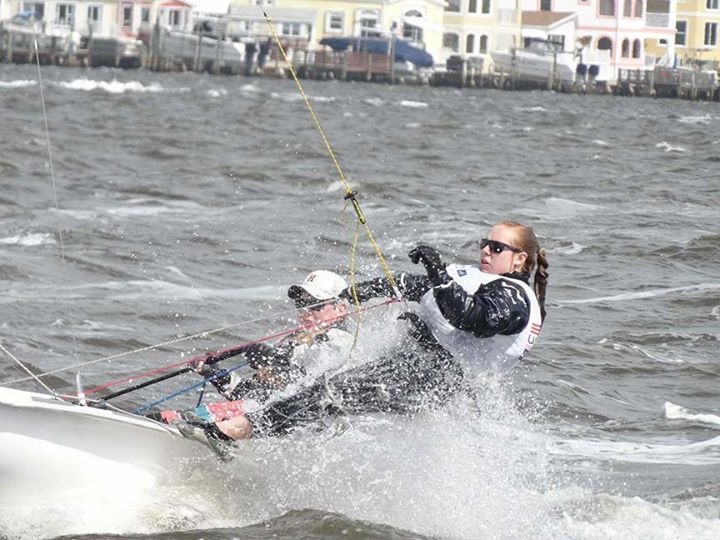 The Club 420 Association held its Midwinters Championships at the US Sailing Center of Martin County in Jensen Beach Florida February 13-15 and the 208 sailors were provided an assortment of conditions all leading to 22 exciting races. Wiley Rogers and Jack Parkin led the event from wire to wire posting 12 points in 11 races to the second place team of Ivan Shestopalov & Mario Gonzalez.
For full results CLICK HERE
104 boats competed with the 208 sailors representing Mexico, Canada and 18 US states.. Conditions on Saturday and Sunday were clear and consistent with 12-14 kts breeze. Monday started with 20kt wind and proved to be challenging for many competitors.
The top women’s team of Julia Reynolds & Anne Sidamon-Eristoff`finished in 20th place and the top junior (16 and under) team of Clay Snyder & Isabella Farina finished 10th.
Racing continues for the class at regional events across the US, Canadian and US National Championships in July and North American Championships at Coranado Yacht Club in August.
About the Club 420 Association – The Club 420 Association was established in 1980 to promote, foster, encourage and sponsor one-design sailing for youth sailors. The Association annually sponsors a North American Championship, US and Canadian National Championships as well as regional and team racing championships across North America while promoting the class to all ability and experience levels of youth sailing.
For additional information please contact the C420 class at www.C420.org or John Vandemoer, Class Executive Director, [email protected]