Whitecap Composites has been selected as the exclusive builder of the International Comet Class. With active fleets in Maryland, New Jersey, the Midwest and Bermuda, the appointment of a new builder will keep the class going for many more years to come.
Whitecap has already completed new molds and tooling and has produced it’s first hull which has been tested at MIT and won it’s first regatta at the Pumpkin Bowl in Maryland this month.
“We are very excited to be the new builder for the International Comet Class. Our manufacturing process allowed us to use thicker cores and a more elaborate grid system resulting in a stiffer and stronger boat while maintaining the class minimum weight required by the class rules. We are also thrilled that the boat was victorious in it’s very first regatta. We feel that we have put a modern twist on such an historic design in terms of cockpit layout, ergonomics and controls.” states the owners of Whitecap Composites.
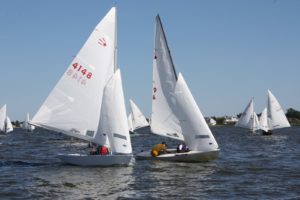 The Comet was designed by C. Lowndes Johnson as a trailerable version of the Star. The design combines a 16 foot hard chine planing hull with a classic sloop rig. Her light weight (260 lbs.), generous sail area (140 sq. ft.) and semi-flat bottom, make her easily driven to weather and can be planed off the wind in breezes of only 10 to 12 knots. The Comet carries a mainsail and jib, the mast stands twenty feet five inches above the deck and is supported by a fully adjustable three stay rig. The hulls feature watertight side tanks and a false bottom which is self-bailing in the event of a capsize. The boat has evolved greatly since 1932 and has kept pace with the times. The modern Comet sports “Go Fasts” such as vang sheeting, mast benders and depending on the skipper’s appetite for complexity, ball bearing travelers, and magic boxes for mast rake control. All sail adjustments may be placed on the cockpit coaming, to be at fingertip control from a fully hiked position.
The boat carries a crew of two for racing, making it ideal for husband and wife or parent and child teams, yet it can hold three adults for pleasure sailing. The boat is easily trailered, rigged and launched. Even more importantly, the Comet is one of the most affordable one-designs in its class.
For more information contact us at www.whitecapcomposites.com
RS Quest
RS Sailing would like to introduce the development of their latest sailboat, the RS Quest. Designed by RS Sailing and Jo Richards, the RS Quest is a 14’ 1” dinghy developed for use across all sailing programs across North America.
RS Sailing have been aware of a potential opportunity to get more people afloat through programs such as Learn To Sail and courses offered at Community Sailing Centres and are confident the RS Quest, seated between the RS Feva and RS Vision within the RS range will do just that, providing a sailboat for beginner programs right up to spinnaker improvement programs. Current sailboats used for programs of this nature require a level of upkeep so developing a sailboat requiring less maintenance and providing more versatility across all levels of sailing is the next logical step.
Read the S1D detailed profile on the RS Quest
Class Profile: RS Quest
RS Sailing would like to introduce the development of their latest sailboat, the RS Quest. Designed by RS Sailing and Jo Richards, the RS Quest is a 14’ 1” dinghy developed for use across all sailing programs across North America.
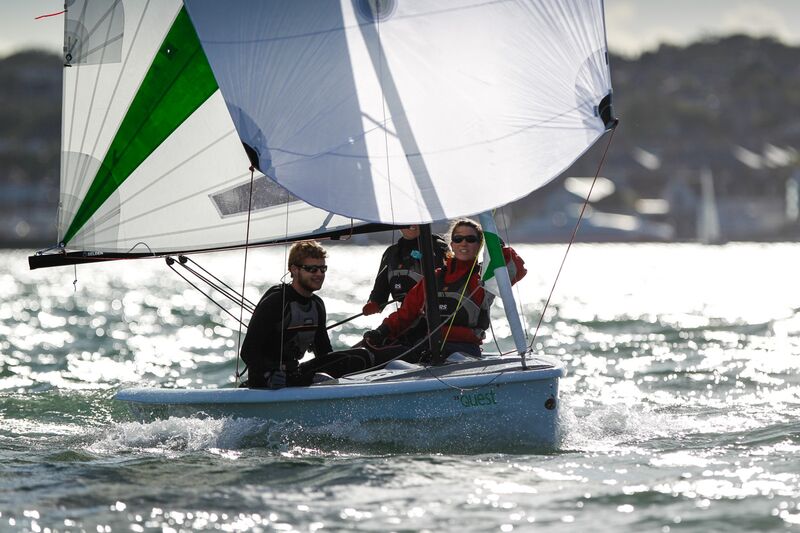
RS Sailing have been aware of a potential opportunity to get more people afloat through programs such as Learn To Sail and courses offered at Community Sailing Centres and are confident the RS Quest, seated between the RS Feva and RS Vision within the RS range will do just that, providing a sailboat for beginner programs right up to spinnaker improvement programs. Current sailboats used for programs of this nature require a level of upkeep so developing a sailboat requiring less maintenance and providing more versatility across all levels of sailing is the next logical step.
The RS Quest has been developed based on the following requirements from a range of Programs currently running in North America:
- To have a capacity of four people, enabling the introduction of basic sailing techniques with both students and an instructor on board
- To be a versatile dinghy that can easily cater for a whole range of sailing courses, from ‘Learn to Sail’ to ‘Racing’ and ‘Advanced Techniques’
- To be light enough in weight that youth sailors can manoeuvre the boat with confidence and ease on and off the water
- To have simple and effective control lines to meet beginner needs right through to advanced sailing techniques
- To offer both a asymmetric and symmetric spinnaker for versatile use in enclosed waters
- To include additional storage space for longer journeys
- To offer light sheet load with approximately 11m2 in the main and jib sail area, putting a focus on enjoyment for youth sailors
- To be easily reefed
- To have the ability to be easily recovered from capsizes
- To include adjustable toe straps for the varying size of sailors
The RS Quest has already undergone intense testing with the first prototype having been tested by a range of sailors over the past couple of weeks. In true RS development fashion, styling has not gone amiss. Features such as a pivoting mast and the ability to be set up for both symmetric and asymmetric spinnaker sailing are just two features that have been included, and demonstrate RS to be once again leading the way in design and development.

Features of the RS Quest include a self-draining cockpit, and a super stable hull to give maximum security and feel ultra safe. The feel of the boat is considerably larger than its size with a large cockpit for up to four people, great for training and family. The RS Quest has been designed for maximum strength in all high load areas of the deck and hull. The rig can be set up for both symmetric and asymmetric sailing – perfect for confined sailing locations and for conducting relevant spinnaker courses. The hull offers plenty of dry storage and removable thwarts and seating, as well as adjustable toe straps for versatile use.
The rig is a two-part aluminium mast, with a sealed top mast for buoyancy aiding recovery and reducing inversion. To aid the rigging process, the mast foot is on a pivot, making it easier and safer for one person to rig. Externally running halyards make for easier use and hassle free replacement as well as control lines on the boom designed for simplicity. The square head main has buoyancy in the top of the sail drastically slowing down the time it takes to invert, taking into account the varied ability of its potential sailors. Reefing on both the Dacron main and the jib is in its simplest form: slab reefing on the mainsail and roller reefing for the jib.
The RS Quest foils features a GRP pivoting centreboard and aluminium rudder blade. A cast rudder stock with a lock on the tiller for holding the rudder up and down is combined with a protective mechanism that will release on contact with the ground.
Alex Newton-Southon, Managing Director, Operations and Technical of RS Sailing commented; “We are extremely privileged and excited to be working on this project with Sailing Programs in mind in North America. It’s a new area of the market we are yet to explore and hope to provide sailing to lots more sailors, both young and old in the future with this development.”
http://www.rssailing.com/us
Club Profile: Little Traverse Sailors, Michigan
 About Little Traverse Sailors
Our staff members are US SAILING, CPR and First Aid certified. Most instruction is from safety boats.
Junior Racing Programs from 10 and up
As students gain sailing skills, many will want to learn to race as well. LTS provides racing programs geared for students all levels.
The LTS Race Team (13yo and above) practices every weekday afternoon in our Lasers and 420s, as well as in J/70s and other bigger racing boats. The Race Team also travels to regattas to compete against teams from other junior racing programs around Michigan.
The LTS Junior Race Team (10yo – 12yo) introduces motivated younger skippers to the basics of racing, using both our single-handed Bugs and 420s.

Our Fleet
9 Lido 14s (14ft sloops)
6 Pixels (14ft sloops, with spinnaker)
5 Bugs (8ft singlehanded/doublehanded)
6 Lasers (13ft singlehand racers)
3 Club 420s (14ft sloops, with spinnaker & trapeze)
6 RIBs/Boston Whalers for use as instruction and safety boats.
Get in Touch
Little Traverse Yacht Club / 343 East Bay Street / Harbor Springs / Michigan / 4974
www.littletraversesailors.org/
Contact: Dan Thompson: [email protected]
South Carolina YC OPTI Team Race Results and Report
For Immediate Release- November 11, 2015
The South Carolina Yacht Club presented an idea to bring six teams from across North America to Hilton Head Island. With the help of Zim Sailing and the Westin Hilton Head Resort and Spa the concept of “OPTI” was born. The Optimist Pram Team Invitational (OPTI) was a team racing regatta that matched sailing skill and abilities rather than who had the best equipment or newest sail cut. This event, unlike traditional Opti team racing was 3 versus 3 which is a more synonymous team race format used across the world. Modelled after the New York Yacht Club Invitational, this regatta pit yacht club against yacht club and all members of the team must be club members.
Zim Sailing donated 18 brand new and equal Zim ZForce Optimists to include custom team race sails. We can actually call this a true One Design regatta where no parts were allowed to be swapped out or exchanged. The South Carolina Yacht Club sent invites out to Fishing Bay Yacht Club (VA), Chicago Yacht Club (IL), Florida Yacht Club (FL), Royal Canadian Yacht Club (Ontario), Edgewater Yacht Club (OH) to make the trip to Hilton Head South Carolina. Not normally known for its Optimist sailing events, but more for its vast beaches and popular harbors for snow bird yachtsman sailing south on the Inter Coastal Waterway just feet from the entrance to Windmill Harbour.
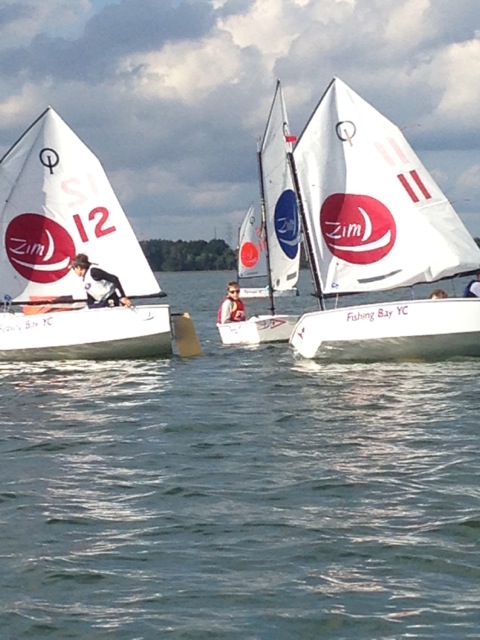
The racing conditions were challenging with a strong current and 15-25 knots of breeze on Sunday tested each sailor’s boat handling in the tight confines of team racing. Saturday the race committee headed by PRO Kevin Keogh was able to get only 3 races off in the light and shifty southerly. For the first time it could be said, “If you’re not first you were last”, as the top three teams with one victory; South Carolina Yacht Club, Fishing Bay Yacht Club, and Edgewater each had one victory. Racing was called as a thunderstorm began building and moving in from Savannah and the sailors were able to spend some time at the Westin pool prior to dinner at Local Pie which is the best pizza on the Island!!!
Sunday’s conditions were the complete opposite of Saturday’s light air. The temps dropped from 78 degrees from the previous day down to the low 60s. The northern teams felt a bit more at home while the southern teams put on every piece of spray gear they owned. The round robin left the race committee with two teams in a knock out round best of three. Fishing Bay Yacht Club with zero losses and Edgewater yacht Club with one loss were the top two team racing teams. Fishing Bay was able to get out in front at the start in race 3 and was able to finish in a winning 1, 2, 3 combination making them OPTI’s inaugural champions and the first recipients of the Paul Miller Trophy. The victory guarantees an invite to return and defend their title next year. The knock out round was a nail bitter as Fishing Bay won the first and Edgewater with a come from behind victory took race two.

OPTI, a one of a kind experience that the sailors will remember forever. Teams were only responsible for travel and breakfast, as the Westin Resort and Spa provided complementary rooms for the sailors and their families. The South Carolina Yacht Club was able to provide a great kid oriented buffet Friday night as well as Local Pie on Saturday where kids ate free Pizza together at a communal table. The parents spent time catching up on the football scores and catching up with the other Opti parents discussing their summer travel schedules. The true essence of comradery and the Corinthian spirit was portrayed during OPTI.
The one of its kind event was developed by Bob Adam of Zim Sailing, Lee Lucier of the South Carolina Yacht Club, Kevin Keogh PRO, and the SCYC Yachting Director Mark Newman who brought a vision of a true one design regatta where competitors could compete for their yacht club pride, and do so without breaking the bank. Thank you to the Westin Hilton Head Resort and Spa for supplying the accommodations, Zim Sailing for the boats, Local Pie for the Saturday dinner, and The South Carolina Yacht Club for the support needed to put on this event. Complete event coverage and photos can be found on the event Facebook page. https://www.facebook.com/OPTI1SCYC/?ref=bookmarks
COLLEGE SAILING 101: Inside the World of College Sailing for Sailors, & Parents of Prospective College Sailors
WHAT: COLLEGE SAILING NIGHT
WHERE: Severn Sailing Association, Annapolis, MD
WHEN: 04 December 2015 1900-2100
LIVE VIDEO
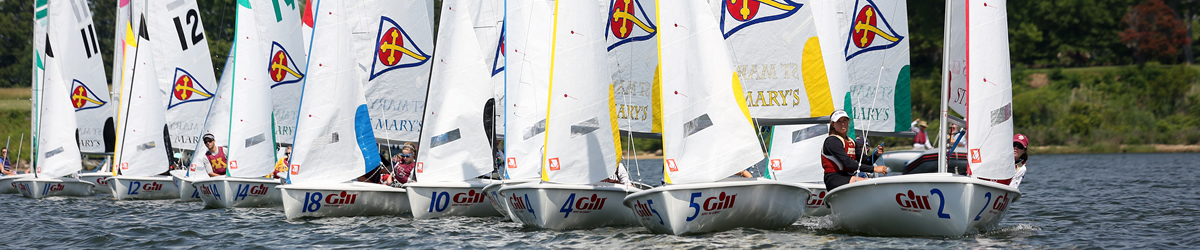
Come join us for a round-table discussion/Q&A session at Severn Sailing Association on Friday evening, 04 December 2016. Learn more about the not-so-mysterious world of college sailing from some of the top college coaches in the country.
Sponsored by Sail1Design, registration is now CLOSED, we are FULL!! Don’t worry, Sail1Design will publish a web-based taping of the event!! Stay tuned for more information!!

Schedule
Panelists and moderator will deliver a brief synopsis of college sailing, following the outline below. We will then open up the presentation to questions, followed by an informal meet and greet opportunity.
Topics will include:
- Inside the ICSA: The organizational structure of the sport. What it is, and what it isn’t
- The Conferences (Districts)
- Types of Teams & a Few Team Profiles
- Varsity vs. club
- The Actual Sailing Itself
- Types of regattas
- COED, Women’s, Team Racing, Singlehanded, Match racing, Keelboats
- Boats Used
- Life of a College Sailor
- Commitment
- Travel
- Social life
- Eligibility
- Recruiting 101
- How coaches view players
- How coaches view parents
Moderator
Tom Sitzmann, Director of Sailing, Severn Sailing Association
The SSA Director of Sailing, Tom has coached sailing and directed sailing programs from Maine to Annapolis, beginning with stints at Tufts and Dartmouth Colleges as an assistant. Tom was also an assistant offshore & dinghy coach at the USNA, head intercollegiate coach at Bowdoin College, and more recently head coach at Severn School, where he guided the team to a National championship, the first and only Chesapeake Bay school ever to win the prestigious Mallory Trophy.
Tom has a great deal of dinghy racing experience, competing successfully in the Laser, J/24, and J/22, winning several regional and district championships in those classes, both in New England and the Mid-Atlantic.
Panelists
Bill Ward, Head Coach, St. Mary’s College
In nearly 15 years of collegiate coaching, Ward’s teams have won five national championships. He also had the honor of coaching Team USA at the 2008 Beijing Olympic Games. In 2008, Ward was named the National Coach of the Year by the U.S. Olympic Sailing Committee. He was also on the coaching staff of the U.S. Sailing Team for the 2007 Pan Am Games in Rio de Janeiro, Brazil. Ward served as the team leader/head coach for the U.S. Inter Collegiate Sailing Association Team competing in the BUSA Tour in England and Ireland in 2005. He graduated from Georgetown University in Washington, D.C. in 1996, where he was a two-time All-America honorable mention (1994 and 1995) and team captain. Ward led Georgetown to the program’s first-ever appearances at the ICSA Dinghy and Sloop National Championships.
Michael Callahan, Head Coach, Georgetown University
Michael J. Callahan was selected to be Head Coach of the Georgetown University Sailing Team (GUST) in August 1998. Callahan initially joined the athletic department as an assistant sailing coach in August 1997. During the 1999-2000, 2000-01 and again in the 2005-06 season, Callahan was the recipient of the Outstanding Coaching Achievement Award, an honor presented by Hoyas Unlimited to the most outstanding Hoya coach from the past season. To date, the award has been bestowed upon Callahan more than any other Georgetown coach.
Ian Burman, Head Coach, US Naval Academy
Ian Burman is in his eighth year at the helm of the Navy intercollegiate sailing team in 2015-16. In 2014-15, the team had top-10 finishes at both the ICSA Team Coed Dinghy National Championship and the ICSA Team Racing National Championship. Senior Mary Hall capped off her career by being named an ICSA All-American Women’s Skipper. Hall was also named the MAISA Women’s Sailor of the Year and to the All-MAISA Women’s Skipper First Team and the All-MAISA Coed Skipper Second Team. Fellow senior Emma Ferris was named an ICSA All-American Women’s Crew.
Scott Iklé, Head Coach Hobart/William Smith Colleges
Clearly, one of the premier sailing coaches in the nation, Scott Iklé has been at the helm of the Hobart and William Smith sailing program since 1993. The 1984 graduate of Hobart inherited a struggling team, built it into a consistent national championship contender, and reached the pinnacle of college sailing in 2005, not once, but twice.
John Vandemoer, Head Coach, Stanford
John Vandemoer has taken Stanford sailing to new heights, and looks to continue to do so during the 2015-16 season, his eighth on The Farm. During his tenure, Stanford has reached the national championships in all three divisions in each of his seven seasons, finishing as high as fourth in coed racing (2014), fifth in women’s racing (2013) and third in the team race (2014, 2015). All said and done, Vandemoer’s Stanford squads have won 20 of 21 spring conference crowns in the Pacific Coast Collegiate Sailing Conference.
Michael Collins, Ass’t Coach, USMMA King’s Point
Michael Collins enters his second season as the assistant coach of the Kings Point intercollegiate varsity sailing team. Collins graduated from Old Dominion University in 2008 where he earned his Bachelors of Science degree in Sports Management. While at Old Dominion he competed on their intercollegiate varsity sailing team. He served as captain of the team his senior year.
Charles Higgins, Ass’t Coach, Old Dominion University
Charles Higgins enters his seventh year as an assistant coach at his alma mater in the 2014-15 season. He returned to ODU three years ago to continue his collegiate coaching career after one year of coaching at the U.S. Merchant Marine Academy in King’s Point. Higgins was an impact sailor in his career at Old Dominion as a leader in team racing and sloop sailing.
John Norfleet, Head Coach, Fordham University
Fordham is a member of the Middle Atlantic Intercollegiate Sailing Association (MAISA), one of seven regional conferences of the Intercollegiate Sailing Association of North America (ICSA), the governing body of College Sailing in the USA.
Zach Runci, Head Coach, SUNY Maritime College
Zach Runci joined the Maritime waterfront staff as the assistant sailing coach in the Fall of 2013, and will now be entering his second season as the team’s head coach beginning in the fall of 2015. In his first season as head coach, Runci led the Privateers to one of their most successful campaigns in recent program history as the team was nationally ranked on several occasions through the 2014-15 season.
Linden Dahlkemper, Ass’t Coach, US Coast Guard Academy
Coach Dahlkemper was a four year member of the intercollegiate sailing team as a cadet, splitting her time between the women’s team and coed team as both a skipper and a crew member.
After graduating in 2008, she spent two years on the CG Cutter WALNUT, a buoy tender homeported in Honolulu, HI. Then, from 2010 to 2012, she was stationed as the Operations Officer on the CG Cutter ASPEN, in San Francisco, CA.
Upon her return to the Academy as an instructor in the Department of Humanities, Dahlkemper joined the coaching staff as a volunteer assistant, working closely with the team during the week in practice and during weekend competitions. Focusing primarily on the younger members of the team, she assists with growing the depth needed to sustain a nationally competitive program.
Dahlkemper also serves as the intercollegiate sailing team’s Faculty Affiliate and spends her summers training cadets on the Academy’s L-44 sloops.
Sam Patterson, Chris Craven, Captains, U. Virginia Club Sailing Team
The Sailing Association at UVA is a student run club sport open to all UVa students of any skill level. We are an active group of sailors interested in racing, recreational sailing, and social events. We sail out of Lake Anna Yacht Club where we keep a fleet of nine Collegiate FJs and one Hobie 16, as well as two brand new Carolina Skiffs.
We will likely have more coaches, and several alumnus representatives from Bowdoin College, Tufts University, GW University, U. Vermont, Syracuse, and more. Also, many teams will send detailed brochures/recruiting information on their teams, so this will be an invaluable opportunity to learn about college sailing!
Working Together for Sailing Success
By Rachael Bennung, Airwaves writer
Henry Ford, founder of Ford Motor Company, once said; “Coming together is a beginning; keeping together is progress; working together is success.” This quote is very relatable to sailing in doublehanded boats. We see many sailors in high school and college sailing stepping into doublehanded boats for the first time. This is a whole new ball game; you now have to work with another person for success on the water. Communicating in a positive and productive way is essential to successful racing on the water.

A lot of sailors struggle with their transition to doublehanded sailing. We see this a lot of times with the skippers. You are so used to singlehanded sailing and are looking around and not communicating with your crew. This is where skippers need to readjust for sailing a doublehanded boat. Now you have a crew, which is a great asset. You now have someone who can look around the course for you and you can focus on steering the boat. Skippers, you need to focus on your tell-tails, boat speed, and sail trim rather than looking around the course. These are all essential to keeping your speed up while sailing. Every time you move your tiller your boat is slowing down, so this is where you need to use your crew to your advantage. Not only do we need to be communicating, but it needs to be done in a positive and productive way to help you succeed while racing.
Skippers, like we mentioned, you need to use your crew to your advantage. Your crew is your eyes on the course so you need to trust and communicate efficiently together. There is so many ways a crew comes in to help for your success. Here are some ways you and your crew can work efficiently on the water.
- Crews can keep track of the time for the start.
- Upwind the crew can tell the skipper what the other boats are doing on the course.
- The crew can be looking for the pressure on the course and be telling the skipper when the breeze will be on.
- Downwind the crew can be looking for the pressure and what the boats are doing behind.
 Talented skippers may get away without good communication in the beginning, but eventually you will see no progress. You won’t be getting better, but only staying the same or getting worse, especially compared to those teams that are working together. If you can’t work as a unit you won’t be successful on the race course. Additionally, bad, or negative communication won’t be effective for your success either. You need to make sure you are able to communicate positively to one another; yelling at each other is not going to make you go faster. You need to work together to find efficient and positive ways to talk and share information.
Adjusting to doublehanded boats can be very difficult for some sailors. It’s a new transition where you need to trust and communicate with another person in your boat. Skippers, you need to learn to use your crew to your advantage so you can sail the boat as fast as possible. Crews you need to make sure you are communicating effectively to your skippers. As the quote by Henry Ford says “working together is success.” Working together as skipper and crew with positive communication is the only way to reach that finish line successfully.
Club Profile: Cape Cod Sea Camps
News Flash: Cape Cod Sea Camps is Hiring! View their open jobs HERE
The Cape Cod Sea Camps Mission
Through personal commitment and dedicated to the development and guidance of youth we will provide a unique educational environment in which individuals have fun and realize their worth and potential.
Working Philosophy

The Cape Cod Sea Camps are preeminently dedicated to the guidance of youth and founded on the principles of love for fellow men and appreciation of God’s world and people. Camping is a joyful educational experience carefully designed to allow children to develop all aspects of their personalities – physical, mental, spiritual, and emotional. Children at camp are viewed not merely as “miniature adults”, but as youngsters who need constant care and attention to help them develop into happy, productive, sensitive men and women. Camp provides a microcosm in which a child’s attitudes will be greatly influenced and in which he may “experiment” with new types of behaviors in a controlled, responsive environment. Camp helps children learn about themselves as they learn about people and natural beauty around them. As each child is respected as an individual, so he is encouraged to become sensitive to the unique aspects of humanity in others. Children are helped to overcome the insensitivity inherent in categorizing individuals by group associated through living, working, playing with others of both sexes, and various ethnic, religious and racial backgrounds.
The Cape Cod Sea Camps are “people places” where the needs of children and abilities of the staff determine the program; no tradition is so entrenched that is wisdom cannot be scrutinized and no proposed innovation is too radical not to merit serious consideration. The essence of the camp is the multifaceted composite personality of every person who has influenced it throughout more than three quarters of a century, and the substance of its future has yet to be determined by those who will give of themselves tomorrow. Everything that happens at Cape Cod Sea Camps, however, is strongly imbued with the moral consciousness that it takes time for a child to grow and a deep conviction that camping is indeed an educational experience, and unlike any other anywhere.
- Camping is an Educational Experience
- Camp develops all aspects of a camper’s personality-physical, mental, spiritual, emotional
- Each child is respected as an individual and encouraged to become sensitive to the diversity in the world around us
- Camp is a “people place”
History of Cape Cod Sea Camps

The history of the Cape Cod Sea Camps, Camp Monomoy for Boys and Camp Wono for Girls, is the story not only of two children’s camps, but also of a family, the Delahantys. More than any other single individual, Robert J Delahanty created and crafted the essence and character of the Sea Camps. It was his vision that came to life in 1922 and which still endures today. With the inestimable assistance of his wife and partner, Emma Berry Delahanty, and later, their daughter, Berry Delahanty Richardson, Captain Del gave substance to his dreams, founding a business and embarking on a calling.
Captain and Mrs. Del dedicated themselves to serving youth. From the beginning of his career, Captain Del passionately believed in the educational and spiritual value of properly constructed recreational activities. His brilliance shone through in his camp program offerings, and also in his innate sense of what was good and useful for children. He understood that every child needs to be best at something, whether hitting a baseball the furthest, sailing a course the quickest, swimming a distance the fastest, or simply having the most perfect bed in camp.
Today the Delahanty tradition not only endures, it flourishes! Captain and Mrs. Del’s granddaughter, Nancy Garran, now steers the ship with the same commitment to excellence laid down by her grandparents and her Aunt Berry.
News Flash: Cape Cod Sea Camps is Hiring! View their open jobs HERE

Work at CCSC
Our counseling staff is comprised of college students, graduate students and teachers. We are looking for individuals who have the desire and talent to make a difference in a child’s life. It is probably one of the most demanding, yet satisfying jobs on the planet. Our staff are chosen carefully, with an eye on their ability to be good role models, contribute positively to children and to teach specific activities. There are 90 Resident Camp counselors, 74 Day Camp counselors and 28 supervisory staff.
Camp Season
The camp season is 7 weeks long for the campers, June 29th – August 16th, 2014; and the day camp season is July 1st – August 16th, 2014. The commitment for staff is approximately 8 weeks, June 23rd – August 18th, 2014. Counselors must attend the staff orientation prior to the campers’ arrival and remain at camp after the campers’ departure until their responsibilities are completed.
Campers
There are approximately 380 campers ages 8-17 in our Resident Camp and 300 campers ages 4-17 in our Day Camp.
In each unit there are 5-10 counselors and a Head Counselor, augmented by 4th year Junior Counselors. At the Resident Camp, there are always at least two counselors in each cabin such that the counselors have every other night off and one day off per week as assigned by our Program Director. Counselor areas are simple but are separated from the camper areas. Most all cabins have bathrooms attached and all cabins have electricity. Shower houses are adjacent to the cabin areas.
Activities
Our Program Director assigns counselors to activity areas on a weekly basis. Activity periods last approximately 1 hour. Depending on the number of campers taking an activity, there are a proportionate amount of staff assigned for coverage, i.e. 25 campers in archery would have 4 staff assigned. Sailing, water-skiing, windsurfing and canoeing are offered as all-morning or all-afternoon activities. The major activities we hire staff to teach include: Sailing, swimming, tennis, arts and crafts, drama, woodworking, archery, riflery (BB’s and .22’s), photography, nature, landsports, dance, newspaper/good books/creative writing, cycling, snorkeling, waterskiing, kayaking, windsurfing. We encourage counselors to introduce new activities within the confines of our camp philosophy.
Sailing Staff
Members of the sailing staff must have current certification in CPR, First Aid and Lifeguarding or Small Craft Safety (sailing, canoe/kayak). Other certificates are welcome such as US Sailing Level 1 Certification, USCG Launch Tender License (or higher license).
Club Profile: Kittery Point Yacht Club
Kittery Point Yacht Club is located in New Castle NH, on the southern shore of the Piscataqua River. Its clubhouse stands opposite Seavey Island, home of the historic Portsmouth Naval Shipyard. Ships from all over the world pass before it, vying with local lobster and fishing boats during the week and hundreds of pleasure boats on holidays and weekends.
A member of the US Sailing association, KPYC is well represented in local, regional and occasionally national events, with members racing and cruising a variety of boats. The KPYC sponsors the KPYC Sailing School, the Seacoast’s only public sailing school and youth racing program.

Our members are drawn primarily from surrounding states of New Hampshire and Maine, with some living farther away during the winters. Most enjoy common interests in boating and organized social activities during the main season from May to October. Pot luck dinners and casual gatherings are often found throughout the year.
LaserPerformance Collegiate Cup Travels to Torbole, Italy
LaserPerformance is pleased to announce the 2016 venue for the LaserPerformance Collegiate Cup (LPCC). LPCC will be held in Torbole, Italy on Lake Garda hosted by Circolo Vela Torbole from 23rd -27th August, 2016.
The inaugural LPCC took place in August 2015 at the Yale Corinthian Yacht Club. Hosted by Yale University under the auspices of the Inter-collegiate Sailing Association (ICSA) and governed by ICSA rules.

With the support of ISAF’s “Connect to Sail” program, LPCC will reach out and work with as many countries as is possible to encourage participation of as many young sailors as possible.
“We are excited to build upon the success of LPCC and offer university-age sailors the opportunity to travel to top venues like Lake Garda and to sharpen their racing skills from the best,” says Bill Crane from LaserPerformance. “Our goal is to have this annual event continue for years to come both spreading the benefits of college sailing and to provide access to the sport of sailing itself.”
In its first year, LPCC welcomed 8 teams from 7 countries. University-age sailors and their coaches attended from Oman, Japan, Ireland, Italy, Canada, France, and the USA. Teams competed for their countries in Yale’s fleet of LaserPerformance double-handed Z420s. The 5 day experience included a practice session, a team race clinic led by the LPCC Ambassador and Olympic Gold Medalist Anna Tunnicliffe with support from team race gurus Karl Ziegler and Scott Macleod, followed by 3 days of team and fleet racing. The USA Women’s All Star team from the ICSA won and earned an all-expense paid trip to compete in Torbole in 2016.
Looking to 2016, up to 12 teams, each with 6 or more sailors ages 18-25, will compete for their countries in LaserPerformance’s double handed Z420s.
We are excited to work with a talented group of partners and sponsors each year to make LPCC a success. If you would like to learn more, please contact [email protected]
We encourage interested participants to visit www.laserperformancecollegiatecup.com to register
To view the Z420 go to www.laserperformance.com
LaserPerformance Introduces Thomas Galster
LaserPerformance is thrilled to announce the addition of Thomas Galster as the company’s new Institutional Account Executive.

Thomas brings several years of sailing experience to the LaserPerformance team. A Rhode Island native, he grew up sailing at Saunderstown Yacht Club and was the captain at North Kingstown High School. He continued his sailing career at St. Mary’s College of Maryland and received a BA in Economics.

In his new role, Thomas will focus on the expansion of Institutional programs. He will support the success of annual event series including the LaserPerformance High School Invitational and the LaserPerformance Collegiate Cup (LPCC). These unique events organized by LaserPerformance offer the opportunity for high school and university aged sailors to experience a collegiate sailing environment in the z420s. Thomas’ enthusiasm and dedication will be an asset to the LaserPerformance team.
“I am excited to join the LaserPerformance team and look forward to supporting them reach the next level,” adds Galster. “LaserPerformance has built a superior platform for high school and college sailors to advance with the new z420. Growing the sport will be an exhilarating experience.”
For more news and event information please visit www.laserperformance.com
Shaina Vlaun
Social Media Associate
LaserPerformance Services
Skype: shaina.vlaun.1
Coaches Locker Room: Practice How You Race
By Airwaves writer Rachel Bennung
Sailors fouling during practice can become a problem. It becomes an even bigger problem when they don’t do their circles. Some may think this isn’t a big deal, however, practicing how you race is vital in a sailors development. Not doing their circles in practice can lead to not doing them in regattas. This leads me to, how can you make sailors understand the importance of practicing how you race?
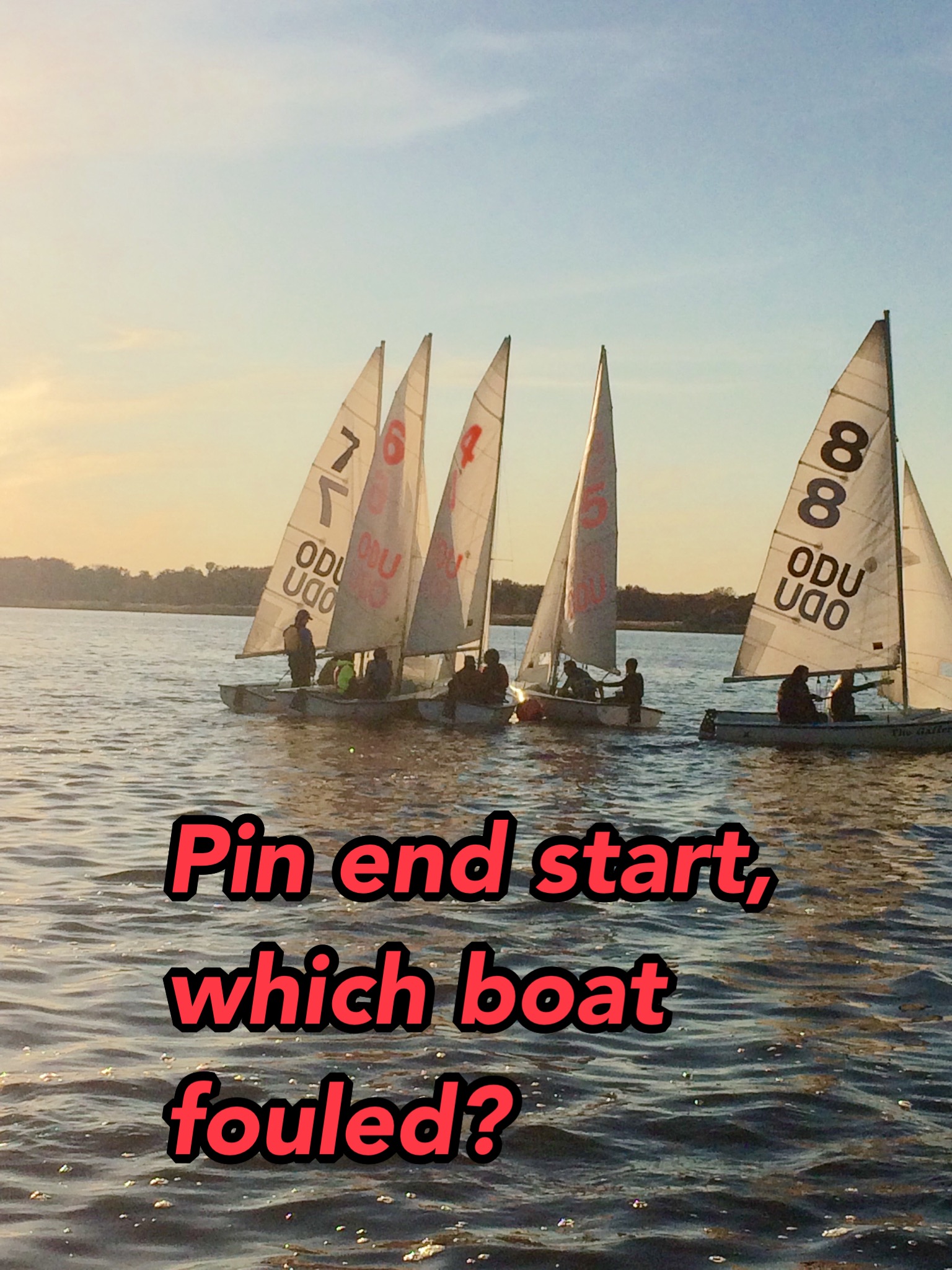
Have you ever heard from a sailor during practice, “Do I really have to do my circles, it’s only practice.” This happens across the board in junior sailing, high school sailing, and college sailing. So how can we make these kids understand how important doing these penalty turns are in practice. Here are 3 steps to help to break sailors of these bad habits during practice and become all around better sailors.
- If you see a sailor foul another boat or hit a mark and not do their circles, you need to try and approach them and have them spin. Briefly explain how they fouled, but let them do their spins and finish the drill.
- Once the drill is complete head over to that sailor and explain how they fouled in that race. Ask them did they know they fouled and if so why didn’t they spin? We want to make sure the kids understand why they fouled. Then suggest what they could have done differently to avoid the situation.
- Once on land in the debrief you need to recognize that sailors mistake. You want to explain to the group how they fouled and reiterate why its important to do your circles. Explain to the group how the boat could have avoided fouling. Then remind the group we practice how we race and explain the importance of this.
These are easy ways to help sailors to understand their mistakes. Pointing it out and having them do it during practice will make them be accountable, and ultimately help them so they don’t foul while racing in a regatta. However, if they do end up fouling they know their mistake and get their circles done quickly and efficiently.
Another struggle some coaches may have is dealing with sailors that get fouled, but don’t make their friends or other sailors do their spins. Some of these sailors are timid to call out their friends or just someone they don’t know. We need to help these sailors have more confidence and get more aggressive with their sailing. You can approach this subject in practice both on the water and off the water. Again here are 3 steps in approaching this situation.
- If you see a sailor get fouled and not say anything to the other boat. Remind them at the time of the incident, for example “Protest boat 18, boat 10 they fouled you.” Give a brief summery of how they were fouled and let them finish the drill.
- After the drill or practice race talk to the boat and ask them did they know they were fouled. If they did, explain they need to be more vocal and make that sailor accountable for fouling
- In your debrief on land again talk to the group about being more aggressive when sailors foul them. Explain how they need to be vocal and make sailors even their friends be accountable for fouling in practice. Even though it’s practice you need to practice how you race and say protesting if a boat fouls you.
 We need to make sure all sailors are understanding that practice is getting us ready for the big regatta. Some sailors need to be reminded that if they foul they spin. While some sailors need to be more vocal and call fellow sailors out when they foul them. Practicing how you race is vital to developing honest skilled sailors. These tips will hopefully help you get your sailors to more effectively practice how they race.