By Airwaves Writer Rachel Bennung
Do you ever feel like your just not getting the spinnaker up fast enough, or you feel really exhausted after getting into a tacking duel? You do cardio, but you still feel winded sometimes while sailing? Maybe your problem is your doing cardio, but not the right one to reach your sailing goals. However, with the right cardio you will be able to build your endurance and reach your goals faster. Today you will learn about the different types of cardio, what is the best cardio for sailing, and how to enhance your sailing performance with the right cardio.
Cardio can be categorized in several ways. For the purpose of this article I will categorize them into three types.
- Regular Cardio – This type of cardio includes low-medium intensity, and medium to long duration. The workout lasts for 30 minutes to an hour or more. Examples of exercises would be walking, jogging, and swimming.
- High Intensity Cardio – This type of cardio requires you to maintain a high level of intensity throughout the workout. The workout lasts for 30 minutes or less. Examples of exercises would be performing the same exercises as regular cardio, but at a much higher intensity.
- High Intensity Interval Training – Also known as HIIT, this is a type of cardio where you give 100% effort for the exercises, and then follow that with a short sometimes active recovery period. This cardio gets your heart rate up and keeps it up throughout the workout. This type of cardio workout can range in duration from 10-30 minutes.
So we have regular cardio, high intensity cardio, and high intensity interval training, which one is the best for sailing? Think about your movements on a sailboat, a lot of times they have to be very quick. For example you have to get the spinnaker up or down as fast as possible, or you get in a tacking duel. These movements cause your heart rate to increase quickly. Since in sailing we have times where we need to use more energy, giving 100% effort the best form of cardio we can be doing is High Intensity Interval Training.
By adding high intensity interval training to your workout routine you will start to see a difference in your sailing performance. High intensity interval training will improve your cardio abilities. It will come easier, and you will get quicker all those times on the boat where you need to give 100% effort. Not only will you boost your cardio abilities, but by adding interval training to your routine you will also boost your endurance on the water. By adding high intensity interval training to your workout routine today, you will be able to start maximizing your performance on the water.
Now that we know what is the right cardio to do for sailing, how do we get started? Check out below the 20 minute HIIT workout I created that will start you on your way to improving your cardio for sailing. Also check out the moves in the video.
HIIT Workout:
-Warm up for 5 minutes
-1 minute alternating lunges
-1 minute jumping jacks
-1 minute butt kicks
-1 minute squats
-1 minute high knees
-Set your timer for 15 minutes. Do each exercise giving 100% effort for the amount of reps listed. Rest for 30 seconds between each exercise. Continue the exercises until you reach 15 minutes. Cool down and stretch after completing the workout. (If you want a longer cardio workout set your timer for 20 or more minutes. )
-15 Squat Jumps
-12 Alternating Tap Ups
-15 Alternating Jumping Lunges
-20 Plank Jacks
-15 Burpee Spins
Sailors need to always be on top of their game and ready to move quickly. You may have been doing cardio, however, by incorporating the right cardio into your workouts, high intensity interval training you will see major improvements in your sailing. You will be able to maximize your performance for those movements where your heart rate is high. Along with being able to give 100% effort without being fully exhausted, you will also see a boost in your endurance while out sailing. Get started today with the HIIT workout above and check out the video of the moves.
For more information on fitness for sailing contact [email protected]. Also check out Sailorcise on Facebook, Twitter, and Instagram for daily tips on fitness, nutrition, and sailing.



 On the first day of the qualifier, the race committee kept the 22 schools racing continuously from about 11am to 6pm. The wind began light and shifty, thankfully a condition very familiar to Corona del Mar. The drastically shifting offshore breeze made it necessary for us to play the sides of the course intelligently and facilitated the importance of focusing on boat speed. As a 10-12 knot breeze began to fill midway through the day, keeping our boats completely flat became essential. Small waves also emphasized the need for good boat handling and warranted the infantile stages of surfing on the downwind legs. The race committee kept a pace of fast rotations to achieve as many races as possible. Rhodes and I (A division) and Derek and Victoria Thompson (B division) each began and ended the day with consistent, upper fleet scores. We ended the day smoothly and secured a second place behind the Francis Parker School, with Point Loma on our tails.


 oyster shells at the foot of Duke of Gloucester Street, which, in 1888, became the Clubhouse for the formally organized Severn Boat Club. This oyster pile was rented from St. Mary’s Church and was next to a rickety wooden bridge across Spa Creek. In 1897 a new clubhouse was built and was enlarged in 1912.
 In 1904, the first records of meetings indicate a membership of 30. In 1910, the first wharfs were built, and the first club manager was hired in 1911 at a salary of $15 a month. Members began to acquire small sail boats and organize club regattas. These were uncomplicated affairs held on Memorial Day and Labor Day. Shell and canoe races started up Spa Creek at Old Woman Cove and ended at the Eastport Bridge. There were also swimming races and diving competitions. The club owned several single and double shells, two four-oared shells, and was given an eight-oared shell in 1911 by the US Naval Academy.
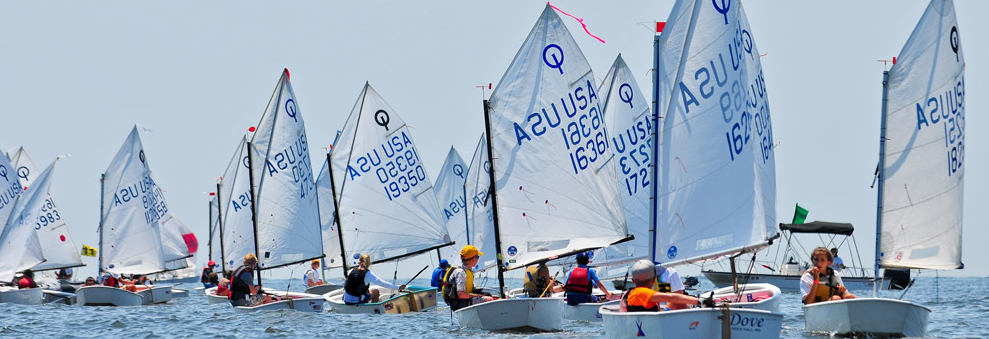 Lt. Cmdr. Carl Menneken first proposed a Junior Fleet in the Race Committee meeting of March 13, 1946. Presented to the Board in April, it was tabled for details and discussed at various meetings until the Board meeting of June 9, 1948 when $2,000 were allocated for the purchase of 6 Dolphins which would be used by the newly created Junior Fleet.

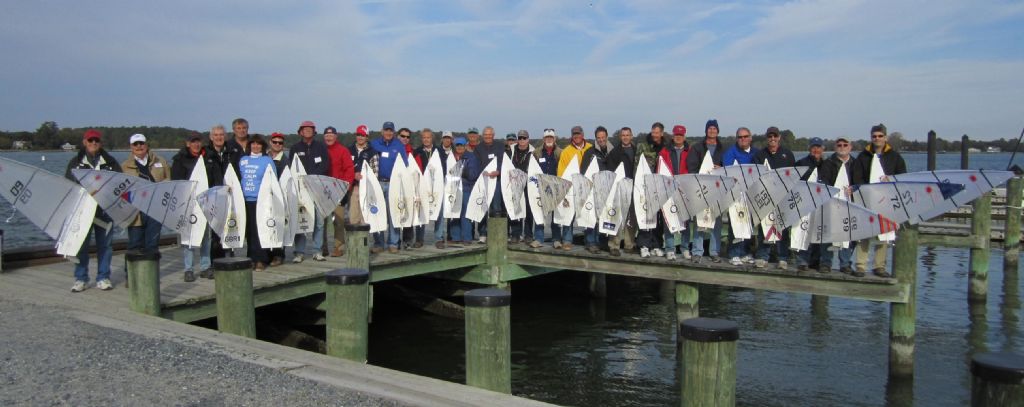 The Oxford RC Laser Fleet is proud to announce that it has become a sanctioned racing fleet within the