Tight Race to First for C420 Nationals
By Katelyn Montero
San Diego, CA (July 18, 2014) “For the last day of a national championship, it can’t get much better than the tight racing we’ve had going into today and certainly into the last race, John Vandemoer, Executive Director of the Club 420 Class Association said as he watched the competitors gear up for the tenth and final race of the regatta. With one more race left in the regatta, only four points separated the top three teams, and in the words of Vandemoer, it was anyone’s game. Ultimately, it was locals Scott Sinks and Rebecca McElvain from San Diego Yacht Club who were able to nab the title of national champions. In the final race, their third place finish in the final race gave them a score of 43 and secured their overall win of the regatta.
Barely trailing behind them, Max and Ian Brill finished second with a score of 45, separated from the third place team of Romain Screve and Jackson Ritter by only one point. With scores as close as these and the drama of an exciting finale, it’s tough to believe that the regatta had originally gotten off to such a slow start.
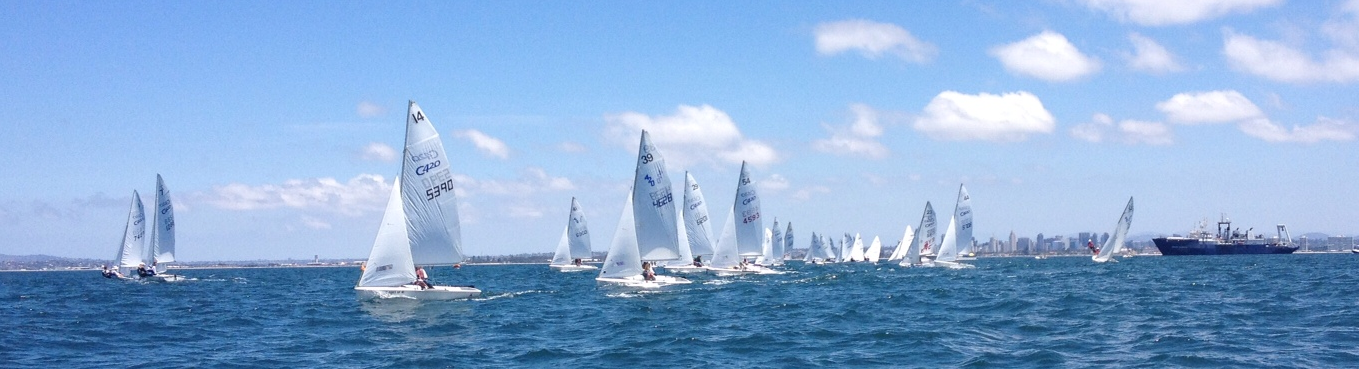
The first race took place on Tuesday, July 16, but it wasn’t until two general recalls that the actual racing began. Light winds and poor sailing conditions made for long races and difficult starts. Originally hoping to hold four races each day, PRO Jeff Johnson and the rest of the Race Committee was only able to get in two races for the day. Cassie Obel and Annika Garrett took the early lead as the day one winners, but were unable to keep their fast finishes up throughout the rest of the regatta and ultimately finished in 6th place.
The second day of racing took place in quintessential San Diego conditions, with sunny skies, 75 degrees and 8-12 KTS. The racing was fierce and the day was long with a total of five races taking place on Wednesday alone. By the sixth race of the regatta, competitors were qualified to drop their lowest score. It was the third place overall team Screve and Ritter from San Francisco Yacht Club who won the second day of racing, and the stage was set for a close fight to the finish on the third and final day.
Conditions on Thursday were primed for a great final day, and the regatta was able to get in three races for the day with about 10-12 KTS and clear skies. Sinks and McElvain finished the last race of the day in third place, giving them the win for the regatta. Crew McElvain is no stranger to national championships, having won on the Point Loma team at the high school level. “It feels pretty good,” McElvain said of her new first place championship. “I’m just happy to be able to win with my skipper.” The skipper, Scott Sinks, is also SDYC Commodore’s son, and was happy to be able to win the regatta on home waters.

The 2014 Nationals was not just an exciting regatta to watch, but also one for the history books. With the largest registration for the C420 class on the West Coast, Class Director Vandemoer is hopeful that the class will continue to grow.
Final, full results can be seen here: http://www.club420.org/results/14UL420%20Nationals%202014%20results.pdf
Blog
2014 J/70 North American Championship Day 1 Report
By Airwaves writer Geoff Becker
Team Helly Hansen, Skipper: Tim Healy, Tactician/Trimmer: Geoff Becker, Tactician/Trimmer: John Mollicone, Bow: Gordon Borges
Day 1
3 races (all course 4, 4 legs and downwind finish), Wind 8-14 knots from the Northwest, with a fairly steady direction.
Day one of the 2014 J/70 North American Championship saw 71 boats make it to the starting line for three races in winds much better than forecast. With the large fleet and long starting line our plan was to stay safe and leave ourselves options in the first part of each race. We were fortunate to get three good starts and finish the day with a 3-3-6, earning Team Helly Hansen the early lead after Day 1. (Scroll down for full results)

The course today saw a fairly steady wind direction as far as the headings were concerned, but it was clear that the boats getting more to the left side upwind were coming out better on almost every beat. After the first race and into the second race it became increasingly difficult to get to the left side since more and more boats were trying hard to get that way. In the third race, our start was not as strong as the other two and we had to tack toward the middle before getting all the way to the left, which gave boats to our left more of the course advantage.
Being a little behind early in the final race made us look for other ways to gain upwind, since we couldn’t always get as much left as we would have liked. We noticed that many of the other boats wanted the left side so badly, they were basically sailing outside the course to get there and overstanding the layline in the process. This gave us the opportunity to tack short of the boats on the left side and lead them back to the windward mark as they sailed extra distance. So, even if one side is favored, it is a good idea to pay attention and save distance when you can’t get to the favored side.
Our takeaways from Day 1 are…
1. Try to stay safe on big starting lines.
2. Know which side is favored, but also know where you are on the course.
3. Saving distance can make gains against boats on the favored side.

Results after Day 1
Overall Group 1
1 Tim Healy USA 58 12.00 3 3 6
2 Brian Keane USA 36 13.00 5 6 2
3 Mauricio Santa Cruz BR 66 21.00 4 16 1
4 Brian Elliott USA 20 27.00 7 1 19
5 Allan Terhune USA 69 27.00 10 13 4
6 Ian Atkins GB 76 29.00 6 20 3
7 Kerry Klingler USA 30 38.00 11 4 23
8 Joel ronning USA 52 39.00 29 2 8
9 Jud Smith USA 48 42.00 8 18 16
10 john brim USA 03 42.00 24 9 9
11 Bennet Greenwald USA 54 43.00 16 22 5
12 Kris Werner USA 23 49.00 20 7 22
13 Adam Burns USA 05 51.00 15 8 28
14 Peter Vessella USA 07 51.00 19 19 13
15 Marco Teixidor PUR 56 52.00 2 21 29%
16 Jenn Ray Wulff USA 22 53.00 1 23 29
17 Mikael Lindqvist SW 78 53.00 9 5 39
18 James Barnash USA 82 56.00 12 12 32
19 Martin Kullman USA 42 57.00 21 15 21
20 Martin Johnsson USA 61 58.00 17 14 27
21 Will Welles USA 50 66.00 37 11 18
22 Henry Filter USA 26 72.00 23 37 12
23 Thomas Bowen USA 11 75.00 34 30 11
24 Chuck Millican BER 33 78.00 33 31 14
25 Todd Hiller USA 49 79.00 41 28 10
26 Jim Cunningham USA 06 85.00 32 27 26
27 Mark Ploch USA 44 89.00 50 32 7
28 Stu McCrea CA 29 91.00 22 17 52
29 Stanley Edwards USA 79 92.00 13 34 45
30 Heather Gregg Earl USA 14 93.00 25 43 25
31 Jeff_John_Ed_Go Sulliv USA 75 96.00 46 10 40
32 Donald Finkle USA 02 97.00 51 29 17
33 Gregg Mylett USA 55 97.00 18 46 33
34 Catharine Evans USA 15 99.00 14 38 47
35 Daan Goedkoop USA 09 99.00 40 35 24
36 David Koski USA 64 100.00 36 44 20
37 Richard Nesbett USA 12 107.00 28 45 34
38 Neil Sullivan USA 73 109.00 31 41 37
39 tyler doyle USA 31 113.00 27 56 30
40 Maxwell Plarr USA 74 117.00 43 24 50
41 Dave Franzel USA 65 123.00 53 39 31
42 Paul Cannon USA 04 128.00 30 49 49
43 Ian Mayers CA 51 129.00 49 42 38
44 Frank McNamara USA 41 133.00 47 50 36
45 William Markel USA 39 134.00 63 36 35
46 Bruno Pasquinelli USA 21 135.00 38 25 72q
47 Scott Weakley CA 37 135.00 68 26 41
48 Brandon Flack USA 13 138.00 26 66% 46
49 Kathy Parks USA 35 142.00 65 33 44
50 Ron Thompson USA 24 142.00 52 47 43
51 John DiMatteo USA 18 148.00 39 54 55
52 Neil Ford USA 72 150.00 56 40 54
53 Tim Gibbs USA 45 156.00 61 53 42
54 andrew fisher USA 77 158.00 44 48 66
55 Corbo Corbishley USA 46 160.00 54 55 51
56 peter Firey USA 16 162.00 42 64 56
57 Rich Bergmann USA 70 163.00 35 67 61
58 Anthony Byrne USA 28 163.00 48 57 58
59 Jonathan Pollak USA 43 168.00 45 66 57
60 R. Latane Montague USA 83 169.00 58 63 48
61 Davis King USA 80 170.00 59 51 60
62 Kenneth Smith USA 47 173.00 62 58 53
63 Edward Backman CA 60 178.00 55 61 62
64 David Dombroski USA 27 186.00 60 62 64
65 J.B. Walsh USA 57 188.00 57 72% 59
66 Martin McKenna USA 01 195.00 71 59 65
67 timothy Weibel USA 08 199.00 66 70 63
68 Mark Wagner USA 38 202.00 69 65 68
69 Holly Graf 84 204.00 64 71 69
70 Kristen Robinson USA 19 205.00 70 68 6771 Jim Hermetet USA 63 209.00 67 72% 70
Growing Sailing at the National Level, Part II
By Airwaves Writer Sara Morgan Watters
Part 2: Growing the sport of sailing at the national level (This article follows up from the first, “How to Grow Sailing: A Wellington New Zealand Case Study“)
What is the role of a countries governing body of sailing and how can it best contribute to the sport in that country?
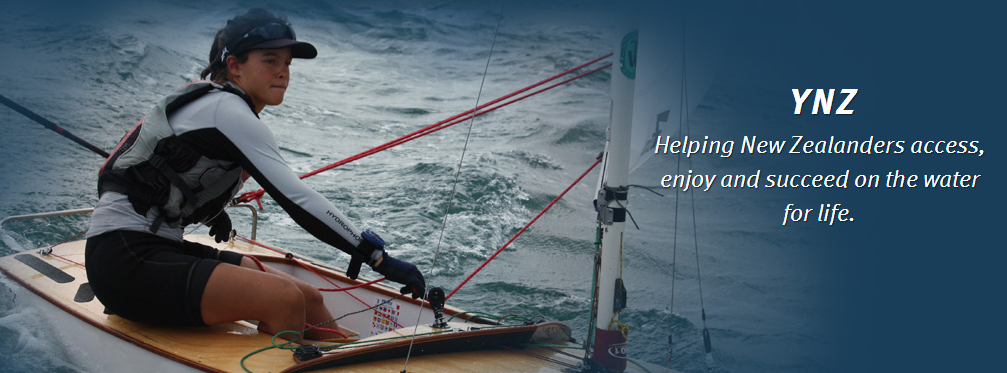
The U.S. Sailing mission statement reads, “provide leadership, integrity and advancement for the sport of sailing”. If you compare that to Yachting New Zealand’s (YNZ) mission statement, “helping New Zealanders access, enjoy and succeed on the water for life”, you can see a clear difference in priority. With a big push to get as many people involved in the sport now and for life, YNZ has been developing a very successful program over the last eight years to try to achieve its mission.
It shouldn’t be surprising, however, that in a country of only 4.5 million, surrounded completely by water, with a long tradition in the sport, that sailing isn’t a highly supported and mainstream sport. Nonetheless, the past and future success in the sport hasn’t come with out the efforts, investments, and support from their governing body of sailing.
In a recent article Growing the Sport of Sailing: a Wellington New Zealand Case Study, I described how the Wellington Ocean Sports Centre that has successfully introduced and involved many Wellingtonians to sailing and other water sports through an accessible and affordable program. But locally driven support for growing the sport doesn’t stop in New Zealand’s capital city. In fact, just to be sure sailing reaches as many small towns and clubs as possible, YNZ has designed an outreach program that brings sailing to kids, thus encouraging people from all across the country to get involved in the sport.
Volvo Sailing… Have a Go! began in 2006 operating out of one trailer and fulfilling the dream of Sir Peter Blake that all children should get the chance to go sailing. The Team New Zealand 2000 trust provided the original funding to get the program started and has since been supported by the Lion Foundation and in 2013 Volvo Cars New Zealand. The Volvo Sailing… Have a Go! YNZ program is run by three instructors assigned to different regions of New Zealand who each trailer the provided boats, coach boat, and equipment to different sailing clubs around the country, giving students between the ages of 8 to 12 a chance to try out the sport. Offering two half days or one full day ‘challenges’ students will take part in a variety of sailing activities and games which focus on physical and personal development, science and the environment and technology.
Not only does this program expose more people to the sport, it is great for the clubs as well since it helps boost membership from returning students with their families. With a happy memory of sailing while growing up, have-a-go kids will also be more likely to sign up with a yacht club later in life. Since it started in 2006 the program has grown each year, especially in the past three years with more yacht clubs and sponsors taking part. Just in the last season alone 3,586 kids took part in the program, which has introduced 1,234 students to sailing for the first time.
This program is just another example of how YNZ and many yacht clubs are committed to fulfilling their mission, with strong evidence that it is working. All sailors, yacht clubs, and national sailing bodies should be concerned with getting more people exposed and involved in the sport not just for altruistic reasons, but also for the indirect benefits it has for filtering support for the sport at the higher levels. So the question remains, what comes first; a push from the ground up for building programs like this or support from the top down to implement them?
To learn more: http://www.yachtingnz.org.nz/learn-to-sail/volvo-sailing-have-a-go
RS Sailing Joins the Sail1Design Team!!
“20 Years of Awesome” RS Sailing reaches 20-year Anniversary

2014 sees the 20th Anniversary of the sailboat brand RS Sailing, with boats suitable for learning and training right up to high performance skiff sailing – and all ages and sailing styles in between.

It all began with a group of sailors sat on a sea wall discussing the fact that there were many developments in sailboat design and construction, but only a few “exotic” classes using them, so an opportunity existed to create new classes that moved the game forward for many more sailors. The vision was born to use these advances to develop boats that would make higher performance, more exciting boats, more accessible.
RS Sailing decided to launch two new classes at the same time for maximum impact, despite limited resources. Development teams were assembled consisting of the designers, hull manufacturers, hardware suppliers and Hyde Sails as sailmaker – all overseen by Nick Peters, who retired from RS Sailing just last year. This has proven to be really successful and the development process has never changed – only the team has evolved and grown.
The RS400 and RS600 were the first two boats; developed through 1993 and launched at the London Boat Show in January 1994. The reaction to both boats was so exciting with orders placed immediately and incredible enthusiasm from a whole range of sailors. A number of them are still involved today – one of the very first guys to buy a 400 ordered yet another new one just last week. We love that.
Another element to the RS vision was to create events that were fantastic to be part of from both sailing and social perspectives, whether you were at the front, middle or back of the fleet. The RS racing circuits, awesome people and the camaraderie have, from the outset, played a huge part in the RS story. Even at the highest level, both in RS adult and junior classes, there is a spirit of competition while having a good time, helping others improve and socialising without experience level barriers. The first National Championships were at Hayling Island and saw about sixty boats come together for the first true RS festival of all that we all love about small boat sailing – and the die was cast.

Following the successful introduction of the RS400 and 600 classes we added boats to the range, filling niches where development had been relatively static. These were all performance racing boats, mainly sold in the UK, with the RS200 particularly strong – currently the UK’s strongest adult double-handed class, highly competitive and with an incredible reputation for lively events afloat and ashore.
In 2002 the market was broadened with the first rotomoulded multi-purpose boat that would have training and recreational markets, as well as building a junior racing Class – the RS Feva was born late in 2003.
These broader markets gave the opportunity to begin to build the RS Sailing international dealer network. As the network has grown and the RS range become more established, international sales have increased rapidly – now representing well over 60% of our sales, with RS dealers in around 40 countries.
The last ten years has seen steady expansion to the range of multi purpose boats such as the RS Tera, a superb entry level junior single-hander, inspiring young sailors in a truly exciting, affordable and durable boat. The RS Feva became RS Sailing’s most successful Class and the world’s best selling two person sailboat every year since 2006. Feva World Championships attract approaching 200 boats and the Class is still rapidly expanding into new regions – North America being one of the latest. Just last week the Royal Bermuda Yacht Club ordered their first fleet and the first shipment of Fevas left for Qatar.
Several RS designs have earned ISAF Class status and we are incredibly proud that our boats have been selected by sailing programmes, including National Sailing Authorities, across the world for projects to help build sailing participation.
Excitement and momentum is still brewing at RS HQ as the launch of a boat for a group of sailors not catered for until now kick started 2014. The RS Venture Keel with its Sailability equipment options should genuinely help more sailors get afloat. The interchangeable gear means the boat can be used by able-bodied sailors in the morning and set up in Sailability mode in the afternoon – a major advantage for many clubs and sailing centres, echoed by the gratifying response from the Sailability community.
Martin Wadhams, Managing Director of RS Sailing commented, “It has been a privilege to work with so many great people in creating and building the RS brand over the last 20 years and to make so many good friends among the amazing RS sailing community. Right now we are absolutely flat–out delivering boats to destinations all over the world and the next generation of RS sailors. Awesome. “
The latest RS development could be the biggest Class of all. The RS Aero is, in many ways, a 21st century Laser. And just like the first RS boats, its key features use further developments in technology to define its reason for being – and deliver a “full size” single-hander that weighs the same as an Optimist! You can easily imagine just how exciting and responsive that feels. Over three years of development and through four versions of the hull, many sailors have given feedback – from club sailors to Ben Ainslie…. and nearly all of them have said they want one. The RS Aero will be unveiled at the RYA Dinghy Show in London 1-2 March 2014.
http://www.rssailing.com/us
PRESS RELEASE
From: RS Sailing North America
RS Aero Lift‐off and North America Launch Information
Following the U.K. debut of the RS Aero single-hander last month, demand has been greater than any demand for a new RS boat ever. The first 100 boats sold out literally in a weekend. Even with the manufacturers own lofty expectations for the boat, the worldwide response following the unveiling has been unprecedented. RS Sailing unveiled what could become one of the most important new sailboats of this era. This ultra‐light, new generation single‐hander has struck a nerve with sailors and ignited excitement around the world. The following outlines the rollout timeline for the RS Aero for North America.
The RS Aero is the 21st century full size single hander weighing just 70lb, that’s similar to an Opti. Every dinghy sailor can imagine how that changes the game. Sail the boat and you quickly realize you underestimated it. From the exhilaration on the water, to the sheer user-friendliness ashore, the RS Aero re‐sets preconceptions: The rush as the boat accelerates ‐ the ability to carry it up the beach single‐handed – the convenience of youths or small women lifting it onto a roof‐rack with ease – Truly attainable in all aspects for any sailor.
Ultra‐light weight means the hull form and rigs need not be extreme, so the RS Aero is utterly exciting without being at all hard to handle. Wide structural gunwales give a dry ride and make the boat quick and safe to right from capsize.
A three rig system, has been envisaged from the start to cover the desired sailor range – RS Aero 5 (juniors) – RS Aero 7 (women & lighter men) – RS Aero 9 (men). All spars are carbon fiber, with a common top mast and boom for all sails and radically different stiffness lower mast sections. The hull is so light that even the Aero 5 has a higher sail area to weight ratio than most existing single‐handers and retains the Aero’s incredibly dynamic feel.
Two v4 pre‐production prototypes were on the RS Sailing booth at a London show and caused a storm, with crowds around them all weekend and people lifting the boat and laughing out loud at the surprise. Final stages of the development process are underway, with every aspect of this simple boat having been examined, developed and tested for functionality over fashion, minimal weight, maximum strength and manufacturing efficiency.
Perhaps the most remarkable achievement of the RS Aero is that despite being half the weight, built using epoxy resin and significant amounts of carbon fiber in the hull and all carbon spars, the price will be close to that of a Laser – a launch offer of just $6940 strictly limited to the first 200 boats reserved in North America. Boats will be allocated and sold on a first come/first served basis and can be reserved subject to a trial sail and confirmation with your regional distributor later this summer.
Final development of the RS Aero is concluding after 3 years of secretive testing and research, four different hull variations, and numerous rig, foil and layout options. The UK, being the home of RS Sailing, will be the first launch country for the boat. Six months after that, the Aero will roll out to other European countries. North America will see their first test boats in the Summer of 2014 and customer orders arriving March 2015. The order book and official purchasing queue for the RS Aero in North America will start March 24, 2014 with a downloadable order form on the website www.rssailing.com
The press will have access to RS Aero in the UK only initially – many thanks for your initial contacts to arrange a sail –US based equipment will land mid Summer and a further announcement will be made of press sailing opportunities
Please stay tuned for further details on the launch pricing and offer. Watch the site: RSsailing.com for the latest information, photos and UK press releases.
RS boats are available in every part of North America.
North America is represented by over 35 dealers, including these primary distributors.
The Boat Locker, West Coast Sailing, Fogh Marine, KO Sailing.
For further info and queries please contact
Riki Hooker
VP Sales
RS Sailing North America
[email protected]
US Cell: (203) 308 5511
US Switchboard: (203) 212 9411
News from Selden Dinghy
It is as though each roll tack and splash of water over the bow, washes away memories of one of the coldest winters in recent history. The much awaited summer of 2014 has finally arrived! With the solstice in our review mirror, summer sailing camps and programs across the country have commenced, and training programs are ramping up for national championships rapidly approaching.

The Seldén team would like to extend a HUGE Congratulations to the Dartmouth sailing team for their victory at the Sperry Top Sider Women’s College Nationals, as well as the Yale sailing team for winning both the APS Team Race and Gill Coed National Championships. Both institutions have recently acquired brand new fleets of Laser Performance Z420s, outfitted with Seldén spars.
We are also pleased to announce that the recently launched Z15 from Zim Sailing has been outfitted with a Seldén boom!
Also we want to share that all of our Optimist spars are fully in stock. Check out our Dealer Directory to find your nearest Seldn dealer, and feel free to explore our new and improved website at http://www.seldenmast.com/en/dinghy.html
2014 Sail1Design Marblehead Team Race Results & Report
Marblehead Team Race
Under sunny skis, mild temps, and mostly great breeze the first stop of the 2014 Sail1Design US Team Racing Grand Prix took place this weekend in Marblehead, MA. The Host club, Eastern, was badly burned in a 3 alarm fire just 8 days prior but with the firm commitment to sailing by the club superiors the event went on mostly as planned.
6 Highly competitive teams hit the water Saturday morning in a building southerly which was quickly replaced by a stubborn northerly which was again replaced by the true south-easterly sea breeze. Defending Champs, Bristol Pistols, came out firing with a near perfect scoreline in the rounds completed Saturday followed closely by a couple other teams all within a win of each other and still only 3 wins behind the pistols. Bostspeed and crisp boathandling, especially downwind, were key in the 5-8 knot seabreeze and heavy chop, fairly typical Marblehead summer conditions. With 6 teams and fairly steady wind, all competitors were back on land and socializing before 5pm after sailing about 12 races each.
After racing, Eastern Yacht Club delivered on its promise of food and beer. The plan had been for a BBQ and some sort of keg but with the club closed, badly burned and water damaged, pizza delivery and light canned beer was served on the still beautiful, front lawn. It was refreshing, and a real positive in light of the bad situation, to have such a fun, informal, low-key gathering at a club like Eastern. We really had the whole club to ourselves. A couple daring competitors took a trip through the club to inspect the damage only to be kicked-out by the security guard (they turned the wrong way looking for the bathroom). At least some things never chance in the V15 class.
After a night on the town, competitors hit the water mid Sunday morning to a building seabreeze. Since it filled early and didn’t compete with a northerly, most of the day was sailed in champaign team racing conditions of 8-10 knots, perfect for the V15. My team, the Tannery Loungers, a historically Stork family and friends team came out firing. Sailing for us was myself and Coco Solsvig, Alden Reid and Andrew “Sharkey” Sneider, and of course John Stork and Ceila Johnson. We sailed the Pistols 2 more times on Sunday, coming out with 2 VERY CLOSE wins where the lead switched no less then 3-4 times each race. Both the Pistols and Loungers were challenged by the eventual 3rd place team, Corinthian Yacht Club. On there team was Freshmen Yale prodigy Ian Barrows and College Sportsman of the year Sam Madden, Even Cooke and Andi Bailey, Will Baily and Katia DaSilva. Other teams such as a strong team of Wianno YC instructors and a Marblehead local team took wins off all 3 of the top teams and a lose to them was ultimately the difference between the Pistols beating the Loungers by 1 win. In 6th place was a great team of young college sailors who looked to improve every race and certainly got a lot better, challenging the top teams by the end of the event.
Team racing, or really any sailing event, is not possible without dedicated volunteers who believe in the cause and want to be out there. Big thanks goes to 2 of the most active sailing supporters in Marblehead, Greg Wilkinson and Susie Sneider. Also all the other volunteers and of course the Eastern Yacht Club, for keeping this event intact despite a near total disaster at the club.
Although the V15 class has seen a drastic decline in numbers over the past 5 years team racing is still going strong. RITRA provided colored jibs for this event and will do so for the next 2 events at New York Yacht Club (July 26-27) and BBR Team Race (August 2-3). RITRA.org is also your source for charter boats for both these great events. Please register as far in advance as possible. They are going to be professionally run by yacht clubs who spend a lot of time and money planning and need to know what to expect more then just a day in advance. You can find links to register at V15.org along with information on other great events. If you need a charter boat, reserve one at ritra.org because they do sell-out. If all else fails, post to Vanguard 15 Class Association on facebook and someone will try and help you out. You can also contact local fleets for boats to borrow, info on V15.org.
http://www.easternyc.org/uploaded_files/2014mheadtrfinal1_bhr6ab.pdf

The Bristol Pistols with their trophy mugs! Congrats to Ben Spiller, Anna Spiller, Mark Dineen, Abby Preston, Matt Allan, and Wendy Reuss.