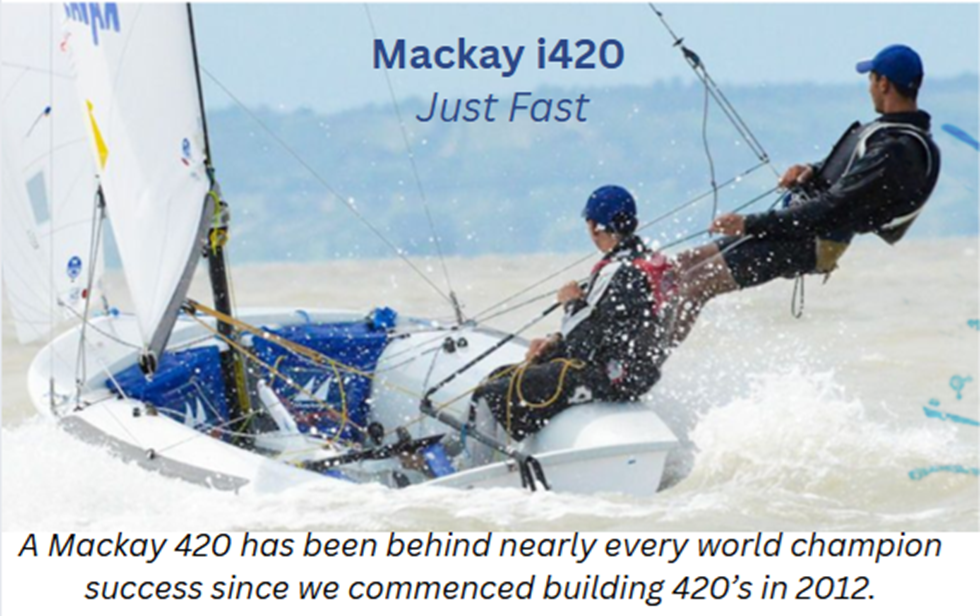
Follow Up on Luke Muller by Airwaves writer Grace Lucas
The past couple of months have been a blur for most high school sailors who are seniors – trying to cram in college visits, time for applications, and schoolwork into a very short period of time; however, it was no surprise that Luke Muller was recruited to one of the most competitive sailing schools in the nation – Stanford. There is no doubt that Luke will continue to have success in the future and it is definitely worth keeping an eye out for this upcoming household name in the sailing world.

Back in August he was selected to be the Sail1Designer of the Month, (https://www.sail1design.com/muller/) after his first place finish in the Radial at Youth Champs in Corpus Christi this past summer, with half of the points of the 2nd place boat. Since then, he has had some significant wins, such as 1st place at Orange Bowl in December 2013 in the Radial, which is arguably the most competitive youth fleet in the nation. Luke has also been selected to represent the United States at Youth Worlds in Portugal this summer, along with the US Sailing Development Team.
Read more about his recent success and future plans for sailing below:
S1D: When you came out of the Opti, what made you decide to sail Lasers instead of other common youth boats?
I guess it was mostly fate. I usually put myself in the most difficult/rewarding option when making decisions so the Laser was a good choice with its reputation as being one of the hardest fleets in the world but also has a history of turning out some of the greats in sailing, which is humbling and inspiring. I was also growing like crazy so I fit in the strap well.
S1D: What is your favorite aspect of sailing Lasers?
Coming in from a long and tough day happy with what I did.
S1D: You mentioned in your last interview that you trained using the CrossFit program. What aspect of that program is most beneficial when it comes to sailing?
You know, since then I haven’t been doing much CrossFit because of my recent switch back down to the radial but CrossFit has some really great benefits in keeping you fit and harnessing your mental toughness, which is key in any task.
S1D: You were recently accepted to Stanford for sailing, do you have any worries about transitioning from Lasers to college FJs and 420s?
No, I love learning new things and accepting new challenges so I’m actually looking forward to sailing them.
S1D: How does it feel to be chosen for the Sperry Topsider youth development team?
It feels great. The leaders of the team are really steering the whole program in the right direction and it is really exciting being one of the first group of sailors feeling the benefits of this new leadership.
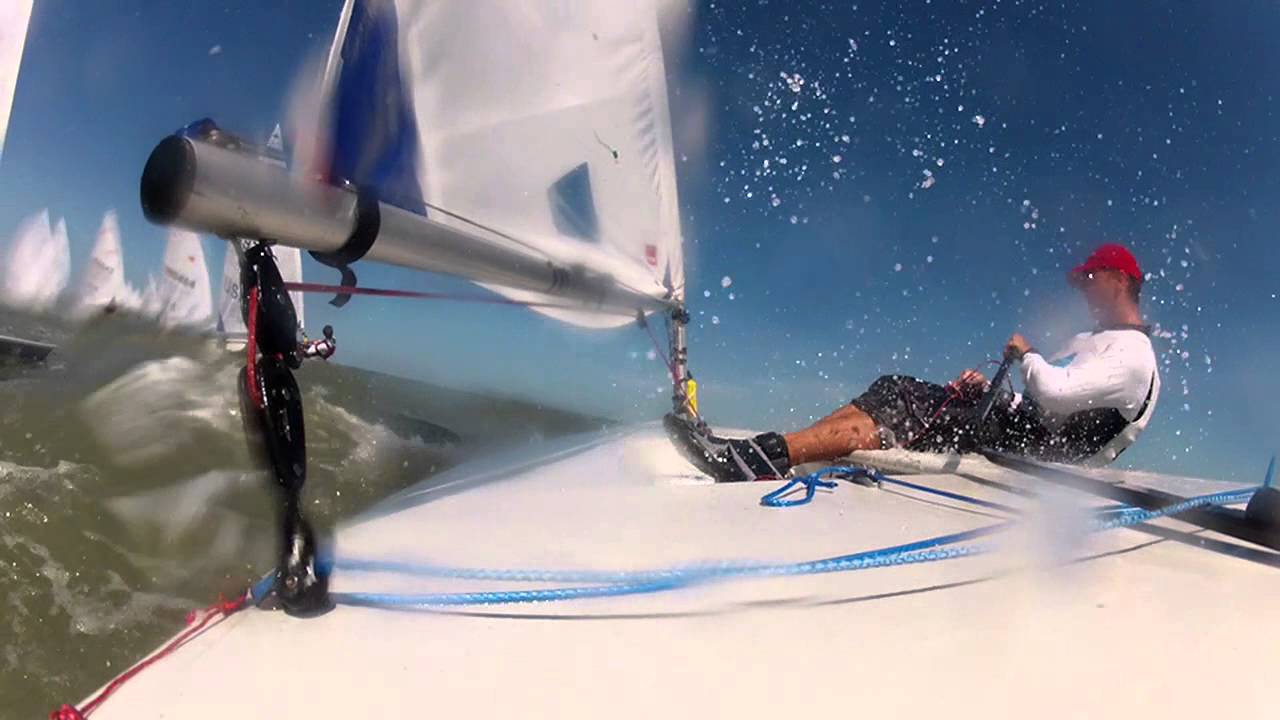
S1D: Do you intend to continue to train with the youth development team while sailing at Stanford?
Yes
S1D: Do you have any long-term goals for sailing? Do you have any specific plans in place to achieve them?
It’s always been my dream to go to the Olympics, do a Volvo, and sail in the America’s Cup and I hope I can hold on to that dream for as long as possible.
S1D: How are you preparing yourself for Youth Worlds this upcoming summer in Portugal?
The US team is now based out of Long Beach so I’ll be spending a lot of time out there this summer preparing for the worlds.
S1D: Do you have a favorite drill? What about a favorite leg of the course?
Favorite drill…..hmm practice isn’t really ever fun haha I’m joking.
I like really short course racing with a tight group of fast sailors. It’s a drill where every mistake is magnified and you have to be almost perfect to win. It gets pretty intense.
Favorite leg….I like the second upwind because people start to lose their focus and it is a leg that provides a lot of opportunity to make big gains for those who are still making good observations and putting out 100% physically.
Communication for Speed!
By Andrew Kerr
Picture yourself on port tack, going fast – with a wall of starboard tackers coming at you that you can barely see but you know their bows are charging at you!
Your team communicates well and is all on the same page, you cross the first 3 starboard tackers and then do a smooth duck on the last one before tacking on to the lay line for the weather mark. The whole situation seems almost routine – why? One strong element is that the team was communicating well as each team member was apprised of the situation and their subsequent role in it.

In particular – new teams, boats with new crew and teams that haven’t sailed together for a while would be well served to sit down together and talk about the communication / terminology that all on the team can quickly understand in the heat of competition and implement and execute with.
I typically sail with a wide variety of teams in a fairly wide variety of classes and have found it helpful to ask the team I am sailing with what type of and how much communication they like.
It is particularly important to get on the same page terminology wise – for instance needing to communicate that we need to go faster might be termed “ bow Down fast forward” by one person, “bear off” by another, “ foot mode” by another and so on!!
There essentially is no point communicating things the skipper doesn’t understand! Have you ever noticed sometimes that a team goes silent after a bad start and is fighting it out in the back of the fleet on the first beat? If you recognize this trait in your team, then now is the time to try and change it – be the one to start prompting the team to communicate – whether it be puffs, angles, waves or looking for lanes and opportunities, it gets the team back in the game and before you know it you will be passing boats and getting back in the race.
The trick is to all agree on the terminology so there is no misunderstanding. One of the
Challenges of good communication is formulating way’s to get across your observation / idea to the rest of your team in the most efficient and understandable way. Let’s look at a suggested communication model for a five person J24 that also can be applied to other boats as well.
Imagine you’re self on the rail as tactician trying to describe to the skipper how your team is doing against 20 or so boats that are to windward and on the same tack.
Here is a suggestion – divide the fleet into thirds – the initial (closer) third, the middle third and the top (most windward) third. The communication would go like this: “Initial group is bow down, middle group is bow even and the top group is bow up” That may be followed up by an overall performance analysis of – “it’s net gain/net even/ net loss to us”. Now like all the management courses tell you – if it is a net loss then we need to bring a solution to the table rather than simply present a problem! No need to kill the messenger here!
That reason may be that they have more breeze, a favorable wind shift or could simply be going faster. If the latter – why? Look at their set up – pay particular attention to the other boats forestay tension & Genoa halyard tension and how much backstay they have on and compare it to your setting also note what mode of sailing are they in – “ a fast forward bow down mode or a bow up height mode.
Let’s break the race down in to segments and look at the basic communication roles that each team member has. We will assume that the tactician/ strategist in this example are the middle person.
Before the start/ practice & preparation time:
This a perfect time to get the communication flowing – hoist the Genoa, go upwind and get settled in and then start the communication flowing both upwind and downwind , once the dialogue is established then we have a model & understanding for which we can build on . If you are sailing with a new team this is a perfect time to talk out what is understandable to everyone on board and what your communication role is going to be.
On the final approach to the start:
Bow: Communicates distance to the line in boat lengths using hand signals – communicates where other boats are and looks through the Genoa vision window to warn of encroaching boats. An example of this is – “Do you see bow 32 and 71 “?
Note: Try to do this off the bow as much as you can on smaller keel boats by crouching at the shrouds with an occasional run up to the bow for a confirmation – this keeps the weight off the bow and also increases skipper vision.
Mast: Communicates time clearly – a good technique is to make eye contact with the skipper when calling the time so they are under no uncertain terms of the time.
Middle: Warns the skipper of boats to windward and behind who may try to reach down and overlap to leeward late in the starting sequence an example might be – ‘ watch # 65 he might try to hook us “ .
Verbalizes the big picture to the team from a strategy standpoint – “there is more breeze left and the line is square – let’s start to the left of midline”.
Communicates clearly the broadcast on the VHF Radio and also communicates any flags that may have been hoisted from the RC – also backs up on time calling if necc.
Cockpit: Warns the skipper of boats approaching from clear astern and boats to leeward – particularly port tack approaches – an example of this – “ do you see # 22 “ and points at that boat as well as making eye contact with that skipper
I have seen the top cockpit crews do this – it firstly alerts the skipper to the port tacker and also communicates to that port tacker that they have been seen and defensive action ( Usually bow down and aiming at them to make them tack early or duck you) is about to happen.
The cockpit also communicates how much space to leeward there is and when the leeward boats are accelerating – “#27 is trimming on and is getting bow forward on us , we have a good gap to work “.
Skipper: Communicates whether we want to go fast or slow/ hold position. This can be done easily by the words “speed” or luff”.
It should be noted that a bad start very often includes a lack of team clarity on any one of these aspects – in particular the skipper losing a sense for where the line is at 15 seconds or the time not being communicated clearly. It’s so important that your team is all on the same page here.
The challenge of starting – particularly in a big aggressive fleet is that it is a series of one on one situations that happen in rapid succession – thus the necessity for different teams members to take on concise communication roles .
It is really important for the crew to provide concise information to the skipper but then to let them execute the start. The skipper doing there own start will enable them to continue to develop there own skills ( time & distance, gap and special awareness) and instincts in conjunction with concise verbalized observations that we have noted prior.
Upwind:
Bow:
Communicates puffs, light spots, flatter water and waves and where the mark is; “Big puff coming in 3, 2, 1 and it sustains, mark is at 11 o’clock”. It is very helpful to know if the puff does sustain (hold) or not so your team knows how much and how long we may have to depower the boat.
Very often calling the lulls and how long they last is neglected and this costs a team many boat lengths. A good example of good communication here would be: “Light spot coming in 3, 2, 1 and it last for about 10 lengths”.
Critical communication for the bow person going upwind is boats converging with your team through the Genoa window – especially in a big fleet!
Poor communication hear can lead to some theatric maneuvers that were not planned on!
An example of excellent communication would be: “ 2 starboard tackers coming about 40 seconds away in the middle of the window – looks like we are bow to bow with them – do you see them? ‘ Important note here is some teams prefer a time estimate and some a boat lengths estimate – find out what the preference is or what is more understandable.
Using the Genoa vision window is a great tool for judging crossings – if the approaching boat is in the forward part of the window they are likely crossing ahead, if they are in the middle of the window they are likely bow to bow with you and if they are in the back part of the window you are likely crossing them.
In Choppy conditions it is very beneficial for the bow to communicate a flat spot for the team to tack in – “good flat spot in 2 boat lengths”. Anyone that has ever tacked into the biggest chop set of the day will appreciate this!
Keep it up – keep calling the puffs, waves & lulls and don’t get down if you feel you are missing some of them or not doing it perfectly.
I remember years ago during a regatta taking a break from it on one portion of a windward leg as I thought I was off beat in my calls – as soon as I stopped calling the wind – Rod Johnstone (who was on the rail next to me) said some encouraging words – –“keep it up, Jeff (Johnstone) is listening and it’s helping us a lot”. Ever since, both in my own sailing and coaching I have encouraged people to keep taking there swings at it as it helps keeps the team alert and in the race.
Mast: Helps relay compass #’s and looks for the mark. “Mark is at 11 o’clock”. A really good one is when the mast person takes over calling puffs/ waves while the bow is putting the guy in the pole – “ Big puff in 2, 1, followed by a chop set “ . This back up communication is excellent and is one of the hallmarks of the good teams.
Middle:
Communicates speed and height versus the competition and overall positioning (see prior communication suggestion at the beginning of the article).
Asks the skipper how the boat feels and communicates to the skipper what mode of sailing the team should be in – i.e.: fast forward, (bow down, Genoa sheet eased, Mainsheet slightly eased) or in “height mode” (bow up, trim tighter, sailing with a narrow groove) to possibly pinch another team off. “Let’s get in height mode here – there is more wind just to weather of us” or “ lets go fast forward here , there is more breeze straight ahead” would be a good example of the middle s communication. Another one would be – “the fleet is heading to the right, lets pick a spot and go with them”.
Translates what the compass numbers mean is invaluable – particularly off the starting line and also rounding the leeward mark – “we are up 5 degrees “, “we are at the Median heading “, and “we are down 10 degrees on this tack compared to last time”. Being specific here is the key element and keeping the number of words to a bare minimum for simplicity will be the way to go in all instances.
Cockpit:
Talks with the skipper about the gap the Genoa trim – “am at max trim “, “am in eased mode”. One of the hardest scenarios is in light air when the wind is shifting faster than the skipper can steer to – if the wind lift and the outside telltale stalls a good communication is : “ I am eased,” or “we are lifted” ( While easing the sail out to reattach the flow to the outside part of the sail).
In light air the trimmer will be sitting to leeward and can verbalise the performance of the boats to leeward and also the separation between the team and the leeward boat. This can be particularly helpful off the starting line – “good gap to leeward you have room to go bow down if you want” – other examples would be – “boats to leeward are in fast forward mode and are gaining”,” good separation on the boat to leeward, net gain us”.
Skipper:
Can verbalize the compass numbers as they are in their range of vision and ask for input once in a while if it is not forthcoming. Talks about how the boat feels and whether there is enough power, also talks about what mode of sailing is required for the given boat to boat and strategic situations.
“We thought you meant go – not no!!”
It is not uncommon to see communication lapses between a starboard tacker who does not want a port tacker to cross and a port tacker who thinks the starboard tacker is waving them to cross. !
If your team wants a port tacker to cross (rather than get lee bowed) then the best thing to say is “Cross”, cross!” If a team say’s “no “it could be interpreted as “go” and vice versa.
Important note here – and especially in a big fleet is that it is very often far better to tell a port tacker to cross – as you may be lifted, going fast and in a great lane and the last thing you want is to be lee bowed and slowed down or impeded in any way.
Downwind:
Especially with a bigger fleet – maintaining a lane of clear air and positioning for the next puff become paramount. As well as inside position at the respective gate mark (if there are two leeward marks.
The team has to maintain the same intensity that they had at the start and the first leg and this can be achieved through concise and consistent communication to help the team go fast in the given conditions and circumstances.
Very often teams fall silent going downwind if they are behind ( just like after a bad start) this is where you have to pick it up , look harder , be more observant and get every scrap of info that you can to gain places. Keep the dialogue going and intensity level as if you were in the lead, it will pay dividends.
Bow:
Helping look for wind and scanning and verbalizing where the marks (s) are a big here. “Mark is at eleven O ‘clock, big puff forming up to beam in 3, 2, and 1 – now “would be an example of good communication and heads up sailing.
Mast: Some good communication here is relaying the compass #’s to the middle and also asking the trimmer & skipper how the pole height is and vang tension looks. “How’s pole height? I think the vang is too tight – how does it look? “
Middle: The middle crew is communicating lanes of wind and verbalizing jibing opportunities and fleet performance analysis as well as keeping track of Compass $’s to make sure the team is on the correct jibe.
They are talking about the net gains or losses versus boats that are on the other jibe and the angles that the boat s behind are sailing.
A good example would be “boat behind sails 5 degrees higher than us, now he is same angle, our air is clear; its net gain versus the boats on the other jibe”. More info would be: “I like where we are, we have been headed on the compass and are on the closest jibe to the mark, the starboard gate is favored in this shift”.
Any concise communication that you can come up with that eloquently and to the point states your observation is going to help the team understand what is required and the tactical scenario.
Cockpit:
A really good spinnaker trimmer focuses on the sail all the time and doesn’t get distracted. The communication from the middle and the dialogue they have with the skipper paints the picture for them of where the team is on the racecourse.
The trimmer’s communication would typically be – “pressures starting to develop (on the spin sheet), hold that angle, now pressures good – come down 5 degree, ok no lower”. The communication can be even more specific “down two degrees, hold, no lower, up 3 degrees, great, tight there, no higher”. This communication is so valuable on those puff / lull days that present the team with good opportunities to gain.
One of the goals of this ongoing and specific communication from the spinnaker trimmer is to ensure that the team does not sail too low in the lulls and too high in the puffs.
As a trimmer one’s ongoing goal is to provide consistent and specific communication on the trim to help the boat go fast and at the right angle as much as possible in the range of conditions.
Skipper:
The real focus here from a communication standpoint is listening to the crew communication, double checking where the mark is and noting compass heading changes for shifts. If the communication is not forthcoming then some verbalized prompters such as “where is the best breeze?” “Is our air clear? How are we doing versus the boats that jibed? ‘And so on may be necessary.
At the leeward mark – Negotiate early!
In observing big fleets round the leeward mark one of the hallmarks of a disciplined fleet are very few protests and the fleet rounding in single file (bow to stern) and not blocks of boats rounding on the outside.
This year I watched some of the races at the UK J24 Nationals and observed some excellent mark roundings with very few protests, the hallmark of a good caliber fleet.
To me this indicates teams who have negotiated their overlaps or lack of overlaps early and then have focused on the best rounding possible.
Important note here is that most of the time it is better to round behind someone with clearer air and the option to tack rather than outside them, in bad air and with little or no option to tack.
Good communication approaching the leeward mark would be for the skipper (or your designated communicator) to start the dialogue early with the skippers of the other boats – “# 52 we are overlapped, #77 no overlap “etc.
Now obviously this can change later on but what you have done is opened up the dialogue to reduce the potential for late mis understandings.
Keep the process going:
The bulk of this article is suggestions on your team’s communication – the composition and style of each team is different so the communication channels & content may be different.
I have found that you just cannot get too good at this, there are always’s better, more concise way’s of expressing observations in a concise and understandable way, I try to come up with new ways as much as I can both in my role as a coach and in my own sailing.
The important thing though is that those channels are open and that the team has established a foundation so that everyone is on the same page with the type and amount of communication that is required for each scenario that you meet on the race course. Very best of luck at your next regatta.
A Monumental Step Forward for the 49er Class
By Clinton Hayes
A Monumental Step Forward for the 49er Class
While clicking through the usual sailing media outlets, I came across something this week that deserves some more attention. In what I see as a truly revolutionary step,the 49er class has announced that they are moving forward with their “theater style” racing for the Rio 2016 Olympics and beyond. The real revolutionary part is not necessarily the format itself, but the philosophical stance they have taken by “proposing an alternative format to better align Olympic sailing with the Olympic business model.”

Large Country flags have been a staple in 49er sailing for a long time and are now required in all competition.
If you’re not familiar with it, theater style racing is the 49er class’s finals format. It involves 3 single point races with the top 10 boats from the qualifying series, no drops, with points from qualifying carrying through to the end. The big difference is it’s sailed on an actual racetrack, 600 meters by 325 meters maximum with boundaries that can’t be crossed. The class settled on this after multiple tests, and the decision to move in this direction after the single medal race format, run in the Olympics since 2008, turned out to be less than compelling for main stream media and not fulfilling for the sailors.
Theater Style Finals course (ignore MS and MP). The boundaries are actually a line of buoys on the same string so there’s no confusion. As this concept advances they will find even better ways to mark the racetrack.
If you haven’t seen one of these theater style races, they really are worth watching. Check out these from the Miami World Cup. https://www.youtube.com/playlist?list=PL0qme8rhNJgfECErZy_bylLNncaT4P8Tu
For the first time ever you can watch a sailboat race from beginning to end and understand who won and how they got there. The races are about 12 minutes long and full of action, beginning to end. I would go out on a limb and even say its more exciting than watching match racing, which I really enjoy. It’s important to note that the video from Miami is a very amateur production, yet, unlike most live racing video, its still fun to watch. Think of where it could go with a full budget. Sailing could actually fit in the space between commercials in a normal Olympic (or any other TV) broadcast. You could explain to the public HOW someone won a race in more detail than just, “they caught a wind shift and went faster.”

Generally, changes like this are interpreted as some sort of a tradeoff. As Scuttlebutt wrote, “Sport vs Spectator…will the reward be worth the change?” Although I get where they are coming from, this is flawed old school thinking. How are theater style races worse for the sport? I only hear people talk about the 2 hour long Olympic races of years past with a glazed over look in their eyes. Sure, this racing requires a different, more tactical skill set but like always the boat that sails the best will win. If, on the off chance, a boat sails so well in the qualifying series that they are well ahead of the fleet, then they might only have to score mid fleet results in the finals to clinch the regatta win. In terms of spectator, is it better for sailing to move towards a golfing image or a more extreme Red Bull Media image? I could go on but the 49er class explains it best: http://49er.org/blog/classinfonews/the-49er-progression-drive-explained/
Some questions do linger such as, “what do the sailors actually think?” This will only be answered with time but given the direction high performance sailing is headed (think extreme 40s and the Cup) coupled with the fact that many of the pros are 49er sailors, they won’t (and really shouldn’t) be against it. Top Olympic athletes survive off marketing dollars and anything that generates more views directly correlates to sponsorship potential. Sure it will be stressful and sure, the team who loses the Gold because of an unlucky break will be frustrated, but that’s sport. Unlucky breaks are common and those who truly love sport will come back time after time, not because of the race they won, but because of the Gold they lost on that unlucky break.
One Design Profile: J/24
By Tyler Colvin
Introduction and History: The Start of an Empire
In 1975, Rod Johnstone built a keelboat named Ragtime in his garage in Stonington, CT. Ragtime was the first J/24, a class that started the wildly successful J-Boats Empire and has grown into the world’s largest one design keelboat class. Since the class’ inception, over 5400 have hit the water and competed worldwide.
The Boat: A Keelboat for the People
As a small, light keelboat, the J/24 displaces 3100 lbs with a waterline length of 19’5” and an overall length of 24’. Maximum beam is 8’11” and it draws 4’, making it easily trailered behind a truck or utility van. It is constructed of fiberglass/resin with end grain balsa core which serves to maintain strength while saving weight. The deck/hull joint is secured with an inward flange and stainless steel nuts, bolts and washers. Original boats (first two years of production) were sealed with silicone sealant which has since been replaced by 3M’s bulletproof 5200 sealant.
The beauty of the J/24 is the parity across decades of construction. 1970s era boats can be just as competitive as the newest boats off the line from Waterline Systems, and place at the countless local, regional, and national regattas held annually. As a racer on a budget, a competitive boat can be had inexpensively and campaigned reasonably due to class restrictions on sails and equipment.
Pre-#3000 series hulls often require keel work to move material toward the leading edge to help with pointing and speed. Additionally, because of the extensive racing of the class (nearly all boats have raced in some capacity), all older boats should be checked for delamination as well as moisture intrusion into the core. Rotted core is easily detected with a moisture meter and should be replaced; it is often found under deck fittings and around the mast/hull through hole.
Sailing the Boat: A Balanced Approach
Sloop rigged, the J/24 is quick upwind, responsive, and very maneuverable. She is easy to day sail and challenging to race. As a day sailor, she is comfortable to cruise under main and genoa or under main alone, even upwind. Competitive boats require meticulous set up and are responsive to weight placement, boat tuning, and sail trim. A typical sail assortment consists of main, genoa, blade jib, and spinnaker.
Racing the J/24 is a wild experience. Fleets can be upwards of 80 boats with everyone from weekend warriors to professional sailors. Her nimble nature which is a strength also makes for a twitchy racer. More dinghy like then most keelboats of the same size, tuning, tension and sail trim make an enormous difference in speed and pointing ability. Reliable tuning guides are available through North Sails (http://www.tuningguides.northsails.com/tuningguides/TuningGuides/TuningGuidesJ24NewportDesign/tabid/9245/Default.aspx).
Trim is a labor of love. Under the genoa, the boat responds well to very flat angle of heel and power in the headsail. In light air, maintaining flow over the foils is important, as the boat is slow to accelerate. As breeze increases, the boat will stand up and point well with a light tiller hand and constant main trim. Playing the traveler as in medium air helps to keep the boat upright and maintain pointing angle. In increasing wind velocities, backstay should be used as needed if the rig feels overpowered and there is an increase in lee helm.
Class Association: All Together Now
The J/24 class association (http://www.j24class.org/) organizes and oversees international competition in the class. There are national organizations across North and South America, Europe and Asia. On the local level, hundreds of fleets in the US alone plan and execute club and championship level racing every year. Active fleets can be found around the US and are often more than happy to assist new J/24 owners with the finer points of the boat. A list of active fleets and districts with links to their respective websites can be found here http://www.j24class.org/usa/links.htm.
Who Sails the Boat?
Sailors of all ages and abilities come together at J/24 events. In one annual regatta on Lake George, NY, The Changing of the Colors, 70+ boats gather with average ages ranging from 19-60+. Professional sailors such as Andy Horton and Mike Ingham and collegiate coaches like John Mollicone regularly compete against club racers at events like J/24 Nationals and North Americans. The majority of participants are club racers at the local level. Fleet 50 in Newport RI boasts one of the largest memberships in the US and will be playing host to the 2014 J/24 World Championships (http://www.sailnewport.org/regattas/2014%20J24%20Worlds/2014j24worldchampionship.html). Local fleets such as Fleet 23 in Malletts Bay, Vermont also boast competitive racing on a weekly basis in the summer.
Why sail? A No-Brainer
The J/24 offers a great mix of personality, competition, and sailing comfort. As a day sailor she excels, providing affordable cruising to sailors of all abilities and is as easily dry sailed/trailered as she is stored on a mooring. As a racer she is cost effective, competitive, and quick. Whether sailed one design or under handicap rule, never count a J/24 out of the mix. Boats of all vintages, from the 1970s to 2000s and beyond can be winners, as can participants from junior sailors to seniors. What started out as a garage project in Stonington, CT, has blossomed into the most popular one-design keelboat classes in the world. The J/24 provides, pound for pound, some of the most exciting racing in the world that is accessible to every day club sailors, at a cost that is almost impossible to beat.
A First Impression of Sailing in Wellington, New Zealand
By Airwaves Writer at-large, Sara Morgan Watters
After a 23 hour journey to Wellington, New Zealand just over a month ago, I was welcomed to the country’s capital city by overcast conditions and, as promised, a strong summer breeze. Some people compare windy Wellington, as it is known, to San Francisco for consistent and breezy conditions. Additionally, I can personally attest to the steep San Francisco like hills, since I walk up one every day and can justify it as a short work out.
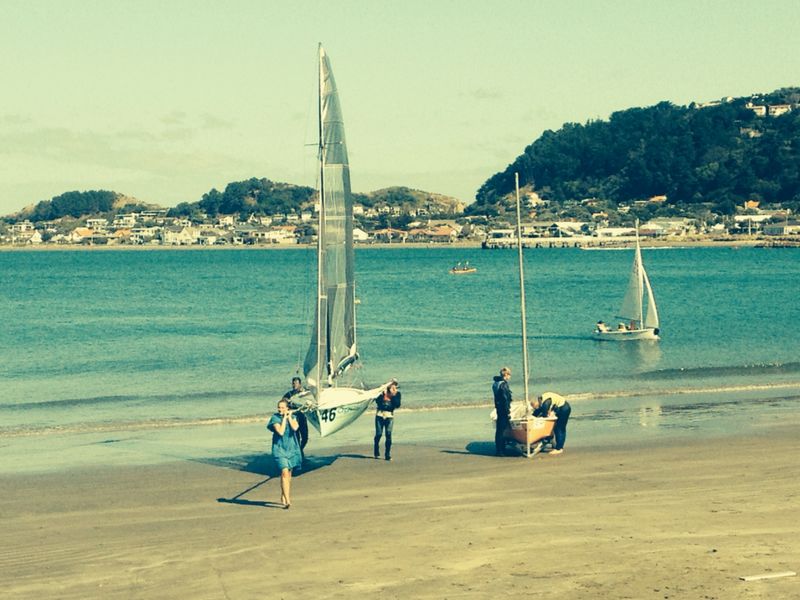
As I am settling into my new Kiwi life I have been keen to get involved in some New Zealand sailing, arguably the best in the world. As summer is wrapping up here, the high sailing season is coming to a close. So, trying to get the most out of my one month of summer I’ll get this year, I’ve been hard at work familiarizing myself with what the sport has to offer here in Wellington. So, what have I learned so far?
1. No one wears shoes!
It seems silly, but going barefoot is totally acceptable in supermarkets, stores, university classes, the street and yacht clubs! Perhaps this is so shocking because isn’t the number 1 rule of any junior sailing program in the U.S. to wear closed toed shoes at all times? Well, here bare feet around the club or while sailing is just the way it is. Are we just overly cautious in the U.S. or do New Zealanders end up with a lot more stubbed toes?
2. Everyone gets involved in sailing
Club members are very active at the three main clubs around Wellington. At Worser Bay Yacht Club (WBYC), a 10 minute drive out of the city center, you have a very community, family friendly oriented club, while still maintaining its competitive edge. On Saturday mornings, there are Opti, laser, Starling and P Class racing, the later two fleets being an alternative junior racing boat for kids just out of the Optimist or adults who are still the right size. Senior racing takes place after lunch, although you’ll often find a younger junior sailor hanging off the wire catching a ride on their parents boat. Some of the clubs’ more weekend based sailors will go out on the water for a casual rip around the bay on The New Zealand 12ft Skiff, not your average cruising boat.
Evans Bay Yacht & Motor Boat Club is another active club just five minutes from the city center which has social cruising division racing, competitive weekend dingy racing for sailors of all ages, hosts high school teams, learn to sail programs, and national and international regattas. Every Saturday there are opportunities to compete in trapeze and non-trapeze dinghies, Javelin Skiff (another New Zealand native skiff), Paper tiger (single-handed catamaran), among other classes. With a very fairly priced snack/bar area, there is plenty of socialization after racing – an important part of any club. On Sundays you can join the Development Squad or Learn to Sail Programs and try your skills on a boat you’ve never sailed before. Or if you are a slightly less experienced sailor you can just work on getting better. As you can see, there are lots of opportunities.

Under 21 year olds who are keen to do more competitive keel boat or match racing might be more likely to sail out of Wellington’s closest venue, Royal Port Nicholson Yacht Club, just a few minutes walk from downtown. There, youth sailors can train on the Wellington Youth Match Racing Development Squad, a feeder into the Under 21 Squad, which competes at major national and international match racing events.
3. When they go sailing, they do it in a lot of wind!
It is important to imagine these three clubs operating all the weekend activities in one of the world’s most consistently windy venues. When skiff sailors go out for a cruise on Saturdays, there is nothing leisurely about it. Or if you are taking advantage of the learn to sail program, you are most likely learning to sail in perpetually windy conditions. As a result, there is a significant shift in the perception of what a windy day is really like. When I think of a windy day I think of sailing in 18-20 knots. When a Kiwi thinks of a windy day, they might be thinking more in the 25-30 knot range.
4. Everyone Volunteers
Probably the most impressive feature of the sailing taking place at these clubs is that the people running it are mostly all volunteers! Sailors often regard volunteering time as part of being a member of the club. For example, at the start of the year at WBYC rosters are drawn up for Race Officer (Junior/Senior), lunch duty, and bar duty so everyone has a turn. Managing the different classes, choosing a day to set courses or act as the safety boat are all a part of being an active member. Members of the club also typically serve on National management committees for the classes they compete in.

From my experiences in the last month, both in the sailing community and out, Kiwis are very friendly, open people who make it easy to fit in. New Zealand, after all, is a very multicultural country so it is no surprise that I’ve felt so welcomed. So, I ask myself, are the sailing communities in the U.S. as bare feet going, passionate about sailing, and unquestionably willing to give back?
With rain and wind for the last six of the seven days, I’ve been told this is the official start of winter. As summer is just around the corner in the northern hemisphere, New Zealand is shifting into its winter season. Let’s see what there is to offer over these next few months. Stay tuned!
Megabyte
The Megabtye is a fast, yet stable boat that can be sailed with two crew or raced singlehanded. The boat was designed to carry some “serious weight” with a proper cockpit laid out for two people, but with the simplicity of a single sail. The Megabyte’s lightweight, tapered, carbon fiber mast and battened Mylar sail provide plenty of power when needed, and are easy to depower with well led controls.
Sailors well over 200 lbs can singlehand the Megabyte competitively and comfortably thanks to its powerful sail plan, deep cockpit, and high boom. The two piece carbon fiber mast and 130 lb hull make Megabytes easy to car top and transport. The Megabyte was designed by Farr Yacht Design and selected as Boat of the Year by Sailing World in 2000.
2014 J/70 Charleston Race Week Results and Reports
By Geoff Becker
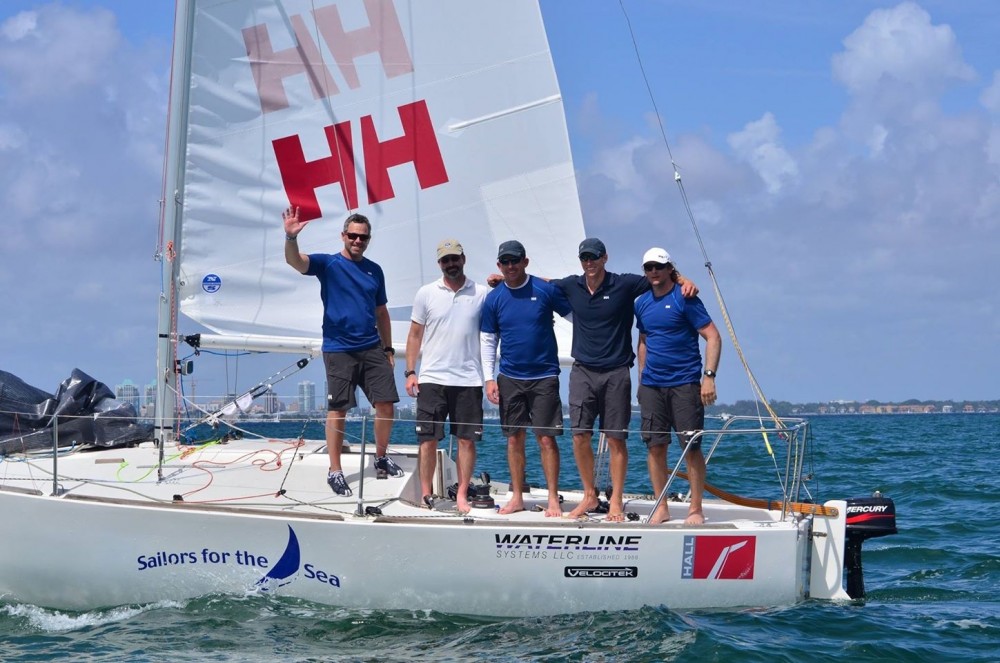
Team Helly Hansen: Skipper, Tim Healy, Tactician/Trimmer: Geoff Becker, Trimmer: Sam Stokes, Bow: Gordon Borges
Day 2 3 races, 2 heats/race (races course 4, 4 legs and downwind finish) Wind 6-12 knots from the South, shifty again!
Again, on Day 2 of Chareston Race Week 2014, three races (two heats per race) were sailed in a puffy and shifty sea breeze. Team Helly Hansen again had our ups and downs finishing the day with scores of 1st, 10th and 3rd, moving us into a tie for third overall. With the short course and challenging wind shifts it was important for us to be prepared to tack or gybe quickly in reaction to the oscillations and positioning of other boats.

In conditions where there are a lot of significant puffs and wind shifts, there are often time where the boat needs to react quickly to the breeze when it changes. For example, when sailing upwind toward a puff that looks to be a significant header wind shift, the boat might need to tack immediately as the shift arrives. It is important that the skipper and crew are ready for the new wind to arrive, and be prepared for the likely to outcome when the shift does arrive. For such transitions to go smoothly, there has to be discussion and communication on board before any reactionary maneuver happens.
As a new wind approaches, the driver and the tactician need to discuss what is likely to happen when it arrives. The conversation can be something like this…
Tactician: “Here comes a big puff, it looks like a header.”
Driver: “Do you want to tack on it, or keep going straight?”
Tactician: “We need to tack as it hits us, so everyone be ready.”
The same type of conversation can be used in many other scenarios on the racecourse. For example, when sailing on port tack and approaching a boat on starboard tack…
Driver: “Here comes a starboard tack boat…I am not sure if we are crossing?”
Tactician: “We are lifted, we need to continue straight, so try to cross, but duck behind if we can’t cross.”
Being prepared for new wind puffs and other scenarios on the racecourse can ensure the boat is prepared for a maneuver well before it has to be executed. If these types of discussions don’t take place, boathandling will certainly suffer and often a crew will end up with more than their share of crash tacks and tight situations with other boats. A little prep work and communication will go a long way and keep the whole crew more involved during the race.
Our takeaways from Day 2 are…
1. Be prepared for puffs and wind shifts as they approach
2. Communication is the key to reacting quickly to those changes
3. Discuss likely scenarios as the occur during the entire race
TOP 30 after Day 2:
| 1 | USA 187 | Catapult | Joel Ronning | 1 | 3 | 5 | 1 | 1 | 13 | 24 |
| 2 | USA 248 | Scamp | Will Welles | 1 | 7 | 10 | 2 | 6 | 1 | 27 |
| 3 | USA 316 | Superfecta | James Barnash | 10 | 2 | 8 | 4 | 4 | 1 | 29 |
| 4 | USA 2 | Helly Hansen | Tim Healy | 3 | 8 | 4 | 1 | 10 | 3 | 29 |
| 5 | USA 397 | Hot Mess | Rob Britts | 3 | 4 | 11 | 14 | 1 | 2 | 35 |
| 6 | USA 179 | Africa | Jud Smith | 10 | 1 | 2 | 16 | 3 | 4 | 36 |
| 7 | USA 51 | Black River Racing | Doug Strebel | 8 | 9 | 7 | 5 | 5 | 10 | 44 |
| 8 | USA 96 | Savasana | Brian Keane | 2 | 20 | 4 | 3 | 2 | 15 | 46 |
| 9 | USA 34 | Perseverance | Bennet Greenwald | 8 | 4 | 15 | 9 | 2 | 9 | 47 |
| 10 | USA 245 | USA 245 | Ian Liberty | 5 | 13 | 3 | 15 | 10 | 7 | 53 |
| 11 | USA 364 | School’s Out | John Aras | 13 | 5 | 1 | 12 | 7 | 17 | 55 |
| 12 | USA 167 | Kraken | Gary Tisdale / Adam Burns | 5 | 6 | 3 | 12 | 14 | 16 | 56 |
| 13 | USA 94 | Lifted | Jim Cunningham | 6 | 6 | 19 | 3 | 8 | 14 | 56 |
| 14 | USA 45 | Wild Child | Henry Filter | 6 | 3 | 1 | 20 | 21 | 10 | 61 |
| 15 | USA 159 | Torqeedo | Chris Carroll | 2 | 17 | 14 | 2 | 18 | 11 | 64 |
| 16 | USA 11 | Menace | Kerry Klingler | 7 | 24 | 14 | 13 | 5 | 1 | 65 |
| 17 | CAN 246 | Touch2Play | Rob & Sandy Butler | 11 | 7 | 6 | 13 | 19 | 15 | 71 |
| 18 | USA 217 | Joint Custody | Jenn & Ray Wulff | 7 | 5 | 8 | 19 | 26 | 8 | 73 |
| 19 | BER 308 | Elusive | Chuck Millican | 9 | 15 | 12 | 7 | 20 | 12 | 75 |
| 20 | USA 185 | Turbo Duck | Bodo & Nick von der Wense | 4 | 14 | 13 | 8 | 13 | 25 | 77 |
| 21 | BRA 403 | Bruschetta | Mauricio Santa Cruz | 17 | 23 | 10 | 6 | 7 | 14 | 77 |
| 22 | USA 15 | Junior | Don & Tim Finkle | 22 | 25 | 12 | 11 | 3 | 5 | 78 |
| 23 | USA 174 | Magic Bus | Gregg Mylett | 19 | 2 | 21 | 21 | 16 | 3 | 82 |
| 24 | USA 151 | Reach Around | Thomas Bowen | 12 | 21 | 2 | 14 | 17 | 17 | 83 |
| 25 | USA 171 | Running Wild | Peter Vessella | 14 | 12 | 9 | 19 | 12 | 19 | 85 |
| 26 | USA 26 | Jungleland | Chris and Carolyn Groobey | 15 | 23 | 22 | 5 | 14 | 7 | 86 |
| 27 | USA 326 | Aquaholiks | Martin Johnsson | 12 | 10 | 42/DSQ | 4 | 13 | 6 | 87 |
| 28 | USA 99 | Nostalgia | Blake & Lud Kimbrough | 20 | 18 | 16 | 7 | 4 | 22 | 87 |
| 29 | USA 86 | Stampede | Loring / Pasquinelli | 9 | 26 | 9 | 25 | 8 | 18 | 95 |
| 30 | USA 035 | Moxie | Cole Allsopp | 19 | 13 | 26 | 8 | 18 | 13 | 97 |
_______________________
Day 1 3 races, 2 heats/race (races course 4, 4 legs and downwind finish), Wind 6-14 knots from the SW, shifty!
With the popularity of the J/70 in the past year and a half the fleet sizes continue to push the limits of many venues including Charleston Harbor for the 2014 Charleston Race Week. The J/70 fleet has grown to almost 80 boats this year and with the limited space the organizers decided to sail the regatta in heats, allowing all the boats to fit on the course. To make the heats, the entire fleet was divided into four colors (groups) and each race was sailed with two separate race starts with two colors sailing in each start. For subsequent races, the colors would rotate allowing each color to sail the others in a round robin format.
Three races, of two heats per race, were sailed on Day 1 in a shifty SW sea breeze. The shifty conditions were challenging enough, but you add 40 competitive boats in each heat and you have a lot of opportunities to pass and be passed. Team Helly Hansen ended the day with a 3rd, 8th and 4th earning our team 5th overall moving into the weekend. While our scores show some consistency, there was nothing consistent about our day. In fact, in Race 2, we were never in 8th place until we crossed the finish line, spending much of the race in the bottom half of the fleet.
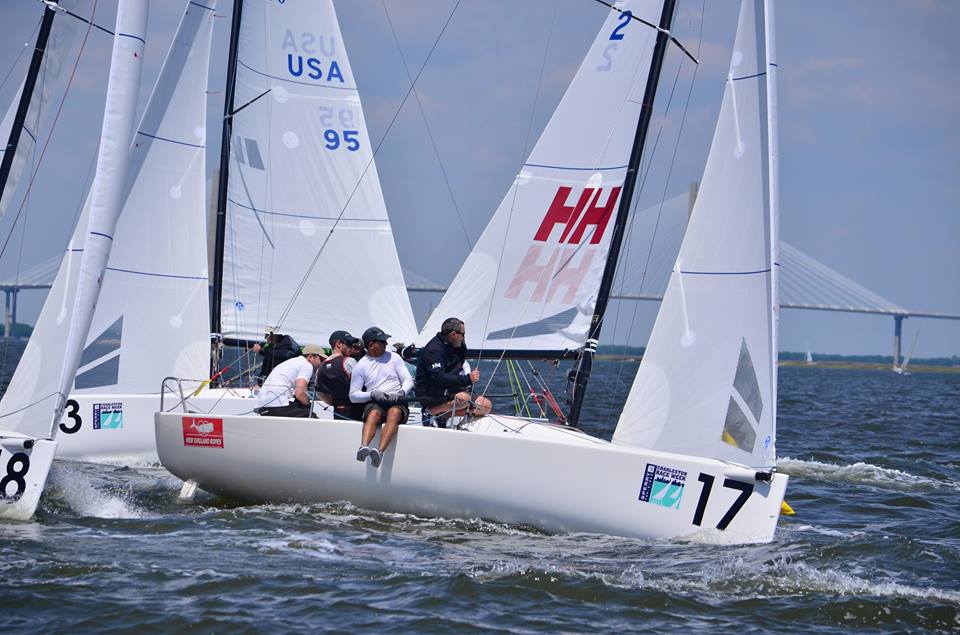
When the conditions are such that there are large gains and losses possible on the course, it is important to keep a mentality that you have to do the best you can with the options you are given. Off the starting line in Race 2 we had a bad position and were forced to tack shortly after the start. That clearing tack immediately caused us to be out of phase heading toward the middle of the course. What happened next might seem familiar to almost every sailor; we bounced around the middle trying to find a clear lane on the lifted tack, while boats continually tacked in front of us forcing us to tack away, etc., etc.. We eventually made it to the first mark, but only managed to stay ahead of a handful of boats.
Now what? The good news was, that the whole fleet was tightly packed and there looked to be opportunities to catch groups of boats if we could maintain our focus. We worked hard to minimize the distance we sailed to the next mark, keeping our sailing lanes as clear as possible. That meant trying to stay away from other boats in general, in a position where we could make our own decisions as to where to sail to get the next shift. Often, when there are a large number of boats tightly packed, it can be easy to get caught so close to a group of boats you become trapped by the group and forced to sail in the direction of the group.
With the conditions being so shifty, we thought that if we sailed away from packs, there would eventually be chances to gain as long as we waited for the shifts in our area to work in our favor. Instead of tacking or gybing on every shift, we would sail toward the bigger shifts we could see and let the packs battle for the smaller shifts making more maneuvers. This strategy worked, as we were able to move up in the fleet each leg until finally crossing the finish in 8th place.

Looking back at that race, many of the places we gained during the race were a result of packs of boats slowing each other down, getting in each other’s way and trying to get every little shift (very much like the way we sailed on leg one). After the first mark, we tried to maneuver less and stretch out away from packs of boats whenever possible. Sometimes just settling in, sailing straight and stretching out can be the best tactical move, even in shifty conditions.
Our takeaways from Day 1 are…
1. Do the best you can with options you have
2. Avoid packs of boats for tactical freedom
3. Stretch out and sail straight to help get back into phase
Overall results for all classes: http://www.yachtscoring.com/event_results_cumulative.cfm?eID=968
J/70 Results after day one:
| J 70 | ||||||||||
| 1 | 76 | USA 187 | Catapult | J 70 | Joel Ronning | 1 | 1 | 1 | 3 | |
| 2 | 59 | USA 45 | Wild Child | J 70 | Henry Filter | 6 | 3 | 1 | 10 | |
| 3 | 85 | USA 179 | Africa | J 70 | Jud Smith | 10 | 1 | 2 | 13 | |
| 4 | 42 | USA 167 | Kraken | J 70 | Gary Tisdale / Adam Burns | 5 | 6 | 3 | 14 | |
| 5 | 17 | USA 2 | Helly Hansen | J 70 | Tim Healy | 3 | 8 | 4 | 15 | |
| 6 | 45 | USA 248 | Scamp | J 70 | Will Welles | 1 | 7 | 10 | 18 | |
| 7 | 18 | USA 397 | Hot Mess | J 70 | Rob Britts | 3 | 4 | 11 | 18 | |
| 8 | 46 | USA 364 | School’s Out | J 70 | John Aras | 13 | 5 | 1 | 19 | |
| 9 | 50 | USA 316 | Superfecta | J 70 | James Barnash | 10 | 2 | 8 | 20 | |
| 10 | 19 | USA 217 | Joint Custody | J 70 | Jenn & Ray Wulff | 7 | 5 | 8 | 20 | |
| 11 | 51 | USA 245 | USA 245 | J 70 | Ian Liberty | 5 | 13 | 3 | 21 | |
| 12 | 54 | CAN 246 | Touch2Play | J 70 | Rob & Sandy Butler | 11 | 7 | 6 | 24 | |
| 13 | 72 | USA 51 | Black River Racing | J 70 | Doug Strebel | 8 | 9 | 7 | 24 | |
| 14 | 44 | USA 96 | Savasana | J 70 | Brian Keane | 2 | 20 | 4 | 26 | |
| 15 | 39 | USA 34 | Perseverance | J 70 | Bennet Greenwald | 8 | 4 | 15 | 27 | |
| 16 | 55 | USA 185 | Turbo Duck | J 70 | Bodo & Nick von der Wense | 4 | 14 | 13 | 31 | |
| 17 | 25 | USA 94 | Lifted | J 70 | Jim Cunningham | 6 | 6 | 19 | 31 | |
| 18 | 53 | USA 159 | Torqeedo | J 70 | Chris Carroll | 2 | 17 | 14 | 33 | |
| 19 | 41 | USA 151 | Reach Around | J 70 | Thomas Bowen | 12 | 21 | 2 | 35 | |
| 20 | 43 | USA 171 | Running Wild | J 70 | Peter Vessella | 13 | 12 | 9 | 35 | |
| 21 | 62 | BER 308 | Elusive | J 70 | Chuck Millican | 9 | 15 | 12 | 36 | |
| 22 | 29 | USA 174 | Magic Bus | J 70 | Gregg Mylett | 19 | 2 | 21 | 42 | |
| 23 | 48 | USA 86 | Stampede | J 70 | Loring / Pasquinelli | 9 | 26 | 9 | 44 | |
| 24 | 82 | USA 11 | Menace | J 70 | Kerry Klingler | 7 | 24 | 14 | 45 | |
| 25 | 33 | USA 95 | Muse | J 70 | Heather Gregg-Earl / Joe Bardenheier | 4 | 30 | 13 | 47 | |
| 26 | 80 | BRA 403 | Bruschetta | J 70 | Mauricio Santa Cruz | 17 | 23 | 10 | 50 | |
| 27 | 36 | USA 68 | Noname | J 70 | Ron Thompson | 21 | 27 | 5 | 53 | |
| 28 | 26 | USA 97 | Loki | J 70 | Michael Zupon | 16 | 15 | 22 | 53 | |
| 29 | 28 | USA 62 | Lucky Charm | J 70 | Ken Corsig | 28 | 1 | 24 | 53 | |
| 30 | 47 | USA 157 | Spring | J 70 | Dave Franzel | 18 | 11 | 24 | 53 | |
| 31 | 37 | USA 99 | Nostalgia | J 70 | Blake & Lud Kimbrough | 20 | 18 | 16 | 54 | |
| 32 | 49 | USA 152 | Sundog | J 70 | Kathy Parks | 25 | 25 | 6 | 56 | |
| 33 | 79 | USA 219 | GetMyBoat | J 70 | Vortex Racing | 33 | 16 | 7 | 56 | |
| 34 | 35 | USA 335 | Nitemare | J 70 | Amy Neill | 15 | 11 | 31 | 57 | |
| 35 | 81 | USA 48 | Wicked Witch | J 70 | Larry Landry / Paul McDowell | 13 | 20 | 25 | 58 | |
| 36 | 31 | USA 035 | Moxie | J 70 | Cole Allsopp | 19 | 13 | 26 | 58 | |
| 37 | 22 | USA 15 | Junior | J 70 | Don & Tim Finkle | 22 | 25 | 12 | 59 | |
| 38 | 52 | USA 87 | Tick Tock Croc | J 70 | Richard Nesbett | 18 | 31 | 11 | 60 | |
| 39 | 27 | USA 46 | Loonatictu | J 70 | R Noel Clinard | 11 | 33 | 16 | 60 | |
| 40 | 21 | USA 26 | Jungleland | J 70 | Chris and Carolyn Groobey | 15 | 23 | 22 | 60 | |
| 41 | 73 | USA 37 | Grizzly | J 70 | Charles Bayer | 22 | 10 | 28 | 60 | |
| 42 | 38 | USA 410 | Perfect Ten | J 70 | Joe & Jeff Pawlowski | 21 | 26 | 15 | 62 | |
| 43 | 13 | USA 169 | Empeiria | J 70 | John Heaton | 14 | 31 | 17 | 62 | |
| 44 | 9 | USA 488 | Convexity | J 70 | Donald Wilson | 24 | 22 | 17 | 63 | |
| 45 | 69 | USA 184 | VLLN | J 70 | Patrick Nichols / Mark Nichols | 16 | 18 | 30 | 64 | |
| 46 | 74 | USA 238 | Zuni Bear | J 70 | Rich Bergmann | 26 | 9 | 32 | 64 | |
| 47 | 4 | USA 326 | Aquaholiks | J 70 | Martin Johnsson | 12 | 10 | 42/DSQ | 64 | |
| 48 | 68 | USA 425 | USA 425 | J 70 | Joe Baggett | 29 | 8 | 29 | 66 | |
| 49 | 5 | USA 510 | Button Fly | J 70 | Andrew and Melissa Fisher | 23 | 14 | 29 | 66 | |
| 50 | 10 | USA 369 | Cool Story Bro. | J 70 | John Brigden | 23 | 22 | 23 | 68 | |
| 51 | 24 | USA 207 | Leading Edge | J 70 | Todd Hiller | 26 | 24/SCP | 19 | 69 | |
| 52 | 12 | USA 340 | Rimette | J 70 | John Brim | 27 | 19 | 23 | 69 | |
| 53 | 7 | USA 497 | Chinook | J 70 | Frank McNamara | 17 | 24 | 28 | 69 | |
| 54 | 86 | USA 420 | E.L.E. | J 70 | Matt Braun | 35 | 17 | 18 | 70 | |
| 55 | 34 | USA 194 | Napoleon | J 70 | Patrick Byrne | 30 | 16 | 25 | 71 | |
| 56 | 61 | USA 28 | Misson Impossible | J 70 | David Malkin | 28 | 28 | 18 | 74 | |
| 57 | 32 | USA 379 | Mummbles | J 70 | Brad Kauffman | 32 | 19 | 27 | 78 | |
| 58 | 40 | USA 220 | Phoenix | J 70 | Peter Firey | 32 | 21 | 27 | 80 | |
| 59 | 3 | USA 378 | 378 | J 70 | Jeff Schaefer | 27 | 29 | 26 | 82 | |
| 60 | 11 | USA 357 | Danger Mouse | J 70 | Kristen Berry | 31 | 32 | 21 | 84 | |
| 61 | 23 | USA 236 | Layla | J 70 | Tim Gibbs | 20 | 30 | 34 | 84 | |
| 62 | 1 | USA 390 | 20/20 Racing | J 70 | John Arendshorst | 31 | 36 | 20 | 87 | |
| 63 | 16 | USA 100 | Gemini | J 70 | Blane Shea | 34 | 34 | 20 | 88 | |
| 64 | 56 | USA 168 | USA 168 | J 70 | Marty McKenna | 30 | 27 | 31 | 88 | |
| 65 | 30 | USA 199 | Mojito | J 70 | Catharine Evans | 25 | 32 | 32 | 89 | |
| 66 | 65 | USA 36 | Taipan SB | J 70 | Lloyd Karzen | 24 | 34 | 36 | 94 | |
| 67 | 67 | USA 388 | US 388 | J 70 | Jack Neades | 33 | 33 | 30 | 96 | |
| 68 | 6 | USA 358 | Bucephalus | J 70 | Andrea Krasinski | 29 | 35 | 33 | 97 | |
| 69 | 66 | USA 367 | US 367 | J 70 | Tiller Halfhill | 34 | 29 | 34 | 97 | |
| 70 | 75 | CAN 361 | emiLee | J 70 | Hadrian Corning | 37 | 28 | 35 | 100 | |
| 71 | 64 | USA 392 | Slinky | J 70 | Scott Bursor | 35 | 35 | 33 | 103 | |
| 72 | 2 | USA 91 | Carlos | J 70 | Vinnie Pattavina | 36 | 37 | 36 | 109 | |
| 73 | 60 | USA 382 | Zombie | J 70 | Kristen Robinson | 39 | 36 | 35 | 110 | |
| 74 | 14 | USA 204 | Eowyn | J 70 | Peter Winkelstein | 36 | 37 | 37 | 110 | |
| 75 | 58 | USA 345 | White Rabbit | J 70 | Steve Kiemele | 38 | 38 | 38 | 114 | |
Sail1Design's Team Race Rankings, 9 APRIL 2014!!
As qualifiers finished up this past weekend, the berths for Team Race Nationals in June were filled! Some of the usual heavy-hitters like Stanford, St. Mary’s, Roger Williams and Charleston secured their berths and some of the top spots in our rankings this week with victories at their conference qualifiers. Other regular powerhouses like Georgetown, Yale, and BC confirmed their berths as well with strong sailing to best their competition. And other strong teams who were in the hunt for the remaining berths like Navy, Tufts, USF and ODU came out swinging this weekend and proved that they deserved a spot at the big table.
The weekend also came with upsets and disappointments, in particular in NEISA where Dartmouth, Harvard, and Brown were all in the running for the final nationals berth but couldn’t quite get it done at the Fowle. Fordham, a young team that has come out of the woodwork this year, lost a tie-breaker with ODU for the final MAISA spot at the Prosser, and greatly deserves their recognition in the top 15. Stay tuned as Nationals approaches and we get our championship predictions from our panel!
SEE THE RANKINGS: https://www.sail1design.com/college-team-race-rankings/
Sail1Design's Career Center: Find Your Sailing/Marine Industry Destiny!
Since 2007, Sail1Design has provided a vital, active Career Center and Job Board. Here, you can post your resume, search marine/sailing industry jobs, or post a job and find your next great employee.

SAILING/MARINE INDUSTRY CAREER CENTER & JOB BOARD
We offer sailing’s #1 Career Center and Job Board, always chock full of incredible sailing job opportunities. Our comprehensive career center also offers job seekers the ability to create their own web page, highlighting their experience and posting their resume. Likewise, employers can search our resume database to find the right match for that open position. Sail1Design is proud also to be the official job board of the Intercollegiate Sailing Association (ICSA), and the US High School Sailing Association (ISSA).
Sail1Design also offers:
MARKETPLACE & PROFESSIONAL BROKERAGE
Unique to the industry, Sail1Design hosts and manages an active private, by-owner marketplace, focusing on performance and one-design sailboats & gear. For all boats under 25′, our ads are free. What makes us different is that we also provide, side-by-side, professional brokerage services as well. We have had great success helping our sailing clients market and sell their boats, using our powerful client base, social media, and the brokerage industries multiple listing service to ensure your boat gets noticed.

AIRWAVES NEWS & CALENDAR
S1D also hosts Airwaves, an interactive, user fed Sailing Calendar and informative Sailing News, Articles, tips, & more. Airwaves has developed a great niche in the sailing publication world, and now boasts a seven-member staff of dedicated sailors, all contributing to our varied content.
2014 Baldwin Cup Team Race Video Report
The Baldwin Cup Team Race was conceived in the fall of 2007 on a Tuesday afternoon conference call looking to reinvigorate the US Yacht Club Challenge. Staff Commodore Bill Palmer had recently returned from a trip back east and had witnessed the success of several east coast yacht club team racing events.
The members on the call quickly realized NHYC was in a position to take a lead among west coast yacht clubs, and produce a team racing event with a distinctly west coast vibe.
In 2008, under the dedicated leadership of event chairwomen Gale Pinckney, the Baldwin Cup Team Race accomplished what many people said could never be done. That year NHYC created a successful national level, 4 versus 4 team race, sailed in Harbor 20’s. The racing occurred in an arena-type setting, created by a vacated NHYC mooring field, which allowed the members to witness the excitement of the event happening just feet from the NHYC main dock.
SailFuture Sets Course Toward a Worthy Mission
By Airwaves writer Clinton Hayes
For Founder and Executive Director Michael Long, SailFuture is built on personal experience. Having spent 2 years in and out of Florida’s juvenile justice system, his probation officer sent him from program to program, but nothing ever clicked. He continued down a pretty rough path until finally hitting rock bottom, and at that point he realized a change was needed. Michael “wanted to build a program that actually worked,” one that not only created second chances, but actually convinced youth to take advantage of them.

SailFuture is located in Sarasota County Florida and currently operates out of the New College of Florida sailing facility. The way the program works is by pairing college age mentors with at risk youth from the local area and giving them time in small sailboats. The program is unique and VERY different from similar programs because the mentors themselves are not sailors. This puts the mentors and the students on the same level, allowing a strong relationship to form. They have pulled away from the traditional sailor and coach model and focus on using sailing to teach life lessons. This may sound like stereotypical talk but when the mentors don’t know how to sail either it really becomes a working partnership. The students aren’t just listening to the mentors give orders but are listening and observing how the mentors learn and solve problems. The big “life lesson” through sailing is the ability to learn on your own and have the confidence to figure things out and execute on a plan.
Sailing Director CJ Lee spent his youth learning to sail in Annapolis, MD before moving to Florida. Both he and Michael recognized the impact sailing has had on their lives, as well as the impact it could have on others, and wanted to incorporate what they learned from sailing directly into SailFuture’s curriculum. CJ gives this example, “when the students are learning points of sail, we do not list off close hauled, close reach…etc. We give them marks to sail to and tell them to keep their bows pointed at the mark and adjust their sails until they start moving. The students learn the importance of keeping their eyes on the goal and always making adjustments to get there. They learn that the longer they wait to adjust, the harder it becomes to get back on track.” The goal of the program is not to teach kids to become great sailors but to prove to them it’s possible to set and achieve goals and hopefully encourage them to set new goals in life. You can really see how this mission pushes students beyond what a traditional sailing program might.

More than a sailing partner, mentors are also each student’s personal tutor. All SailFuture students are in high school with GPAs below 1.5, chronic behavioral challenges, and significant family trauma at home. Sailing teaches life lessons while the mentor creates an individualized academic plan “that becomes a student ‘chart’ to graduation.” The BIG GOAL of the program is to get all students to graduate high school with plans for the future and the confidence that they can go wherever they want to in life.
Since May 2013 SailFuture has impacted the lives of over 50 youth. Mentors spend 10-12 hours a week in the program with the kids but often much more of their own free time outside of program days. The program is so new that long-term success cannot yet be measured but with the significant emotional and time commitment of these mentors coupled with the unique program its safe to say that lives will be changed. The way SailFuture is set up it can also be scaled to other locations. It’s set up for small two person boats at college and high school facilities (or community sailing centers). Locally it is run and managed by college students who also serve as mentors. Although being a mentor requires a big commitment they try to engage anyone who is interested as a board member, speaker, volunteer for the day, or boat owner taking students for a day sail.
SailFuture is working hard to secure more funding to ensure long-term s couple weeks ago they were accepted along with several hundred other initiatives lead by students to attend this year’s Clinton Global Initiatives University. Out of that, they were picked to participate in a crowd funding competition with 31 other teams where they raised over $6000 in less then 2 weeks. Although the competition is over, donations are still being accepted on the website- http://www.crowdrise.com/NewCollegeofFlorida-CGIU

Michael wanted to personally thank all the college students running SailFuture especially CJ, Evan Murphy, Julia De Aragon, Aaron Baker, Batya Levy, and the mentors. Without them, none of this would be possible. As Michael says “when you put two people who don’t know how to sail on a boat and say, figure it out, they are bound to come back with bumps and bruises, failures and successes.” We wish SailFuture the best! http://www.sailfuture.org

Sail1Design's All-New Sailing Calendar: Post Your Event!
S1D is pleased to unveil our vastly improved, all-new interactive sailing calendar, allowing our members and users to post their sailing events, link to Google Calendar, and more! Promote your regatta, clinic, or sailing-related event!!!
On the calendar page, look for the green button that says “post your event” and the rest is easy!
We hope you take advantage of this new service. We also have our own calendar managers, Emma & Grace, so if you need help posting events, or want us to do it for you, please email! [email protected] or [email protected]
https://www.sail1design.com/calendar/