NEWPORT, R.I. (December 09, 2015) – The Premiere Sailing League USA, structured after the enormously successful sailing leagues pioneered in Germany and Denmark (www.segelbundesliga.de; www.sejlsportsligaen.dk), announced today that special-edition J/70s and J/88s will be used for the series. The event starts with District Qualification Regattas using J/70s and moves on to the National Finals to be sailed in J/88s. The Premiere Sailing League boat editions are 100% made in the USA, starting with their design by J/Boats (Newport, R.I.); spars by Hall Spars & Rigging (Bristol, R.I.); hardware by HARKEN (Pewaukee, Wisc.); lines by New England Ropes (Fall River, Mass.); and hull and sail graphics by Mac Designs (Newport, R.I.) 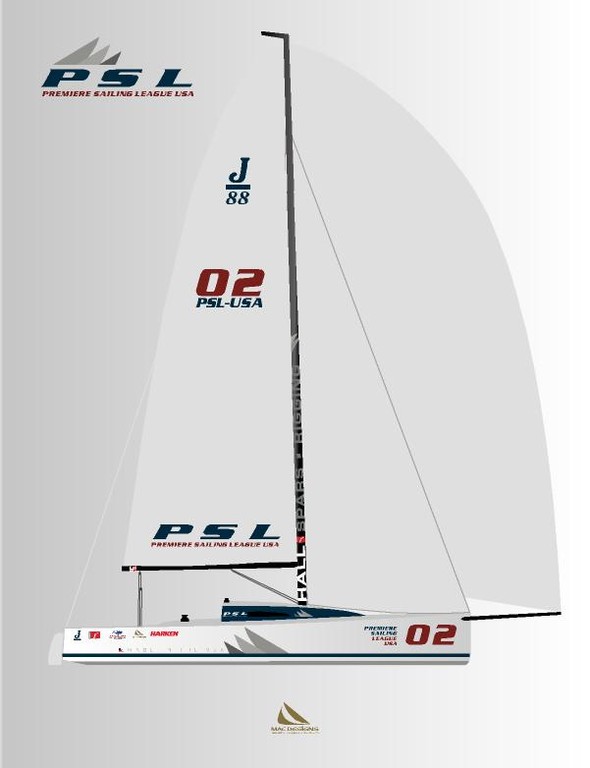 Special “Made in the USA” editions of the J/70 and J/88 will be used in the Premiere Sailing League series. Special “Made in the USA” editions of the J/70 and J/88 will be used in the Premiere Sailing League series.“I am very proud to have on the PSL team companies that are passionate about sailing and have established themselves as leaders in their fields,” said Premiere Sailing League President Benjamin Klatzka. “Support from the marine industry is very important, and with boats ‘Made in the USA’ it will distinguish Premiere Sailing League America from other ‘club-based’ events and also inspire other U.S. companies and organizations to get involved.” At the Premiere Sailing League USA introduction during last year’s Strictly Sail boat show in Chicago, J/Boats President Jeff Johnstone voiced his support for Klatzka’s initiative based on what the overseas sailing leagues have done “to excite and promote grassroots sailing.” Johnstone says the philosophy behind the series is fully convergent with that of J/Boats: “to provide a great platform to promote multi-generational sailing via fun and affordable competition between clubs.” The J/70s and J/88s are built in the U.S. and their rigs will feature Hall Spars for the special-edition Premiere Sailing League USA boats. “Our spars are shipped all over the world and used at the highest levels of competition,” said Hall Spars Vice President Ben Hall, “but we never forget our roots and the importance of keeping the sport fun and accessible to everyone.” Kevin Coughlin, of New England Ropes, shared a similar sentiment, explaining, “As a local supplier, we work closely with all partner companies to provide the best tools and equipment for the sailors and even more importantly to promote sailing and racing, as it is such an essential part of our global business.” Harken, also synonymous with top performance in sailing, supplies hardware to superyachts and racing dinghies alike. “J/Boats, Hall, Harken…we are all international companies,” said Peter Harken, the company’s president. “Our customers rely on our gear to win all over the world. Deep down, I think it’s great something like this is going to happen in the U.S. with American companies represented.” Designer of the new logo for Premiere Sailing League USA and the new “look” of the special-edition boats is Mac Designs, which has provided hull and sail graphics for some of the most memorable racing campaigns in recent history. “Since the regattas will be held close to shore, have a stadium-style atmosphere and utilize the latest social media technologies, the visuals will be integral in allowing the sailing and general public to support and encourage their teams,” said Mac Designs President Bill MacGowan. |
For more information about the Premiere Sailing League USA go to www.premieresailingleague.com or Facebook. Benjamin Klatzka will be available for questions at Key West Race Week and Boot Düsseldorf (Germany). Please contact him at [email protected].

 The
The 
 In recent years, Sippican Harbor has become completely devoted to yachting activities, with no commercial shipping. It is one of the best yachting harbors on the east coast. Today, Marion is a residential community with a winter population of about 5200, swelling to 8000 in the Summer. The buildings of
 At the top of this pyramid are the “Top Guns”. This is the miniscule pool of sailors at the ultra-elite level–the likes of Ben Ainslie, Russell Coutts, Paul Cayard, Jimmy Spithill and their compatriots around the world. Commonly these elite sailors will fly into the regatta, do their magic thing and fly off to the next one. That is when they are not under contract to either a VOR or America’s Cup program. These two events are the largest consumers of professional sailors and supporting “technicians” who make their daily bread as “professional sailors”. And some go back and forth between events.


 We’ve Got Community!
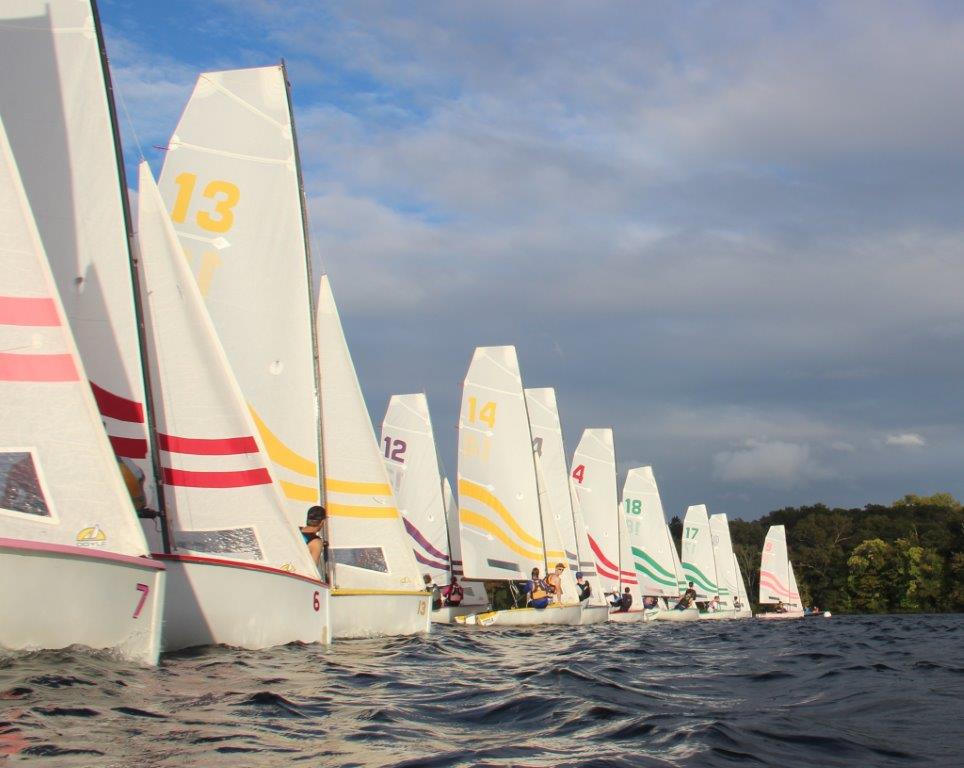
 Although Tufts sailors aren’t training in FJ’s and 420’s, the team’s long history of racing success does not suggest that practicing in Larks is hurting them in any way. Legler explains, “Larks are different, at least a little, from FJ’s and 420’s, just as those two classes are different from each other. There are small technical differences in how the sails are trimmed… The Lark is the same size as the 420 and FJ, and as such we are training the right sized people. It is more stable than an FJ, but less stable than a 420.” To make up for those differences, Legler enters his team into regattas every weekend, “at all levels, including club events, for our new crews to train muscle memory for sailing FJ’s and 420’s.”
 I remember- as a good example of this – one quite seemingly regular summer race day at the J24 US National Championships on Berkeley circle in San Francisco a number of years back.
 Learn more about Great Harbor Yacht Club’s Sailing Program
 The United States government leased the Club property in 1943 for the duration of the war plus six months for use as an Air Force Crash Boat Rescue Base. The club regained control of its property in January 1946 with the payment of $100.00 to the United States government for improvements made to the site, mainly two barracks buildings, which served as a clubhouse for many years. During the war period the membership declined to 66 regular members. A new clubhouse was built in 1958.