#1 Yale Wins New England Championship
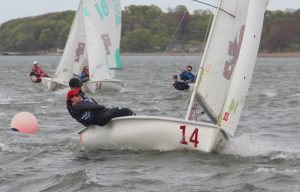
Photo by Ken Legler
April 30, 2017– Sunday morning at the Savin Hill Yacht Club showed an early, stiff seabreeze. “Brisk,” said PRO Alden Reid. As predicted, the breeze, building throughout the day, coupled with the temperature created a championship atmosphere fitting only for the New England Coed Championship/ US Coast Guard Alumni Bowl.
The #1 Yale Bulldogs entered the boatyard 4 points behind Saturday’s leaders, the #15 Roger Williams Hawks and defending New England Champions. Throughout the day on Sunday the Bulldogs outmatched the opposition, finishing the regatta 1st overall with 201 total points, 17 point ahead of Roger Williams.
NEISA Sailor of the Year, Ian Barrows with Babineau trophy winner, NEISA Crew of the Year, Clara Robertson won A-Division narrowly over University of Rhode Island’s Rachel Bryer (‘17), Hannah Scanlon (‘18) and Ellis Havelock (‘18). Throughout the season, Mr. Barros and Ms. Robertson have proven to be the fastest boat in the nation. The pair caught fire in the middle of the day Saturday and sailed extremely impressively in the breeze.
Roger William’s second place finish was led by an transcendent B-Division win by Junior, Mackenzie Bryan, Jennifer Angell (‘19) and Michael McBrien (‘18).
The home team, #3 Boston College finished 3rd overall with 226 points.
#1 Yale, #15 Roger Williams, #3 Boston College, #11 Boston University, #12 Coast Guard, #7 Dartmouth, #18 Brown, Rhode Island and #12 Tufts composed the top 9 respectively and are the teams that will represent NEISA at the ICSA Semi-Final, May 30-31 in Charleston, SC.
Notably, #20 Harvard, #4 MIT, #14 Bowdoin and #17 Connecticut College failed to qualify for the Coed Semi-final regatta. This year’s NEISA Coed Championship was one of the deepest regattas of the year.
#9 Hobart and William Smith Colleges Dominate MAISA Championship
In one of the most impressive showing this season, Hobart and William Smith Colleges dominated Sunday to win the America Trophy/ MAISA Conference Championship, hosted at Cornell University.
Cayuga Lake presented a home-like advantage for the neighboring HWS sailors. With no races outside the top-3 on Sunday, Freshman Hector Guzman with Maya Weber (‘20) and Adam Schafer (‘17), won B-Division by a whopping 22 points after 15 races. The standout performance from the B-Division team in conjunction with a well sailed regatta from Greiner Hobbs (‘18) and Anna Flaherty (‘20) sealed the deal for MAISA’s newest champion. If Guzman and company can replicate that effort in Charleston, the HWS team is a legitimate contender to take down the perennial favorite, Yale.
“It has been a while since our last America Trophy win,” said HWS Head Coach, Scott Iklé “It reminds us how special and important these events are to the athletes. These championships are hard to win. A championship title is a confirmation of hard work, commitment and dedication by a team. There are a lot of great teams in MAISA with rich histories, so to once again be included on the winner’s list of the America Trophy is a sense of accomplishment for all the past, present and future HWS sailors. It was a special weekend.”
“Sailing at Cornell is like sailing at home,” continued Iklé. “There is a strong tie between the teams and the programs have worked together to grow with each other’s help. This friendship extends back to the late 1990’s, so it was great to see the two teams working together to pull off the event. It was great to have almost the entire HWS team there at some time during the weekend cheering on their teammates, but more importantly working with their friends at Cornell to showcase college sailing in the Finger Lakes. Both teams took pride in running this regatta for their MAISA friends.
Senior, Patrick Snow won A-Division with Mary Morocco (‘19) and Brittany Slook (‘20) for the Naval Academy Midshipmen. #5 Navy finished second overall at the regatta, with 158 points.
Fordham finished 3rd with 196 points.
#9 Hobart and William Smith, #5 Navy, Fordham, #2 Georgetown, #10 George Washington, #16 St. Mary’s, Hampton, #19 ODU and Kings Point were the qualifying teams from MAISA and rounded up the top 9 accordingly.
#7 Stanford Wins the Pacific Coast and Santa Barbara City College goes to first National Championship
The #7 Stanford Cardinal won the PCCSC Championship decisively with 66 total points. A committee won A-Division for Stanford with Will La Dow (‘18), Reinier Eenkema Van Dijk (‘17) and William Marshall (‘19) all taking turns on the tiller with John Cannistraro (‘17) and Cassie Obel (‘19) in the front of the boat.
Jacob Resenberg (‘20) of Stanford with Sarah Placek (‘18), Haley Fox (‘18) and Elena Vandenberg (‘18) narrowly, finsihing with 38 points, 1 point fewer than Hawaii’s Chuck Eaton (‘17) with Cuylar Zimmerman (‘19) and Annika Garrett (‘19).
UC Santa Barbara finsihed second with 81 points, Hawaii finsihed 3rd with 91 points and for the first time in school history, Santa Barbara City qualified for the Semi-Finals, finishing 4th overall.
University of Washington wins NWICSA Coed Championship
Behind an impressive scoreline, the Washington Huskies won the NWICSA Coed Championship with 20 total points after 12 races. The effort undoubtedly resulted in a win in both A and B division.
Connor Hughes (‘19) and Audrey Jacobs (‘18) won A-Division with 9 points, including 3 first place finishes. Nathaniel Gordon (‘20) and Cassidy Lynch (‘17) won B-Division with 11 points and 3 bullets of their own.
The UBC Thunderbirds of British Columbia narrowly edged Oregon State and Western Washington to finish second overall with 35 points, securing the final berth to Nationals.
Northwestern and Stanford win and are headed to Team Race Nationals
The Northwestern University Wildcats cap an impressive season with a MCSA Team Race Championship win. Their 16-2 record was enough to edge University of Wisconsin (13-5), who took second and the last spot MCSA offers to Team Race Nationals.
Jacob Bruce (‘16), Michael Pauleen (‘18), Ryder Easterlin (‘20), Susan Riley (‘17), Noah Rosenthal (‘18), Audrey DeBruine (‘19), Mark Davies (‘20) and Zachary Herron (‘18) led the effort for the Wildcats and look towards Charleston to continue their team race season.
The #7 Stanford Cardinal won the Carter Ford Trophy/ PCCSC Team Race Championship with a 7-1 overall record. The performance by Reiner Eenkema Van Dijk (‘17), Taylor Kirkpatrick (‘20), Will La Dow (‘18), Kathryn Booker (‘19), Jacob Rosenberg (‘20) and Sarah Placek (‘18) was enough to send the Cardinal to Team Race National once again.
Finishing second and claiming the final berth the PCCSC offers was the University of Hawaii Rainbows, with a 6-2 overall record. The Rainbows opened the regatta with an undefeated first round, handing Stanford their only loss of the regatta. This pivotal race was what made the difference over rival, UC Santa Barbara.
Written by Chris Klevan, Photos by Ken Legler
Blog
Club Profile: Offshore Sailing School
The Offshore Advantage: Why We are America’s #1 Sailing School
News Flash: Offshore Sailing School is hiring!
Offshore Sailing School is owned and operated by Steve and Doris Colgate. Their dedication to delivering the very best sailing education, in environments that make learning fun and rewarding, keep all of us at Offshore Sailing School passionately engaged. No other sailing school in the world has leaders with such vast experience in sailing and sailing education, and that is what distinguishes Offshore Sailing School one of the best sailing schools in the world. The Colgates are the inspiration and driving force behind Offshore Sailing School’s very high standards and exceptional reputation.
Our Value Proposition: Reputation, Quality, Professionalism, Educational Expertise
- Our founder and Chairman, Steve Colgate – Educator, author, creator of the award-winning Colgate 26, Olympian and America’s Cup sailor with seven decades of sailboat racing success and cruising miles on boats ranging from dinghies to maxis
- Our President and Chief Executive Officer, Doris Colgate – Founded the National Women’s Sailing Association and Women’s Sailing Foundation, author, passionate sailor, industry spokesperson and perfectionist
- Our professional teaching faculty – Full-time employees who hold Coast Guard licenses and US Sailing instructor certifications, dedicated to delivering the exceptional quality of our courses, with vast cruising and racing experience, and profound ability to communicate and teach
- Our boats – The award-winning ultimate trainer, the Colgate 26, designed by Steve Colgate and Jim Taylor for training, performance handling ease, and ergonomic comfort; and beautiful cruising boats chosen for performance and comfort; all maintained to the highest standards by a dedicated fleet manager.
- Our course curricula and classroom teaching aides – Developed by Steve Colgate and continuously fine-tuned for each course level, followed closely by instructors to ensure we deliver consistent training at all locations onboard and in our classrooms
- Our unique textbooks – Written by Steve and Doris Colgate, published by McGraw-Hill, painstakingly written to give our clients the very best preparation for each course in our syllabus
- Our diversity of sail and power courses – No other sailing school has the breadth of courses provided by Offshore Sailing School, for beginners to passage makers, sailboat racers and power boaters
- Our dedicated sales team – Knowledgeable, friendly and caring Offshore Sailing School graduates who know our courses and locations well, and work with clients during and after business hours to deliver exceptional customer service
- Our locations – In the most beautiful sailing areas at lovely destination resorts and popular metropolitan locales, providing clients with after-course sailing opportunities, and full service amenities including resort accommodations, all packaged for one-stop shopping when a course is booked
- Our course certifications – US Sailing Certifications for instructors and students developed by a team of sailing educators headed by Steve Colgate for US Sailing, appointed by the U.S. Congress in 1894 as the U.S. Governing Body of Sailing; and our original Colgate Certification started by Steve when he founded Offshore
- Our industry and resort partners – Offshore Sailing School is “the official sailing school for The Moorings,” the pre-eminent charter company worldwide, and enjoys long term relationships with stunning resort properties in Florida and in the British Virgin Islands; many industry associations and businesses including North U and sailing magazines – providing valuable benefits for our clients
- Our graduates – More than 130,000 adults and families who have taken a course with Offshore Sailing School and gone on to live the sailing lifestyle; our graduates are a tribute to why Offshore Sailing School is one of the best sailing schools in the world
Women’s Conference Championships in both MAISA and NEISA
#12 St. Mary’s College of Maryland showed that they’re the best women’s team in MAISA with an emphatic win at the MAISA Women’s Championship at the Naval Academy. Seniors Greer Wattson and Elizabeth Dennison put together an extremely impressive score-line with no race outside the top-7 and 8 race wins throughout the 15 race regatta. The two won B-division decisively and were the catalyst behind St. Mary’s championship effort. Watson and Dennison finished with 44 points.
Rose Edwards (‘18) and Emily Fung (‘17) won A-division with 51 points for #11 Georgetown. Ms. Edwards was also named MAISA Women’s sailor of the year.
St. Mary’s started strong, taking the lead after the first race of the regatta. They surrendered that lead only for two races throughout the rest of the event.
Georgetown University finished 2nd at the event with #13 George Washington finishing 3rd. #16 Hobart and William Smith Colleges, Cornell University, University of Pennsylvania, Fordham, #18 Navy and University of Virginia filled the 4th through 9th sport, accordingly, and will represent MAISA at the ICSA Semi-finals, May 23-24, in Charleston, SC.
#5 Coast Guard showed up to win the Reed Trophy, NEISA Women’s Championship, hosted by Brown University, to defend their 2016 NEISA crown. The Bears of Coast Guard passed Boston College late on Saturday and were able to hold of the Eagles throughout Sunday.
The Bears finished the regatta with 112 points and scored only one double digit finish throughout the entire event.
Coast Guard, returned all but one sailor from their 2016 New England, Atlantic Coast and National Championship victory tour. When Nikki Barnes, Anna Morin and Dana Rohde are all on the race course together, the Bears are undefeated on the women’s circuit.
This year’s championship team was led by junior Dana Rohde and freshman Maddie Ekin in B-division. The two ladies put together an impressive scoreline with 45 points through 14 races.
Erika Reineke (‘17) and Allison Ferraris (‘17) won A-division with 63 points. NEISA’s A-Division featured some of the best sailors in the country and the Eagle’s victory in the division came down to the last race. Ms. Reineke was named NEISA Women’s sailor of the Year.
#2 Boston College finished second overall with 121 points and #1 Yale came in 3rd, 153 points.
#8 Boston University, #3 Brown, #4 Rhode Island, #14 Dartmouth, #10 Tufts, ,#9 Vermont and Bowdoin finished 4th through 10th accordingly and will represent NEISA at the Semi-Finals, May 23-24 in Charleston, SC.
Notably, #17 Harvard missed the cut by the narrowest of margins. Tied with the Bowdoin Polar Bears at the conclusion of racing, the two schools split head-to-head races. Moreover, they had the same number of 1st place finishes, seconds, thirds and fourths. Bowdoin had more 5th place finishes, the eventual tiebreaker that differentiates staying alive, heading to nationals and going home thoroughly disappointed.
“The fleet was stacked,” stated Bowdoin Head Coach Frank Pizzo. “The event could not have been much closer,” continued Pizzo. “For the Polar Bears, we really just tried to focus on our boats throughout the event. On Saturday, we simply tried to use our speed and conservative tactics to keep our team in the hunt. It was obviously tough to end the day with a DSQ in A division. As a team we focused on remaining positive and controlling the controllables.”
“We knew the points were compressing throughout Sunday but really tried to just have good starts and sail smart conservative races. We had our best start of the day in A division in race 14 and it allowed for a great race. For the B race, we were able to get off Ok in the middle but saw others teams that we were competing against over early or not having great starts. We were all pretty even at the second windward mark and new every single point would matter and did just enough. A tension convention for sure.”
MCSA and SEISA Coed Champs and NWICSA Team Racing headlines the coed weekend
University of Wisconsin won the MCSA Coed Championship, hosted by Northwestern College with 54 points after 10 races in each division. Senior Charles Bocklet with Sophomore Maggie Houtz won B-Division for the Badgers with 24 points.
Mark Davies (‘20) and Michael Pauleen (‘18) won A-Division for the Northwestern University Wildcats. Northwestern finished 2nd overall at the event.
In addition to Wisconsin and Northwestern, UW Milwaukee, Michigan and Marquette will be heading to the ICSA Coed Semi-finals, May 30-31 in Charleston, SC.
Texas A&M University at Galveston won the SEISA Coed Championship decisively. The aggies won all but 4 of the 18 total races, obviously, winning both divisions in the process, John Hanna (‘19) with Megan Ferguson (‘17) and Haley Walker (‘18) in A-division. Alexander Thompson (‘18) with Hannah Barlow (‘20) and Megan Ferguson (‘17) in B-division.
Texas A&M finished 2nd, claiming the last spot offered to the Semifinals with a 2 point finish over Tulane University.
Oregon State University won the NWICSA Team Race Championship in dramatic fashion of the University of Washington Huskies. After a 1-2 record against the huskies during the first 3 round robins, the Beavers of Oregon State won both of the Final 2 head to head races to secure a trip to Charleston for the Team Race Nationals in Charleston, May 27-29.
MIT won their home event over the weekend. After 33 total races on the Charles River only 1 point could discern The Engineers from the Boston College Eagles at the 82nd Boston Dinghy Challenge Cup. MIT charged after a slow start to take the lead after the 6th race of the regatta and never relinquished it thereafter.
Ty Ingram (‘18) and Sameena Shaffeeullah (’19) won A-Division for the home team with 50 points. Charles “Scotty” Sinks (‘18) and Lily McGrath (‘18) won B-Division for the Eagles after a tie-breaker with MIT’s Alexander Stewart (‘17) and Paige Omura (‘17). Wade Waddell (‘19) of BC with Emma Perry (‘19) won C-Division by nearly 30 points.
Written by Chris Klevan
Photos by © 2017 Rob Migliaccio, All Rights Reserved
Nutrition: Tips to Eating Right While Traveling For Sailing
Nutrition, it’s key to living a healthy lifestyle. However, a lot of the time we hear people talking more about their workouts and less about what they are eating. Having a healthy diet is even more important for our success out on the water than any workout you do. Don’t get me wrong working out is still very important, but without a healthy diet, your body can’t perform at its highest potential. You need to use both a healthy diet and a good workout routine to perform at your best out on the water.
When you are home eating healthy can be relatively easy because you can plan out your meals, and prepare them ahead of time. However, now that sailing season is here you will be hitting the road for different regattas maybe for a day, a weekend, or maybe even a week. So how can you stay on top of your nutrition while away from home? Follow the 6 tips below to help you eat healthy while on your sailing travels this season.
 1. Pack For The Trip
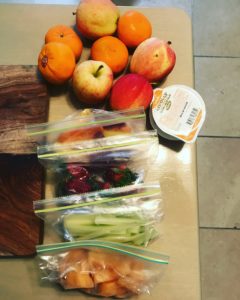
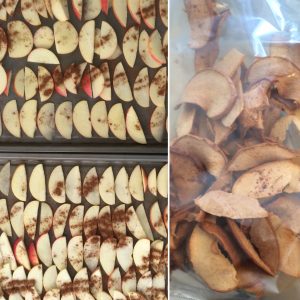
The first step before you leave for your sailing adventure is to pack healthy snacks to go. This is a simple way to eat right while on the road and away (also a great way to save money). The healthiest way to go is making your own snacks. Things I love to make to bring with me to regattas are granola bars, granola, trail mix, dehydrated fruit, almond butter cookies, and roasted chickpeas. However, sometimes it is easier to buy these items. If you are buying these items make sure you stick to items containing little to no sodium and sugar content. If you are flying to get to your destination dry snacks are the easiest thing to pack. If you are traveling to your regatta by car pack a cooler. You can fill it with fresh foods. I love to pack the small packets of guacamole and have it with carrots and celery while on the road. This will not only keep you eating right while traveling but while you get to your destination. Look at the list below for some more ideas on packing for your next sailing trip.
Packing for the road:
- Trail mix
- Granola bars
- Packets of almond butter or peanut butter
- Fresh fruits: apples, bananas, ora
 nges, grapes
 - Jerky
- Dehydrated fruit
- Roasted chickpeas (these are a great crunchy snack filled with fiber and protein check out the recipe below)
- Fresh veggies: carrots, celery, broccoli
- Snack pack guacamole
Recipe for Roasted Chickpeas:
Ingredients:
1 can of chickpeas
2 tablespoons olive oil
salt (optional)
garlic salt (optional)
cayenne pepper (optional)
Directions:
1. Preheat oven to 450 degrees F
2. Rinse chickpeas then dry them with a paper towel. Place chickpeas in a bowl and mix with olive oil and seasonings. Spread on a baking sheet and bake for 35-40 minutes or until brown and crunchy. Let cool, then enjoy!
2. Research Beforehand
Before you head on your trip you want to make sure you do some research. Research the menus of different restaurants and try to look for the healthiest options. Also research local supermarkets where you can pick up some more healthy meals and snacks. You also want to check out where you will be staying and what they have to offer. If you are staying at a house you can plan to make most of you meals. If you are staying at a hotel see if they have a mini fridge so you can store meals and snacks. If you come prepared you will have an easier time eating healthy and also save yourself a lot of time.
3. Drink Lots of Water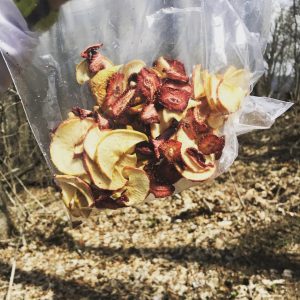
You always want to be drinking lots of water, however, its very important to remember this while on the road traveling. People tend to forget about hydrating themselves while traveling and without the proper hydration you won’t be able to perform at your top level. Try to avoid other beverages and stick to water most of the day. Carry a reusable water bottle with you to help remind you to drink throughout the day.
4. Avoid New Foods
While your away for a competition you want to avoid trying new foods. The day before a regatta you especially want to avoid eating anything you have never tried or don’t eat often. If you want to feel the best and perform at you highest level while sailing you need to be cautious with your eating. Try to pick nutritious items off the menu with simple ingredients or if you are cooking yourself pick something you know is good for your body.
5. Try to Stick To Your Schedule
While traveling for sailing it can be hard to stick to your same schedule. However, you really want to try with your eating habits. When you body is used to a schedule, and then things change your body will start to feel it. Try to eat the same 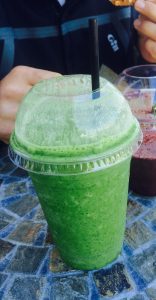 number of meals you normally do and attempt to do it at the same times. This is hard when your on the water, but do you best by bringing snacks with you.
6. Eat Real Food
We see too many people eating processed food these days. But to be a top athlete you need to fuel your body with nutritious real food all the time even while traveling. Try to avoid the processed items as much as you can. Grab a real piece of fruit or snack on some veggies. When your traveling you tend to go for the easiest option, but go for the real food to keep your body in line. Real food is the healthiest option and best way to stay on your game while out on the water.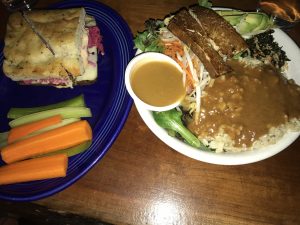
Just because your traveling it doesn’t mean your eating habits have to suffer. To perform at your best level while out on the water it is essential to keep with your healthy routine. By using these six tips packing for your trip, researching beforehand, drinking lots of water, avoiding new foods, sticking to your schedule, and eating real foods you can keep sailing at your top level throughout your travels. It may seem hard to follow the first couple times you travel, but soon enough you will get in a routine. Good luck sailing and keep eating healthy at home and while on the road!
For more information on fitness and nutrition for sailing contact [email protected]. Also check out Sailorcise on Facebook, Twitter, and Instagram for daily tips on fitness, nutrition, and sailing.
Club Profile: Palm Beach Sailing Club
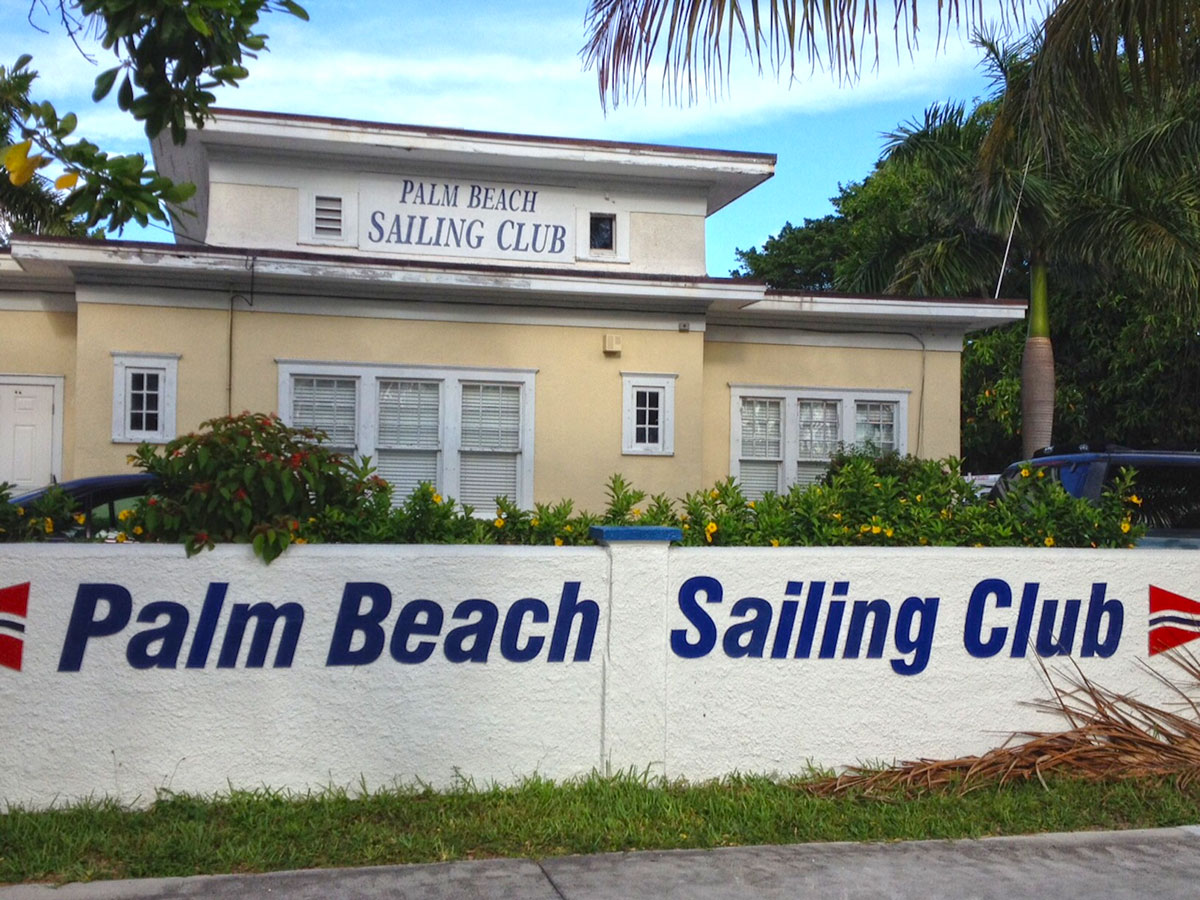
The Palm Beach Sailing Club is a private, not-for-profit organization formed in 1966.The objective of the club shall be to develop, encourage and stimulate interest in sailing in the Palm Beach County area, to promote fellowship and camaraderie among local and visiting sailors, and to offer sailing education and training to members and others.
News Flash: PBSC is Hiring a Full-Time Sailing Director!!
Mission
The objective of the club shall be to develop, encourage and stimulate interest in sailing in the Palm Beach County area, to promote fellowship and camaraderie among local and visiting sailors, and to offer sailing education and training to members and others.
 Our History
The Palm Beach Sailing Club was founded in 1966 by sailors who wished to promote the sport in West Palm Beach. As the oldest club in the area, the PBSC offers its members many sailing related services and an active social calendar. The clubhouse is a waterfront residence built in the 1920s and offers a panoramic view of the Intracoastal Waterway and neighboring Palm Beach.
Membership
The Palm Beach Sailing Club offers its members a number of exclusive benefits. These include numerous social events each year, such as Christmas Holiday Party, the Halloween Party, and the popular end-of-the-month social. Small boat regattas and the club’s ever popular Wednesday Night Race Series remain a part of the PBSC’s seafaring tradition. The sailing instruction program introduces new fans to the sport every year. A wide variety of membership categories is available, all reasonably priced. We welcome you to find out more about the benefits of membership by contacting the PBSC.
Youth Sailing
PBSC only employs US Sailing certified instructors and counselors. Instructors and counselors are certified by the US Sailing Association complete with CPR and First Aid Certificates.
Summer Sailing Camp is available to children ages 7-16. Our 2017 Summer Camp starts June 5th and runs through August 4th. An additional Summer Camp week from August 7 through August 11 is available by invitation only. Summer Camp will be closed July 3 – 7.
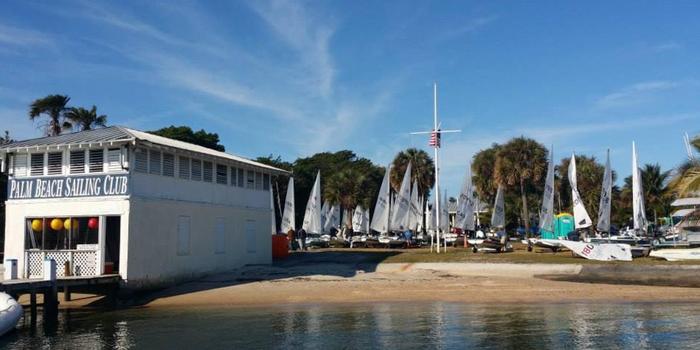 Each sailor will receive a t-shirt with their registration. Sailing is a lifetime sport and many of our campers have advanced to become some of the best sailors in the country. Please fill out the registration form on the opposite side of this flyer and mail or fax it to the Palm Beach Sailing Club.
Your child will experience the joy of sailing and learning the essential elements of boat handling, seamanship, water safety and sportsmanship in a safe and fun environment.
Campers gain self confidence as they master the skills of sailing, learning lifelong lessons that build character, foster teamwork, and strengthen respect for self, others, and the marine environment.
Basic swimming skills are required. Camp will be held rain or shine and in the event of bad weather, basic skills and sailing – related activities will be taught indoors.
Youth Sailing Team
Our Youth Sailing Team meets during both the fall and spring school semesters. We refine the basic sailing skills that have been taught during camps and teach the racing rules and tactics of sailing in two fleets. For the younger sailors we have our International Optimist fleet and for the older sailors we have a fleet of Lasers. Both fleets are sailed around the world and in the Olympics.
News Flash: PBSC is Hiring a Full-Time Sailing Director!!
2017 S1D/Gill Coach of the Year Nominations Now Open!!
Greetings, sailing fans!!! We’re sending out an early call this year for nominations for the prestigious Coach of the Year Award. In true grass-roots fashion, we pick the ultimate winner only from nominees supplied by you, our readers. We are thrilled also to announce this year that Gill North America is our Exclusive Sponsor for this award, and will provide the winner with a well-deserved gift!
 Sail1Design annually seeks your nominations for the Gill S1D Coach of the Year, for a coach that embodies the qualities (and more) listed in the article below. Sailors, this is your award! The Sail1Design staff chooses the winner only from our readers nominations! This is a great opportunity to recognize a coach that you feel makes a difference!
Please write a detailed nomination letter to [email protected] . Nominations close on 15 JUNE 2017
Past S1D Coach of the Year Winners
2016- Bill Ward
2015- Frank Pizzo
2014- Chris Dold
2013- Steve Hunt
All good coaches, regardless of their chosen sport, share some important fundamental qualities that transcend technical knowledge, or specific x’s & o’s. In other words, whether it’s a basketball, tennis, hockey, football, chess, or sailing coach, there are certain key characteristics to good coaching, and none of these really requires technical knowledge of the sport they are in.
Here are some of those characteristics: logistics, organization, energy, leadership, passion, creativity, patience, dedication, motivational skill, humility.
I would bet that you could take a good coach, put him or her in a new sport, and that coach would find some success. Think about the best coach you ever had, and visualize that person in another sport, and you might see just how that person could adapt and still be a difference-maker.
However, we all know that great coaches not only possess these core qualities, but indeed they are also masters of the subtleties, rules, and technical chess moves of the sport they are involved in. Very often, great coaches are former players themselves, and often they are good, but not necessarily great players. In any event, it seems virtually certain that actually having been in the arena at some level, having been a true game player, is a necessary ingredient for a great coach.

So then, what an important advantage sailing coaches have, since the sport allows lifelong top-level competitive opportunities. While it would be impossible for a middle-aged football coach to live, first-hand, what his players go through on the gridiron, middle-aged sailors and coaches can stay current, and can compete right alongside the world’s best sailors, and even win world championships in sailing. Opportunities exist in team racing, match racing, and all types of one-design classes offer regattas, year-round. In this manner, sailing coaches have the ability to get inside the sport, at the highest levels, learn more, and feel the same things that their players go through out on the race course. The empathy gained here is a very powerful tool that great coaches employ when coaching.
Getting into the rhythm of a sailboat race, realizing first-hand the excitement and frustrations of the sport, preparing mentally for each race, “knowing when to tack”, these are all things that coaches must be able to talk to their players about, and talking to them about these things is so much more clear and present when done by someone who is actually good at them, and has done them recently at a high level.
For example, it was always easy for me to say to a team, “make sure when you are in FJ’s at the starting line to allow yourself more leeward room to accelerate since the foils are small and the boats need to go bow down first before they start lifting.” It was really easy to say. It was quite another thing to actually do it, and to go out on the starting line, in FJ’s, and practice what I preached. That was a LOT harder, and I drew a great deal of empathy with my players from that situation and recognized better ways to talk about it and to talk them through it, having been there myself. This is especially true in team racing, where coaches can see plays easily on the coach boat or on the drawing board, but it’s one thing to talk about a mark trap at Mark 1; it’s another thing altogether to go out and be able to execute it. Without being, or having been, in the arena, sailing advice and technical coaching can be somewhat hollow compared to other sailing coaches who know it first-hand and live what they coach.
So, when you look to your coaches for advice or to get to that next level, or if you are a interested in sailing in a college program, take a moment and check out the coaches resumes, just as they will most assuredly be checking yours. The list that makes coaches good coaches should be there for sure, but see if the coaches list how, or if, they stay current in their profession and have the passion to go out on the racecourse themselves. Great coaches usually always have a story, and very recent one, of a lesson learned at a regatta they sailed in themselves. They love to sail and get better, if only to become a better sailor and coach.
While there is a short list of coaches who choose to (and can) do it all, many top collegiate programs now share these coaching qualities by hiring an assistant or co-head coach, who is very often a recent college sailing alumnus and is active in dinghy racing and brings that empathy, right away, to the team. The head coach then ties everything together with experience, maturity, management, and knowledge of the game.

If you’ve ever noticed, baseball coaches actually suit up for games even though they certainly won’t be playing. This historically comes from the old “player-coach” model, and perhaps, this connects them with the game and the player more intimately. Sailing offers the unique ability for all ages to compete at the highest levels of the sport, and great sailing coaches take advantage of this, “suiting up” themselves and making themselves better at coaching by sailing competitively.
About Gill
Gill NA, with headquarters near Atlanta, GA is the exclusive importer and distributor of Gill-brand foul weather gear in North America including Caribbean, US and Canada. Gill is a worldwide apparel and accessories brand serving the marine industry with over three decades of experience . Gill specializes in high tech, breathable waterproof clothing. The company develops and markets a variety of performance-oriented, award-winning apparel and accessories for virtually every type of boating activity with product lines that include foul weather gear; interactive layering systems; footwear; gloves; bags; junior gear; scholastic gear and team wear.