 PRESS RELEASE – FOR IMMEDIATE DISTRIBUTION
North Kingston, Rhode Island, December 21, 2015
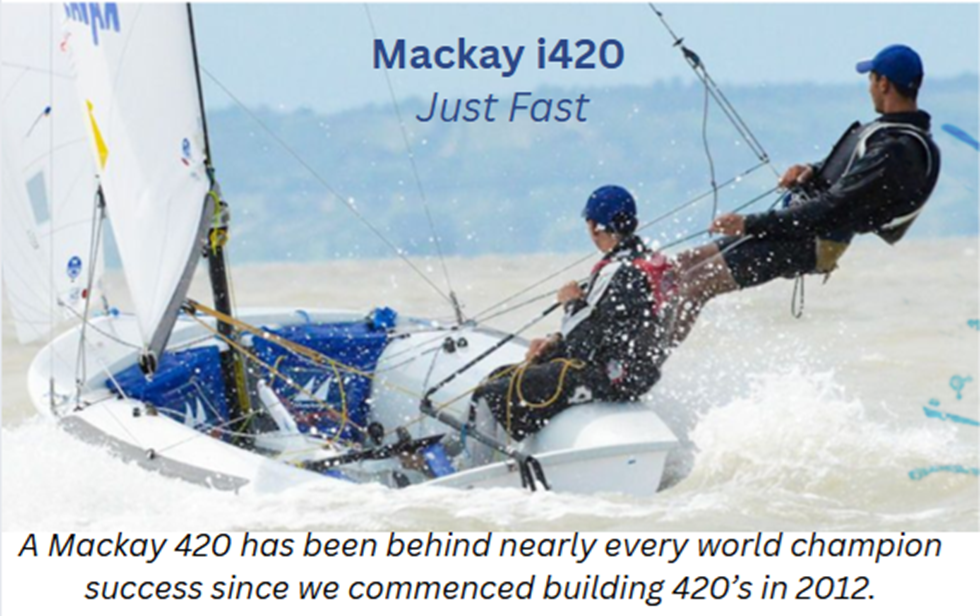
As the largest North American youth-oriented, double handed class the Club 420 is a key entry point to a lifetime sailing for many juniors. The boat offers more learning opportunities than any other doublehanded boat. Over 5,000 Club 420s are sailed in youth, high school and collegiate programs all over the United States, Canada, Mexico and the Caribbean.
In addition to organizing national level and regional events, the class invests in its community through the creation of on-line learning videos which are freely available. We encourage sailing schools, high school teams and all others use these valuable resources are encouraged to utilize these training vehicles.
The class also invests in high caliber coaches for regional regattas and other events throughout the year to help bring the expertise of those coaches to hundreds of youth across North America.
We would like to show you what it’s like to sail a Club 420 in a new video produced for the class by Chris Love Productions. Filmed at our National Championship at Sail Newport earlier this year, we believe it shows the excitement and scale of the class and of the community behind the class. We hope you enjoy it:
For a listing of our 2016 events go to our calendar here.
About the Club 420 Association – The Club 420 Association was established in 1980 to promote, foster, encourage and sponsor one-design sailing for youth sailors. The Association annually sponsors a North American Championship, US and Canadian National Championships as well as regional and team racing championships across North America while promoting the class to all ability and experience levels of youth sailing.
For additional information please contact the C420 class at www.C420.org or John Vandemoer, Class Executive Director, [email protected]
Blog
Manage Your Sailing Program Toward Success
PART I: SAILBOAT RACING IS A MANAGEMENT EXERCISE
Annapolis, MD (December 16, 2015) – By Airwaves Writer Joe Cooper
Editor’s Note: This is the first in a series of articles, taking cues from successful business management principles, on how to manage a sailing program. Enjoy, and stay tuned for Part Two.
Any group of humans trying to accomplish something needs to work together. Unless you are sailing a Finn, Laser or similar single-handed boat, (and yes these boats do need a team at the elite levels although of a slightly different make up) you will need to build the crew, a team of souls who share your vision, your ideas, sensibilities and in general who share your idea of how sailing and racing should be conducted.
I have been fortunate to have sailed on boats and been in programs that were under the command of great leaders. Learning from these people I have picked up a few ideas on how to assemble a collection of individuals into teams; and in a few cases, really very successful teams.
COMMON GOALS
In November 2014 I was contracted to coach a fellow who wanted to bring his boat and pretty novice crew to Block Island Race Week 2015. He and I spoke a few of times and I became acquainted with his requirements and expectations. In December I was invited to join him and his team at his house for Christmas cocktails. The idea being to introduce me to the team, to meet his crew and to outline how we were going to accomplish his goal. The GOAL, your goal if you are the owner or instigator, is the first, and a mighty important element in building a team. You need to have a very clear idea of what it is you want to accomplish with your sailing and your team. This clarity of purpose is the sailing version of the Mission Statement” one hears so much about today.
WHAT are you wishing to do? Win the XYZ class nationals? Do you want to improve or to win or place in your regions prominent races? Do you want to improve your position in the Wednesday night series? Is it a long time dream to enter and finish a Bermuda Race? OR do you to simply have a fun time with some mates? It matters not what the goal is, BUT it needs to be articulated. Clarify in your mind what you want to do, what you want to feel when you are driving home after sailing. Write it down and pin it up on the bulkhead in the cabin. If you are in this for the long haul, break it down in to a discrete timeline: Individual races, regattas or place improvements over a number of years or however it makes sense for you
SAILBOAT RACING IS A MANAGEMENT EXERCISE
We have probably all been out racing somewhere and heard a skipper screaming at the crew or an individual crewmember about something. Apart from being embarrassing it is absolutely not productive. In the management of the boat, it is the skipper who has a large share of the “blame” for the crewmember not doing what is needed. Citing this common vignette was my opening remark to the prospective crewmembers assembled in my client’s kitchen after he called them to order.
The first actual “learning” statement I made to my client’s crew with respect to success in sailboat racing was: “Sailboat racing is a management exercise.”
That was all I said in the kitchen, full of perhaps 15-18 adults and two high school lads, all with a work history. There was a modest span of sailing skill and experience although in a few cases, none. My client owned a modest size business and some of the crew were his family and mates who worked with and for him. By definition there was some management experience in the group. When I had finished the sentence I shut up.
The kitchen was dead quiet. The silence lasted for what seemed like a minute but was probably 15 seconds. The silence was finally broken by my client’s, face lighting up into a broad smile and exclaiming, “Oh, I get it, this will be easy”. My job was made a lot easier from there on and the rest our BIRW 15 goals were a lot easier to meet having this shared concept to weave into all the instruction. Once the boat was in the water the practice was made much easier too. The rest of the evening was discussing the mechanics and best ways to develop the team along these lines. I remarked to the crew that there are various departments of a boat and compared them to the departments in a business.
In business for instance one has the line staff, supervisors, middle and upper management, sales, marketing, accounting, personnel and so on. If one considers a sailing boat going off to race, I think in terms of five departments.
Regardless of the size of the boat, from a J-24 to Comanche, the departments remain the same they may just have more team members in each department and maneuvers take longer.
- Senior management
Aka: The afterguard: This includes, the navigator, tactician, strategist and the helmsman*
*(Tacking back for a moment to the screaming driver noted above, my next statement made a few minutes later was: “steering is just another job on the boat.” That statement of course brought another round of silence and I will elaborate on this statement in a minute.) - Sail Trimmers
This of course encompasses the crew responsible for control over the shape and trim of the sails. - Grinders/middle of the boat
The horsepower. - Pit
Halyards and related activities - Bow
This does not need defining now does it? - Non –sailing departments
And there are departments too that are not sailing specific. The operation of a sailing boat requires the operation and understanding of non-sailing equipment and skills like machinery, electronics and electrical systems, navigation safety and deck rigging and sails to pick a few of the more common areas. Encourage your crew to pick a department and to “take command” of it. This principal has to be front end loaded in that you need to have a clear plan and articulate that plan with respect to what you want the members of each department to do and be responsible for.
Like the original Mission Statement for the boat and the owner’s wishes, this vision should be written down and discussed at crew gatherings. If this method of division of labor is used, two things happen. The leader of the program, owner skipper usually does not have to do it all—-Nothing like waiting for the skipper to get the boat off the dock while he finishes checking the oil or entering in way points…
AND the members of each department are empowered to “own” their departments. When they get to the boat, there is a specific task list they should check off, rather than everyone standing around and everyone trying to do everything, or not doing anything. Almost everyone I have ever met around boats will jump into any task as soon as it is asked of them. Identifying the divisions just formalizes this individual effort.
STEERING IS JUST ANOTHER JOB ON THE BOAT
After sailing on a lot of different programs over the years the number of times I have seen “the owner” wanting to steer AND who also wants to do all the other jobs in his department, and sometimes other departments too (explaining how to rig up the kite comes to mind) is the rule not the exception. To me this makes no sense.
Steering is, to my mind, a pretty particular skill requiring the full attention of the driver ALL the time. Sure, in one design sailing and especially single-handed boats you must do it all. But this is a bit like starting your own business: You are all departments all the time and sometimes all of them all at once. In solo dinghies though all the boats are carrying the same handicap as it were. But on boats with multiple crewmembers the job of steering consumes the driver’s attention (hopefully) 100% of the time. To ask the guy or girl driving to take on other tasks, crew boss, tactics navigation and so on, is simply not fast if nothing else.
Certainly there are programs where the guy or girl driving does a lot more than just steer. On the other hand two of the most successful Corinthian programs I have seen the owner has someone else drive.
LEADERSHIP
In business and sometimes in sailing, we hear if we listen for it, the term Leadership pretty regularly. I have a selection of books on leadership and a favorite is one written by a retired Commander in the US Navy. In the book, he relates his experiences after being posted to a new ship where he could not believe the difficulty he had getting things done. He looked into this of course and found out his predecessor had been a micro-management fiend. The ships crew, some 280 souls became too scared of doing anything for fear of doing it wrong. Thus the entire ship basically ground to a halt, the crew being scared to do anything unless the captain signed off on it. A moment’s reflection will tell you what a failure that would be anywhere, never mind a fighting ship. Not surprisingly the ship had appalling numbers under the metrics by which the US Navy measures the performance of their ships and crews. The new captain’s approach was totally different from the previous one. He totally overhauled the ship’s operating culture, largely by empowering the crew to ‘own’ their tasks, jobs, divisions and teams. This made the ships a team function as it should AND raised the ships metrics off the dial, by the liberal use of two words also found in business.
DELEGATION AND OWNERSHIP
Delegation is essential of the business (or the team) to develop, grow and become successful. When you build your business you are building a team to help you. As your business grows you might first hire a book- keeper, then a sales person, then someone to help take the load in the manufacturing or coding and so on. You must delegate some of the load otherwise you will not grow the business. This principal is the same in yacht racing. Even say on a J-24, the skipper must steer, to their best ability, 100% of the time. Because the mainsheet trimmer need not be adjusting the trim 100% of the time, the driver (invariably the owner) can delegate to the mainsheet trimmer some responsibility to help with tactics.
Ownership means in short, that the people who best know how to do a job or task are the people actually doing it. It makes no sense for the CEO to come down and try and show a line staff person how to do that persons job. Even in the circumstances where the CEO does in fact know the task, it is not a good use of the skills the person has that got them to the CEO Suite in the first place. In sailboat racing the guy steering is last person who ought to be instructing the bowman in how to do their job and ESPECIALLY 5 boat lengths out….
Part Two will discuss team building & dividing up the workload and particular tasks when the boat is not sailing.
Check out PART II
Staying in Touch: College Alums Create Alumni Yacht Club!

By Airwaves Writer Brendan Healy
Charleston, SC (December 15, 2015) – Since its inception in 1953, the College of Charleston Sailing program has been synonymous with championship sailing both at the college level and far beyond. The program has captured 19 national championship tiles, and has produced in excess of 100 All-Americans, national and world champion sailors, as well as Olympians. Until recently however, upon graduation from the College, its athletes lost all “official” connection with the program in terms of representation. Along came the commissioning of the College of Charleston Yacht Club in 2014 to address this exact issue. The club was created in order to provide a way for graduates to both give back to the program and to represent the institution that fostered so many friendships and provided opportunities for its sailors during their tenure on the team and extending past graduation.

Led by a few enthusiastic graduates, the club was founded in order to fulfill the needs that graduates could rarely attain from their respective home yacht clubs. As previous members of the program, there was a desire to continue to compete with our classmates, in addition to graduates of all generations, to represent the burgee that we’ve all come to know and love. As Commodore Zeke Horowitz put it, “Sure we could all go on in life and join yacht clubs in our home towns and hopefully compete in inter-club team races and club sponsored events, but in doing so we’d miss out on the opportunity to sail with our college friends and relive the ‘old days”. Together with the help of Head-Man-In-Charge, Greg Fisher, Horowitz has helped to organize CofC’s graduates into a full-blown, commissioned club of dues-paying members, all of whom are graduates of the College. The club’s mission: “To bring together like-minded individuals who share a passion for sailing, strong camaraderie, and all things Charleston” in an effort to compete in numerous yacht club challenges, and other high profile regattas throughout the country.
 Obviously creating something awesome and totally different doesn’t come without its challenges, the greatest of which, being the physical organization of its members. Prior to Greg’s arrival as the Director of Sailing, the program had a somewhat poorly attended alumni weekend, which changed in dates from year to year and had no real consistency in terms of attendees. Viewing this as a great opportunity to bring graduates together in an effort to showcase the current team and raise funds, Greg sought to revamp the annual alumni celebration. With the help of some recent grads, including the Commodore, the program enjoyed its greatest attended Alumni Weekend and regatta in history in 2013 by communicating with grads from several generations and agreeing on a time of year that would fit into the majority’s calendar. The following year, we snowballed on that enthusiasm with the announcement of the club and the election of officers, as well as the unveiling of a burgee and the launch of an official website. The Alumni Weekend now serves as the annual Alumni Regatta, hosting several get-togethers in order to collect annual dues and provide alumni with exposure to the current team members.
With the College of Charleston Yacht Club now officially off the ground, the next challenge became the collection of dues and the allocation of funds to support the club’s mission. Annual dues are kept to a minimum, providing grads with membership and a chance to represent the club at any Yacht Club team races or inter-club events to which it accepts an invitation. Club dues are also tax deductible and a significant portion of the club’s collections go on to directly fund the operations of the current college sailing team. Members are additionally encouraged to donate whatever funds they deem appropriate to help fund the team and support the club’s mission. With its founding, it satisfied the needs of graduates while also directly supporting the operations of the current sailing team. Instead of shoveling out thousands of dollars annually to some other yacht club, graduates can now represent a burgee that is truly theirs, continue the experience of sailing with life-long friends, and expand the reach of the Sailing Program in terms of recruiting and marketing, all while helping to develop the College of Charleston Sailing Team.
The club has gone on to support its members in two major events thus far. This past November, CofCYC graciously accepted its first ever invitation to a yacht club team race hosted by Southern Yacht Club for the Southern Soiland Trophy. A group of eight Charleston graduates, joined by the Head Man Greg Fisher, flew to New Orleans to represent the club. After going undefeated in the first flight, the team struggled slightly to end the event in a 3-way tie for fourth overall. Turns out the eight sailors attending the Soiland weren’t the only grads in attendance. A total of 17 previous College of Charleston sailors competed in the event with the eventual win coming from the hosting Southern Yacht Club, with several grads on board. In addition to this event, we also supported the J22 team of Ezra Zankel, Becky Bestoso, and Creighton Armstrong for the SAYRA Championships, hosted by CofC, where they placed second overall. This is obviously just the beginning for CofCYC sailors with the ambition of pursuing and accepting additional invites to yacht club team races and events. The club encourages its members to seek out any and all regattas of interest, to which it will strive to provide financial support with a goal of fully financed sailing.
With the commitment from a few passionate graduates, and the direction of CofC Sailing Program Director, Greg Fisher, the College of Charleston Yacht Club has established itself as a real entity with the desire to compete and succeeded on the inter-club sailing scene. It’s members enjoy the benefits of sailing with friends and fellow alumni under a burgee of their own while contributing to the success of the college sailing team, all for a minimum cost per year. Hopefully in the future, the club will continue to receive team racing and fleet racing invitations and come to be as well know and synonymous with championship sailing as its sister organization, the College of Charleston Sailing Program. See you on the water.
Premiere Sailing League Unveils “Made in the USA” Boat Editions
NEWPORT, R.I. (December 09, 2015) – The Premiere Sailing League USA, structured after the enormously successful sailing leagues pioneered in Germany and Denmark (www.segelbundesliga.de; www.sejlsportsligaen.dk), announced today that special-edition J/70s and J/88s will be used for the series. The event starts with District Qualification Regattas using J/70s and moves on to the National Finals to be sailed in J/88s. The Premiere Sailing League boat editions are 100% made in the USA, starting with their design by J/Boats (Newport, R.I.); spars by Hall Spars & Rigging (Bristol, R.I.); hardware by HARKEN (Pewaukee, Wisc.); lines by New England Ropes (Fall River, Mass.); and hull and sail graphics by Mac Designs (Newport, R.I.) 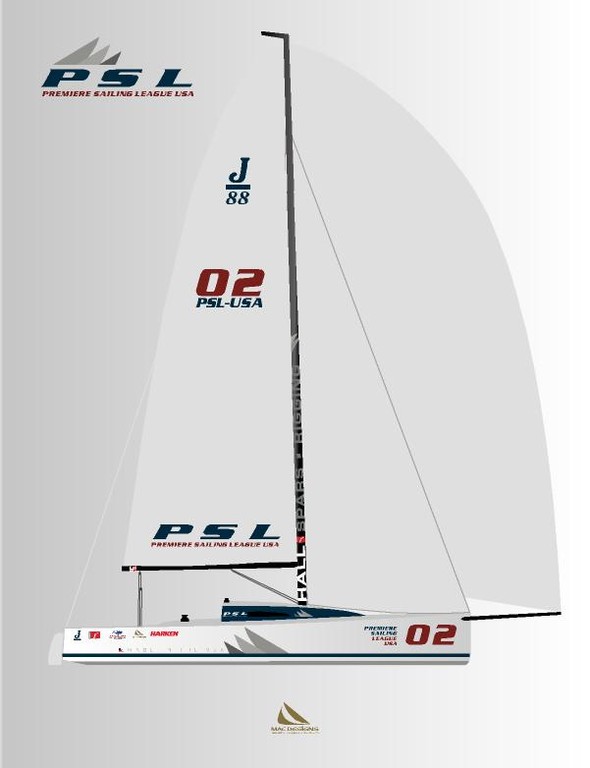 Special “Made in the USA” editions of the J/70 and J/88 will be used in the Premiere Sailing League series. Special “Made in the USA” editions of the J/70 and J/88 will be used in the Premiere Sailing League series.“I am very proud to have on the PSL team companies that are passionate about sailing and have established themselves as leaders in their fields,” said Premiere Sailing League President Benjamin Klatzka. “Support from the marine industry is very important, and with boats ‘Made in the USA’ it will distinguish Premiere Sailing League America from other ‘club-based’ events and also inspire other U.S. companies and organizations to get involved.” At the Premiere Sailing League USA introduction during last year’s Strictly Sail boat show in Chicago, J/Boats President Jeff Johnstone voiced his support for Klatzka’s initiative based on what the overseas sailing leagues have done “to excite and promote grassroots sailing.” Johnstone says the philosophy behind the series is fully convergent with that of J/Boats: “to provide a great platform to promote multi-generational sailing via fun and affordable competition between clubs.” The J/70s and J/88s are built in the U.S. and their rigs will feature Hall Spars for the special-edition Premiere Sailing League USA boats. “Our spars are shipped all over the world and used at the highest levels of competition,” said Hall Spars Vice President Ben Hall, “but we never forget our roots and the importance of keeping the sport fun and accessible to everyone.” Kevin Coughlin, of New England Ropes, shared a similar sentiment, explaining, “As a local supplier, we work closely with all partner companies to provide the best tools and equipment for the sailors and even more importantly to promote sailing and racing, as it is such an essential part of our global business.” Harken, also synonymous with top performance in sailing, supplies hardware to superyachts and racing dinghies alike. “J/Boats, Hall, Harken…we are all international companies,” said Peter Harken, the company’s president. “Our customers rely on our gear to win all over the world. Deep down, I think it’s great something like this is going to happen in the U.S. with American companies represented.” Designer of the new logo for Premiere Sailing League USA and the new “look” of the special-edition boats is Mac Designs, which has provided hull and sail graphics for some of the most memorable racing campaigns in recent history. “Since the regattas will be held close to shore, have a stadium-style atmosphere and utilize the latest social media technologies, the visuals will be integral in allowing the sailing and general public to support and encourage their teams,” said Mac Designs President Bill MacGowan. |
For more information about the Premiere Sailing League USA go to www.premieresailingleague.com or Facebook. Benjamin Klatzka will be available for questions at Key West Race Week and Boot Düsseldorf (Germany). Please contact him at [email protected].
Winter Is Coming: 5 Ways to Stay Sharp in the Off-Season
By Rachael Silverstein- In the wake of a busy regatta season and rigorous practice schedule, a brief hiatus can restore a sailor like a good night’s sleep. It allows the body to heal, and the mind to feel restored. If we remain in that break mode for too long, though, we inevitably get a little rusty.
As the winter months usher in cooling temperatures and promise more chill, sailors haul out their boats and stow their gear in anticipation of race course hibernation. Just because the familiar silhouette of sails dwindles from the horizon, however, doesn’t mean your training regime can fade away with them. In fact, your competitive racing training for next spring starts now!
We spoke with sailors, and tallied the results. Here is our Top Five list for some of the most helpful tips to stay sharp during the Off-Season:
- Catch Up, and Get Ahead
Whether it’s personal, educational, or professional, we all have responsibilities to manage in addition to our sailing habits. Use the beginning of your off season to take care of other priorities (are there really any priorities besides sailing??) while you’re still on a disciplined schedule. Then, those burdensome and un-fun “priorities” won’t create mental baggage that may detract from your sailing education experience – more about that later …. - Keep Your Competitive Edge
Get involved with different group activities and team sports. Engaging in friendly competition on a regular basis during the winter months can help maintain your race-mode mentality. For example, starting a kickball league within your team, attending trivia night at a local establishment, or inviting your friends to fitness challenges using an online tracker, are all effective methods for staying competitive. It’s a great way to stay connected with teammates, and continue to push yourself physically and mentally. - Maintain Fitness Goals
It’s easy to slip out of a workout routine if you don’t constantly have the boat reminding you of its physical demands. Keep up with your race season agility and strength training, and make the effort to support an active lifestyle. Reserve some of your extra time to engage in different physical activities, such as biking or backpacking, in addition to upholding your fitness goals. If you try something new, be sure to research proper form to prevent any unwelcome injuries. - Build Your Knowledge Base
There is an immense amount of knowledge floating around the sailing world, and being out in a boat is not a prerequisite to access it. Take advantage of sailing seminars in your area; subscribe to a weekly race-scenario e-newsletter; reacquaint yourself with the Racing Rules of Sailing and the Umpire Callbooks; and review all of your favorite sailing videos to analyze what works and what doesn’t. Even playing SailX online will keep sailing a frontrunner in your everyday life, and make the transition back to race season more fluid. We are students of a lifelong sport, and continuing to educate yourself will enhance your performance in the long run.
- Go Sailing!
No matter the time of year, temperature, or weather conditions, people are always getting out on the water to enjoy sailing. Many yacht clubs host local frostbiting series to keep sailors active during the chilly winter months. If bundling up to head out in icy weather doesn’t appeal to you, round up a group of fellow snowbirds and head south to compete in the warmer southern circuit. The opportunities for sailing are always available to those who seek them.
Adopting these techniques into your daily routine can reinforce learnings from last season, and make your transition into the next season a seamless one. The sooner you get your sea legs under you, the more time you’ll have to focus on taking your sailing to the next level. After all, the most effective treatment for rusty sailboat racing is to prevent the rust from forming in the first place.
Also read Zach Brown’s older post on the same topic
Club Profile: Beverly Yacht Club
 The Beverly Yacht Club is one of oldest and most distinguished yacht clubs in America. It was founded in 1872 in Beverly Massachusetts by a group of sailors from the Eastern Yacht Club who wanted to race small boats under 30 feet on the waterline. Our founding member and first commodore was Edward (Ned) Burgess. Ned is best known as the designer of three successful America’s cup defenders Puritan, Mayflower, and Volunteer in the late 1800’s. Ned was an active racer, started the “wet pants league” of small boat racing, and with it a long history of excellence and sportsmanship at our club.
Beverly Yacht Club is hiring a SAILING DIRECTOR!!
Within ten years of our founding, BYC had so successfully championed small boat racing that more sailors from the south shore and Buzzards Bay had joined the club. In 1882 and 1883, the Beverly Yacht Club hosted what was believed at that time to be the largest union regatta recorded in America. There were a reported 113 and 171 small and large boats in these regattas.
In 1895 the Beverly Yacht Club moved to Pocasset, and in 1913 to Marion where it remains today, name unchanged.
Beverly Yacht Club has a very active Junior Program.
Originally settled in 1679 under the name of Sepecan, the town became known for its shipyards and salt works. In 1872, Sippican became the Town of Marion, named for the revolution war hero, general Francis Marion, also known as the “Swamp Fox.”
During the 19th century, Sippican Harbor was the third most productive whaling center in the United States. Twenty-three whalers made over 100 trips to the South Atlantic and Pacific. You will use wharfs formerly reserved for whaling vessels and their cargos of oil and baleen.
 In recent years, Sippican Harbor has become completely devoted to yachting activities, with no commercial shipping. It is one of the best yachting harbors on the east coast. Today, Marion is a residential community with a winter population of about 5200, swelling to 8000 in the Summer. The buildings of Tabor Academy, a college preparatory school, can be seen on the west side of the harbor.
Beverly Yacht Club is hiring a SAILING DIRECTOR!!