USODA Team Race Midwinter Championship Hosted by Lakewood Yacht Club January 16 -18, 2016

FULL RESULTS AND CONSOLATION ROUNDS
Zim Sailing: Made in the USA
2016 kicks off with Zim Sailing moving our world headquarters to a 24,000 sq. ft. facility. With more than double the space, we will be expanding warehousing, production, and retail, now all under one roof. 
Our new facility will allow us to begin production of our top selling C420 in Rhode Island, making us the only C420 manufacturer in the USA! We will continue manufacturing the Zim15, Byte, and Megabyte, while expanding production of the CFJ as the only US manufacturer. Orders are brisk and the backlog is deep, but there is still time to get your boats for summer. Contact us to place your order today. 401-237-6117![]() Contact Us |
2016 470 & I-420 North American Championship Results
470s (33 boats) (top)
Series Standing – 6 races scored
Information is provisional and subject to modification
Regatta results last updated: Monday, January 18, 2016 4:26:03 PM CDT
Click on race number to view detailed race information.
Pos,Sail, Skipper, Yacht Club, Results, Total Points
1. USA 1, Stu McNAY/Dave HUGHES, US Sailing Team Sperry, 1-5-3-2-5-[7]- ; 16
2. BRA 177, Fernanda OLIVEIRA, CBVela, 6-[7]-6-1-3-1- ; 17
3. GRE 1, Panagiotis MANTIS/pavlos kagialis, PSC, 9-1-5-[13]-1-8- ; 24
4. USA 88, Sydney BOLGER/Carly Shevitz, US Sailing Team Sperry, 5-[18]-11-4-8-16- ; 44
5. CHN 67, Zangjun XU/WEI WANG, CYA, 17-4-8-7-9-[34/BFD]- ; 45
6. CHN 1267, Hao LAN/CHAO WANG, CYA, 13-3-2-[21]-16-12- ; 46T
7. CAN 6, Jacob CHAPLIN-SAUNDERS/Graeme Chaplin-Saunders, RNSYS/ CYC, 8-6-9-6-[34/BFD]-17- ; 46T
8. CHN 616, Xiaomei XU/Ping Zhang, CYA, 11-[34/BFD]-7-18-11-3- ; 50
9. USA 1813, Wiley ROGERS/Jack Parkin, TCYC/LYC/Riverside Yacht Club/LISOT, 15-15-10-10-[21]-2- ; 52
10. USA 1806, Russell CLARIDA, Pequot Yacht Club, 4-19-[28]-14-12-4- ; 53
11. AUT 3, Matthias Schmid/Florian Reichstadler, YCBb, [34/DNF]-2-1-12-34/BFD-6- ; 55T
12. MEX 1, Jeronimo CERVANTES/Ander BELAUSTEGUIGOITIA, IZAR-LABALSA, 3-11-14-[28]-14-13- ; 55T
13. BEL 16, Corentin DEMANET/Quinten LAUWERS, BRYC, 12-16-17-[19]-2-9- ; 56
14. ESP 9, Onan BARREIROS/Juan CURBELO CABRERA, Real Club Náutico de Gran Canaria, 2-[34/BFD]-4-9-10-34/DNF- ; 59
15. AUT 437, David BARGEHR/Lukas Maehr, Yacht Club Bregenz, [34/DNF]-8-12-15-20-5- ; 60
16. ISR 77, Tsuf ZAMET/Stav Brokman, Sdot-Yam Sailing Club, 10-14-22-8-[23]-11- ; 65
17. CHI 136, Andres Ducasse/Francisco Ducasse, CYA, 7-12-16-30-[34/BFD]-10- ; 75T
18. ESP 33, Marina GALLEGO, Club Nautic Sa Rapita, [34/DNF]-9-15-20-17-14- ; 75T
19. CHN 1221, Xiaoli WANG/LIZHU HUANG, CYA, 23-13-[24]-16-4-20- ; 76
20. ESP 14, Bàrbara CORNUDELLA RAVETLLAT/Sara López Ravetllat, Club Nautic el Balís, 14-[22]-19-11-18-19- ; 81
21. CHN 1, Shasha CHEN/HAIYAN GAO, CYA, 16-17-21-[23]-13-15- ; 82
22. AUS 9, Thomas KLEMENS/Tim Hannah, Sorrento S C B C, 26-10-23-3-[34/BFD]-23- ; 85
23. CHI 2, Nadja HORWITZ/Sofia MIDDLETON, CNP, 20-[34/BFD]-25-17-6-21- ; 89
24. AUS 99, Carrie Smith/jaime ryan, Fremantle Sailing Club, 19-20-18-22-[34/BFD]-18- ; 97
25. CAN 622, Allie SURRETTE/Ali ten Hove, RNSYS, 25-21-26-[31]-7-27- ; 106
26. POR 10, Joao VILLAS-BOAS/Tomás Camelo, Clube Naval de Cascais, 27-[34/BFD]-20-26-15-22- ; 110
27. SIN 12, Priscilla LOW/Shu Xian Lee, CWSS, 18-24-[29]-27-19-24- ; 112
28. SIN 11, Jovina CHOO/Amanda Ng, Constantwind sea sports, 21-23-[27]-25-22-25- ; 116
29. AUT 431, Lara VADLAU, KYCK, 22-[34/DNS]-34/DNS-5-34/BFD-34/DNF- ; 129
30. ARG 7, Jonathan MARTINETTI/John Birkett, SYC-PLYC, 24-[34/BFD]-13-34/BFD-34/BFD-26- ; 131
31. ARG 6, Mercedes TRAVASCIO/Delfina BELLAGIO, YCA – CVB, [34/DNF]-26-31-24-24-28- ; 133
32. USA 1814, Edward LEBENS/Mike McBRIEN, Seawanhaka Corinthian Yacht Club, [34/DNF]-25-30-29-25-34/RET- ; 143
33. 89, Sarah Michelle DESILVA, Chatham YC/Northeastern, [34/DNF]-34/DNS-34/DNS-34/DNS-34/DNS-34/DNF- ; 170
Results courtesy of RegattaNetwork: http://www.regattanetwork.com/event/11233#_newsroom
I-420s (37 boats) (top)
Series Standing – 6 races scored
Information is provisional and subject to modification
Regatta results last updated: Monday, January 18, 2016 5:09:23 PM CDT
Click on race number to view detailed race information.
Pos,Sail, Skipper, Yacht Club, Results, Total Points
1. 55116, Alex ABATE/Marcus Abate, Lakewood yacht Club, 2-[24]-4-11-5-1- ; 23
2. 55918, Henry BURNES/Peter Barron, Wianno Yacht Club, 10-[15]-2-4-4-5- ; 25
3. 55173, Shawn HARVEY/James Westerberg, Coral Reef Yacht Club/LISOT, 11-1-15-1-1-[19]- ; 29T
4. 55873, Kathryn HALL/Ashton Borcherding, LISOT, 8-5-6-[20]-7-3- ; 29T
5. 55900, Eduardo MINTZIAS/Ariel Casaretto, CRYC/LIMA, 3-7-7-17-3-[25]- ; 37
6. 55317, Thomas RICE/Walter Henry, LIMA / Seawanhaka Corinthian Yacht Club, 1-13-[32]-12-16-2- ; 44
7. 55876, Carmen COWLES/Emma Cowles, LISOT/Larchmont Yacht Club, 9-[38/BFD]-3-15-8-15- ; 50
8. 55494, Anna-Luisa BRAKMAN/Grace Austin, Noroton Yacht Club / Lisot, [25]-9-12-24-2-4- ; 51T
9. 55616, Madeleine RICE/Kimmie Leonard, LIMA / Seawanhaka Corinthian Yacht Club, 14-16-[19]-8-6-7- ; 51T
10. 53629, Timothy DANILEK/Pierce Ornstein, Noroton YC, [38/DNF]-11-9-2-9-23- ; 54
11. 55988, Sam GAVULA/Richard von Waldow, Bay Head YC/LISOT, 17-10-[22]-7-12-12- ; 58
12. 55916, Emma KANETI/Catherine Mollerus, Larchmont YC, 16-4-8-25-[28]-10- ; 63
13. 55917, Dylan ASCENCIOS/Hunter Skinner, Lakewood Yacht Club/ LISOT, [38/DNF]-2-5-10-21-26- ; 64
14. 55341, Eli BURNES/Noble Reynoso, Wianno Yacht Club/LISOT, 5-3-11-[26]-26-21- ; 66
15. 55912, Emily HAIG/Julia Zaleski, LISOT/Little Egg Harbor Yacht Club, 19-12-[26]-3-11-22- ; 67
16. 55617, Joseph HERMUS/Christopher Byrnes, Bellport Bay Yacht Club/LIMA, [20]-14-18-18-10-8- ; 68
17. 55147, AnaClare SOLE/Sophia Sole, Texas Corinthian Yacht Club/GCYSA, 23-8-1-21-[29]-16- ; 69
18. 55447, Matt LOGUE/Cameron Giblin, Riverside Yacht Club, 6-6-16-[38/BFD]-17-28- ; 73
19. 55999, Alyson TURNER/virginia alex, Chautauqau Lake Yacht Club, 7-[29]-13-13-25-17- ; 75
20. 54067, Julia REYNOLDS/Anne SIDAMON-ERISTOFF, Pequot Yacht Club/LISOT, 15-[22]-21-16-13-11- ; 76
21. 55148, Ryan VITTIMBERGA/Max Vittimberga, LYC/CRYC, 13-21-[23]-9-19-18- ; 80
22. 55146, Zane TINNELL/Reese Guerriero, corpus christi yacht club, 18-[27]-17-14-18-20- ; 87
23. 53962, Jack JOHANSSON/Ian Robinson, CRYC, [38/DNF]-18-24-6-15-30- ; 93
24. 55143, Macey McCANN/Lenox Butcher, Texas Corinthian Yacht Club, 4-17-27-29-22-[32]- ; 99
25. 55997, Connor MRAZ/William MacDonald, Chester Yacht Club, 21-[38/DNF]-14-30-23-14- ; 102
26. 54629, Trevor BORNARTH/Kathryn Bornarth, Edward Teach Youth Sailing Association/LIMA, 26-25-[30]-5-24-29- ; 109
27. 53964, Julian MARTIN/Nico Martin, Seabrook Sailing Club/ Royal Vancouver Yatch Club, 24-[31]-28-22-14-24- ; 112
28. 55339, John MASTRANDREA/Michael Mastrandrea, Rochester Yacht Club, 22-19-25-[28]-20-27- ; 113
29. 53900, Kyle MERGENTHALER/Garrett Mergenthaler, Lake Norman YC, [38/DNF]-20-34-27-31-9- ; 121
30. 53963, James PAUL/Nick Chisari, Stamford YC/LISOT, [38/DNF]-38/BFD-10-32-30-13- ; 123T
31. 55618, Alexandra MARES/GiGi Arias, Houston Yacht Club/GCYSA, 12-28-20-31-32-[35]- ; 123T
32. 55296, Teagan CUNNINGHAM/Meghan Gonzalez, BLYC — LISOT, [38/DNF]-26-29-33-33-6- ; 127
33. 54066, Sinead McMANUS/Claudia Loiacono, CRYC/LIMA, [38/DNF]-30-31-19-27-31- ; 138
34. 55621, Scott McKINNEY/Jack Glenn, Orient Yacht Club/LIMA, [38/DNF]-23-35-34-35-33- ; 160
35. 53337, Helen HORANGIC/Theodora Horangic, CRYC/LIMA, [38/DNF]-38/BFD-33-23-34-34- ; 162
36. 53691, Josh DOCHODA, SPYC, [38/DNC]-38/DNC-38/DNC-38/DNC-38/DNC-38/DNC- ; 190T
37. 56027, Joshua TEMKO/Alexandra Tillinghast, DYSA/CCSC/American YC/LISOT, [38/DNF]-38/DNS-38/DNS-38/DNS-
Force 5
The excitement of sailing a high-performance dinghy has always been the test of the sailor’s response to wind and wave conditions. The enjoyment and lasting interest that Force 5 sailors specifically have in common, is the “all-inclusiveness” of the Class. Age, weight, size, gender and strength may all have some bearing on the amount of effort required to be a top contender, but the design of the boat and the attitude of the sailors is what makes Force 5 Regattas so alluring and enduring.

Convenient, is an understatement for the Short-Rig. You don’t need to replace your Full-Rig mast and boom as other one-design boats. Simply insert the mast cap on the top of the middle mast section instead of the upper 4 foot section. Having a full foot and generous roach supported with a full upper-batten, coupled with the same luff-sleeve pre-bend that’s incorporated into the Full-Rig sail, the Short-Rig sail almost defies death-rolling.
The Short-Rig is a stable high-performance sail that opens a whole new range of sailing enjoyment in the Force 5. Not only will Class regattas be able to provide separate one-design competition for Short-Rigs and Full-Rigs, but Full-Rig competitors will have the option to “down-size” when the day calls for stronger winds than they want to handle.
Length Over All 13’ 10”
Beam 4’ 10”
Displacement (hull only) 145 lbs
Sail Area
Standard Rig 96 sq ft
Short Rig 69 sq ft
Draft board down 38 “
Portsmouth DPN Rating
Standard-Rig 95.4
Short-Rig 103.0
CLASS ASSOCIATION: https://www.force5class.org
Manage Your Sailing Program Toward Success: Part II, Team Building
By Airwaves writer Joe Cooper
Check out Part I
During my two America’s Cup campaigns we would generally try and pull the boats out of the water every day (Oh yes, things are much different today). With the boats on the hard or hanging in the travel lift straps the team members, those not working on other tasks, would default to wet sanding the bottom. Occasionally some innocent bystander would wander into the yard and say something like “getting ready for the big race, eh?” We would nod and exchange pleasantries for a minute and if they stayed too long, we would offer them some sandpaper and they would scurry away.
When the America’s Cup World Series was in Newport a few years ago, I was walking the grounds at Ft. Adams one afternoon just before the racing started and came across two guys wet sanding the bottom of one of the cats. Not wishing to interrupt or be invited to help I watched for a minute, musing on the idea of how some things never change. As I watched I was reminded yet again of the idea that rather than getting ready for “the big one” these guys were actually at the end of the ‘to do’ list for the regatta. If you have not planned, prepared, trained, tested: repeat, for as long as you can, then no amount of wet sanding will help. Consider all the organization, planning, practicing, designing, rebuilding, testing over several years in advance of the last America’s Cup in San Francisco for what amounted to just a few hours of actual racing. The wet sanding (on the day the boat goes out to actually race) is really out there on the margin of actions that produce winning results. I am NOT saying it is not important but once the boat has been sanded to the 1200 grit stage: consider wet sanding’s relative impact on the actual performance of the boat.
In the first essay of this series I posed the idea that successful sailboat racing is a management exercise. The first job for you as the owner is to articulate your goals to yourself AND write them down. The next thing you need to do is build a team from individuals that have the same goals. I say team because I submit that a TEAM is a different way of looking at the collection of individuals that make it up, than a CREW. I think that a team is a collection of individuals who make a concerted effort to become better than the individuals of each member while working together for a common goal. A crew is a collection of people who sail together on weekends.
Really good managers spend a lot of time understanding what makes their team members tick. We all are unique individuals and have different needs, wants, things that jazz us and things that annoy us, our own ways of responding to different situations, our own verbal shorthand, body language and so on. For a good leader to build a great team, he or she must understand these aspects of the humans on the team. The first key element after identifying a collection of likely souls is the “buy in.”
In other words, establish that the prospective team members are excited and willing and will create the synergy that achieves your (written down…) goals. The spectrum of where such people might come from is wide: existing or former crew, family & friends, mates from the yacht or golf club, from work, from other local yacht clubs, junior sailing programs locally, high school and college sailors, even the ones who are not rock stars, and so on.
So by definition you will have a collection of individuals with various backgrounds, sailing and or technical skills and histories. And it should be noted that the bigger the boat and the more aggressive the sailing program, the bigger the ratio of the number of people on the roster to the actual number of crew required to race the boat must be. Therefore even a modest boat, a J-109 for instance needing 7 or so sailors to work the boat might easily have 15 people on the roster. Once you have established the roster of individuals the next thing is to learn about them and to understand them. In order to do this you need to spend time with them, and I don’t mean just walking down the dock with them on race day or having a beer after the race. It so happens that the opportunities to learn about your team can be piggy backed onto a variety of activities both social and boat work related.
Some of the activities that offer opportunities to build a team include:
workdays on the boat (yup, including wet sanding and the earlier in the season the better); and scheduled sailing practice with a purpose (starts, mark roundings, reefing, tacking gybing etc., BEFORE you show up to the race). Other ideas are: practice drills with no speaking allowed; purposely creating situations where the crew is caught flat footed and the maneuver gets screwed up; letting the crew rotate in practice and in races where appropriate; letting the crew use the boat when you are not there or sending it out without you; having them move the boat from A-B.
Team building does not have to be all work and no play. Implement fun things like the best ‘on time” (to the boat) record for instance. Introduce a MVP award voted on by the crew.
You can set up a physical exercise award. Specify a particular series of exercises that can be done against each other or the clock.
This chart is what was called the Super Seven exercise regimen for Australia, 12KA5 in 1980. It was the compulsory standard exercise drill we all did before anything else in the morning. A full set is this list repeated 3 times.
Recognition and appreciation are two simple actions the leaders can take that have a disproportionately large impact on the recipient compared to the energy spent by the leader. A fun and simple approach that has been adopted by the Prout Sailors I coach is to distribute awards centered on the personality of the recipient. One year they presented awards using a paper plate with a graphic done by a couple of the more artistic sailors painted on it. These awards were for things like: most color coordinated, loudest laugh, most likely to barge at the start and so on. They were presented at an end of season party at one of the team member’s houses (parents invited too) and it was a hoot.
Another solid way to develop team ‘buy-in’ is allocating or asking different members to take on “departments” within the boat. Remember in the first essay I identified the five departments common to all boats regardless of their size. This is a great way to give the team a vested interest in the goals of the program because a part of the boat is “theirs” rather than just showing up on the weekend to sail on Fred’s boat.
“Owning” a part of the program invites their contribution to the program’s success. This is a greater contribution than merely showing up on Saturday morning. Again with the Prout sailors I get them to take on different responsibilities within the team. Getting the sails out, leading the newer kids in rigging, getting the marks ready and so on. For yachts, the list of areas within each department that need to be looked after is long. There is the engine and its related systems, safety equipment, navigational and electronics gear, sails, spars, rigging, logistics, food and water, race administration (for the paperwork-heavy Newport to Bermuda race, for example), rules, tactics and strategies for the various styles of racing you plan on, and so on. You can make your own list. Remember that the owner/skipper ought to be managing all of this and in any event cannot (successfully) and in fact, should NOT, do it all.
Who does what? On most boats, the bow, sewer/mast man and pit members generally will manage the sails, rig setup and tune, running rigging, winches, hydraulics, and anything related to the sails and the equipment used in setting them. This is largely because these departments actually use this equipment so it is in their best interest to make sure it is in good order.
The care and feeding of the engine is another important area that needs to be covered. Having a team member(s) take on the maintenance of the engine, battery, and related charging system, especially for boats sailing in distance races, prop thru hull and shaft alignment, the prop itself and its folding mechanism, fuel consumption, engine maintenance, and spares Belts and the water pump impeller are two good pieces of equipment to know how replace in short order. These are all good areas to have a dedicated team leader responsible for. In this department the more experienced can have an apprentice or two, again often a younger sailor, skilled in dinghies and day sailing keel boats, but unfamiliar with diesel engines. This apprenticeship not only provides a backup for the department head but also introduces the younger sailor to another element of what makes boats work—and so increases his or her value for their next boat. It will also develop a bond between the two or even three people in that sub team.
Performance meters and data recording feed critical information to the race management team in the afterguard. This ‘electronics’ department is another critical area that can have a direct impact on the performance of the boat. Electrons and salt water and air are very strange bedfellows and so a constant watch on all this gear is close to essential. This is of course a perfect match for the resident computer head(s).

Another important department (which one is not?) is basic ship husbandry, that is, looking after the boat. Ever been on a boat where once it hits the dock, everyone leaves? A really good buy-in to the boat is tidying up, writing up the work list, (although this is better done on the way in, after racing), and cleaning the boat. The cleaning task can be done by some number of the crew on a rotational basis you can figure out. This does a couple of things. It engenders a sense of pride in the boat, making her look sharp all the time AND it is a good way to find little things that need attention. Examples include: little stuff like a busted strand of wire on the life lines, or chafe if the life lines are textile; a cotter pin sticking out ready to gaff some innocent’s boot, skin or sail; an area of chafe on a halyard or other line and so on. It is important that the crew understands that no one leaves until the boat is clean and tidy. (Ok I get it will not be 100% all the time but we are talking goals here.) To do otherwise sets up an “us-and-them” meme which is the opposite of what you want: a cohesive team supporting each other.
Buy-in need not be the exclusive realm of the sailing team members either. Sailing takes up an inordinate amount of time and energy. Sailors need to have their sailing interests and sailing time in harmony with their private lives and significant others—if they are to sail with a consistency that works towards the attainment of the boat’s goals. Don’t be afraid to issue invitations for “John Q. Crew and Significant Other” to team events.
You may well observe that the foregoing is the exception rather than the rule with respect to most Corinthian programs. The overall idea I am articulating is to have not only the management of the program understand the individual members but to have also each member be part of building a cohesive team where each crew-member understands to as great depth as possible his or her team mates. The goal is to have the teamwork be as smooth, quiet and efficient as possible regardless of the circumstances on the racecourse the boat is on. Regardless of who is steering and calling tactics, having the crew yelling instructions to each other is distracting. There is a reason “teams” practice and spend time together over and above improving the actual technical skills of their activity.
My template for this kind of thinking is professional sports teams and elite military teams. Ok, ok, I get that you are not going to go out and win a Super Bowl or save the world, but in the area of increased performance in sailing, professionalism is a mind-set rather than an income stream. Carbon sails, super-duper thin, strong string, and instruments worth the GDP of a small country can only get you so far.
Sailing skills and seamanship can be taught, but cohesion, understanding, trust, confidence, and a shared sense of purpose in desired goals need to be built. These are the hallmarks of well managed teams. Anything less is merely a crew, and really, any old crew can wet sand a boat.
Sail Stronger Part III: Upper Body
By Airwaves writer Rachel Bennung
See Part I: The Core here
Part II The Legs here
In the sports world we determined that strength in certain areas of your body are more important then others. You want to have total body strength, but focus on maximizing strength in certain muscles for better overall performance in your sport. In Part One we determined having a strong core is the base of your overall fitness. In sailing a strong core will help you hike longer without becoming fatigued quickly as well reduce your chance of injury. In Part Two we determined having strong legs will help with your endurance and mobility while out on the water. Leg exercises also increase your core stability therefore increasing strength and stability throughout your body. In our third and final part we will be talking about strengthening our arms to maximize your performance while sailing.
Upper body strength is important not only for sailing, but your every day life. Having a strong upper body will improve your flexibility, range of motion, and mobility. Some of the major muscle groups in your arm are the biceps, triceps, and deltoid. With strong arms you will see an ease in completing other daily tasks. Strong arms will also make you less prone to injury in these muscles during activities that stress these muscle groups.
As you can see the benefits of strong arms are very essential to your daily life. So how do strong arms help you during sailing? It might seem like this is a common sense question, your arms are needed for pulling in the sail. However, it’s more then just that. First, and probably most importantly you need arm strength for trimming your sail in and keeping it in. With arm strength you will have the endurance on those windy days to get your sail all the way in and keep it there. Arm strength is also very essential to your success steering the boat. You will be able to control your boat through waves and other conditions with ease having strong arms. If you are a crew arm strength can be one of your most important factors. You’ll need it to be successful in hoisting, trimming, and dousing the spinnaker quickly and efficiently. Remember that little thing called capsizing? Well without strong arms you’ll have some trouble getting your boat back up and getting yourself into it. As you can see muscle strength in your arms is more then just trimming in the sail.
So how do we get these strong arms that are so essential to sailing? The list of arm exercises is endless, but I chose 4 exercises that I think are great for getting the strength in your arms you are looking for in sailing.
- Push Ups – This is an exercise that has been around forever. It may seem like a simple exercise, but using your own body weight to get strength is a great form of working out. Start in plank position with your hands directly under your shoulders. Lower your body while engaging your core then push back up to the starting position. Then repeat this same move. Start with doing 20 repetitions then working your way up to more. (There is also many different variations to push ups making them easier or harder.)
- Upright Rows – Rows are a great exercise that simulate the movement of pulling. Hence rows are great for sailing! Start with dumbbells in each hand resting in front of you on the top of your thighs. Lift dumbbells up till you are close to touching your chin. Your elbows will be higher then your forearms for this move. Lower dumbbells back to starting position. 10-15 pound weights are a good starting point. Start with doing 15 repetitions.
- Bicep Curl to Overhead Press – Bicep curls are a great arm exercise themselves, but here we add another move working your shoulders as well. Stand with dumbbells at your sides. Curl the weights up to your shoulders then rotate your wrists so your palms face out then press the weights over your head. Bring the weights back to your shoulders rotating your wrists so your palms face in then lower back to starting position. That is one repetition, start with doing 15 reps.
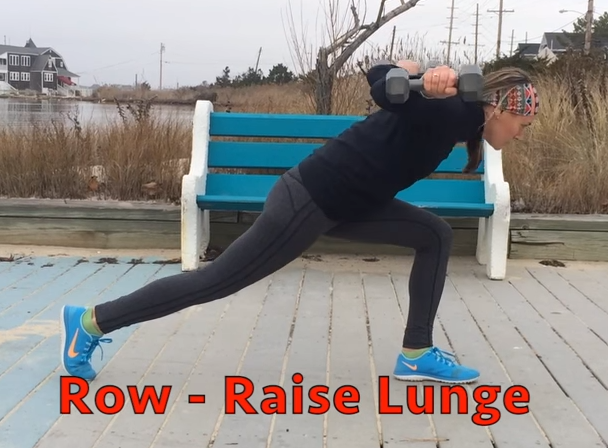
- Row-Raise Lunge – This exercise is one that works not only your arms and shoulders, but your total body. Start in plank position with a weight in each hand. Row the left weight up to your ribs, then the right weight. Step in with your left foot between your hands into a low lunge. Raise weights out to your sides at shoulder level. Return to starting position. Switch legs and that is one repetition. Start with doing this move for 12 repetitions.
(You can easily make these exercises into a arm workout. Do 3 sets of each exercise 20 push ups, 15 upright rows, 15 bicep curls to overhead press, and 12 row-raise lunge.)
-Check out the video of these exercises below
If you want to sail stronger, longer, and faster you need to be in top shape. You need to not only be out there sailing, but training your total body. With a strong core, legs, and arms you will see the difference in your sailing performance. All these muscles need to work together efficiently for you to be at the top of your game for those big regattas. By incorporating exercises for your core, legs, and arms you will be able to maximize your performance and sail stronger.
For more information on fitness for sailing contact [email protected]. Also check out Sailorcise on Facebook, Twitter, and Instagram for daily tips on fitness, nutrition, and sailing.
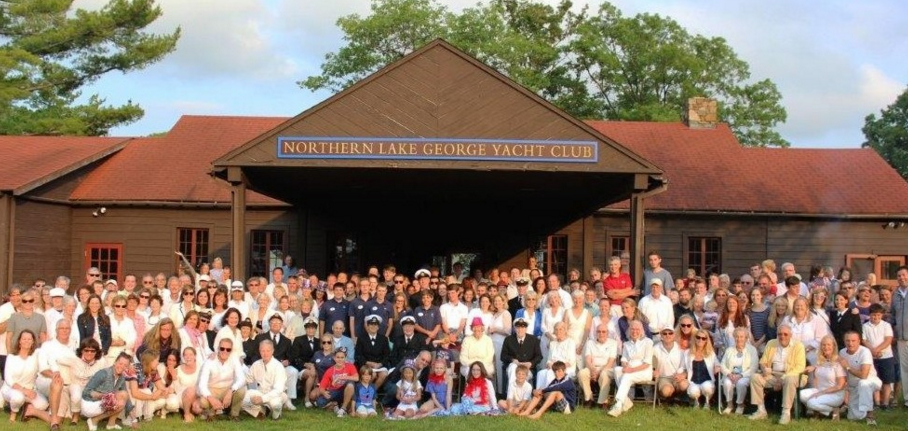
Club Profile: Northern Lake George Yacht Club
JUNIOR PROGRAM
The NLGYC Junior Program seeks to provide a safe, constructive, and enjoyable family oriented environment for the youth of our club. Our objectives are to develop life-long skills in sailing, swimming and tennis; to foster sportsmanship, and racing skills; to continue the heritage of the NLGYC community; to nurture an appreciation and respect for the lake; and to encourage lifelong friendships. Children of non-member families are welcome to register for the Junior Program at non-member rates with the hope that those families will consider becoming members of the club. In cases of limited space availability, preference will be given to members who register by February 14th. After February 14th, registration will be open on a first-come, first-serve basis.
NLGYC is Hiring!!!
HISTORY
The Northern Lake George Yacht Club grew from several roots, the oldest of which was the Lake George Yacht Club, organized in 1888, and the center of yachting activity on Lake George until 1906. The interest and property of this Club were left in the hands of its last Commodore, Mr. John R. Simpson. In 1941 his daughter, Miss Helen Simpson formally transferred to the Northern Lake George Yacht Club the burgee of the old Lake George Yacht Club, a blue field with a central white stripe in the middle of which is a red star. The name of the Lake George Yacht Club was also to be inherited, but because of the likelihood of confusion with the Lake George Club, the word “Northern” was added.
Additional roots were put down in 1926 when competitive sailing was attempted at the northern end of the lake with the purchase of four Red Wings, but because of the intense interest in motorboat racing at that time the attempt failed.
In 1931 sailing was introduced at Glenburnie and at Rogers Rock. The Rogers Rock Yacht Club, organized in 1932, conducted regular week end races until 1939 when it was found impractical to continue.
With the termination of the activities at Rogers Rock it became apparent that no single community could maintain a continuous program of racing. This, together with the fact that The Star Class had found it necessary to use Hague Bay in order to lay out satisfactory courses, brought to a head the growing idea that the communities at the northern end of the lake should join to create one yacht club. In 1940, accordingly, representatives from Rogers Rock, Glenburnie, Hewletts and the Adirondack Camp met, merged the existing yacht clubs and formed the Northern Lake George Yacht Club.
The incorporators of the Northern Lake George Yacht Club (March 16, 1941) were:
- Clinton Hernandez — Heart Bay
- Joseph Cronin — Adirondack Camp
- Frederick Bruno, Sloan Wilson — Rogers Rock
- Rt. Rev. Monsignor Robert F. Keegan, Ralph C. Craig — Friend’s Point
- Harold M. Davison, Richard Manning — Glenburnie
- Charles Henderson, Jr., James A. Corscaden, M.D. — Hague
The location of the Club was the subject of much study and discussion. Properties in Heart Bay, Glenburnie and Hague were considered. It was finally decided to accept from the Cook Estate the property on which the club now stands, which had been offered through the intercession of Ralph Craig.
For seven years the activities of the Club were conducted from the property of Monsignor Keegan on Friends Point. He not only offered his property for use, but officiated at most of the races himself.
After the war, with an increase of membership and activity, and because of Monsignor’s failing health, it became clear that the club must have its own quarters. The sum of $14,000 was raised by subscription.
In 1948, the Club House was built with these funds donated by the members. Later additions, the kitchen, the fireplace, shed and, in 1961, the new dock and hoist with the waterfront improvement were built by the same method. It should be added that hundreds of man-hours of labor were also contributed. Tennis courts, built on land leased from the Friend’s Point Association, were added to club facilities in 1968 and the Junior Staff house was built in 1971.
In 1990-1991, under the direction of Jim Beaty and Jim Cullen, a major 50th anniversary clubhouse renovation was undertaken for improvements to the kitchen, rest rooms and storage facilities. Self financing was completed with the project. The fund raising was very ably handled by Janet Lawrence. Over three years, 1997-2000, nearly all families of the club participated in “Stewardship 2000″ — a stem-to-stern renovation and restoration of all club buildings, waterfront and tennis courts.
Our club is fortunate to have title to one of the oldest burgee designs in the country. The burgee of blue field with red star on white stripes was designed for the Lake George Yacht Club in 1888. This organization disbanded in 1906. But in 1941, Miss Helen Simpson transferred the flag to the fledgling Northern Lake George Yacht Club where it is flown proudly to this day.
Flag etiquette suggests that the burgee be flown on the bow staff and the United States Yacht Ensign on the stern staff of powered yachts between dawn and dusk.
Activities
The activities of the Club have centered principally about sailboat racing. At first, a heterogeneous fleet of boats produced mostly headaches and gray hairs for the members of the handicapping committee. In 1932, a fleet of Akroid 14-foot dinghies was purchased. These soon gave way to the Comets in which fleet No. 109 of the International Comet Class was organized in 1934. In that same year, the Lake George Fleet of the International Star Class Yacht Racing Association was formed. A Turnabout Fleet was organized in 1952; Thistles in 1965; Flying Juniors in 1971, Lasers in 1978, and Optimists in 2002.
Regular weekend races have been maintained. A volunteer day “breakfast” with the Laser Regatta winds up the social and sailing season along with “closing” the club for winter. The tennis season is closed with the annual club tournaments.
Outside competition in the Star Class has yielded several championships in the Twelfth District. Comet territorials have produced many championships and even an international champion. The Thistle Fleet actively participates in area regattas and holds a regular “home and home” with a neighboring fleet.
Interclub regattoa for the juniors are held regularly with the Royal St. Lawrence Yacht Club, the Lake George Club, the Cooperstown Country Club, the Mallett’s Bay Boating Club, the Lake Sunapee Yacht Club, and the Lake Champlain Yacht Club.
The other principal activity of the club has been to sponsor a “youth program” in which hundreds of juniors, ages 3 to 16 have been given instructions in sailing, swimming, life saving, tennis and other skills by which they might enjoy the lake. In addition, there is a social program of dances, hikes, excursions and overnight sailing.
Since the early 1930s a number of perpetual trophies have been presented to the Northern Lake George Yacht Club. Each year these trophies are awarded to the Champion of each fleet as well as to those individuals who have attained special levels of accomplishments during the season.
NLGYC is Hiring!!!
Coast to Coast: The Battle of East vs. West Youth Sailing
By Airwaves Writer Tyler Colvin
The battle of East vs. West sailing has existed for decades with competitors from both coasts seemingly trading podiums with each passing event. Across classes, age ranges and yacht clubs, top sailors from each coast with different approaches dominate the sailing community and skill sets. Harkening back to the hip-hop feuds of the 90s, East vs. West has always been a source of pride and contention amongst competitors in the junior sailing classes, high schools and colleges alike.
Junior sailing on both coasts has progressed to a level not seen before in the sport. Skill levels of the top sailors in the major youth classes continues to grow each year, and with it, the desire to travel to events. This was evidenced at Opti Nationals, C420 Nationals and 29er Nationals, of which all exhibited top competition from both coasts.
In 2015, sailors from the East Coat dominated Opti Nationals with sailors from New Jersey, Annapolis, Florida and Long Island rounding out the Top 5 overall standings. This is a testament to the strength of the East Coat Opti class and the emphasis put on the pram by East Coast clubs.
C420 Nationals showed significantly more parity between the coasts with podium finishes from each. The 2015 C420 Nationals was the largest event in the class history with 196 boats entered. At the Chubb Junior Championships, West Coast teams took the top two spots in the Bemis Trophy as well as a podium spot in the Smythe Trophy.
On the skiff side of things, 2015 29er Nationals were dominated by West Coast teams with 3 of the Top 5 and 7 of the Top 10 teams from the left coat. While admittedly a much smaller fleet size than the other classes, the Olympic class trainer is alive and well on the West Coast.
High school and College sailing around the country is exploding in popularity at the moment. More and more players from varying backgrounds are stepping into boats and never looking back. If junior sailing circuits in Optis and C420s are FJ programs, high school and college fleets are decidedly dirt track run-what-you-brung. Short courses, high volumes of races and no throw outs make high school collegiate sailors competitive and hungry.
Fundamental differences between how high school and college racing are conducted on each coast are a reflection of location and funding. East coast high school and collegiate regattas are primarily held at locations with full fleets; teams show up to a venue, race all weekend, and go home. West coast high school and collegiate teams must travel further distances and provide their own boats either by towing or chartering from hosts. One advantage the West Coast teams have over almost all but the southern East Coast teams is the ability to practice year-round.
Despite the differences in how regattas are conducted on each coast, there is a remarkable amount of parity at the top of the high school sailing world. PCISA schools Point Loma and Newport Harbor are perennial national contenders, but it is hard to count out SAISA contenders Shorecrest and St. Thomas Aquinas, or NESSA’s St. George’s and MASSA’s Annapolis, Severn and Christchurch.
In college sailing it is a slightly different story. East coast colleges dominate the college sailing world with only Stanford as the current west coast contender and Hawaii as a past contender. NEISA and MAISA provide the majority of the top 20 national rankings and top 10 at national championships. Stanford is the lone PCCSC school consistently in the rankings and in the hunt at nationals with Santa Barbara, Santa Clara, Hawaii and USC on the outside looking in.
What the West Coast lacks in tradition and infrastructure to its East Coast counterpart, it makes up for in growth of the sport. In high school sailing PCISA is the fastest growing conference with the numbers of registered teams growing at what seems like an exponential rate. It is a battle of tradition and establishment (East) versus growth and innovation (West). So while the needle may swing towards the East in youth sailing at the moment, don’t count the West out of the picture by any means. At the rate new sailors are growing and improving on the West, it is only a matter of time before the left coast is on equal footing across the board.
Whats your take?
Club Profile: Lake George Club
NewsFlash: The Lake George Club has an opening this summer for a RACE COACH & SAILING INSTRUCTOR!!

The Lake George Club was formally organized and received its certificate of incorporation on November 16, 1908. Nine months later a clubhouse had been built and docks, tennis courts and a nine hole golf course were in place.
The Club opened its doors on August 14th, 1909 with its first and only Superintendent, Mr. Emil Strand and his bride, to welcome the members. Mr. Strand served the members for fifty-four years until he retired in 1963. Each spring he grew the white petunias which graced the Clubhouse. We keep this tradition as a tribute to his long and dedicated service.
The purpose of the Club as outlined in a meeting in 1908 was to provide a place where residents and visitors might meet and have the opportunities for mutual pleasure, to hold regattas and other aquatic sports, to provide a golf course, tennis courts and facilities for other games and make arrangements for dramatic and musical entertainment.
These things were all done, but changes have taken place over the years. The original regattas were motor boat races. Ever faster and more sophisticated boats were built and raced, leading at last to George Reis’ El Lagarto which won the Gold Cup in 1933 and defended the Cup in 1934 and 1935 at the Lake George Club. That was the last Club sponsored motorboat regatta.
Golf was played on a nine-hole course laid out on Club property and property to the north leased from the Marion House. The course ran parallel to and on both sides of the Bolton Road. The Marion House was torn down in 1939 and the land subdivided, but the golf course continued in operation through 1942 when the lease expired.

The original three clay tennis courts served the members for 75 years. For thirty-three of those years, 1916-1949, the Tennis Chair was Miss Helen Simpson, a devoted member who was also a director for twenty-eight years and Vice President for five years. In 1983-84, after ten years of discussion, three new courts were added and the old courts resurfaced. We continue to have some of the finest courts in the area.
Sailing was introduced in 1935 with boats from all over the lake invited to join the eight Club boats; Dr E.F.W. Alexandersons Nordic, Mr. W.M. Bowdens Highland Fling, three Stars and three Cape Cod Knockabouts. The Stars began racing as a separate class in 1936 followed by the Cape Cods in 1937 and the Sound Interclubs in the late thirties. Mr. Harold Pitcairn, who was Commodore from 1940 to 1953, provided his own fleet of two boats in each class sailed by himself and his eight children. Sailboat racing was suspended from 1943 through 1945. New classes were introduced after the war: the Rainbows in 1963, the J-24’s in 1980 and the J-22’s in 1991. The sailing story would not be complete without the mention of Ralph and Mary Derby, Boom Boom and Can Can, who were in charge of the starting guns and signal flags on the race committee boat for over 25 years.
Learn more about our junior sailing program HERE.
During World War II, the membership dropped from 125 to 64. The Club was closed for the 1943 season. A small group headed by C. Everett Bacon, president from 1933-1945, and Hubert Brown, 1946-1947, rallied support and contributions to keep things going. In 1955, the emphasis shifted from the older generation to the baby-boomers.

Tennis, sailing and swimming instructors were hired in 1955 and junior tennis and sailing programs were started. The juniors competed in Turnabouts, Cape Cods and Lasers for the next 25 years. Contributions from the members have permitted the Club to fund three newer fleets: the 420’s in 1979, the Optimist Dinghies in 1990, and the FJ’s in 1994. The children of the baby-boomers are now active participants in our junior programs.
The club presently has 300 regular members and a waiting list of prospective members. The House Committee and staff have revitalized our Social program. Sailing and tennis are actively pursued on all levels.
The Junior Sailing program is a focus of the Club. Juniors grow up sailing, swimming and playing tennis, building long lasting relationships. Their parents and parents did as well. There is a great sense of community and family here! Learn more about the Junior Sailing Program here: http://www.thelakegeorgeclub.com/Summer-Sports/sailing.html
NewsFlash: The Lake George Club has an opening this summer for a RACE COACH & SAILING INSTRUCTOR!!
For more information, please contact:
Tracey Thacker / 518-668-5734 / lgctracey @ yahoo.com
S1D Youth Sailing Team of the Year Award Winners 2015 Announced!
Teamwork. Chemistry. Dedication. Cooperation. Being on the same page as your partner and/or teammates is never easy, especially when that shared vision has to endure, and not simply be a statement of purpose on the dock. These characteristics are requirement in youth sailing team success. Sail1Design is proud to recognize the top North American Youth Sailing Team, each year, with this prestigious award.
The award is presented annually, in January, and reflects the efforts of a youth sailing team throughout that previous calendar year. This is YOUR award! We require written submissions of nomination; in fact we only choose from nominated sailors, and do not suggest nor solicit specific nominations. If you’d like to nominate a team, please write a 200 word minimum letter, with regatta results, to [email protected].
Well, this is a first. We have never had 3 nominations for the same person/team before! Although there were many other great nominations, the team of Stephanie Houck/Camille White stood out. We at Sail1Design admire their stellar 2015 results, to be sure; we were even more impressed, however, with their team chemistry, hard work, and dedication to their goals. This is a great recipe for long term success, in any endeavor, and we are very proud to have Camille and Stephanie win this award!!
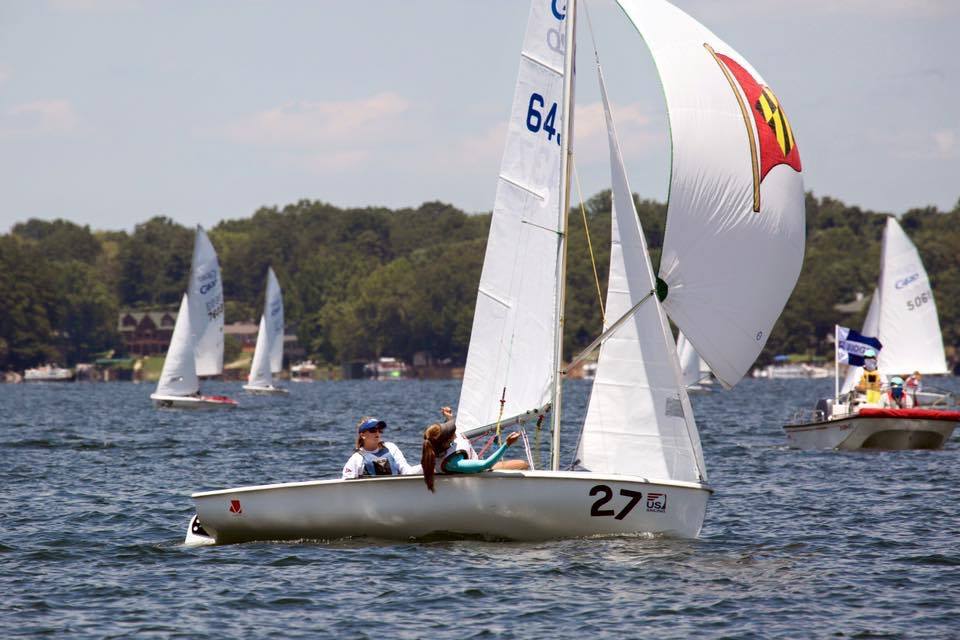
Please enjoy reading excerpts from our three nominating letters:
Nomination letter #1 I would like to nominate Stephanie Houck and Camille White for the 2015 Youth Sailing Team of the Year award. These two young ladies have put in a tremendous amount of work and energy into their sailing this year. When I first met them, Stephanie and Camille were sitting on a couch in my office trying to work through some skipper crew communication issues. They were smart enough to realize a major problem before it happened and sought help to come to a healthy solution. Less than a year later, with lots of practice and help from many coaches, Stephanie and Camille won the Ida Lewis regatta. This was a huge accomplishment for the both of them and it made them work even harder to stay at the top of their game and the top of the C420 circuit. After another month and more rigorous training, this duo won top female honors, top junior boat, and 1st place overall at the largest ever Club 420 National Championship. As a young team, there is plenty of time left for these two to continue to develop and get even better.
Nomination letter #2 I write to nominate Stephanie Houck/Camille White to be designated as Sail1 Design’s 2015 Youth Sailing Team of the Year. Here are my reasons.
- In June, Stephanie and Camille did not just win the US Sailing Jr. Women’s Double-handed Championship (aka the Ida Lewis Trophy), they dominated the 39 boat fleet. Over the ten races completed, they had five bullets, two seconds, two thirds, a fourth and a fifth (that was their drop) and won with 16 points, an average finish of 1.77. They did not need to sail the last race, but of course, did.
- Roughly three weeks later, Stephanie and Camille won the 2015 Club 420 National Championship at Sail Newport. One hundred ninety-four teams raced in the event which is, I believe, the largest double-handed one-deign regatta in the US and probably the most competitive fleet this summer as it included, amongst the 193 other teams, skipper Ivan Shestopalov, winner of an IODA South American Championship and 2nd in an IODA North American Championship. They were only team with all single digit finishes!
I do not recall another all women boat winning the Club420 national championship. Perhaps even more impressive they were “Club 420 juniors” at the time, that is not turning 17 before 12/31/15.
I note that your criteria are as follows;
Teamwork. Chemistry. Dedication. Cooperation. Being on the same page as your partner and/or teammates is never easy, especially when that shared vision has to endure, and not simply be a statement of purpose on the dock. These characteristics are requirement in youth sailing team success.
These results are not by accident nor attributable to the skipper or the crew. These results at this age reflect a lot of hard training in the spring and early summer and more importantly, a willingness to work together and listen to each other. I think it is pretty clear that these were championships won by “Stephanie/Camille.”
Nomination letter #3 Stephanie Houck, 16, and Camille White, 15, from Annapolis, MD, began sailing together in the Club 420 in 2014. Stephanie, a year older than Camille, crewed in the Summer of 2013 for Julia Lambert; Camille joined Stephanie directly from the Optimist dinghy class. Stephanie and Camille had been close friends even before they started racing Opti’s in the Green Fleet, as they would tag along to the regattas of their older siblings. They definitely had friendship and chemistry off the water, but had never sailed together as a team.
In preparation for their first summer racing together, Stephanie and Camille attended clinics including the 2013 Warm Up Clinic Pre-Orange Bowl, 2014 CISA Advanced Racing Clinic, and the 2014 Neill Advanced Sailing Clinic. They also competed together throughout the summer of 2014 on the Chesapeake Bay as well as in New England.
In 2014, Stephanie and Camille’s results were not particularly impressive, and they even overcame some rather embarrassing experiences. For example, at the 2014 C420 North American Championship in Brant Beach, NJ the breeze picked up to 20-25 kts. In big breeze, due to their inexperience, the girls spent a lot of time “upside-down.” Unfortunately, it was so shallow on Barnegat Bay that in addition to their mast getting stuck in the mud, their boom did too! After racing that day, they spent over an hour washing their sails and cleaning out the mud inside the mast, but they didn’t get it all. The next day, a ton of muddy water was dripping out of the boom and getting all over Camille; huge chunks of mud remained lodged inside. Stephanie’s idea was to stick the spinnaker pole in the end of the boom to try to get the mud out, but then the pole got stuck in the boom! Meanwhile, the Race Committee blew the warning signal, Camille was absolutely covered in mud, and Stephanie was frantically trying to get the spin pole out of the boom! Luckily they sorted it out before the start. They still laugh about all the funny looks they received from fellow competitors!
Stephanie and Camille didn’t give up and continued to work hard, and in 2015 their dedication produced amazing results, as referenced above. As a team, they both improved in communication, boat handling, and in making tactical decisions. Stephanie credits Camille as an amazing crew who is extremely athletic and is able to learn new things incredibly quickly. Camille is always adjusting things to make sure their sail shape is perfect, and Camille is great at communicating pressure, shifts, etc. Often interaction between skipper and crew can complicate a relationship off the water, but Stephanie and Camille have actually become even closer friends thanks to sailing.
For any team to win a single national championship such as the Ida Lewis in a given year is tremendous; but winning two national championships is extremely rare. And, 2015 Club 420 Nationals was the largest Club 420 regatta ever held! Finally, Stephanie and Camille were the first ever all girls team to win Club 420 Nationals. This victory in particular is outstanding for women’s sailing, and the future of the sport. This proves that girls can compete and beat the boys!
2015 Regatta Results
US Sailing Junior Women’s Doublehanded Championship (Ida Lewis Trophy), Columbia Yacht Club, SC.
o 1st Place (39 boats)
Club 420 Association National Championship, Sail Newport, RI
o 1st Place (196 boats)
o Top Girls Team
o Top Junior Team (16 years old or younger)
Brooke E. Gonzalez Advanced Racing Clinic Regatta
o 3rd Place (20 boats)
Learn more about our S1D Youth Sailing Team of the Year
S1D Optimist Sailor of the Year Award Winner 2015: Luke Arnone
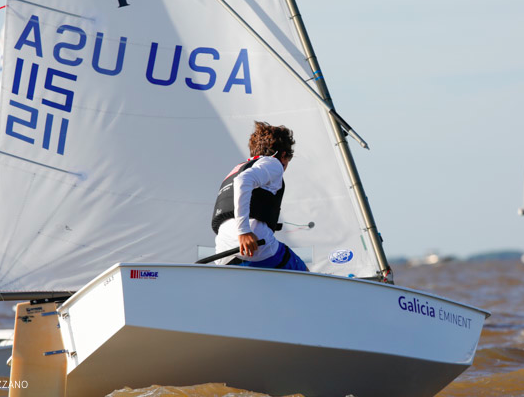
Sail1Design is elated to announce our very first winner of the S1D Optimist Sailor of the Year Award winner, Luke Arnone!
Optimist sailing, for so many, is where it all starts. In fact, there may be no healthier one-design class in North America than the US Optimist Class. Sail1Design is proud to salute this boat, the people involved in the class, but most importantly, the kids who get out there in sail in this great little boat. This is the Lone Wolf in training, the next great singlehanded sailor!
This award, announced each January, goes to the Optimist sailor, who in the evaluation of our judge panel (from nominated sailors), had the best overall sailing year, for the preceding calendar year. This is YOUR award! We require written submissions of nomination; in fact we only choose from nominated sailors, and do not suggest nor solicit specific nominations. If you’d like to nominate an Optimist sailor, please write a 200 word minimum letter, with regatta results, to [email protected].
The S1D panel was certainly impressed with Luke’s race record; however we were even more impressed with his sportsmanship, hard work, and the fact that he is well-liked and respected by his peers and competitors. This is a great recipe for long term success, in any endeavor, and we are very proud to have Luke win this award!! Read below from the nomination letter, to learn a bit more about Luke:
I was reading about your new awards to honor youth sailors in the United States, and I’d like to nominate Luke Arnone for the “Optimist Sailor of the Year Award.”
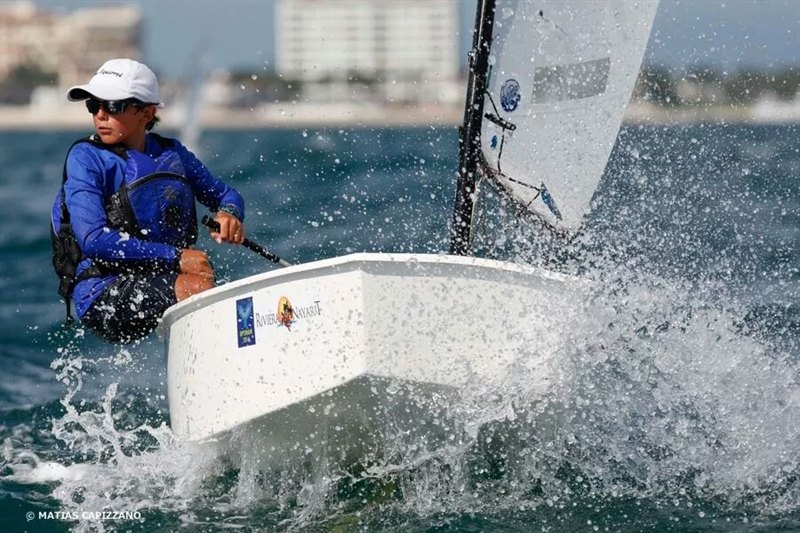
Luke Arnone is 14 years old and from Mantoloking, NJ. He sails for Mantoloking Yacht Club and CERT (Colie Elite Racing Team). He is a 9th grade student at Ranney and has just helped to start a sailing team at his high school.
Luke’s Opti results are second to none, and he has showed that he can be at the top of the fleet in any breeze, any condition, and on any day. Highlights this year include first place at the Optimist Team Trials (qualifying for the Optimist Worlds for the second time) and winning the Optimist Nationals. Most importantly, Luke is a hard worker, his peers and competitors respect him, and he is a good sport. His work ethic and his understanding of the game continue to impress me.
Here are his 2015 results:
TR Midwinters; New Orleans, LA: 1st Place
USNT Practice; Miami, FL: Top Gun Award
Florida State Opti Champs; Jenson Beach, FL; 1st Place
Lake Garda International Optimist Meeting; Lake Garda, Italy; 8th Place (900+ boats)
SE Dinghy Champs; Key Biscayne, FL; 3rd Place
US Team Trials: Miami, FL; 1st Place
Volvo Ocean Race Team Race Regatta; Newport, RI; 1st Place
North American Champs; Antigua; 12th Place
North American Team Racing Champs; Antigua; 1st Place
US National Champs; Pensacola, FL; 1st Place
US National Team Racing Champs; Pensacola, FL; 3rd Place
New Jersey Opti Champs; Surf City, NJ; 2nd Place
World Championship; Poland; 24th Place
These results are incredible, and I wholeheartedly believe that Luke is the best Optimist sailor in the United States and is deserving of this award.
Learn more about the S1D Optimist Sailor of the Year Award
S1D Youth Sailor of the Year Award Winner 2015: Caden Scheiblauer
Presented by KO SAILING
Sail1Design and KO Sailing are elated to announce the first winner of the Annual Sail1Design Youth Sailor of the Year “Lone Wolf” Award. Dedication. Perseverance. Independence. These are just some of the attributes of the go-it-alone sailor, the lone wolf who is able to train, plan, and compete by her or himself, and do it successfully. This award, presented by KO Sailing, goes to the North American youth sailor who best personifies the qualities necessary to be a successful athlete in the single-handed sailing world. Sail1Design picks ONLY from nominated sailors… this is YOUR award!!

Mark McNamara of KO Sailing noted: “KO Sailing congratulates the winner of this year’s award. Our mission is to support sailors in their efforts to rise to the next level. The S1D Youth Sailor of the Year Award is the perfect vehicle to recognize the efforts of these sailors as they achieve their goals. Our Sponsorship of the S1D awards is a small return for the investment these sailors make and we are proud to be a part of it.”
The Sail1Design staff was most impressed with this nomination letter, among all others, especially with Caden’s dedication and commitment to improve.
Here is the nomination letter for Caden:
I would like to nominate Caden Scheiblauer, from Santa Barbara, CA and representing Santa Barbara Yacht Club and the Santa Barbara Youth Sailing Foundation for the “Lone Wolf” Award: Sail1Design Youth Sailor of the Year.
Caden epitomizes the definition of the “Lone Wolf” Award; he is a Laser Radial sailor. Caden first sailed competitively in Optimists at the age of 10 years old. By the time he was 12 he was too big for the boat and transitioned into the Laser Radial when many of his contemporaries were still sailing Optimists. Many of his older sailor friends were sailing 29ers as they were not big enough to sail a Radial.
Caden took to the Laser Radial immediately and loved the feeling of a faster, more powerful boat. He has been sailing the Radial for 2 years.
Sail1Design uses the words dedication, perseverance, and independence to define the “Lone Wolf” recipient. At 135 pounds and 12 years old when he began sailing the Laser Radial, Caden knew that he needed to differentiate himself through fitness, diet and exercise to compete in breezy conditions with the older, bigger kids already sailing Lasers. He did not let the fact that many of the kids he had grown up sailing around were no longer in his fleet; he was a lone wolf.
Fast forward to 2015 and I believe that Caden’s enthusiasm and dedication are paramount to his current success in the Laser Radial. Caden is a lean 147 pounds and 5 feet 10 inches tall. He started an intense workout routine going to gym 4 times a week in late 2014 and has continued in since. He routinely gets up before school to work out or will go after he completes his homework and will not skip a workout. In addition he does not eat red meat, and adheres to a strict no sugar, high protein and complex carbohydrate diet. You won’t find a 14 year old as dedicated to the sport and his fitness as Caden.
In the summer of 2015 he competed in numerous high profile Laser events and some of his accomplishments are below;
13th Cressy Trophy – 18 competitors(only freshman in the competition)
2nd PCISA Cressy Eliminations – 31 competitors(only freshman to qualify)
4th – Laser District 25 Champs/Frost #1 – 40 competitors
22nd Laser North Americans -115 competitors
14th Laser US Nationals – 127 competitors
2nd Junior Olympics – 25 competitors
3rd Laser Pacific Coast Champs(PCC’s) – 34 competitors
4th ABYC Olympic Classes Regatta – 32 competitors
3rd ABYC Memorial Day Regatta – 16 competitors
5th Laser Gulf Coast Champs – 33 competitors
14th Laser Midwinter’s West – 51 competitors
30th Laser Midwinter’s East – 118 competitors
Most recently Caden has been invited to participate in the US Sailing Olympic Development Program Camps sailing with coaches Leandro Spina, Anna Tunnicliffe, Rulo Borojovich. Caden understands the importance of his fitness in the Laser Radial class and has increased his commitment to this aspect by signing on with Anna Tunnicliffe and works out 4 times per week with CrossFit style sailing workouts.
To culminate a fabulous 2015 Caden was invited to travel to the Australian Laser National Championships outside of Sydney, Australia on Dec. 26th at Belmont 16’s Sailing Club. He will be working with US Sailings Olympic coach Mark Littlejohn and relishes the opportunity to represent the USA at this event.
I do not think you will find a more dedicated 14 year old to his sport. Caden wishes to represent the USA in the Laser in the 2024 Olympics. You can follow him on his website he singlehandedly composed and launched at www.cadenscheiblauersailing.com. For all the dedication, perserverance and independence I have described in his diet, workouts, training and traveling to regattas, I believe Caden is a worthy recipient of the Lone Wolf award. In addition he maintains a 4.0+ grade point average at Santa Barbara High School.
Learn more about our Youth Sailor of the Year Award.