By Airwaves Writer Andrew Kerr

One of the hardest things for a team to do is to field the same team at every race or regatta – inevitably someone cannot make the event and the team has to adapt with new crew, it is the reality of life that just about every team has to adapt to.

As a coach I recognize this fully and have formulated team position charts for different types of boats so that the team has a blue print on how to plug someone new in as seamlessly as possible, the most challenging scenario very often is on bigger boats where there are more team members and very often more complexity than smaller boats teams experience.

The position chart that I use as an example is for a J/120 team sailing in PHRF and like all the charts, is very flexible in terms of how it is applied as regards to the experience level of the new crew and who they may be replacing.
CrewPositionchart
The chart has been very useful as a training tool in helping develop the foundational structure of the teams individual responsibilities around the race course, in some instances I have expanded it to include roles at the dock prior to and after racing, roles and a check list in between races – who packs the spinnaker, keeping the boat close to the starting line etc. as well as the team debrief with a team member taking notes or filming the session.
To start developing your own chart I recommend interviewing each team member on their role going around the race course, fine tune it then implement it in the next practice session or in the pre-race practice session . The chart is continuously developed and fine-tuned after each regatta and really does help provide a blue print for who does what when – especially if you notice three people up on the bow during a Spinnaker takedown doing one person’s job !

Blog
Club 420 Association Announces New Winter Series
North Kingston, RI (September 19, 2014) — The Club 420 Association today announced the new c420 Winter Series 2014 which will include the 2014 Orange Bowl Regatta, the 2015 Boomerang Regatta and the 2015 c420 Midwinters.
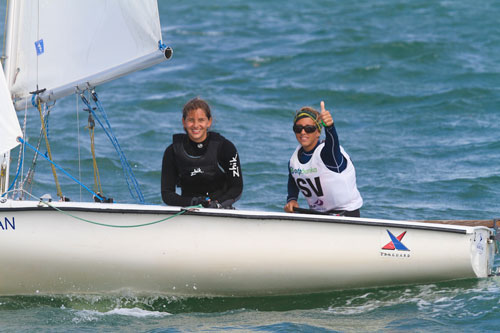
Building on the success of the summer c420 series, The Triple Crown, the c420 Class has designed the 2014-15 Winter Series to bring some of the popular winter events together into a point series at three great venues. The regattas counted towards the winter series will be the 2014 Orange Bowl (Dec. 26-30), the 2015 Boomerang Regatta (Late Jan.) and the 2015 c420 Midwinters (Feb. 14-16). The regatta series will move north up the east coast of Florida each event from Miami, to Ft. Lauderdale and finally to Jensen Beach.
The c420 class is not only about providing great regatta opportunities but also about providing great access for our sailors to coaches and quality information for every sailor in the class to improve. As a prelude to the new Winter Series, the c420 class is proud to present the Warm-Up Clinic, hosted by Biscayne Bay Yacht Club. This clinic will be a three day (Dec. 21-23) educational experience where sailors will be exposed to great college coaches like Justin Assad (Dartmouth College), John Mollicone (Brown University), Kevin Reali (Eckerd College). For more information on this great clinic go to www.club420.org
After getting some great coaching at the Warm Up Clinic sailors have three quality regattas to look forward to in three very different venues. “What stands out to me the most about this series is the opportunity to race against the best junior sailors in the country in three very distinct venues” commented class director John Vandemoer. “Club 420 sailors will have a chance to sail in beautiful Biscayne Bay, the home for many top level international regattas; in January the boats move north to Lauderdale to a fantastic ocean venue at Lauderdale Yacht Club with waves and great breeze. To top it all off we head to the home of winter c420 sailing in Jensen Beach at the US Sailing Center of Martin County which can provide a little of everything.”
The Winter Series rules and regatta details will be announced at www.club420.org. Registration has just opened up for the Orange Bowl regatta and there is a limit of 100 boats so register quickly to insure your place. Boomerang and Midwinters will open up their registrations soon.
Orange Bowl: http://www.coralreefyachtclub.org/Waterfront/orange-Bowl-Regatta/COMPETITORS.aspx
Boomerang: http://www.lyc.org/web/guest/regattas
C420 Midwinters: http://www.usscmc.org
About The Club 420 Class Association
The Club 420 Association was established in 1980 to promote, foster, encourage and sponsor one-design sailing. The Association sponsors a class North American Championship, US and Canadian National Championships as well as regional championships for the class across North America while promoting the class to all ability and experience levels of youth sailing. Since 2006, the class membership has more than doubled from 300 to its current 715 members. The class offers many regional, national and North American championships in both fleet and team racing formats as well as clinics across North America. Our Nationals / North Americans have had 175 boats attend, with all levels of sailors competing in some of the finest and socially fun regattas you will attend.
About The Club 420
The Club 420 is a two person dingy which forms the base of many local, high school and collegiate programs in North America. Simple for beginning sailors and yet challenging enough for collegiate champions. The Club 420 offers more learning opportunities than any other double-handed boat you can find. Over 5,000 Club 420s are sailed in youth, high school and collegiate programs all over the United States, Canada, Mexico and the Caribbean.
For more information please visit our website at www.club420.org or visit us on Facebook
Contact:
John Vandemoer, Executive Director
Email – [email protected]
44th Hobie 16 Open North American Championships and 2015 Pan Am Games Qualifier
Lewes Yacht Club, Lewes DE
Pre-event Press Release

Lewes, DE (September 17, 2014): 50 to 60 teams from all across North America will be descending on Lewes Delaware and the Lewes Yacht Club for the 44th Hobie 16 North American Championships. Racing is scheduled to begin Monday, September 22, 2014 on the classic Hobie 16 just off the beach in the Delaware Bay. Four to five races are expected to be held every day for 5 days with the champion being crowned on Friday. The event is also a Pan Am Games Country qualifier, with the top team from the top 3 countries (not including the host country, Canada) qualifying for the 2015 Pan Am games to be held in Toronto, Canada. The top finishing US team will qualify to represent the USA in the Pan Am games. Currently, teams from USA, Canada, Guatemala, Puerto Rico and Venezuela are registered. Many former North American Champions and other top sailors in the class will be in attendance so the racing will be exciting.
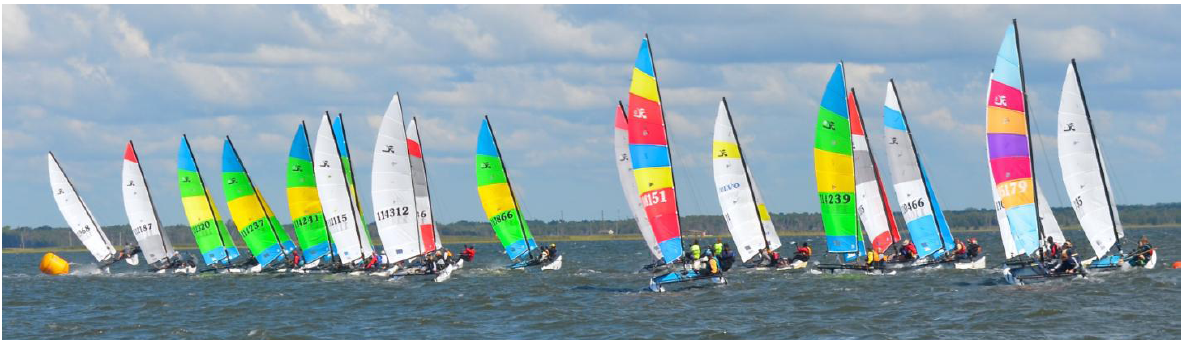
In addition to the competitive racing scheduled, the event is highlighted by a presentation by Gary Jobson. Also, the Hobie Class Association in partnership with the Hobie Cat Co. will create a promotional video featuring Hobie 16 sailing to be filmed during the 2014 Hobie 16 North American Championships. Gary Jobson Sailing, Inc will create and produce the video.
About Hobie Class Association of North America: The Hobie Class of North America, as a regional association of the International Hobie Class Association (IHCA) carries on the “Hobie Way of Life” tradition that Hobie Alter started over 50 years ago. We organize regattas (including women’s and youth events), publish the quarterly HOTLINE magazine, organize Guest Expert Programs, provide grants to deserving youth sailors and a host of other services. For more information visit: http://www.hcana.hobieclass.com/
Lewes Yacht Club: http://www.lewesyc.com/ Pan Am games: http://panamsailing.org/
Event Media contact: Greg Raybon 732-939-5414, [email protected]
Hobie 16 North Americans Website
Event Chairs: Rich McVeigh – 301-526-6046, [email protected]
Mark Santorelli – 908-783-1915, [email protected]
2014 J/70 World Championship Final Results
| ne Design Division | ||||||||||||||||||||||||||||
| GOLD Fleet | ||||||||||||||||||||||||||||
| 1. |  |
USA 2 | Helly Hansen | Tim Healy | 2 | 2 | 2 | 1 | 3 | 2 | 1 | 1 | 13 | 4 | 8 | 2 | [13] | 28.0 | ||||||||||
| 2. | |
USA 187 | Catapult | Joel Ronning | 1 | 1 | 1 | 4 | 8 | 1 | 2 | 14 | 10 | 1 | 4 | 6 | [14] | 39.0 | ||||||||||
| 3. | |
USA 96 | Savasana | Brian Keane | 1 | 3 | 3 | 2 | 11 | 16 | 9 | 11 | 1 | 3 | 25 | 1 | [25] | 61.0 | ||||||||||
| 4. | |
USA 246 | New Wave | Martin Kullman | 6 | 24 | 6 | 3 | 2 | 3 | 7 | 28 | 4 | 13 | 1 | 14 | [28] | 83.0 | ||||||||||
| 5. | |
USA 95 | MUSE | Heather/Joe Gregg Earl/Bardenheier | 23 | 13 | 9 | 11 | 13 | 5 | 4 | 3 | 2 | 7 | 11 | 5 | [23] | 83.0 | ||||||||||
| 6. | |
USA 86 | Stampede//Pour Judgement Racing | Patrick Wilson | 7 | 12 | 13 | 5 | 14 | 15 | 3 | 6 | 19 | 11 | 6 | 4 | [19] | 96.0 | ||||||||||
| 7. | |
USA 55 | Joust | Tim Molony | 16 | 2 | 6 | 2 | 37 | 7 | 6 | 20 | 11 | 12 | 20 | 3 | [37] | 105.0 | ||||||||||
| 8. |  |
BRA 403 | Bruschetta | Mauricio Santa Cruz | 5 | 6 | 4 | 3 | 1 | 25 | 31 | 24 | 17 | 19 | 15 | 10 | [31] | 129.0 | ||||||||||
| 9. | |
USA 179 | Africa | Jud Smith | 14 | 10 | 14 | 20 | 1 | 10 | 19 | 4 | 3 | 22 | 14 | 35 | [35] | 131.0 | ||||||||||
| 10. |  |
NED 69 | Bliksem | Pieter Taselaar | 8 | 14 | 33 | 15 | 2 | 9 | 18 | 2 | 26 | 15 | 16 | 7 | [33] | 132.0 | ||||||||||
| 11. | |
USA 353 | Heartbreaker | Robert Hughes | 7 | 20 | 5 | 14 | 3 | 4 | 16 | 18 | 9 | 10 | 36 | 33 | [36] | 139.0 | ||||||||||
| 12. | |
USA 45 | Wild Child | Henry Filter | 17/SCP | 1 | 7/SCP | 6 | 4 | 19 | 27 | 9 | 14 | 24 | 39 | 18 | [39] | 146.0 | ||||||||||
| 13. | |
USA 85 | Dazzler | Allan Terhune, Jr | 28 | 35 | 2 | 12 | 7 | 6 | 11 | 10 | 29 | 20 | 10 | 11 | [35] | 146.0 | ||||||||||
| 14. | |
USA 209 | Trouble | Peter McChesney | 5 | 29 | 18 | 9 | 4 | 33 | 22 | 16 | 8 | 14 | 9 | 17 | [33] | 151.0 | ||||||||||
| 15. | |
USA 217 | Joint Custody | Jenn & Ray Wulff | 6 | 5 | 12 | 10 | 17 | 12 | 36 | 33 | 5 | 9 | 28 | 20 | [36] | 157.0 | ||||||||||
| 16. |  |
GBR 123 | Team RAFBF Spitfire | Simon Ling | 2 | 10 | 11 | 7 | 7 | 20 | 28 | 39 | 6 | 16 | 35 | 25 | [39] | 167.0 | ||||||||||
| 17. | |
USA 482 | X | Dan Cheresh | 4 | 17 | 27 | 6 | 28 | 35 | 17 | 35 | 20 | 6 | 2 | 8 | [35] | 170.0 | ||||||||||
| 18. | |
USA 69 | USA 69 | Joseph Colling / Lee Sackett | 3 | 21 | 4 | 20 | 12 | 8 | 32 | 13 | 34 | 17 | 23 | 19 | [34] | 172.0 | ||||||||||
| 19. | |
USA 326 | Aquaholiks | Martin Johnsson | 28 | 12 | 11 | 13 | 9 | 17 | 10 | 5 | 21 | 21 | 41 | 26 | [41] | 173.0 | ||||||||||
| 20. | |
USA 94 | Lifted | Jim Cunningham | 10 | 4 | 1 | 11 | 15 | 22 | 33/SCP | 12 | 43 | 23 | 37 | 22/ZFP | [43] | 190.0 | ||||||||||
| 21. | |
USA 49 | Relative Obscurity | Peter Duncan | 25 | 8 | 17 | 8 | 11 | 38 | 33 | 7 | 37 | 8 | 29 | 9 | [38] | 192.0 | ||||||||||
| 22. | |
USA 48 | Rascal | Will Welles | 3 | 14 | 19 | 33 | 40 | 24 | 5 | 8 | 31 | 29 | 13 | 16 | [40] | 195.0 | ||||||||||
| 23. | |
USA 34 | Perseverance | Bennet Greenwald | 24 | 9 | 13 | 22 | 38 | 14 | 14 | 15 | 24 | 2 | 43 | 23 | [43] | 198.0 | ||||||||||
| 24. | |
USA 390 | 20/20 | John Arendshorst | 12 | 7 | 5 | 1 | 30 | 43 | 15 | 36 | 25 | 36 | 12 | 28 | [43] | 207.0 | ||||||||||
| 25. | |
GBR 557 | Boats.com | Ian Atkins | 4 | 23 | 3 | 5 | 24 | 32 | 40 | 23 | 16 | 25 | 31 | 22 | [40] | 208.0 | ||||||||||
| 26. | |
USA 51 | Black River Racing | Doug Strebel | 9 | 42/ZFP | 26 | 15 | 6 | 23 | 12 | 44/OCS | 18 | 5 | 24 | 31 | [44] | 211.0 | ||||||||||
| 27. | |
USA 171 | Running Wild | Peter Vessella | 13 | 3 | 23 | 24 | 20 | 13 | 13 | 30 | 12 | 31 | 42 | 39 | [42] | 221.0 | ||||||||||
| 28. |  |
CHI 680 | Flecha | Felipe Robles | 26 | 8 | 14 | 25 | 10 | 26 | 34 | 17 | 36 | 32 | 3 | 27 | [36] | 222.0 | ||||||||||
| 29. | |
USA 157 | Spring | Dave Franzel | 15 | 7 | 12 | 12 | 9 | 29 | 42 | 34 | 30 | 30 | 32 | 12 | [42] | 222.0 | ||||||||||
| 30. | |
USA 375 | Lickity Split | Stanley Edwards | 8 | 18 | 27 | 10 | 26 | 21 | 26 | 29 | 38 | 27 | 5 | 29 | [38] | 226.0 | ||||||||||
| 31. |  |
MEX 690 | Vincitore | Erik Brockmann | 18 | 16 | 7 | 17 | 6 | 36 | 21 | 38 | 15 | 35 | 40 | 24 | [40] | 233.0 | ||||||||||
| 32. | |
USA 340 | Rimette | John Brim | 22 | 15 | 8 | 25 | 22 | 27 | 8 | 41 | 22 | 18 | 33 | 38 | [41] | 238.0 | ||||||||||
| 33. | |
USA 40 | B Squared | Bryan Cameron & Brian Elliott | 12 | 5 | 20 | 24 | 22 | 28 | 25 | 26 | 23 | 40 | 17 | 40 | [40] | 242.0 | ||||||||||
| 34. | |
USA 397 | Hot Mess | Rob Britts | 13 | 11 | 24 | 13 | 15 | 34 | 30 | 19 | 42 | 38 | 7 | 41 | [42] | 245.0 | ||||||||||
| 35. | |
USA 167 | Kraken | Gary Tisdale / Adam Burns | 20 | 31 | 9 | 22 | 5 | 30 | 39 | 22 | 28 | 26 | 22 | 34 | [39] | 249.0 | ||||||||||
| 36. | |
USA 11 | Menace | Kerry Klingler | 11 | 44/ZFP | 36 | 14 | 10 | 11 | 20 | 37 | 35 | 34 | 26 | 15 | [44] | 249.0 | ||||||||||
| 37. |  |
SWE 601 | Rocad Racing | Mikael Lindqvist | 26 | 4 | 7 | 4 | 28 | 39 | 29 | 32 | 40 | 28 | 27 | 30 | [40] | 254.0 | ||||||||||
| 38. | |
USA 26 | Jungleland | Chris and Carolyn Groobey | 17 | 11 | 10 | 17 | 12 | 18 | 38 | 27 | 33 | 42 | 34 | 44/SCP | [44] | 259.0 | ||||||||||
| 39. | |
USA 159 | Torqeedo | Chris Carroll | 16 | 24 | 16 | 16 | 16 | 37 | 43 | 21 | 7 | 39 | 38 | 36 | [43] | 266.0 | ||||||||||
| 40. | |
USA 389 | Hooligan: Flat Stanley Racing | Trey Sheehan | 11 | 34 | 8 | 9 | 36 | 41 | 23 | 31 | 39 | 33 | 21 | 37 | [41] | 282.0 | ||||||||||
| 41. | |
CHI 687 | Windmade | Juan Reid | 17 | 6 | 16 | 30 | 30 | 31 | 37 | 25 | 41 | 41 | 18 | 32 | [41] | 283.0 | ||||||||||
| 42. | |
MEX 526 | Lampuga | Roberto Escalante | 14 | 35/ZFP | 10 | 29 | 18 | 42 | 41 | 42 | 27 | 43 | 19 | 21 | [43] | 298.0 | ||||||||||
Snipe 2014 Western Hemispheres Regatta Report & Results

Rios steals championship with a single point
By Airwaves writer Katelyn Montero
When sailors talk about a close competition, it’s hard to imagine one that came closer than the Snipe Western Hemisphere and Orient Championship. Forty-three teams from 12 different countries competed in the biennial event hosted by the San Diego Yacht Club, and in the end it all came down to a single point.
Puerto Rican skipper Raul Rios and his crew Fernando Monllor were one of three teams going into the final day of the regatta with a shot at first. By the end of the day, they won the championship by a single point.

The California regatta featured two different courses: one inside of South Bay San Diego and the other out on the Pacific Ocean. Each location was meant to showcase a different skill set for Snipe sailors, and the two courses proved essential in differentiating the top pack of the fleet from the rest of the scoreboard.
The majority of competitors came into the regatta with more experience in bay sailing, and the relatively flat waters on both bay days made speed a top priority. With more chop and slightly bigger breezes, the ocean course required smart, tactical handling in order for boats to get the top scores.
In order to do well in this regatta, competitors needed to demonstrate mastery on both courses, as well as extremely consistent scores across the board. Champions Raul Rios and Fernando Monllor, the sole entrants from Puerto Rico, knew that coming away with first place wouldn’t be easy.
“We knew it was going to be a tough day, but we just had to focus on one boat at a time, one leg at a time,” said Rios. The skipper knew the boat to watch would be the Argentina team of Luis Soubie and his crew Diego Mini Lipszyc. After a poor performance on day four, Rios lost his top spot and fell down to third place. Soubie and Lipszyc held the lead going into day five, but couldn’t hold on to No. 1 during the last two races of the regatta.

“Today was a disaster,” Soubie said of Race 9 and Race 10. “We ended the day feeling like we didn’t do much racing at all today. We were constantly in an emergency or getting away from trouble.” Both races ended up being throw out scores, but Soubie’s consistent campaign in the first four race days left them well poised for a podium finished.
No surprise to the podium’s third place spot was the Brazilian team of Breno Bianchi and Flavio de Castro. While the top two teams each had their own bad day, the Brazilians sailed evenly across the five-day regatta, with their throw-out scores just barely making double digits.
This regatta also functioned as a qualifier for Toronto’s Pan American games in 2015. Many coaches made the far trek across international waters to insure that their country could qualify in time to compete in PanAms to be held in Canada. Puerto Rico, USA, Cuba, Ecuador and Colombia have all qualified during this regatta, while the Bahamas and Mexico remain unqualified.

At the end of the day, Soubie decided that if he was going to lose to anyone, he was happy it was Raul Rios. “He’s the future of the Snipe Class,” Soubie said. “He’s only 20 years old. He’s going to make this class proud.”
Snipe (43 boats) (top)
|
||||
2014 Viper 640 North American Championship Final Results
Brad Boston (Sarnia, Ont.), sailing with Curtis Florence (Cleveland, OH) and Chad Corning (New Rochelle, NY) sat in third place after 11 races over three days of sailing from Alamitos Bay Yacht Club. That trio executed a classic come-from-behind finish on the fourth and final day to claim the 2014 Viper 640 North American Championship. Boston presided over a sailmakers’ boat handling seminar Friday night and was overheard commenting how it was unusual for him to be only four points off the lead without having won any of the 11 races sailed over the first three days. That quickly changed as the fleet of 35 Viper 640s headed out through the breakwater for the final day of racing.
ABYC PRO Steve Kuritz wrapped-up his successful regatta with the following overview: “In the end, it was four great days of racing, and it was really interesting to see how the positions of the top six boats changed from race to race. In the end, Brad Boston “thanked” me for calling him OCS on the day’s first start as it allowed him to quickly restart at the favored boat end and take off to the right side and win his first race.”
Boston’s middle crew, Chad Corning, commented that “It was good going into today with only four points separating the top three boats. We were able to play the favored right side all day and it paid off (line scores 1-1-3). In the end, Brad showed how he can be cool under pressure, keeping the mood on the boat light, and we made our moves to put us into the lead after today’s first race. From there, as the wind continued to build, we just tried to sail in the same neighborhood as Kevin Taugher and Jeff Grange.”
After the third day, Taugher and Boston were tied at 30 points just four points behind Grange who had lead in the scoring from the very first race. In the end, however, it was Taugher who finished second and Grange in third.
This year’s win is Boston’s fourth North American Championship (’09, ’10, ’11) and Corning was the middle crew for Jason Carroll’s NA victory last year in Houston.
The members and staff of the Alamitos Bay Yacht Club put on a spectacular four days of racing and shore-side hospitality. Tim Carter, ABYC Event Chairman, said “I’m glad it’s over…from an event task perspective; but I’m sorry to see all these great competitors leaving ABYC for their home ports across the country and across oceans, too.” All the competitors expressed their gratitude and appreciation for “Timbo’s” as, without all his efforts, the Championship would not have been such a glowing success.
Results of the Championship can be found at: http://www.abyc.org/upload/2014_Viper_NA3.htm. Photos from Bronny Daniels and Peter Howson are available to view at www.joysailing.com and www.yachtracing.us, respectively.
Next year’s Viper 640 North American Championship will be hosted by Larchmont (NY) Yacht Club in October 2015. Final results can be found on the ABYC website.
The Viper 640 North American Championship is a qualifier regatta for the EFG Viper Pan-American Championship. Also helping make this regatta a success are Ullman Sails, Doyle Sailmakers, North Sails, Quantum Sails, Goslings Rum, the Belmont Brewing Company, Rondar Sailboats USA, Sailing Pro Shop, and Rooster.
Final Results: http://www.abyc.org/upload/2014_Viper_NA7.htm