When your home is near the water, J/105 may be your ideal sailboat. Count up the number of nights spent sleeping aboard and compare that to the number of picnic sails when you would have liked a larger, more comfortable cockpit. J/105 is the answer. Her large cockpit combined with simple 4-5 berth week-ending layout results in two significant owner benefits: (1) A savings of $50,000 in little-used furniture, systems and cabinetry needed for extended cruising, and (2) A boat that’s easier to handle, more comfortable in waves and more fun to sail for its size. J/105 has the stability, rig and sail controls to handle 15-20 knot winds without the need of reefing. It has the strength and seaworthiness for ocean going passages.
Sailing World Magazine’s panel of experts selected J/105 as Boat-of-the-Year among racer-cruisers in 1992. Since then over 630 have been launched worldwide, fulfilling a variety of needs. Enthusiasm for this great boat continues to blossom with an active owner’s association and owner maintained web site to help you get the most from your boat. J/105 is the most successful modern one-design keelboat class over 30′ in the World. There are one-design starts in virtually every major sailing center across the US and several class starts across Europe. Single handed sailors have raced and cruised to Bermuda; an older couple is enjoys cruising in Maine and winning the Monhegan Race after giving up their Alden 54; and America’s Cup helmsman race for prize money around the country in a professional match racing circuit.
 loa 34.5’
beam 11’
sail area 577 ft² w/100% jib
spinnaker area
hull weight 7,750 lbs.
crew 1,045 lbs
# of boats built 665
active US fleets CA, MA, NY, LA, FL, OK, TX, ME, MD, NJ, CT, RI
Class website:
http://www.j105.org/
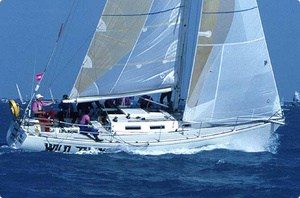 It is probably safe to say that no racer-cruiser in the annals of fiberglass sailboat production elevated the self-esteem of sailors as dramatically as the J/35. When it was introduced in the spring of 1983, it was the closest thing ever seen to instant gratification in an offshore handicap racer and one-design. If it is an exaggeration to say that new owners stepped aboard, raised the sails and began winning races, it is a small one.
 The boat’s greatest impact, however, has been in handicap racing. How ironic that this boat designed with a conscientious disregard for any handicap rule is one of the most successful handicap racing boats ever. It has taken honors in major offshore races around the world, including even the singlehanded transatlantic race. It is the most popular racer-cruiser rated by the IMS. In spite of a challenging PHRF rating more common to 40-footers, the J/35 remains a perennial winner in club racing.
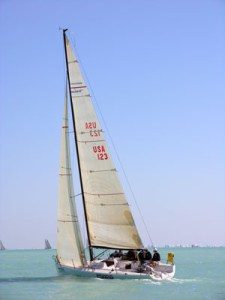 The Melges 32™ is a superior racer with a big, high performance attitude. It is the culmination of the finest in progressive sailboat engineering and design by Reichel/Pugh, the craft and professional talent of Paul Amon at SOCA Sailboats in Trinidad and Melges Performance Sailboats’ incomparable experience and acumen. The Melges 32 takes one design racing to the next level.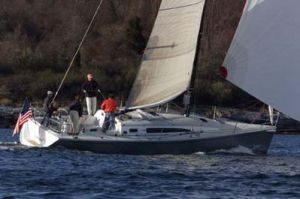
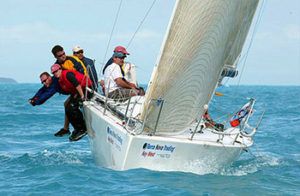 “Our goal in developing the Farr 30 (formerly the Mumm 30) was to create a state-of-the-art offshore one-design that would be fast and exciting, yet uncomplicated and economical. We set about the design of the Farr 30 with a ‘clean sheet of paper’ in that there are no rating rule driven compromises in performance.
 Don’t you think it’s time to join nearly 1000 other owners worldwide who are discovering how well the J/80 fits their plans for sailing fun? J/80 is the only sportboat that combines simplicity of operation, confidence building stability and 15 knot spinnaker rides in an affordable, low maintenance and trailerable package. It even has 4 berths and a 12 foot long cockpit. You can try one out or refine your skills with expert instructions, prior to delivery of your own boat, at a J World Sailing School in Annapolis or San Diego.