Youth Sailing Virginia at Fort Monroe
 By Airwaves writer Rachel Bennung
In the fall of 2013 a youth sailing facility at Fort Monroe was just a dream. But less then a year later that dream started to become a reality. Now flash forward to the present Youth Sailing Virginia is a fully functioning organization, and recently just held the 2016 MASSA Fall Fleet Gold Championships for high school sailing. Youth Sailing Virginia (YSV), Inc. is a 501(c) 3 non-profit organization, whose mission is to develop a vibrant Youth Sailing Program that serves the greater Hampton Roads area and involves a broad spectrum of the community in both support and participation.
Board Member Gary Bodie was the one who presented the idea for a new youth sailing facility at Fort Monroe to a group of coaches, parents, and members of the sailing community back in 2013. The hope was to create a practice and regatta venue for the area’s high school sailing teams. After his initial presentation the buzz of this sailing center grew and started to become a reality. Kevin Eley, a board member, was recruited to head the organization which became known as Youth Sailing Virginia, Inc. A practice site was created at the historic Fort Monroe in Mill Creek with the support of Glen Oder, Executive Director of the Fort Monroe Authority.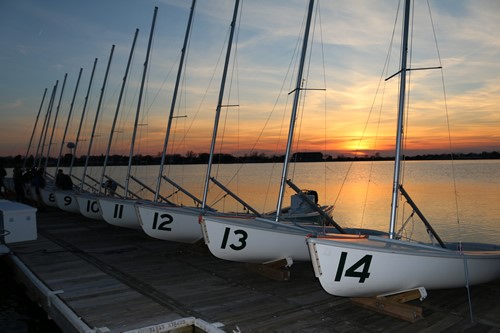
With repaired floating docks and only seven old FJ’s at the time, Allen Kilogore coach of the Kecoughtan and Phoebus High School teams began practicing in March 2014. Then in May 2014 YSV was able to purchase 18 FJ’s from Dartmouth College giving them the ability to host regattas. In August 2014, a larger floating dock was donated, and volunteers held to rebuild to accommodate YSV’s new fleet of FJ’s. With this new fleet it gave YSV the ability to not only host regattas, but give more schools a practice site, including; Hampton High School, Kecoughtan High School, Phoebus High School, and Hampton Roads Academy. In October 2014 YSV held their first scrimmage regatta for 14 teams in the Virginia Interscholastic Sailing Association.
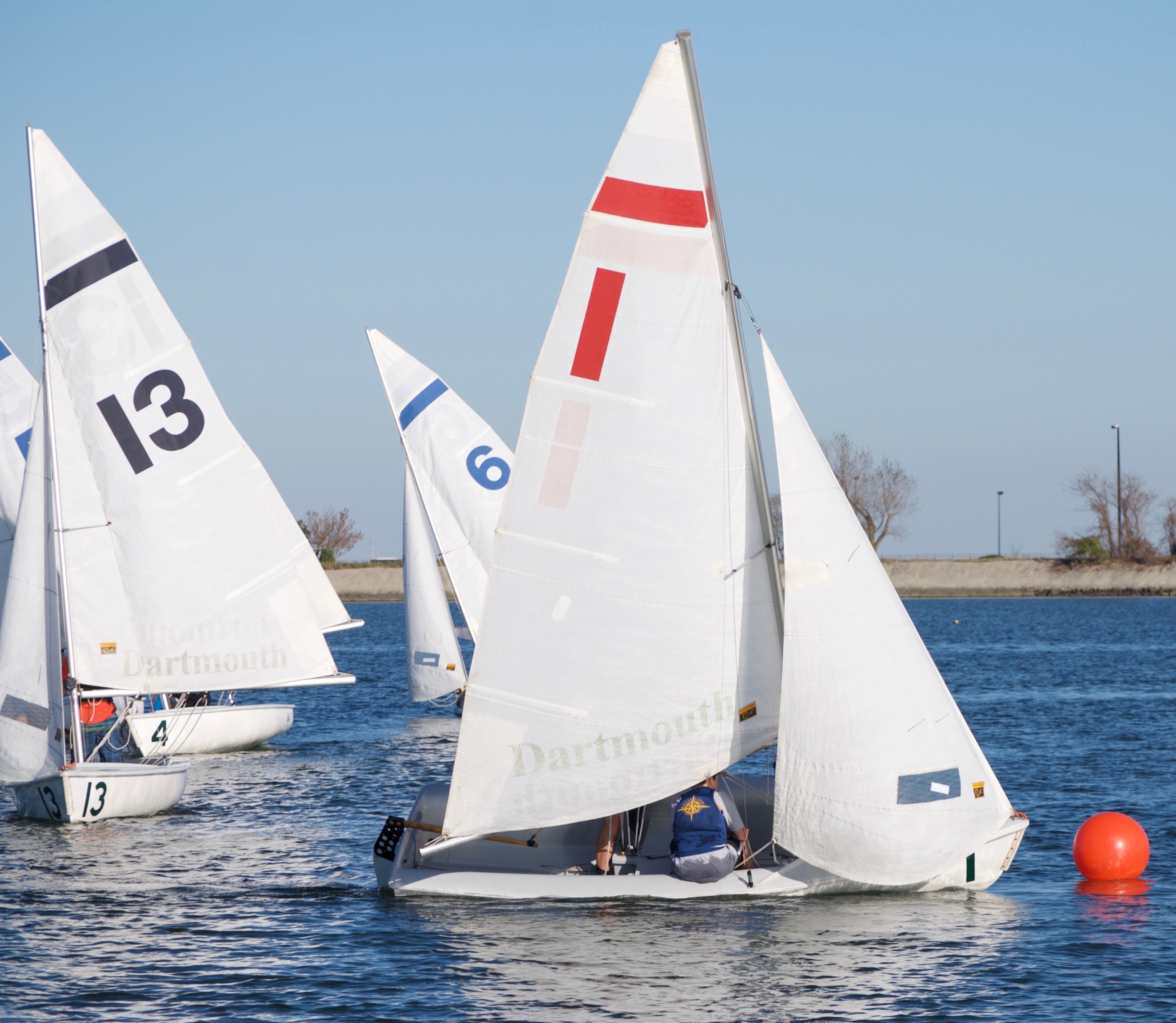 Currently, YSV is a practice site for the four schools mentioned above, this includes middle school JV sailors. YSV has also hosted training camps for college teams. The sailing center is operational from March to November. They typically hold 3-4 regattas in the spring and fall seasons. Most recently, YSV hosted the MASSA Gold Fall Fleet Racing Championship.
On the weekend of October 17-18th, 2016, eighteen teams throughout the MASSA district competed at YSV for the MASSA Gold Championship. On Saturday the sailors were greeted with light and shifty winds, ranging from 4-10 mph. They were able to complete 8 races in each division. On Sunday, the winds were light again ranging from 0-8 mph. With some postponements throughout the day they were able to get two races in each division for a total of 10 races for the regatta. Ranney School from New Jersey placed first, followed by Severn School in second, and Christchurch School in third. Ranney School, Severn School, Christchurch School, Christian Brothers Academy, Norfolk Collegiate School, and Broadneck School qualified to compete at the ISSA Atlantic Coast Championship in Rochester New York on November 11-12th.
All the teams that attended the MASSA Gold Championship had an enjoyable time at Youth Sailing Virginia at Fort Monroe. Teams were very impressed with the race site, race committee, and volunteers. RJ Bouchard the Varsity Sailing Coach of Nichols Sailing team said, “Mill Creek is the perfect venue for high school sailing. The body of water is entirely enclosed by land with few tall structures, allowing for flat water and steady breeze. The venue is right next to the Chesapeake Bay, not far from the ocean, allowing for an early sea breeze to develop. There seem to be no pleasure craft on Mill Creek, minimizing the boat wake that might disrupt the racing. As a long-time college and high school coach I could not have been more impressed by how perfect this body of water is for dinghy racing.” Clay Johnson the coach of the Ranney High School team said, “What made the whole weekend even more enjoyable was the level of enthusiasm and efficiency coming from the spectacular volunteer force. All on-shore logistics were organized and thought out. Gary Bodie and Kevin Eley ran an efficient, well-run event that left all teams happy they made the trek to Virginia for the weekend.”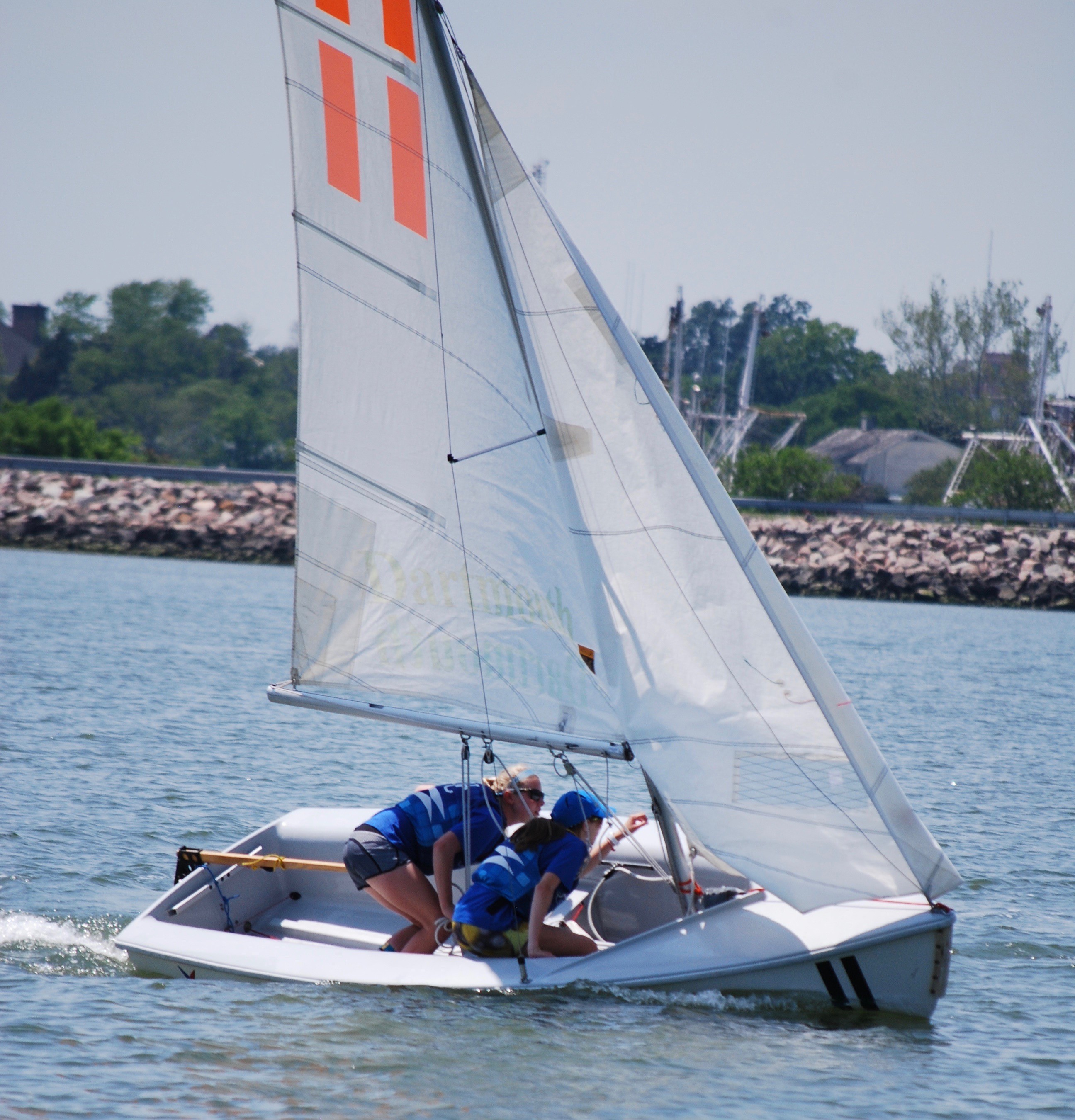
YSV has a great community that is in full support of the sailing center. Coming in the summer of 2017 YSV plans to run learn to sail summer camps in partnership with the YMCA and Hampton City Parks and Recreation. They also plan on introducing the US Sailing REACH program. This sailing center not only is providing a great venue for high school sailing, but giving back to the community in Hampton, Virginia. Learn more and how you can help support Youth Sailing Virginia at http://youthsailingva.org.
Blog
Not a Lot of Time: Get The Most Out of Your Workout
By Airwaves writer Rachel Bennung
The biggest excuse for people not working out is lack of time. However, if you want to maximize your sailing performance you need to make the time! Some days we are just running short, but we still want to get that workout in. So how do you maximize your workout when you only have 20-30 minutes to spare?
Time can be tight some days, but if we want to better our sailing performance we still need to get our workout in. Here are four tips to help you get the most out of your short workout.
- High Intensity Interval Training
High Intensity Interval Training is a great type of cardio for sailing. Not only that, but its very effective if you only have a short amount of time to workout. You can make these workouts 10-30 minutes long, making this type of workout perfect when you are short on time. In this type of workout you give 100% effort for the exercises, then follow that with a short sometimes active recovery period. This type of workout is great for making your short time effective to help improve your sailing performance.
- Have a Plan
You always want to go into a workout knowing what you are doing. However, its even more important to have a plan when you only have a small amount of time to workout. Make sure you look at your week in advance and plan out your workouts. Writing down your workout before hand will save you time, and you will be able to get the most out of the workout. Being prepared is the most important step to your success in anything!
- Bodyweight exercises or only using one implement
When you only have a small amount of time to workout you don’t want to make it complicated. So the best form of this would be just to do bodyweight exercises or just use one implement in your workout such as a kettlebell. When you are jumping around from a kettlebell to dumbbells to a medicine ball it makes your workout longer losing the time you have actually working out. Make it simple when you have little time and make that workout effective to better your sailing performance.
- Limit rest periods
Remember you only have 20-30 minutes to get that workout in, so to make this effective you want to limit your rest periods. Get the most out of your workout and push yourself. This is going to help maximize your performance on the water. Instead of 1 minute or more of rest, stick to 30 seconds or less. This will ensure you will get the most out of the short time you have to get that workout in.
Now check out below a 30 minute workout to improve your sailing performance when you are short on time. Then check out the moves in the video below.
30 minute Strength Endurance Workout
–Warm up with Dynamic Stretching (5 minutes)
Core Activation:
- Plank Jacks (30 secs)
- Reverse Lunge w/ Forward Kick (30 secs each side)
- Side Plank with Leg Lift (30 secs each side)
- Squat Jumps (30 secs)
Repeat 2 times (6 minutes)
Workout:
- V-Ups (60 seconds)
- Push Ups (30 seconds)
- Squat w/ Standing Crunch (60 seconds)
- Ski Abs (30 seconds)
- Forward Kick with Side Lunge (30 seconds each side)
- High Knees (30 seconds)
- Full Sit Up (60 seconds)
- Burpees (30 seconds)
Repeat 2 times with 30 secs rest between sets (12 minutes)
-Cool Down with Foam Rolling and Static Stretching (5-7 minutes)
Fitting a workout into your schedule can be hard some days. However, you need to make the time, even if its only 20-30 minutes that day. Even a short workout can make a huge difference in your sailing performance. By following the tips of using high intensity interval training, having a plan, using only bodyweight exercises or just one implement, and limiting your rest periods your limited time will be effective in improving your sailing performance. Use the workout above to get started on the next day you are running short on time. Also don’t forget to check out the video below for all the moves in the workout!
For more information on fitness for sailing contact [email protected]. Also check out Sailorcise on Facebook, Twitter, and Instagram for daily tips on fitness, nutrition, and sailing.
How To: Running a Successful Regatta
 By Airwaves Writer Taylor Penwell
The steps to running a successful regatta
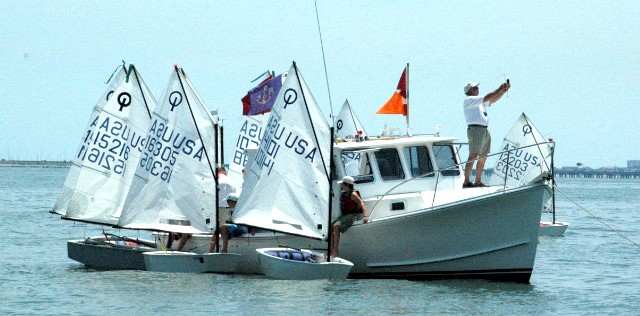
A stressful, make or break day for your yacht clubs image. The annual regatta.. A day/weekend when the club discovers if they’re competent, or simply can patch it for long enough to convince visiting participants it is, or sadly more disorganized than a crowd of Pokemon-Go players sprinting to a rare spawning.
People who play a role in the regatta,
- Directors, Head Instructors
- Coaches
- Board Members/Junior Sail Committee Members
- Club Managers
- Volunteers
- Race Officers
All of these people are vitally important for the success of any regatta. Often there are many more people and factors that come into play for larger, regional, national and international events. However this article is targeted for small and medium sized clubs.
THINGS TO DO:
 Pick a good date
It is imperative that you pick a date that will work well for your club and the clubs around you. The worst thing a club can do is a pick a date when a not-so-far away club is also running a regatta. If two regattas are on the same day and less than 100 miles apart, the number of participants will drop because many will be split between the two venues. Most clubs have had specific dates for annual regattas for years, and knowingly stepping on their designated slot will bring smaller numbers to both events, friction between the other club who is now your rival for hoping more sailors show up to your event as opposed to theirs. And lastly and probably most importantly for small clubs that have to worry about their keeping their program budget in the black, conflicting dates also mean less regatta income from less registrations. At larger annual events which have a number of different classes and over a hundred competitors, this could mean suffering loss of business to the clubs bar and restaurant and also local community. A sizeable regatta bring people to towns to stay in hotels and eat in restaurants that are not affiliated with the yacht club but certainly enjoy the extra boost in customers.
So please, when picking a date, think long and hard to determine if changing your event to the same day as another nearby clubs is worth the risks.
Marketing the event
Marketing your regatta should be done through sailing registration websites, your clubs website, and Facebook pages. A good idea is to have club directors contact other clubs in your area to inform them of your event. It’s a shame when sailors don’t register for a regatta because they see no entries or small numbers. Often times the interest is there for many sailors and clubs, but people don’t want to commit unless they see that the fleet sizes make attending the event worthwhile. Having your club talk to other clubs to see if they are attending is a sign of good faith and also helps your club better prepare for the regatta.
Make a working plan
Event organizers need the cooperation of so many different people for a regatta. The most important part is making a working plan for everyone to understand what their roles will be and for them to follow them. Volunteers and  coaches need to fully know what is expected of them and how the flow of the event will go. Have a meeting and have a printed plan prior to the day of the regatta with instructions and people’s duties. This working plan can cover things such as parking instructions, unloading procedures, boat launching, registration, food and entertainment and scoring.
Have working equipment
Nothing is worse then running around like a headless chicken in the hours before the first race starts looking for marks, lines, flags, horns, and a million other things. Take time to ensure all the boats are fully operational and fueled, all the necessary flags are ready, horns and radios are working, and the marks are working with sufficient length lines. This preparation can save a lot of headache on the day of the regatta.
Have competent race committee
We have all been to events where you are constantly shaking your head at the PRO and race officials. Putting together a competent race committee takes time and energy. The best thing to do is ensure the PROs are capable of doing the job. If your club doesn’t have anyone who will agree to do the job, there is no shame in bringing in outside experienced officials. Competitors are spending time and money and are entitled to a level of professionalism from the race committee staff.
Scoring should be one of the most important aspects of the race committee. Allocate enough people and resources to the scorers so the scoring is accurate and can be posted quickly after racing is concluded.
Have attractions
Regattas are for people to compete against one another and to test their skills but they are also a major social event. Longtime friends get to see each other and catch up along with new friendships being made. A well-run regatta has great racing on the water with good attractions off the water. These attractions should be things like BBQs, bands, cocktail parties, and fun activities for children and junior sailors so everyone in the family can enjoy the regatta.
Regattas are an important pulse checker to see how a clubs sailing is doing. Sailing has seen an increase in attention in recent years with high performance boats on television and in the media. But these kinds of regattas make up a small percent of the sailing community. An to an average sailor who gets to sail for five months out of the year, their clubs annual regatta is their own America’s Cup. They deserve to have well run regattas, and ensuring this takes preparation and an understanding of how things need to be done correctly. These are just a few of the ways a yacht club can do to better prepare for a regatta so everyone can enjoy the occasion.
Club Profile: Grosse Point Yacht Club
 As the GPYC celebrates its 100th year of existence, there has been even more emphasis in providing exceptional service and state-of-the-art amenities for our members and their guests in order to meet their needs and changing lifestyles.
NewsFlash: GPYC is hiring a full-time Junior Sailing Director!
You can consider the Club to be your “home away from home,” which offers something for everyone. The clubhouse grounds include a state-of-the-art swimming pool, tennis, paddle tennis, and a bowling facility. Our 268-well secured harbor, business seminar services, affiliate fitness and golf club partnerships and exceptional dining cuisine along with magnificent views of Lake St. Clair, are just some of the amenities GPYC has to offer.
 There are a lot of exciting changes going on in the sailing world here at the Grosse Pointe Yacht Club! If you have been at the club recently, you may have seen one or more of the five high school sailing teams that are now sailing out of the club…in fact we are hosted the MISSA Mallory Qualifier this past weekend. There were 20 teams from all over the midwest and the top two teams moved on to the national championship for fleet racing. Our two J 70’s from last year have inspired others to start a new one design class in Detroit. Fourteen new owners have agreed to buy and race this new boat on Lake St Clair. We will have a fleet of over twenty boats sailing out of the Grosse Pointe Yacht Club for the Bayview One Design regatta which is the first weekend in June. Please swing by the club to see all the spring sailing taking place!
We also have some great enhancements to the Junior Sailing Program this summer. We will offer new courses while keeping the ones that have worked so well over the years. We will have a learn to sail program in Optimist for the younger sailors and learn to sail in the 420 for the teenagers. Adventure sailing will be a new program designed for teenagers that want to just have ur new refurbished J 22’s. Grosse Pointe Yacht Club should be proud to have the best in sailors and coaches and we will work hard to stand out at all our local regattas. The last week in July will be exciting with our two day regatta follow by a US Sailing Junior Olympics at our club July 29/30 and 31st.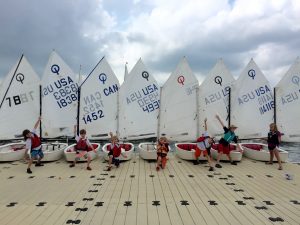
I am happy to announce that we have hired Eliza Schuett to run our race team this summer. While our primary focus will be on the local events I have tasked Eliza with coordinating and executing a plan to inspire and teach our young sailors to take their sailing skills to the next level whether it be a veteran racer, or a child who has just starting racing but has the passion for more.
NewsFlash: GPYC is hiring a full-time Junior Sailing Director!
We are in the final stages of finalizing our new travel policy which thanks to the support of the Yachtsman Fund will offer a generous coaching fee reimbursement for out of town regattas that it do not make financial/logistical sense for the club to send one of our coaches to. In the meantime, If your son or daughter wishes to race in an out of town regatta, please call me ASAP so that I can help facilitate options for coaching.
Club Profile: Tred Avon Yacht Club
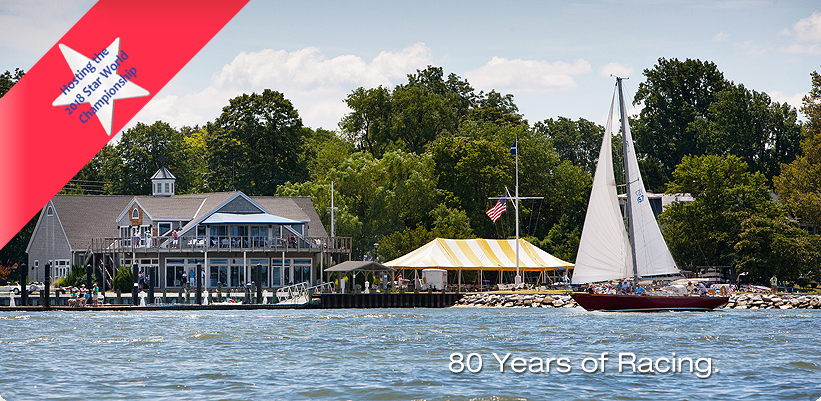
The Tred Avon Yacht Club Junior Sailing Program has always been an active and vibrant aspect of TAYC. While maintaining emphasis on sportsmanship, safety, and the joys of sailing, the junior program mission is to teach all levels of the sport to revive the skills and knowledge once taught in successful programs that focused on a quality youth sailing experience. Please review the program scope and sequence and course offerings for more details. The program is open to juniors, ages 6 and up, and membership at TAYC is not required. Need-based scholarships are available and inquiries are strongly encouraged.
NewsFlash: Tred Avon Yacht Club is Hiring: Junior Sailing Program Director
 A Brief History of The Tred Avon Yacht Club
In June of 1931 a small group of Oxford citizens established a bathing and sporting club on The Strand just above the Oxford Ferry dock. They named it the Kap Dun Club which comes from an old English spelling of Town Point (or Cape). As the sea nettles moved in for the summer, the sporting activity quickly focused on yacht racing and the club held its first races for three boats on a Sunday in late June. The club name was changed to the Kap Dun Yacht Club. The fleet grew each week and by Labor Day of that year, the club organized a regatta with races for Knockabouts, Barnegat sneakboxes, Star boats, powered workboats, row boats, and a Free-for-All class including both square and sharp ended Log Canoes. The club also hosted a long distance race to Thimble Shoals for cruising boats. Jerry Valliant was elected Commodore and the club burgee was designed with a large blue “K” on a white background. There was an active social schedule with dinners and dances during the summer.
In January 1932 the membership voted to change the name of the club to the Tred Avon Yacht Club. A “reverse” burgee was adopted with a blue background and a white “Y” laid sideways with the points of the “Y” where the “K” had been. The same clubhouse was used but a proper flagpole was erected. By-laws were written specifying a variety of membership categories including women and juniors. The racing program flourished with weekly races and a July 4th regatta for Stars, Log Canoes, 16’ and 20’ classes and two Free-for-All classes. Membership increased to 89.
Throughout the 1930s the club grew and refined its racing. In 1934 the annual regatta was combined with that of the Chesapeake Bay Yacht Club and called the Oxford Regatta. Prominent trophies in that regatta included the Sir Thomas Lipton trophy and the Arthur J. Grymes trophy for Stars. New and local classes appeared on the scene including the Scrappy Cat designed and built by Ralph Wiley and the Comet designed by Lowndes Johnson. Many improvements in facilities were made over these years including a float and dock. But by the late 1930s there was a strong desire to build a dedicated yacht club for both improved boating and social activities. During the years that Dr. William Hammond was Commodore, 1938-9, the club leased Town Point from the town of Oxford and improved the property by grading the land, building a fence and a wharf. A new clubhouse was designed by Emory Ross and built by D. Norton Taylor. A new constitution and by-laws were adopted and the club was incorporated. The membership continued to grow and was then limited to 150. Racing flourished and the TAYC was asked to host the Comet Nationals in September 1939.
In 1940 Comm. Sigurd Hersloff started the Junior Sailing program with the addition of Penguins as a club fleet. The Club made an effort to increase Junior participation. During the war years racing was progressively limited with a small regatta in 1942, no regatta in 1943 and a “war” regatta in 1944. But in August of 1945 the Oxford Regatta hosted 64 boats. During the late 40s, the club developed rapidly. Further improvements were made to the house and grounds by enlarging the kitchen, adding a grilling area, building a dinghy shed with ramp and purchasing “The Swoose” for a club launch.
During the 1950s TAYC grew rapidly. There were constant improvements to the club facilities as the membership increased. Waterfront improvements included the extension of the east dock and the addition of the float, grading and filling low land near the dinghy shed, and a play area for young children. The Star fleet made a gift of an electric hoist for the dock. A new bar room and large porch were added to the club house. Club racing was dominated by fleets of small boats—Stars, Comets, Penguins, Thistles, Indian Landing 20s, Dolphins, Oxford Sailors, and Scrappy Cats. Club Championships were started and plaques established to record the Champions. Trophies were presented on Labor Day for club racing. The Oxford Regatta continued to draw large fleets of small and cruising boats. In 1950 the Oxford Race was changed from a start in Gibson Island to a start off Annapolis because of construction of a new bridge across the Bay. Club skippers were champions in their fleets and many Bay and regional championships were held by TAYC. In 1958 the Star class held its North American championships here and had entries from all over the world. During the summers there was an active social schedule with dances held most Saturday nights. Sunday night suppers at the club were family affairs at first catered by volunteers and then by a series of club stewards. In 1958 the TAYC started hosting a Fourth of July fireworks celebration for the town of Oxford which was funded in the early years by donations from members. Afternoon bridge was strictly for the ‘ladies’ and grew into a popular activity.
In 1950 the Junior Sailing Class was formally organized with R. Hammond Gibson as the first instructor. The strict, formal classes spawned a generation of TAYC sailors who have had long successful yachting careers. The Junior Sailing Program grew over the years with many of its alumni returning to teach the next generation of juniors. Noted yachtsman Sherman Hoyt joined the club in the early 50s and ultimately donated some of his many trophies to the Junior Sailing Program at TAYC. The junior boats have evolved from the Penguin to the Laser, Optimist and 420 following the national trends. TAYC Juniors have won many CBYRA championships and many of them have gone on to national prominence.
New regattas were established in time. In 1957 a fall race from Annapolis to Oxford was held by the Naval Academy Sailing Squadron for the cruising fleet. The return race to Poplar Island was sponsored by TAYC. Past Commodore Dr. Howard Kinnamon dedicated a punch bowl trophy to the memory of Past Commodore Dr. William T. Hammond and concocted the famous Hammond punch recipe. This regatta is now held annually in mid September. In 1984 the yacht club hosted a Log Canoe regatta in late August. In memory of his father who owned the canoe Island Blossom and in order to foster Log Canoe racing, Past Commodore William H. Myers donated the trophy for this regatta, a painting of the Island Blossom sailing past TAYC. A few years later, other traditional Chesapeake Bay classes were invited to race the same weekend and this regatta has grown to become the Myers Heritage Regatta and is held late each August.
During the latter 20th century many club families transitioned from racing one designs to racing cruising yachts. The club racing program included CCA and then PHRF handicap series. Teams of club members won many Bay championships and high point trophies from CBYRA.
A significant number of members distinguished the club by bringing home trophies from Annapolis, Nassau, Newport, Halifax and Bermuda.
In 1990 the old club house was found to be unsound. The membership voted to build a new two story house. A spectacular fire was organized to take down the old club. During the sailing season of 1991, the club operated from a tent but still hosted regattas for almost 300 boats. In late 1991, the new club opened to great appreciation for the view afforded by the second story balcony. In 2001 the membership voted to replace the old west dock with floating docks in order to reduce the effect of wakes. This provided mooring for a club fleet of Ideal 18’s which were purchased for the use of members for racing, instruction and day sailing. This fleet, known as Focus on Sailing, has increased participation in sailing by members who are not yacht owners or who want to sail in one designs with other members.
What (and whose) Dinghies Are Best For College Sailing? Re-posted
Editors Note: Sail1Design exists to serve the youth, high school, collegiate, and one-design sailing communities. The observations in this letter were received, and published, in the genuine interest of what is best for the sailors who compete. While those non-sailors who support sailing (administrators, board members, coaches, umpires, etc) are important, and do good work, by FAR the most important part of what we do are the things we do for the sailors themselves, especially young ones. Our organizations should seek, without fail, to make sure they exist for that purpose.
Sail1Design stands behind our op/ed piece published earlier. To get to the main points, a shorter version is hereby republished.
We were, however, remiss in not allowing the ICSA a chance, before the fact, to take part in the conversation. We have added a question/answer section from Mitch Brindley, ICSA President. Sail1Design apologizes for that. As stated, again and again, our mission what’s best for youth and one-design sailors. We feel this is a worthy discussion. Our interview with Mitch is at the end of this piece.
Sailing evolves, like everything else. Over the years, the Intercollegiate Yacht Racing Association [ICYRA] (now, of course, known as the Intercollegiate Sailing Association [ICSA]) has stewarded college and institutional sailing, and made needed changes to stay up with, and improve the game. The National Semi-Finals/Finals format, the growth of team racing, match racing, season practice limits, etc. have all been just a few of the thoughtful changes made by a caring, dedicated, and volunteer organization.
In 2012, the ICSA made a decision to standardize and simplify the equipment used at ICSA National Championships, awarding one supplier, LaserPerformance (formerly known as Vanguard) the sole and exclusive right, for 7 years (it has been reported) to supply dinghies (c420’s, z420’s, and cFJ’s) for the double-handed national championships. This agreement dovetailed with the launch of the LaserPerformance Z420; a higher performance, upgraded and modified design of the original c420 (manufacturer claims 50 lbs lighter and 40% stiffer than the standard scv420). Better boats, standardized; in theory, not a bad idea. Given recent events at the 2016 San Diego College Sailing Nationals (it has been widely reported that the FJ fleet there had significant problems and most boats were destroyed after the event) and others, however, should this agreement be reviewed, and again scrutinized?
Quite clearly this relationship is, and was, a sponsorship agreement, one designed to bring revenue to the ICSA. Sponsorship agreements are perfectly fine, quite common, and with high-profile college athletics, they can also be quite lucrative. The ICSA has every right to solicit and accept sponsorship dollars, for the better of the sport, and most importantly, for the sailors that compete. The ICSA has numerous sponsorship agreements that do just that. In theory, this agreement with LaserPerformance (LP) could have done the same thing, and in theory, it would be a win-win: ICSA gets needed revenue to manage, support, market, and administer college sailing, and LaserPerformance gets their boats at the highest profile institutional sailing events in the world, the college sailing semi-finals and nationals.
How could this go wrong? Critics argue the following (these are well documented):
- Eliminating Venue Diversity. For one, critics immediately argued that by shutting out all other builders, schools without LP boats would, unfairly so, have no chance at hosting Nationals Semi-finals, or Finals. This is a well documented fact, please ask us for detail if you wish. What do you think?
- Less Competition = Less Quality At a Higher Price. Next, by eliminating all other builders from producing boats for the Nationals, one runs the risk of stifling competition, and removing incentive for other builders to supply and support the 420 and FJ. We asked Adam Smith. Competition is usually good for business, especially for the consumer, and tends to have the added benefit of holding costs down for the consumer. What do you think?
- Know Your Sport. Sailing is a unique sport, and one that thrives on diversity. Unlike basketball, our “playing fields” are just not alike. To explain, each venue is different, and each program has different needs, strengths, and abilities. Tech Dinghies, Larks, different versions of the FJ, Fireflies, Turbo 420’s, Z420’s etc. are chosen and used at venues, usually, for good reasons. Larks seem to fit the Mystic Lake very well, for example, just as 420’s are great for Brown, while Tech Dinghies, among other boats, make sense for MIT. Some schools benefit from square top mainsails, others not. This attention to environment should not be, in any way, discouraged by a sponsorship agreement. In that light, the mandated new 420, the “z420”, has not won universal approval as the ideal dinghy for all of college sailing, everywhere. What do you think?
Now, four years later, how has this agreement impacted college sailing? What happened at the San Diego Nationals?* Please write in and tell us. We heard that most of the fleet was destroyed after the event.
Has the sponsorship been a success? In other words, and in the bottom line, in the four years of this agreement, what has been the return to shareholders (college sailors)? What do you think?
This is also not a knock on LaserPerformance, out-of-hand. If they are clearly the best option for sailboats for college sailing, we need to know that, and we should support the agreement. It is entirely possible that the company is doing great things for college sailing, and that this is indeed, a win-win. We hope, however, that regardless, this fosters adult conversation and debate, and that, along with transparency and facts, we can do what’s best for our college sailors.
In Review, and Questions to Ask:
- How much does the ICSA benefit financially from this agreement, and has that financial commitment been faithfully met? It would be important, in fact critical, to know how much the ICSA benefits from this agreement, and how faithfully that agreement has been met by the supplier (LP).
- Is there a fee that a school can pay to host the nationals without LP Boats?
- Is LaserPerformance able to provide quality, long-lasting, competitively priced boats that serve our sport and our sailors?
- Is LaserPerformance able to support these boats with timely service, parts, and competitively priced replacement parts?
- Is the experience at San Diego’s 2016 National Championship just a one-time problem?
- What is the extent of the warranty work list on LP-supplied boats, and is it acceptable?
- Is the z420 the answer?
We welcome your thoughts and comments, positive and critical. Please post below where it says “Join the Discussion”
*According to many sources at the event, most of the brand new Flying Junior sailboats provided for the 2016 Nationals are no longer in use, and may well have been destroyed. Were you there? How were the boats? What are the facts?
INTERVIEW WITH MITCH BRINDLEY
Thank you for allowing me the opportunity to respond to your opinion piece concerning the LaserPerformance – ICSA Sponsorship. I understand your desire to create conversation about college sailing and your efforts to support the sport.
The ICSA is very appreciative of the support all of our sponsors provide college sailors. There are many companies within the marine industry who want a piece of the college sailing market; the ICSA sponsors back that desire up with cash support for College Sailing. LaserPerformance, like our other sponsors, is committed to College Sailing. Generally, our championship title sponsorship agreements carry a category exclusivity and are multiyear agreements. College Sailing depends on the monetary support of sponsorship. It should be noted that ICSA sponsorship revenue has in large part paid for the development and maintenance of Techscore, benefiting all of ICSA and ISSA.
Mitch, thanks for taking the time to chat with us, especially considering the difficulty you had traveling to Cornell this past weekend (canceled flight…etc).
S1D: In our original op-ed piece, we asked what benefits the LP Agreement provides for college sailors. Could you list them, briefly. I think many are not aware, or may not appreciate the depth, and scope of this relationship.
Mitch Brindley: The LaserPerformance sponsorship agreement provides College Sailing with the following specific benefits:
- A fleet of 18 complete and new Laser Standards and a fleet of 18 complete and new Laser Radials at no cost to the sailors.
- A LaserPerformance staff member onsite during the Singlehanded Championships to support the fleet
- Logistic support for the fleet of 36 lasers
- Marketing, PR, and Social Media support for the Singlehanded Championships with a global reach.
- Significant Annual cash sponsorship fee. Application of the sponsorship funds is at the sole discretion of the ICSA. ICSA uses these funds to provide direct support of the ICSA National Championships, as well as other expenses benefiting college sailing such as travel grants, Techscore development and maintenance, website development and maintenance, and other operational expenses.
- New in 2016, a complete set of 18 branded team race mainsails and FJ jibs.
- LP provides professional streaming video coverage with analysts and commentators for the Women’s and Team Race Championships.
- Marketing, PR, and Social Media support for the spring championships.
- Multiyear contract provides greater long-term financial security for College Sailing.
- Agreement provides an opportunity for a host to use one fleet of non-LaserPerformance/Vanguard manufactured boats at the spring championships. This would change some of LP’s obligations to the ICSA, such as payment of fee and expense of media support.
- ICSA’s relationship with LaserPerformance and their sponsorship of the Singlehanded Championships has been fundamental to ISSA’s singlehanded championships.
S1D: There may be some misconceptions about the degree to which the 2016 Nationals FJ fleet was problematic. Can you state with accuracy what some of these may have been?
Mitch Brindley: The variance in weights of the fleet of 2016 FJs used during the championships was less than 10 lbs. Outliers were excluded from the fleet.
It was discovered during the first day of the semifinals for the Sperry Women’s National Championship that some of the boats were taking on water in the tanks. The biggest source of the leaks was the cockpit plugs not properly installed through the rivets and insufficient sealant. There was some leaking through the spinnaker fittings that had been removed in San Diego to equalize the collegiate version boats and the junior racing versions. And some boats were leaking through the centerboard gasket assembly. It was my experience that some sailors and coaches were over estimating volume of water being drained. I heard sailors say, ‘We drained our boat for five minutes’, or “our tanks were full”. That wasn’t the case; 5 minutes is a long time to press an FJ bow on a floating dock. I frequently timed how long a boat was drained, boats were rarely held for more than a minute. I also measured water that was drained from tanks and it never exceeded liter. A team did receive redress for water in the tanks.
S1D: While it is a fact that most of the 2016 Nationals FJ fleet was destroyed after the event, we would like to learn, and I think it’s valuable information for our community, what LP’s response was to this.
Mitch Brindley: I don’t think anyone was more upset and frustrated by the problems than the LaserPerformance representatives at the regatta and the SDYC event officials. Throughout the events, LaserPerformance worked to solve the problem; some boats were removed from the rotation, repaired and then returned. Some boats didn’t leak. In addition to LP’s Technical Engineer on site, 2 LP repair technicians from the UK were brought over to facilitate repairs, and stayed through-out the event. Four additional people from the LP manufacturing team were brought in to address the issues. In the end it is my understanding that LP wasn’t hasn’t happy with fleet as a representative product, so they chose to have the boats destroyed.
Since San Diego, LaserPerformance manufacturing has corrected the problem and made overall improvements to their FJ. Bill Crane, LaserPerformance Chairman of the Board, has been overseeing manufacturing and significant improvements to the gasket system. The cockpit stringers have been improved to allow for more complete and tighter fit of the hull and deck, eliminating weight from the bonding material. And it created a more completely supported cockpit sole. They built a clear FJ to study the construction techniques and bonding of the hull and deck, and hulls are inspected with electronic instrumentation. Director of Institutional Programs, Adam Werblow was at the in China this summer and is very confident in the changes incorporated.
S1D: Can you discuss the new realities of Nationals hosting, from the Exec. Committees point of view? How has this changed over time, what do you now need from a host bid, and how in your view does the LP arrangement make this this challenge a more achievable responsibility?
Mitch Brindley: Over the last 8 – 10 years or so there have been some great changes and improvements in College Sailing, such as team uniforms, branded sails, live scoring with Techscore, championships with semifinals and resulting in the most competitive championship finals, combining semifinals and finals at one location, and 36-team women’s and coed Championships. There has also been an increase in competitive depth in college sailing over the last 20 years. There is no doubt that combining the semifinals and finals into one event has made for an incredibly deep, competitive, and fun championship. This desire for such a championship, with all the teams sailing their way into the finals resulted in the requirement of two fleets of 18 boats at one venue. It also created an event that is a beast to host.
Some of the expectations or needs for the championships from the host or venue are:
- Two 18 fleets of evenly matched collegiate dinghies
- Expert race management, judges, and umpires (including housing, meals, and travel expenses) all with extensive college sailing experience
- Good, reliable sailing conditions (157 races in the team race championship)
- Shore-side venue large enough for 350+ people daily
- Shore-side spectating
- Onsite vendor
- 10-15 appropriate sized powerboats for judges, umpires and media
- Sponsor fulfillment
- Media support and PR
- Sail storage and transport (4 sets of mainsails, 2 jibs)
- Available and affordable housing for teams and spectators
- Venue staff, team members or well trained and plentiful volunteers
Sponsorship revenue and entry fees are intended to cover much of the expenses of the championships.
S1D: Is there anything else you’d like to add?
Mitch Brindley: To clarify another item in your Op-Ed, move away from Chicago for 2017 had nothing to do with our current contract with LaserPerformance. University of Wisconsin found is necessary to withdraw their support for the 2017 Chicago Championships due to purchasing hindrances beyond their control with the WI state government. There planned purchase was held up by the Governor. And they didn’t think the purchase would be made in time for the championship. As a result ICSA and CYC no longer had the needed support and fleet to successfully host the championships in Chicago. CYC had one fleet of boats, junior racing version c420s. We no longer had 2 fleets of collegiate dinghies, nor did we have a collegiate host. The ICSA Championship Committee unanimously accepted a revised bid from College of Charleston (bid for 2018), and the ICSA Executive Committee and Board approved the Charleston 2017 bid.
(In our original piece we asked the question: why was the venue for the upcoming Nationals so recently changed from Chicago to Charleston. It has been reported to us that this had to do with fleet types.)