 In a Nutshell
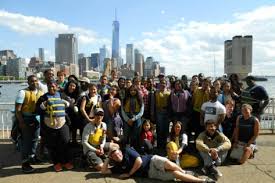
Founded in 2007 to serve the urban community, we partner with public schools to offer credit-bearing academic programs, internships, mentoring, and college readiness. Our youth development platform uses sailing, boat operation, and boat building to further academic skills and instill the qualities of character necessary for college and career success. We also serve the broader community through affordable marine education and recreation for individuals, groups, schools, businesses, and families.
NewsFlash: HRCS is Hiring Sailing Instructors!
HRCS Mission
Hudson River Community Sailing develops leadership and academic success in underserved New York City youth through sailing education and provides maritime education and recreation to the community at large.
 We have ten J/24s sailboats, the most popular keelboats in the world. They are small boats that are fast and sporty, while being stable and safe. The J/24 is typically crewed by 5 people. Get in on the fun and find out why the J/24 is a great boat to learn the ropes on!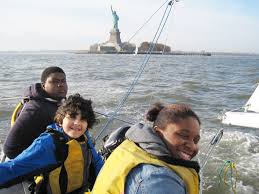
Our facility is an award winning pier and boathouse, located on the western side of the West Side Highway at 26th Street. We are an affiliate of New York River Sports, making up the most unique water sport access point in our city.
From Battery Park to mid-town, Hudson River Park is enriching the relationship of New York City residents and guests with their waterfront. A full description of current and future plans are available at their website.
NewsFlash: HRCS is Hiring Sailing Instructors!
Blog
The Aluminium Cocktail: What Goes Into The Perfect Mast
By Mark Jardine of Yachts & Yachting
While carbon is the ‘sexy’ material of choice for spars, aluminium accounts for a far greater proportion of the masts and booms used in sailing and is much cheaper. What goes into an aluminium mast, and the processes to consistently produce a good spar, though are far from simple – like a good cocktail, the mix of ingredients and the production processes are vital. We spoke to Selden’s Steve Norbury and Andy McCormack to find out more…
Firstly we talked to Steve about aluminium itself and where masts sit in the different ‘series’ available to a manufacturer.
“Over time masts have been made from quite a different number of series of aluminium, all to have different properties. The series of aluminium that is mostly used for mast manufacture, and what we use is 6000 series. The 6000 is relatively hard, extrudes well, is heat treatable and has good corrosion resistance. This means that we can buy them in a soft condition so that we can work with them, and then heat treatment brings them up to full strength. So overall, 6000 series aluminium is reckoned to be the best to make dinghy and yacht spars from.
“There are other families; the 2000 series is a copper-based aluminium and is also very strong. You would think they would make ideal masts, but unfortunately, they have terrible corrosion resistance. If you stored your mast in a bag, maybe for the Winter, you would literally open up that bag in the Spring and find that you had a pile of white powder!
“Another series which is used, is 7000 series. 7000 series has the advantage over the 6000 series in that its yield point is high. That means it is a very strong metal that you can bend further without it taking a permanent set. The disadvantage is that it is almost impossible to work with. You can buy 7000 series round tube, but you can’t get profile section, you can’t taper it, you can’t weld it, and again it has a corrosion problem in that after a few years you would find that your fittings start corroding. So it has been used for windsurfing masts and used for some Optimist spars, but, generally for dinghy spars 6000 is the best material that you can use.”
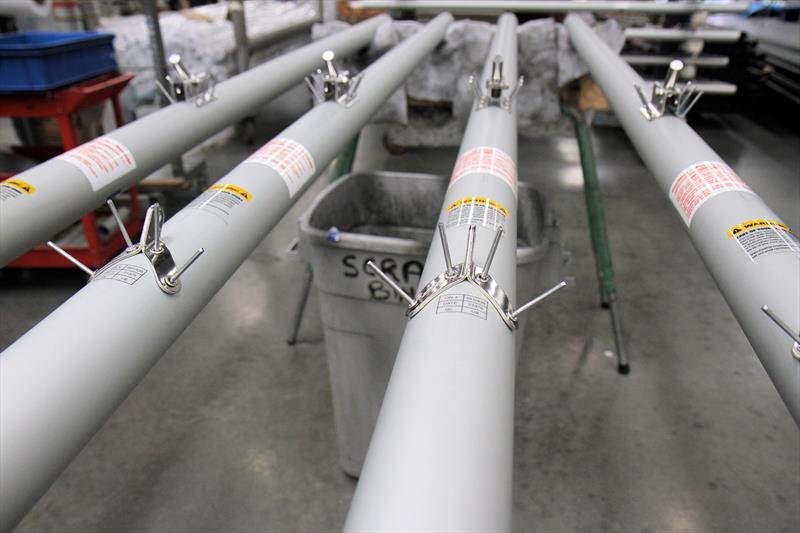
Andy McCormack is Technical Director at Selden and we asked him how you go about extruding a mast into a particular section.
“We have a range of sections, seven or eight, covering the entire dinghy range; some of them are very close together. Cumulus is our most popular section, we also have another section called Alto which is very slightly stiffer, and one called Zeta, which is slightly more flexible – they are very, very close together. Due to the volume of aluminium that we buy, we are able to have three separate dies, that are discrete sections, but very, very close, just a few percent stiffer or more flexible each way.”
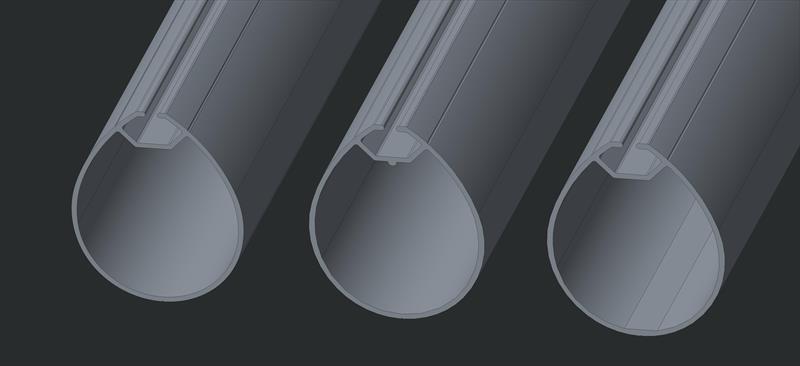
With this range of sections, and having masts that are very similar in their characteristics, we wanted to know how they could ensure repeatability, managing to produce the same mast each time. Andy explains:
“Due to the volume of aluminium extrusions that we buy, we have a tighter set of tolerances that we have agreed with our supplier. Rather than using a British Standard or ISO Standard, we have a Selden Spar standard, which governs overall dimensions, wall thickness, straightness, material properties, and this standard is much tighter than commercially agreed standards that other people may use.”
The next problem for repeatability is when a mast section is tapered. This requires a cut and weld in a spar and we wanted to know how they kept the same mast characteristics each time. Andy told us about the technology Selden use to improve consistency:
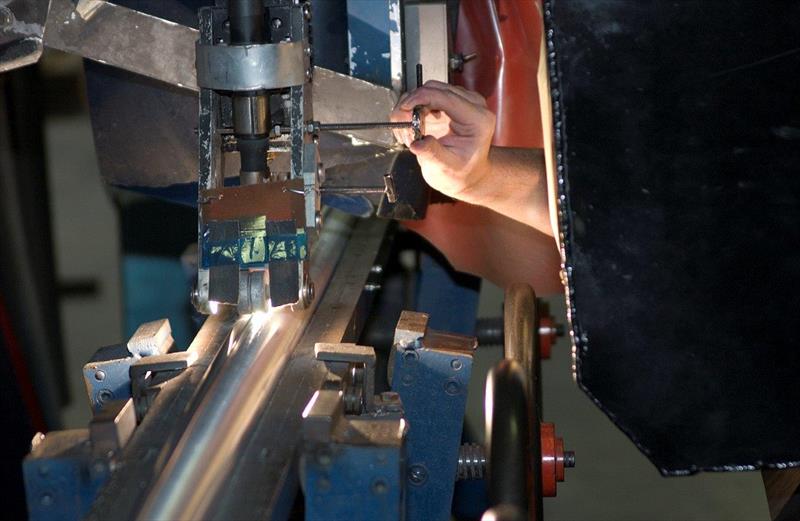
“Rather than cutting the taper by hand, we have a plasma cutting machine, essentially a CNC machine, cutting a section out of the top of the mast, very accurately and consistently.

“We then press that together on a custom tooling for each section. After that the taper is welded on an auto welder – again, this is the same every time. This results in very tight tolerances and is completely repeatable; there is no human intervention.
The final stage of creating a mast is having it heat-treated and then anodized. Andy explains how Selden go about this process:
“We have our own heat treatment oven that is computer controlled with sensors clipped to mast tubes. This produces a graph of the heat cycle for every run. This way we can be certain that the material in the oven has been correctly heat treated.
We carry out a peening operation which gives us a uniform surface finish, it also removes any impurities off the surface of the material. That allows us to send it for anodizing in a state where they have to do the absolute minimum of cleaning and etching, meaning there is no further reduction in material before the anodizing is put on.”

Like all industries and companies, aluminium spar making is moving on, and Selden are at the forefront of experimentation and innovation. We asked Steve what changes are in the pipeline:
“We are all always working with our extruder to develop new modifications to this, or new blends if you like. We are working on some material now, which gives us a much higher yield point – for a dinghy sailor means that a mast will bend further before taking a permanent set. So while we are trying to improve that, we are also trying to retain its surface finish and its anodizing properties.”
Finally we wanted to dispel some myths about aluminium masts, particularly with regard to bend and gust response. Steve explained the facts to us:
“Gust response is all about when a gust hits, the masts bends, and when the gust disappears, the mast bends back. It is all about the stiffness of the material, the weight of the material, and pretty much nothing else. If you look at the formula, it’s the stiffness of the material which is the most important factor.
With aluminium there are very marginal differences in stiffness. But there are massive differences in their yield point – the point you can bend something to before it takes a permanent set. So aluminium masts are all the same stiffness, but they could have a different yield point.”
Selden are the biggest spar manufacturer in the world and work closely with their extruder on experimenting with the ‘mix’ in their masts. It is the volume of work that gives them the flexibility to do this as Steve explains:
“All our dinghy sections come from one extruder and we use many more tonnes of aluminium a year, making us a big enough customer to work with to develop spars with new proprieties. We can make a trial run of a section in a particular material, whereas I doubt they would do that for some smaller manufacturers.”
www.seldenmast.co.uk
Originally published in Yachts & Yachting, and re-printed with permission here
Club Profile: Sandy Bay Yacht Club
NewsFlash: Sandy Bay Yacht Club is Hiring a Jr. Sailing Program Director
 JR SAILING AT SBYC
The Mission of the Sandy Bay Sailing Program is to give our students a broad exposure to the sport of sailing. Our primary goal is to develop, safe, independent sailors, by offering them an active and exciting experience that builds camaraderie, sportsmanship, and self-reliance.
Our secondary goal is to offer those students who have become independent sailors exposure to racing through our racing classes and teams. The desired result of the program is students with a love of the sport of sailing and the SBYC experience.
Our Junior Program uses 18 Optimist dinghies and 9 420’s. These dinghies are the choice of yacht clubs and sailing programs nationwide. They offer the student a sturdy platform on which to learn, while providing enough challenge to keep competent racers involved in the sport. Juniors are grouped by ability and there is a place for everyone including 8 year old beginners, older 13 or 14 year old beginners, right on up to the seasoned racer. Our racing programs offer experienced sailors the opportunity to travel locally and regionally, competing against other sailors their own age.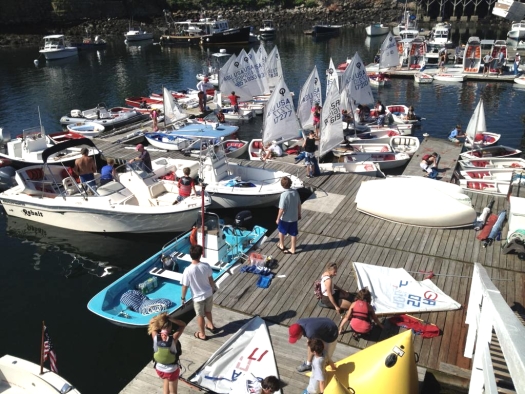
In addition to wonderful sailing opportunities, Sandy Bay Yacht Club offers excellent social opportunities. All students become members of the Club (although parents are not required to become members, we encourage them to join). We encourage you to take advantage of junior cookouts, Sunday Morning Coffees, Chowder Day, and numerous other dinners and events. Sailing is a social sport, and there’s no better place to get started than Sandy Bay Yacht Club.
NewsFlash: Sandy Bay Yacht Club is Hiring a Jr. Sailing Program Director
HISTORY OF SBYC
Founded in 1885, SBYC is located in the scenic and historic coastal town of Rockport, Massachusetts. As an active sailing club, SBYC has numerous one-design and cruising sailboats racing in regular Wednesday evening and weekend races, as well as annual Club regattas and frequent club sponsored District and National Regattas. An active social program complements these events.
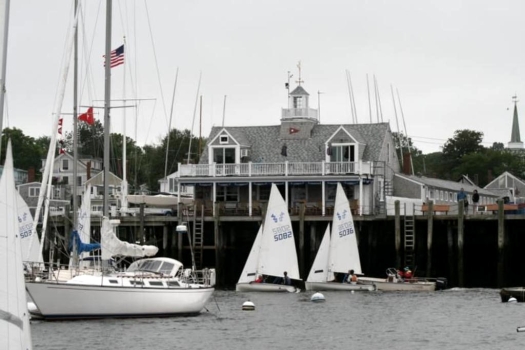 Our sailing program provides basic through advanced training for both juniors and adults. Its purpose is to give our students a broad exposure to the sport of sailing, develop safe, independent sailors, offer exposure to racing, and to instill a love of the sport of sailing.
Open from mid-April through mid-October, Sandy Bay Yacht Club is located north of http://www.boston.com/ on http://www.cape-ann.com/, at the end of T Wharf in Rockport Harbor where our current Clubhouse was built in 1930. A newspaper clipping from the May 22, 1885 “Advertiser” states:
“The Sandy Bay Yacht Club held its initial meeting for permanent organization last Monday evening. There was a good attendance, and the following gentlemen were chosen officers: Leander M. Haskins, Commodore; Howard H. Haul, Fleet Captain; Lemuel Clark, Measurer; Chas. Mills, Secretary and Treasurer. Regatta Committee – Chas. Cunningham, G.T. Margeson, Grafton Butman, Wm. Hale, H.H. Paul. A meeting will be held next Monday evening at the Club Room, Haskins’ Block.”
Since that time we have been actively involved in sailboat racing and training, for both juniors and adults.
Over the years both our one-design fleets and cruising boats have changed and kept up with the times. Our current one-design fleets are: Bullseyes, Club 420s, Flying Scots, Lasers, Optimists, Rhodes 19s and Stars. Racing under PHRF rules, our cruising fleet includes numerous designs from 23 to 44 feet. Along with our regular series racing, SBYC has hosted numerous one-design Championships, including District as well as National Events.
Begun in the 1930s, our Sailing Program has grown rapidly over the last several years. We now accommodate approximately 175 different kids sailing in Optimists, Club 420s and Lasers and 35 adults learning to sail in Rhodes 19s and Bullseyes. Many of our students have become accomplished sailors and racers.
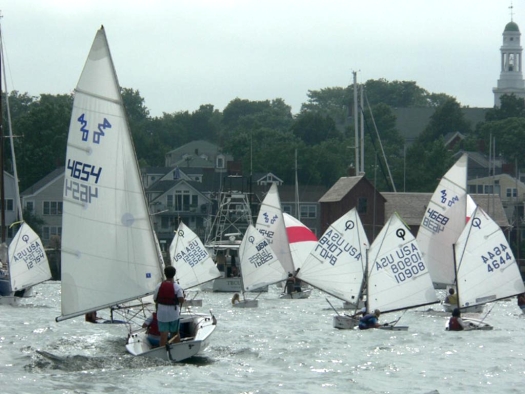 Not all of our activity is sailing around the buoys, pleasure sailing or even chasing down that prized http://www.sandybay.org/stripers.shtml. There are numerous social activities to enjoy while ashore, ranging from potluck or catered dinners to our well attended Sunday morning coffees. Juniors also have numerous social events to choose from, including cookouts and movie nights.
With thanks to James Runkle and Harry Whalen, the following history is excerpted from their book “100 Years of Sailing at Sandy Bay”, published in 1985:
Cleopatra had her barge. But it was not until recent times that many pleasure sailors had their “barges” and had a need or desire to pool forces with other pleasure sailors. “Where did you get that aluminum mast? Is it strong enough?” And the next day, “Hey, someone tow me back to the dock – my aluminum mast broke!” Or to see which boat is faster – how can you race without someone to race with? How can the race be fair without rules? And so the need grows for some kind of organization.
“Summer cottages with an ocean view” were all the rage in 1885 along the North Shore of Massachusetts Bay. White-collar workers of Boston, New York and the Midwest had incomes sufficient to support their dreams of a second home by the sea. And from these they went forth to summer fun on boats, competing in local and inter-area regattas. Active fleets emerged in Marblehead, Manchester, Gloucester, Rockport and Newburyport.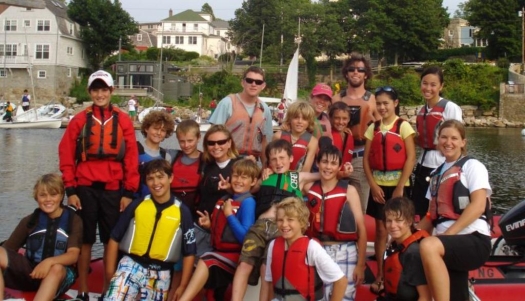
In 1885 Annisquam challenged Rockport to a race around Thacher’s. Annisquam must have had an organization to issue the challenge; Rockport must have had one to accept it. So we say a sailing club, from which ours is descended, existed here in 1885.
Like so many legends of the sea, the Sandy Bay Yacht Club seems just to have appeared. Marshall Swan’s “TOWN ON SANDY BAY” says on page 221 that, riding on the crest of interest in yachting during the 1870s and 1880s, it was founded in 1885. There is the legend mentioned above that refers to the challenge from Annisquam. By 1887 there was a public announcement of a Regatta, “Open to all Boats entered in the Sandy Bay Yacht Club”, to be sailed off Rockport Saturday, July 9th, 1887. The Second Grand Annual Regatta, “Open to all Yachts of 30 feet and under, Sailing Length” was “To be Sailed off Rockport Monday August 1st, 1887, Commencing at 1 o’clock, sharp.”
The Regatta of July 9, 1887, listed two classes, with the proviso that “Two boats must compete in each class or no race. Three boats must compete or no second prize.” The first class consisted of yachts measuring 20 and less than 30 feet, with the first prize the Harwood Cup valued at $40, and a second prize of $10. In the second class were “Yachts measuring less than 20 feet,” with the first prize $15 cash and the second $10 (presumably also cash). The club course was about six miles, with both classes going over the course twice. There is a note that PROTESTS “must be made to the Judges within one hour after the races. Judges’ decisions will be final.”
According to Swan, in August 1883 four yachts had raced around Tha(t)cher’s Island. By July 1886 “The club had 35 boats with new ones to be added.” And in 1887 a Sailing Dory club was formed. The ADVERTISER commented that “Few clubs along the coast can or will show a better lot of prizes than Sandy Bay has now on exhibition.”Robinson’s HISTORY OF MARBLEHEAD mentions a regatta in Rockport in 1885; a framed placard at the Yacht Club advertises a special regatta from Sandy Bay to Newburyport for the Cunningham Cup in 1886. Fliers similar to this have been found in Yacht Club archives announcing regattas in Rockport.
1885 is the same year they began work on the outer breakwater that was to provide a “Harbor of Refuge” large enough to contain the entire Atlantic Fleet. Some years later, Teddy Roosevelt’s ‘Great White Fleet’ would indeed anchor there. Photographs of that time show all the sailboats gaff rigged, with a bowsprit and a straight stem. So we have a good idea what our earlier club members’ boats looked like.
Since the nineteenth century, of course, fashions have changed in hulls and rigging. As various types of racing craft have been developed, pleasure sailors of Rockport have kept up with them. The Club has provided classes to keep all the racing compatible and according to rules. And, in testimony to the interest and vigor with which Rockporters pursued their boating, we note that in 1905 the “Law and Order League” was vexed that Sunday yacht racing was increasingly common.
We have this degree of documentation as to the founding and existence of our club. But until 1930 details of sailing at Sandy Bay are incomplete and unreliable. the yacht club organization lacked formality; interest seems to have ebbed and flowed like the tide. The result is that few written records have been found, and that even the remarkable memories of our ninety-year-olds cannot be expected to stretch back farther than 1910.
We must rely on what information can be gleaned from a study of these other yachting club histories and a close examination of the old photographs of Rockport Harbor, which gives us a fair picture of racing sloops of the time. Few of these boats were exactly alike, as we would expect today of the boats in a racing “class”. “Official measurers” and “handicaps” were the lingo of standard operating procedures. Just as with racing horses, racing sailboats were really the hobbies of the well-to-do. And naval architects emerged as the creators of these “rich man’s toys”, Herreshoff and Crowninshield being two of the famous.
In the original regattas sponsored by Sandy Bay in 1887, entries were limited to boats under 30 feet in length, usually in two or three classes. The first class included boats of 24 to 30 feet; the second, 21 to 24 feet, and the third, boats under 21 feet. When the owner of a boat found that he and his paid skipper consistently came in last, it behooved him to get a new skipper or a newly designed boat.
After 1915 boats of a given design were being built according to the same specifications, so that the results of races would be based on the skill of the skipper and crew in sailing a standardized craft over a clearly marked course and under the same prevailing conditions of wind and weather. As the Star class and Bird class proliferated in Sandy Bay, the club measurer had to concentrate only on the measurement of sails. The very early Star boats had a gaff rig, which soon gave way to a marconi, which still had a short mast and a long boom. It is generally thought that Homer Clark’s ‘Sans Souci’ introduced the new modern design which has proved very successful through the years.
Massachusetts Bay 18-footers were the early “I” class boats. According to Myron Brown, after a substantial fleet of these boats had been commissioned at Manchester by well-to-do owners belonging to the Manchester Yacht Club, the boats took on the Manchester “I” title. Although yacht racing with paid skippers and crew seemed to be the vogue in Manchester at that time, we have no record that this substitute for horse racing occurred at Sandy Bay.
Our Sandy Bay sailors were not entirely leisure time sporting sailors, so to speak. Retired Captain Frank Pierce, for instance, Star boat skipper and noted cribbage player, had sailed stone sloops up and down the coast carrying granite products from the Pigeon Cove quarries. Stories have been passed down of how those craft were loaded until the decks were awash, with only the bow, hatch and stern showing above water, leading to the moniker of “floating ledges”. Old Salts claim that there are still piles of granite cobblestones occasionally found on the bottom along the East Coast, as all that is left of overladen stone sloops from Rockport. And, of course, there is the story of the stone sloop overdue and given up for lost after the 1898 storm in which the steamer PORTLAND went down with all hands off Race Point, when, a couple days late, she made her port: “Mighty big blow”, said her skipper.
As far as a club house is concerned, Hosea Pierce says that Yacht Club members kept their boats year around in the corner of the harbor where the breakwater meets the end of Bearskin Neck, and behind “Gum Drop” or “Haystack” rock. He says a wooden staircase went down to the water’s edge at the granite wall. Another legend says that the “United Nations” house at the end of Bearskin Neck was possibly the first Club House. In light of the story of the wooden stairs, this might be possible. The Historical Marker says it was a survey site for the outer breakwater. Although photographs prove that it existed by 1910, June York, 92 years of age, says she doubts it was a club house for the yacht club. We shall see later that 1931 was the critical year concerning our present club house.
Our Certificate of Incorporation is dated in 1930. Old-timers remember that the club was “re-organized” in 1931 and went into the business of a new clubhouse with a mortgage which was largely underwritten by Lindley Dean and paid off in two years by club members. The spring after the reorganization the first race was held in March, to Thacher’s and back. The wind freshened so that skippers were reluctant to jibe, and one boat went skidding ashore at Pigeon Cove.A lighter side of the history of our clubhouse refers to what some of the sailors did all winter, every winter, after the building had been constructed in 1931. From that time on a devoted group of members played cribbage there until 1961, when Steward Arthur Swanson retired and the building was shut down to save fuel. After that they continued their cribbage competition in Hosea Pierce’s basement on Atlantic Avenue for the next five years.And with rugged names like Hosea Pierce, Musty Somers, Fooey Davis, Polo Cooney, Spooksy Grover, Fuzzy Hawley, Dyke Brown, and Duffy Blatchford on the roster, how could this yacht club fail to succeed?
Leadership of the club, again, has not been too clearly spelled out in the records. Myron Brown tells us that our first Commodore, Marion Cooney, elected in 1931, was a great promoter of boating safety. The “pun’kin seed” boats, such as the Fish and the Bird classes, supposedly stable, with a centerboard for adaptability to the shallows of the Annisquam River, for instance, and sailed at Rockport in 1930, he considered to be unsafe for our conditions on the open Atlantic, and under his leadership members approached John Alden, the prolific yacht designer of Massachusetts Bay, to draft up two rugged and seaworthy boats especially for Cape Ann Atlantic waters. These emerged as the Sandy Bay class and the Pilot class. It is said that when Bent Story was sailing his new “Sandy Bay” from the Marblehead boatyard to Rockport, by happenstance he was overtaken by John Alden in one of his schooners. After sailing a circle around the slower Story, Alden was heard to comment, “I guess I should have made the mast three feet longer”.
Commodore Cooney urged that every boat be entered in every race. If an owner or a skipper had to be absent, a substitute was found to bring the boat to the starting line, which was always off Bearskin Neck. During the race, the mooring area was empty of boats. And during Marblehead Race Week, the harbor was empty for the entire week, with the “fleet” all in Marblehead for the “big” regatta of the summer.
By 1935 we know that the Sandy Bay Yacht Club had been formalized, with incorporation in 1930, Constitution and Bylaws and an energetic year of building and putting out floats etc. in 1931, and a lease taken out for the property where the Club still is today. In fact, in 1931 a daily log was kept for the entire year, with details of the rapid development of the facilities, the weather, and many seaside events, as can be read in excerpts printed in the body of this book. From 1935 onward, our Club was an organized, recognized yacht club with its own clubhouse and floats.
By 1940 we know from the records that there were 38 registered boat owners. In 1941 Rockport fishermen and yachtsmen formed a local United States Coast Guard Auxiliary. In 1976 a Boat Parade was organized in honor of the 200th anniversary of our United States of America.
But the story of the more recent years is best told through the many illustrations, lists, and descriptions of One Design boats that have made up our “fleets” over the past half century. Many Sandy Bay Yacht Clubbers will remember the names, the boats, the scenes. And they will find so much of what they know firmly rooted in the past that other photographs record. They will see the usable harbor grow and many buildings around it change; marconi replaces gaff; hull shapes change to enhance speed; even the “correct” racing attire is different. This compilation is to please you, to interest you, to inform you – and to leave a record for those in 2035 to see us and our forebears.
Serving the Community: Youth Sailing Virginia at Fort Monroe
Youth Sailing Virginia at Fort Monroe
 By Airwaves writer Rachel Bennung
In the fall of 2013 a youth sailing facility at Fort Monroe was just a dream. But less then a year later that dream started to become a reality. Now flash forward to the present Youth Sailing Virginia is a fully functioning organization, and recently just held the 2016 MASSA Fall Fleet Gold Championships for high school sailing. Youth Sailing Virginia (YSV), Inc. is a 501(c) 3 non-profit organization, whose mission is to develop a vibrant Youth Sailing Program that serves the greater Hampton Roads area and involves a broad spectrum of the community in both support and participation.
Board Member Gary Bodie was the one who presented the idea for a new youth sailing facility at Fort Monroe to a group of coaches, parents, and members of the sailing community back in 2013. The hope was to create a practice and regatta venue for the area’s high school sailing teams. After his initial presentation the buzz of this sailing center grew and started to become a reality. Kevin Eley, a board member, was recruited to head the organization which became known as Youth Sailing Virginia, Inc. A practice site was created at the historic Fort Monroe in Mill Creek with the support of Glen Oder, Executive Director of the Fort Monroe Authority.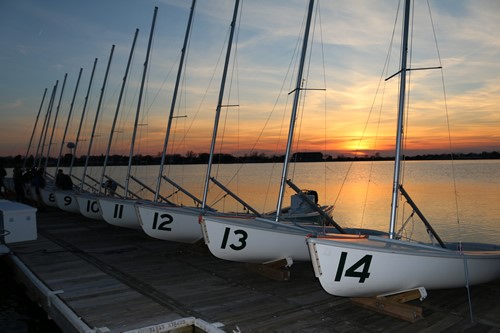
With repaired floating docks and only seven old FJ’s at the time, Allen Kilogore coach of the Kecoughtan and Phoebus High School teams began practicing in March 2014. Then in May 2014 YSV was able to purchase 18 FJ’s from Dartmouth College giving them the ability to host regattas. In August 2014, a larger floating dock was donated, and volunteers held to rebuild to accommodate YSV’s new fleet of FJ’s. With this new fleet it gave YSV the ability to not only host regattas, but give more schools a practice site, including; Hampton High School, Kecoughtan High School, Phoebus High School, and Hampton Roads Academy. In October 2014 YSV held their first scrimmage regatta for 14 teams in the Virginia Interscholastic Sailing Association.
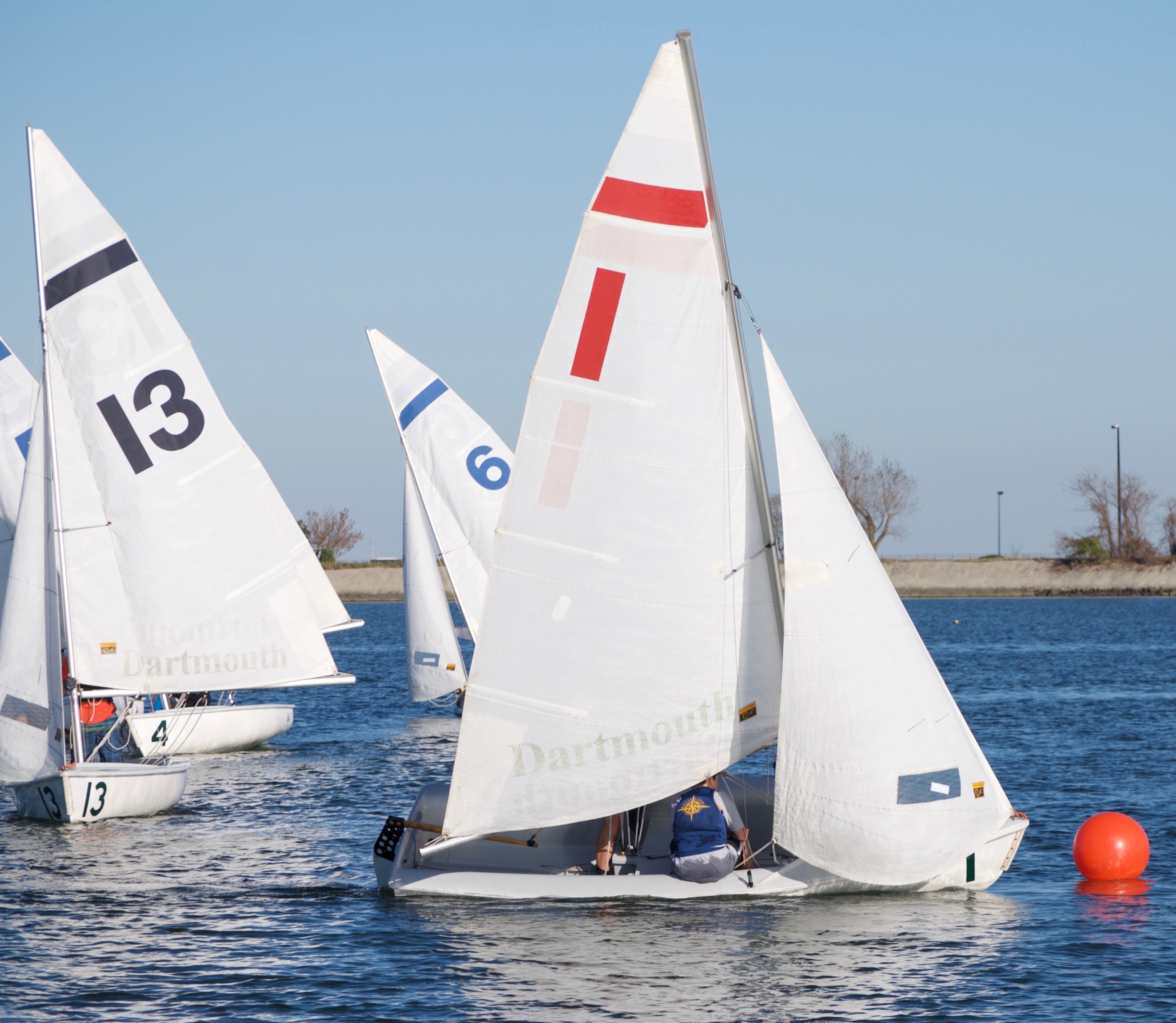 Currently, YSV is a practice site for the four schools mentioned above, this includes middle school JV sailors. YSV has also hosted training camps for college teams. The sailing center is operational from March to November. They typically hold 3-4 regattas in the spring and fall seasons. Most recently, YSV hosted the MASSA Gold Fall Fleet Racing Championship.
On the weekend of October 17-18th, 2016, eighteen teams throughout the MASSA district competed at YSV for the MASSA Gold Championship. On Saturday the sailors were greeted with light and shifty winds, ranging from 4-10 mph. They were able to complete 8 races in each division. On Sunday, the winds were light again ranging from 0-8 mph. With some postponements throughout the day they were able to get two races in each division for a total of 10 races for the regatta. Ranney School from New Jersey placed first, followed by Severn School in second, and Christchurch School in third. Ranney School, Severn School, Christchurch School, Christian Brothers Academy, Norfolk Collegiate School, and Broadneck School qualified to compete at the ISSA Atlantic Coast Championship in Rochester New York on November 11-12th.
All the teams that attended the MASSA Gold Championship had an enjoyable time at Youth Sailing Virginia at Fort Monroe. Teams were very impressed with the race site, race committee, and volunteers. RJ Bouchard the Varsity Sailing Coach of Nichols Sailing team said, “Mill Creek is the perfect venue for high school sailing. The body of water is entirely enclosed by land with few tall structures, allowing for flat water and steady breeze. The venue is right next to the Chesapeake Bay, not far from the ocean, allowing for an early sea breeze to develop. There seem to be no pleasure craft on Mill Creek, minimizing the boat wake that might disrupt the racing. As a long-time college and high school coach I could not have been more impressed by how perfect this body of water is for dinghy racing.” Clay Johnson the coach of the Ranney High School team said, “What made the whole weekend even more enjoyable was the level of enthusiasm and efficiency coming from the spectacular volunteer force. All on-shore logistics were organized and thought out. Gary Bodie and Kevin Eley ran an efficient, well-run event that left all teams happy they made the trek to Virginia for the weekend.”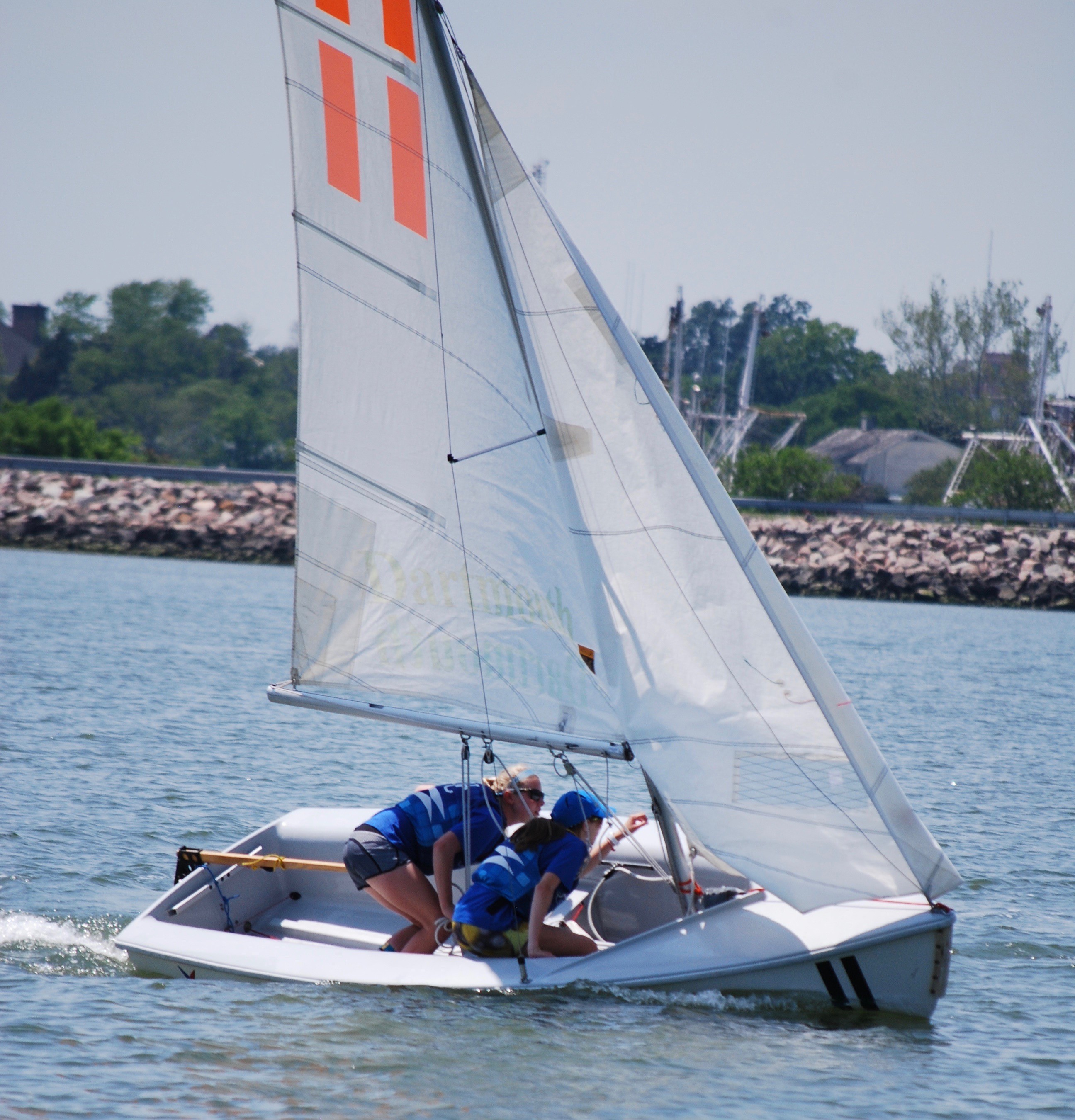
YSV has a great community that is in full support of the sailing center. Coming in the summer of 2017 YSV plans to run learn to sail summer camps in partnership with the YMCA and Hampton City Parks and Recreation. They also plan on introducing the US Sailing REACH program. This sailing center not only is providing a great venue for high school sailing, but giving back to the community in Hampton, Virginia. Learn more and how you can help support Youth Sailing Virginia at http://youthsailingva.org.
Not a Lot of Time: Get The Most Out of Your Workout
By Airwaves writer Rachel Bennung
The biggest excuse for people not working out is lack of time. However, if you want to maximize your sailing performance you need to make the time! Some days we are just running short, but we still want to get that workout in. So how do you maximize your workout when you only have 20-30 minutes to spare?
Time can be tight some days, but if we want to better our sailing performance we still need to get our workout in. Here are four tips to help you get the most out of your short workout.
- High Intensity Interval Training
High Intensity Interval Training is a great type of cardio for sailing. Not only that, but its very effective if you only have a short amount of time to workout. You can make these workouts 10-30 minutes long, making this type of workout perfect when you are short on time. In this type of workout you give 100% effort for the exercises, then follow that with a short sometimes active recovery period. This type of workout is great for making your short time effective to help improve your sailing performance.
- Have a Plan
You always want to go into a workout knowing what you are doing. However, its even more important to have a plan when you only have a small amount of time to workout. Make sure you look at your week in advance and plan out your workouts. Writing down your workout before hand will save you time, and you will be able to get the most out of the workout. Being prepared is the most important step to your success in anything!
- Bodyweight exercises or only using one implement
When you only have a small amount of time to workout you don’t want to make it complicated. So the best form of this would be just to do bodyweight exercises or just use one implement in your workout such as a kettlebell. When you are jumping around from a kettlebell to dumbbells to a medicine ball it makes your workout longer losing the time you have actually working out. Make it simple when you have little time and make that workout effective to better your sailing performance.
- Limit rest periods
Remember you only have 20-30 minutes to get that workout in, so to make this effective you want to limit your rest periods. Get the most out of your workout and push yourself. This is going to help maximize your performance on the water. Instead of 1 minute or more of rest, stick to 30 seconds or less. This will ensure you will get the most out of the short time you have to get that workout in.
Now check out below a 30 minute workout to improve your sailing performance when you are short on time. Then check out the moves in the video below.
30 minute Strength Endurance Workout
–Warm up with Dynamic Stretching (5 minutes)
Core Activation:
- Plank Jacks (30 secs)
- Reverse Lunge w/ Forward Kick (30 secs each side)
- Side Plank with Leg Lift (30 secs each side)
- Squat Jumps (30 secs)
Repeat 2 times (6 minutes)
Workout:
- V-Ups (60 seconds)
- Push Ups (30 seconds)
- Squat w/ Standing Crunch (60 seconds)
- Ski Abs (30 seconds)
- Forward Kick with Side Lunge (30 seconds each side)
- High Knees (30 seconds)
- Full Sit Up (60 seconds)
- Burpees (30 seconds)
Repeat 2 times with 30 secs rest between sets (12 minutes)
-Cool Down with Foam Rolling and Static Stretching (5-7 minutes)
Fitting a workout into your schedule can be hard some days. However, you need to make the time, even if its only 20-30 minutes that day. Even a short workout can make a huge difference in your sailing performance. By following the tips of using high intensity interval training, having a plan, using only bodyweight exercises or just one implement, and limiting your rest periods your limited time will be effective in improving your sailing performance. Use the workout above to get started on the next day you are running short on time. Also don’t forget to check out the video below for all the moves in the workout!
For more information on fitness for sailing contact [email protected]. Also check out Sailorcise on Facebook, Twitter, and Instagram for daily tips on fitness, nutrition, and sailing.
How To: Running a Successful Regatta
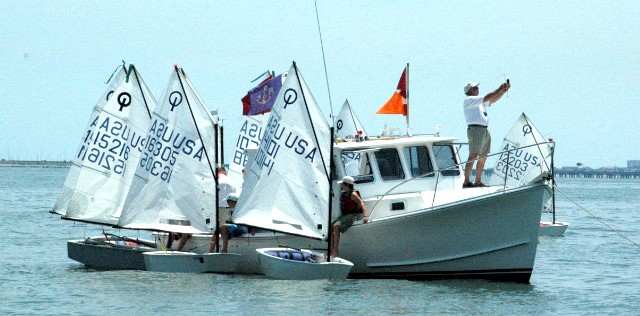 By Airwaves Writer Taylor Penwell
The steps to running a successful regatta
A stressful, make or break day for your yacht clubs image. The annual regatta.. A day/weekend when the club discovers if they’re competent, or simply can patch it for long enough to convince visiting participants it is, or sadly more disorganized than a crowd of Pokemon-Go players sprinting to a rare spawning.
People who play a role in the regatta,
- Directors, Head Instructors
- Coaches
- Board Members/Junior Sail Committee Members
- Club Managers
- Volunteers
- Race Officers
All of these people are vitally important for the success of any regatta. Often there are many more people and factors that come into play for larger, regional, national and international events. However this article is targeted for small and medium sized clubs.
THINGS TO DO:
 Pick a good date
It is imperative that you pick a date that will work well for your club and the clubs around you. The worst thing a club can do is a pick a date when a not-so-far away club is also running a regatta. If two regattas are on the same day and less than 100 miles apart, the number of participants will drop because many will be split between the two venues. Most clubs have had specific dates for annual regattas for years, and knowingly stepping on their designated slot will bring smaller numbers to both events, friction between the other club who is now your rival for hoping more sailors show up to your event as opposed to theirs. And lastly and probably most importantly for small clubs that have to worry about their keeping their program budget in the black, conflicting dates also mean less regatta income from less registrations. At larger annual events which have a number of different classes and over a hundred competitors, this could mean suffering loss of business to the clubs bar and restaurant and also local community. A sizeable regatta bring people to towns to stay in hotels and eat in restaurants that are not affiliated with the yacht club but certainly enjoy the extra boost in customers.
So please, when picking a date, think long and hard to determine if changing your event to the same day as another nearby clubs is worth the risks.
Marketing the event
Marketing your regatta should be done through sailing registration websites, your clubs website, and Facebook pages. A good idea is to have club directors contact other clubs in your area to inform them of your event. It’s a shame when sailors don’t register for a regatta because they see no entries or small numbers. Often times the interest is there for many sailors and clubs, but people don’t want to commit unless they see that the fleet sizes make attending the event worthwhile. Having your club talk to other clubs to see if they are attending is a sign of good faith and also helps your club better prepare for the regatta.
Make a working plan
Event organizers need the cooperation of so many different people for a regatta. The most important part is making a working plan for everyone to understand what their roles will be and for them to follow them. Volunteers and  coaches need to fully know what is expected of them and how the flow of the event will go. Have a meeting and have a printed plan prior to the day of the regatta with instructions and people’s duties. This working plan can cover things such as parking instructions, unloading procedures, boat launching, registration, food and entertainment and scoring.
Have working equipment
Nothing is worse then running around like a headless chicken in the hours before the first race starts looking for marks, lines, flags, horns, and a million other things. Take time to ensure all the boats are fully operational and fueled, all the necessary flags are ready, horns and radios are working, and the marks are working with sufficient length lines. This preparation can save a lot of headache on the day of the regatta.
Have competent race committee
We have all been to events where you are constantly shaking your head at the PRO and race officials. Putting together a competent race committee takes time and energy. The best thing to do is ensure the PROs are capable of doing the job. If your club doesn’t have anyone who will agree to do the job, there is no shame in bringing in outside experienced officials. Competitors are spending time and money and are entitled to a level of professionalism from the race committee staff.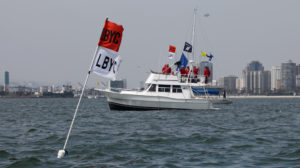
Scoring should be one of the most important aspects of the race committee. Allocate enough people and resources to the scorers so the scoring is accurate and can be posted quickly after racing is concluded.
Have attractions
Regattas are for people to compete against one another and to test their skills but they are also a major social event. Longtime friends get to see each other and catch up along with new friendships being made. A well-run regatta has great racing on the water with good attractions off the water. These attractions should be things like BBQs, bands, cocktail parties, and fun activities for children and junior sailors so everyone in the family can enjoy the regatta.
Regattas are an important pulse checker to see how a clubs sailing is doing. Sailing has seen an increase in attention in recent years with high performance boats on television and in the media. But these kinds of regattas make up a small percent of the sailing community. An to an average sailor who gets to sail for five months out of the year, their clubs annual regatta is their own America’s Cup. They deserve to have well run regattas, and ensuring this takes preparation and an understanding of how things need to be done correctly. These are just a few of the ways a yacht club can do to better prepare for a regatta so everyone can enjoy the occasion.