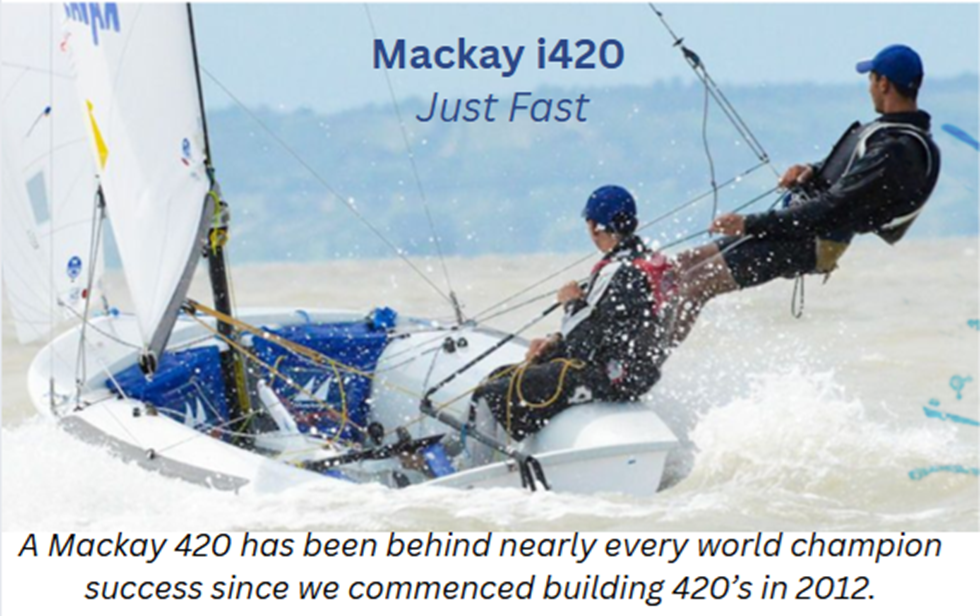
Most coaches will have at some point traveled to an event as a participant. Being familiar with the process helps immensely. Regatta day prep on and off the course revolves around two main areas of concentration. First, you need to make sure your players are ready for competition, and second you need to make sure you are ready for a long day on the water. Mentioned in Part 1, the more organized you are, you will have fewer headaches and more success.
Coach Preparation
Your day starts anywhere from 45 minutes to 2 hours before your players are showing up at the venue. This time you need to be getting an idea of the weather, checking out the sailing venue if you have never been there and reviewing any last minute amendments to the sailing instructions. Check your coach boat; make sure you have enough gas and oil, that the engine starts, if you have an inflatable make sure your tubes are pumped up. Boat and engine issues become ten times harder to deal with when you are out on the water.
Other things to check before you start dealing with your players is making sure the trailer is in a good place, getting your cooler situated for the day, radios operational, sunscreen etc. Basically you want to be ready to go on the water before you need to deal with your players and potentially their parents.
Player Preparation
Your players should be showing up anywhere from 1 ½ hours-2 hours before skippers meeting. This time should be spent first getting the boat set up and then a brief regatta day briefing. Boat set up time will vary depending what class you are competing in, Laser and Opti will take significantly less time to set up than C420, i420, 29er, etc.
Allow yourself enough time to comfortably get the boat off the trailer onto the dolly, step the mast and tune the rig. Having the tuning guide on your phone or tablet in iBooks or similar document reading app will expedite your rigging time. iBooks is also a good place to keep sailing instructions and course diagrams.

Once the boat is tuned and rigged to your satisfaction have your players change and get ready for the water. A good practice is to have them changed and their boat in line on the ramp before the skippers meeting. This way they can immediately get in the water and to the race course right at the harbor start. Take any food/water or bags to the coach boat and make sure they have everything they may need in an eight to ten hour day on the water.
Before launching have a brief briefing with all of your players. In this briefing you go over wind and weather, what to expect throughout the day and general trends that they might see. Make sure they have the courses, flags, signals and starts all nailed down. Hopefully you went over all of this in practice and they have seen some of it before. Have a plan for after launch and before the first start. You may tow out to the course, but if you don’t make sure they come find you and warm up before the first race.
Up next, on the water event coaching.
Feeling ready for summer yet? Check back here at the Locker Room for more articles helping you land your dream job and prepare for a summer on the water. As always, email me at [email protected] with questions, comments, or ideas for articles.
Blog
Sponsor News: Whitecap Composites "1-for-10" Boat Program!
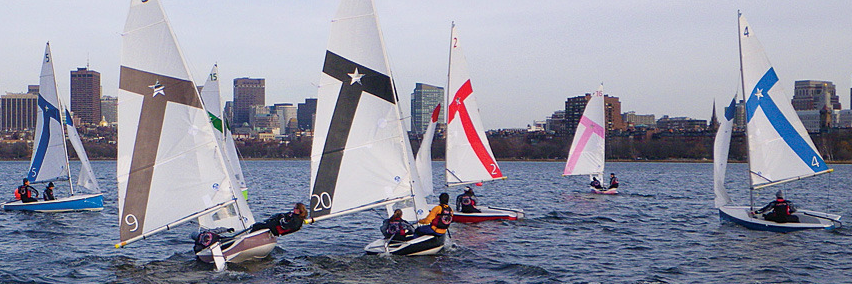
Thanks to an increased recognition for the quality and performance of our boats, Whitecap Composites has had a busy 2014. We refined our already-unique Turbo 420,  developed our Turbo FJ and recently became the new International Comet class builder. Several fleets of our Turbo 420’s and Turbo FJ’s were built and delivered across the country to active sailing programs. We are excited to continue this trend in 2015, and would like to start the new year by giving back to the sailing community.
Whitecap’s new 1-for-10 program aims to give more kids access to our newest designs. From now until April 1, if you order ten boats we will be donating one boat to a sailing program of your choice. There has never been a better time to help boost your local sailing program and encourage kids to get back on the water this summer!

To learn more, contact Whitecap Composites today!
El Toro
Although the El Toro was conceived in “Bull Sessions” at the Richmond Yacht Club in 1936, it has become a recognized class of over 11,000 one-design yachts and is the most popular “dinghy” on San Francisco Bay.
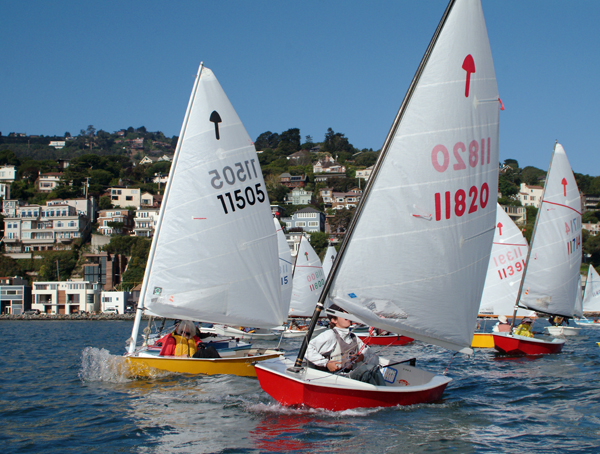 More than fifty years ago, a need was recognized for a small inexpensive sailboat which could serve as a yacht tender and training craft. The El Toro design was based on the MacGregor Sabot plans which appeared in the Rudder Magazine in 1939. Today, the class has allowed new materials to be used with a considerable improvement in performance. The sassy El Toro now has many of the “go fasts” of larger yachts adapted for lighter loads and the small rig. New El Toros are not as inexpensive as they once were, but the original design considerations have remained. Today’s yachts are satisfactory tenders and sprightly racers.
Junior sailing programs at yacht clubs and municipal sailing classes have developed many fine young El Toro captains. High quality racing programs have kept the interest of these young sailors. Often sailors “move up” to larger yachts and are frequently recognized as champions. Many return to the lively tactical sailing situations provided by El Toro racing.
The El Toro has benefited by high quality racing provided by the Small Boat Racing Association. The SBRA has in turn been supplied with sailors in many other classes that have started in the El Toro.
| Length: | 7 ft. 11 in. | Sail Area: | 49 sq. ft. |
| Beam: | 3 ft. 10 in. | Hull: | Wood or Fiberglass |
| Weight: | 60 lbs. (hull only) | Spars: | Wood, Aluminum, or Carbon Fibre |
| 80 lbs. (min. wt. Equipped) | Crew: | One |
-From the El Toro class website
Beetle Cat
The Beetle Cat boat is a 12 foot, gaff rigged, wooden sailboat first built in 1921 by the Beetle family of New Bedford, Massachusetts. Beetle, Inc., now located in Wareham, Massachusetts, is now the sole builder of Beetle Cat boats.
 The Beetle Boat Shop is dedicated to preserving the art of traditional Plank-On-Frame wood boat construction using the highest quality of materials and craftsmanship. While building and maintaining the Beetle Cat is our main focus here at the Beetle Boat Shop, we are also reaching out to design, build, restore and maintain larger wood boats of all kinds. The effort we have made to date will be evident as you explore our website.
We hope these pages will be a resource and an inspiration to anyone interested in Beetle Cat boats and traditional wooden boat building.
Bill Womack, Owner/Manager – from the Beetle Cat Website
NE Beetle Cat Association: http://www.beetlecat.org/
Life After College: Sailing the Z15
By Airwaves writer Tyler Colvin
The past couple decades has seen rapid growth in the numbers of athletes participating in college sailing. In that time the level of sailing has increased exponentially. It could be argued that ICSA Team Race Nationals is the most competitive event in North America on an annual basis. The numbers of high-level post-graduate sailors has increased accordingly. Several boats have arisen to fill the need for a competitive dinghy, such as the V15, however none have had any kind of permanent lasting power. Enter the Z15, the new post-collegiate performance dinghy in the US market from Zim Sailing. A technical boat with advanced rig and hull design characteristics, the Z15 looks to fill a gaping hole in the lives of recent graduates.
The Boat: Technically Sound
Not content with simply remaking the wheel and redesigning existing boats, Zim looked to veteran dinghy builder Steve Clark for inspiration using modern technology and hull designs. At 14’9” long with a beam of 5’5”, the Z15 is slightly longer and wider than an FJ while trimming over 30lbs for a hull weight of 180lbs thanks to the fully cored resin infused construction process.
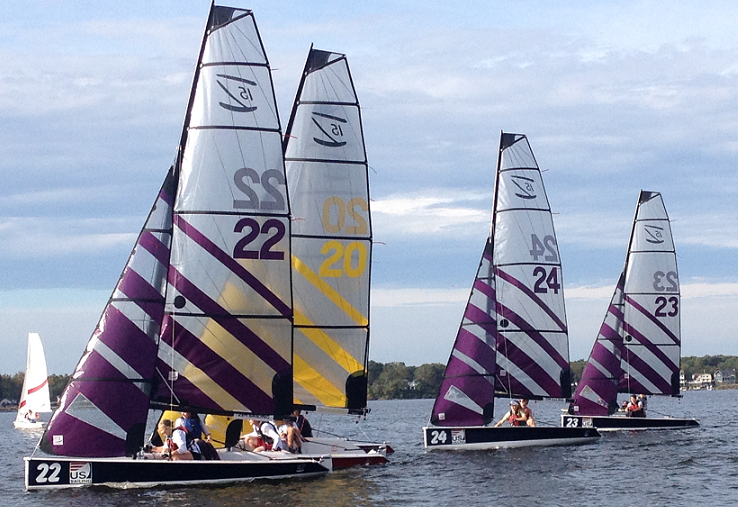
The rig is an update on traditional construction as well. A fully carbon, tapered rig from Southern Spars is fully adjustable and provides a healthy amount of power and eliminating the need for a third (spinnaker/gennaker) sail off the wind. Designed with a wide range of weights and skill levels in mind, the rig is easily depowered for breezy conditions.
Set Up and Sailing: Quick
Thomas Sitzmann, head coach of the Severn School sailing team and previously of Bowdoin College has brought the Z15 to high school sailing in Maryland. On the Z15, “It’s not the same old thing. It can out-sail most dinghies in 3-4 knots, and will definitely perform well in more wind. So, I’d say I enjoy the fact that it is bringing innovation, change, and more options to our sailing world.” Light, fast and technical the Z15 provides new challenges for sailors used to the traditional double-handed designs.
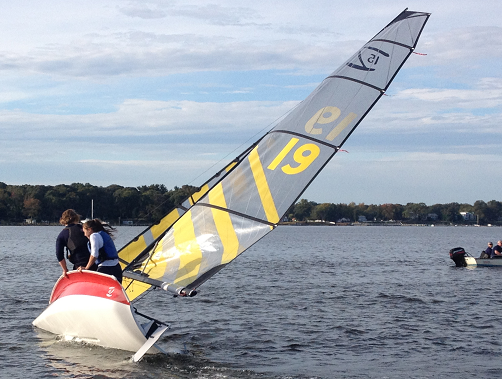
Upwind the boat is sensitive with a narrow groove. “It’s tippy,” said Sitzmann, “and in my brief time sailing it, it seems to be very finicky…In a way, that’s what may be best about the boat. It will force sailors to learn more about sail controls, trim, and balance.” A light air beast, the Z15 was put on display this past fall at the Hinman Trophy US Team Race Championships. Athletes described the boat as sensitive and very responsive to weight placement and sail trim.
Downwind the Z15 takes some adjustment. The lack of a big off-wind sail means the introduction of a whisker-pole to get the clew of the jib out and drawing. The ability to wing the jib out further than held by hand means deeper angles can be sailed than what a two-sail boat might normally be able to achieve. The hull shape makes weight placement key and thusly much less roll is needed to boat-handle than an FJ or 420.
Why Sail? New and Improved
Most of today’s double-handed boats were designed over half a century ago. While they are still more than capable and serve a very large purpose in the youth and collegiate sailing community, there is a need for a technical dinghy for high-level fleet and team racing. It continues to evolve as feedback comes back from the racecourse and promises to be a competitive class for years to come. Mentioned before, it was featured in the Hinman Trophy this past fall and will be the boat of choice for the new 2015 Team Race Midwinters (replacing V15 Midwinters).
Whether you are stepping out of collegiate dinghies, or simply looking for something new and exciting, the Z15 looks to be an exciting new platform for racing. With a price tag around $11,500, the Z15 is a more exciting, faster and most important, growing cousin of the V15. For the moment it would appear the Z15 is the best option for post-collegiate sailors and yacht club members looking for a fun, fast boat to team race in. Bottom line, the Z15 infuses new life into the young adult dinghy racing circuit and provides a new alternative in the performance market.
Coaches Locker Room: Regatta Planning For Your Sailors
Regatta Prep: Junior Sailing
Part 1: 1-2 Weeks Out
Preparation for an event, from your first green fleet regatta to gold fleet youth champs starts a week or two before you pack up the trailer and leave for the venue. Prepping both yourself and your players for a regatta makes your life easier and puts them in the best position to succeed.

The process starts anywhere from 4-6 practices out from the event depending on the preparation of your players. A practice schedule could look something like this:
- Day 1: Lock down boat handling, spinnaker work, making sure skippers and crews are on the same page in the boat.
- Day 2: Review of rules of the road and situations. Practice consists of short courses and trying to generate as much traffic as possible so that a small fleet can feel like a big one.
- Day 3: Review of basic strategy and tactical ideas. Try to run a handful of races in a similar length to the actual event. Most junior sailing events try to have about a 35-45 minute total race length and they need to adjust to a long beat, looking for breeze on the run, and more importantly knowing how much energy a long race requires.
- Day 4: Starts. Everything related to starts. Line sights, acceleration, time on distance, favored end, choosing an end, practicing holding a spot. All of this using the sequence, flags and line configuration that will be used in the regatta.
- Day 5/6: Review of the schedule for the weekend, sailing instructions for the regatta, make sure everyone is ready to sail before you get to the venue. Also today can involve packing up the boats for travel. Touching base with the parents involved needs to be an ongoing dialogue throughout the week.
This is a very general outline and can be adjusted as you see fit. Once you hit the full swing of summer where travel to events is every weekend this will be adjusted accordingly.

Your own preparation will change accordingly as well, but in essence it has several essential parts.
- Know your travel plans. How are you getting to the venue, how is your coach boat getting there and where are you staying once you are there? Much of this (logistically) will be handled by your program director, but you and only you are responsible for making sure it all happens.
- Know the venue. If you’ve never sailed there or coached there, find someone who has and get some knowledge of the tides, wind tendencies, and weather.
- Know the weather. Check and double check as the week goes on, as it will probably change. In New England it changes on an hourly basis with little warning. This goes for wind as well, there are several good iPhone wind apps you can download.
- Get a copy of the sailing instructions and download a copy to iBooks on your phone. Know the schedule, the flags being used, everything you need to know about the regatta.
- Pack your bags. Typically an overnight bag and a regatta bag. Overnight bag is easy, change of clothes and sundries. Regatta bag is everything you need for a day on the water. Foul weather gear, sunglasses, hat, sunscreen, water, food, spare parts, electrical tape, duct tape, spare line, anything else you can think of as well.
The more you ready yourself, the better you will be able to coach your players. Preparing them for the event is as much about results as it is their own enjoyment. If they go into an event feeling unsure and overwhelmed, you can be sure that they will be stressed during competition. You know your players best, and addressing their concerns and weaknesses going into the event will be different group to group. Develop your own routine and each event will get progressively smoother.
Coming soon, packing a trailer, coaching an event and debriefing.
Feeling ready for summer yet? Check back here at the Locker Room for more articles helping you land your dream job and prepare for a summer on the water. As always, email me at [email protected] with questions, comments, or ideas for articles.