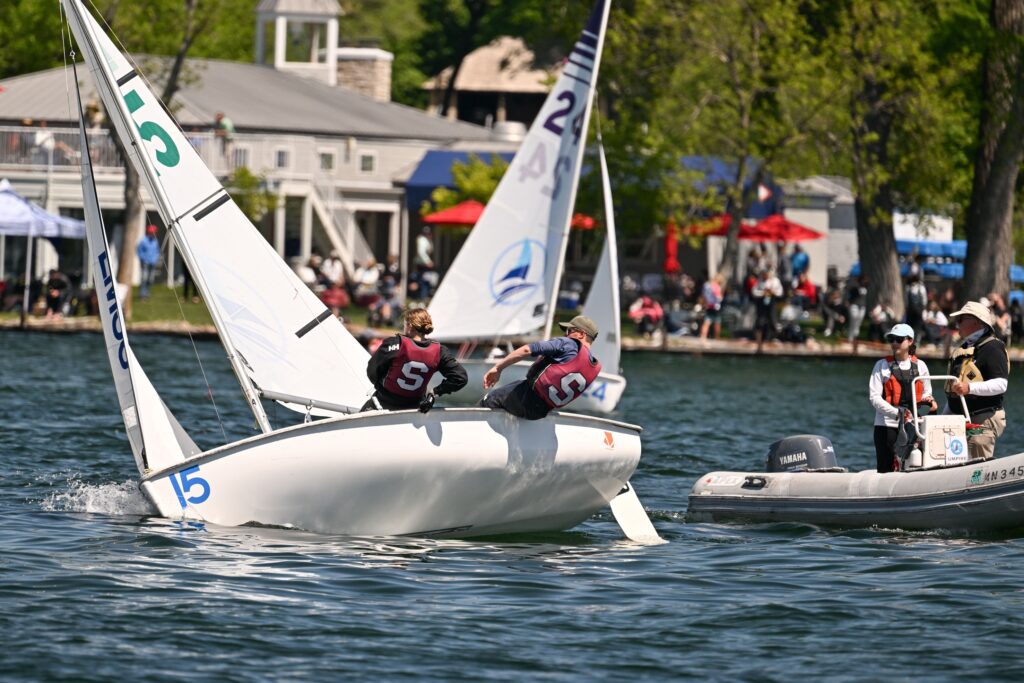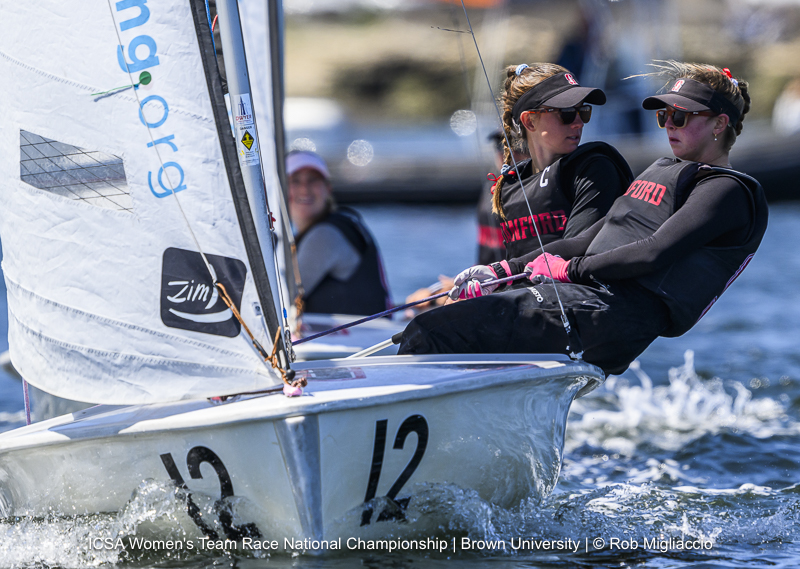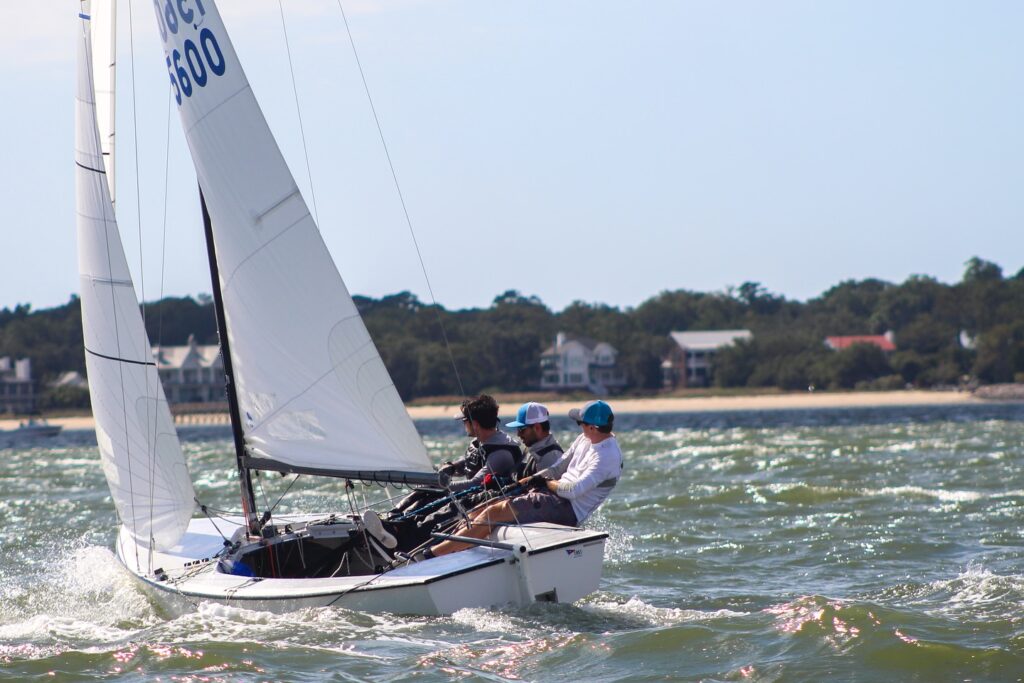
Stanford University held on to win the 2025 Open Fleet Race National Championship at St. Mary’s College. FULL SCORES


Stanford University held on to win the 2025 Open Fleet Race National Championship at St. Mary’s College. FULL SCORES


Sail1Design has been lucky to be part of some great moments over the years, mostly when we do our job, and take part in recognizing the very foundation of our sport: youth, high school, college, and one-design sailors. Reading nomination letters, hearing from our community about unsung heroes, sharing in the joy of the winners…… makes the whole Sail1Design project, now almost 20 years in the making, more than worth it. It is always nice to hear about people in our sport not only doing things well, but doing things the right way.
Remember, for Coach of the Year, we only choose candidates from nomination letters sent in, so we sit back, wait, and take what we get. This year, over the last month we were faced (again) with a lot of really good nominations, and we whittled that down to a small list of finalists. The Pacific Northwest has spoken: the team decided that this years winner had to be Sarah Hanavan. Scroll down to the bottom of this article to learn more about Sarah. We admire Sarah’s energy, passion, and love of both the sport and her gift of teaching. Congratulations!

Sarah is deserving on so many levels; what stood out was the sheer number of separate letters she received, and of course, what those letters described. Despite not hailing from one of the biggest sailing hotbeds, Sarah has really developed a wonderful program at Olympia (WA) Community Sailing. Below are just a few excerpts from 15 separate nomination letters that Sarah received:
_________________________________________
I’m a current college sailor on the Tufts University team, and Sarah coached me from fifth grade until I graduated high school.
Sarah is an amazing coach and was one of my most prominent role models throughout the time she coached me, and even now in college. She has always been focused on promoting confidence and independence in her sailors and has been incredibly dedicated to growing the Olympia program not only competitively but also in creating a deep team where all sailors can build lifetime friendships and find joy out on the water. Along with the amazing team that she created, it has also been one of the most consistently competitive teams in the NW district, and she has worked hard to give sailors opportunities for competitive growth that cannot always be found in the north west.
I credit her passion for sailing and exemplary leadership for helping me become the sailor and person that I am today. Through her encouragement of women skippering, I have had the opportunity to continue competing in college sailing, which I am forever grateful for.
I hope that you seriously consider Sarah for Coach of the Year. She has created an amazing environment where sailors are excited to get out on the water and compete, but also value each other as teammates and as people.
_________________________________________
I am currently a senior at Bowdoin College and am a captain and four-year member of the sailing team. I am thankful for Sarah not only because she is the person who taught me how to sail, but also because she has been an amazing role model and mentor.
The summers after 6th and 7th grade, my parents sent me to Olympia Parks and Recreation summer sailing camps, which, unbeknownst to me, were organized by Sarah. Through these sailing camps, I found the sport of sailing and eventually learned that Sarah also ran the high school sailing team. After a conversation with Sarah, hearing her passion for the sport, she convinced me to join. Progressing through five years of youth sailing, coached by Sarah, she allowed me every opportunity to excel and follow my passion for sailing despite Olympia not having a history of youth sailing and the lack of competitiveness within the Northwest. She taught me the basics, like how to roll tack, the complex like how to sail through a fleet after a difficult start, and the nuanced like how to be a good teammate in the most pressured situations. Sarah taught me high-level sports psychology strategies and allowed me to experiment and develop my unique style of sailing. Sarah did everything from teaching my Level One so I could become a sailing instructor during the summer to coaching me every weekend of her spring, summer, and fall.
I find myself trying to put into words all that Sarah did for Olympia sailing, but it is nearly impossible. Two years before I took my first sailing summer camp, Sarah was hired. When she started, there were four members of the high school sailing team and little to no infrastructure in place for youth sailing. Today, sailing in Olympia takes place through a non-profit Sarah set up (Olympia Community Sailing) with two fleets of boats, operations out of two different locations, and hundreds of kids on the race teams and doing summer camps. All that progress didn’t happen by accident, it happened because Sarah worked day and night to bring the joy and love of sailing to little old Olympia.
Next week, I will graduate from Bowdoin, and the week after, I will sail in my fourth College Sailing Nationals. I have been lucky enough to sail these past four years under Frank Pizzo (2015 S1D coach of the year), but my sailing journey would have been possible without Sarah. I am so truly grateful for Sarah’s impact on my life and can not think of anyone who deserves this award more than her. I sincerely hope that you not only consider but select Sarah Hanavan with this award for her hard work and exceptional coaching.
__________________________________________
I am writing to encourage you to choose Coach Sarah as coach of the year.
My son had his first experience on the water at a summer camp class. Sarah watched them learning, asked him some questions and told him “you’ve been paying attention! We need more kids like you to join the team!” And I’ve been looking back through photos, trying to make sure I get the years right, but I think that was fifth grade. After that, he sailed every year, most regattas, through his senior year of high school.
Sarah instilled in him the best sense of ethics, hustle, common sense, problem solving and can-do spirit. She taught him to lose gracefully. She taught him to look at the wind on the water, and look at the surrounding hills, and then talk with the local folks about the wind. She taught him he can learn new boats. New rigging. Trapeze. She taught him to work with his skipper as a team. She taught him to always thank the race committee.
She inspired him to ride his bike to practice three nights a week -even when school,life , weather made it stressful, because… “It doesn’t matter. We treat every practice just like it’s a regatta”. She’s and now, he’s taken that full circle, and he’s coaching a team!
Sarah’s leadership is just infectious. She makes people believe they can do things. She coached me! I told her that I could not assist with towing boats, because I was scared to tow boats. I had no interest in towing boats. Through gentle coaching, enthusiasm, willingness to train, Sara has turned me into a person who tows boats. I can tow a triple trailer through Seattle traffic, even through the narrow roads and construction around the University of Washington. Anyone who knows me, is in total disbelief. The only reason I am able to do this, is because Sarah inspires those around her to stretch. She has such grace, persuasiveness, good nature…. she is just a magnificent coach. Even of the parents!
Thank you for considering her!
__________________________________________
We are in full support of Sarah’s nomination for Sail 1 Design’s 2025 Coach of the Year. She has many accomplishments to back it up – the letter from Erin Timms as Board President of Olympia Community Sailing summarizes all that she has done for the sailing community quite nicely. What a list of accomplishments can’t do, however, is to touch on the intangibles that Sarah has brought to the community over the past 10 years. My daughter Caleigh somewhat reluctantly signed up for a sailing camp after her freshman year at Olympia High School (Olympia, WA). She still hadn’t quite found her place in high school and only went to sailing camp because her dad and I thought it sounded super cool and wouldn’t that be a fun way to spend a week in the summer? Lo and behold, she was one of many who ended up joining the team due to the spirit of inclusion, fun and the understanding that skill sets of all kinds can bring something to the table.
For the past 3 years, Caleigh has learned SO much from Sarah. From how to sail but mostly how to move through the world with other people – those who have different backgrounds and think differently from you. As a complete sailing rookie parent, I have observed, somewhat to my surprise, that sailing is first a people sport – much of it depends on how the skipper and their crew connect and work together and only then can the technical aspects of sailing follow.
These are life lessons that my now graduating senior will take with her for life. Sarah has been such a positive female role model and we will be forever grateful to the influence she has had on Caleigh’s high school years. From a novice sailor to sailing team captain in 3 years – we are so proud of Caleigh, Sarah and OCS/OHS Sailing! Sarah will be greatly missed as she grows her family but we are so happy for her and Casey to experience parenthood. We are grateful for the years that Caleigh was able to be in her orbit.
__________________________________________
I am a current junior on the Tufts Sailing Team. I first met Sarah and was introduced to sailing by her in Olympia when I was eleven years old. In the 10 years since, Sarah has been the best mentor, advisor, friend, boss, and coach I could possibly hope for. Aside from the clear successes she has had growing the Olympia Community Sailing program from the ground up, as well as regional dominance and repeated national appearances from the team, the community she created is, in my opinion, the star of her accomplishments. Her knowledge and application of Sports Psychology concepts, passion for community, and the infectious energy she brings to everything she does make learning from her a joy. She brings people together in a way I have seen from very few other people in my life, making sure that everyone’s voice is heard, their value acknowledged. I came away from my time with her as my coach, not only a better sailor, but also a better person. As a young girl having a female coach to look up to meant so much more than I could even comprehend in the moment. I hope her many contributions to the sailing community inspire future generations of female coaches. I am so grateful to have Sarah as a mentor. She has changed my life and so many others’ infinitely for the better and deserves this recognition.
__________________________________________
Sarah has had a profound impact on our community and beyond. Erin Timms’ nomination letter tells of Sarah’s history in Olympia, building a barely existing racing program into a year-round program with 75 youth racers and a summer program serving well over 400 youth each year.
Sarah’s vision for youth sailing in our community led to the creation of the nonprofit Olympia Community Sailing in order to grow the program beyond the physical and financial constraints of Olympia Yacht Club. This has allowed Sarah to introduce even more youth to the sport, has created additional jobs for coaches and instructors, and has led to more awareness of sailing as a sport both in the Olympia area and around the Northwest. And on top of all of that, she has been the best coach and role model that any parent could hope for their child to have.
__________________________________________
We are in full support of Sarah’s nomination for Sail 1 Design’s 2025 Coach of the Year. She has many accomplishments to back it up – the letter from Erin Timms as Board President of Olympia Community Sailing summarizes all that she has done for the sailing community quite nicely. What a list of accomplishments can’t do, however, is to touch on the intangibles that Sarah has brought to the community over the past 10 years. My daughter Caleigh somewhat reluctantly signed up for a sailing camp after her freshman year at Olympia High School (Olympia, WA). She still hadn’t quite found her place in high school and only went to sailing camp because her dad and I thought it sounded super cool and wouldn’t that be a fun way to spend a week in the summer? Lo and behold, she was one of many who ended up joining the team due to the spirit of inclusion, fun and the understanding that skill sets of all kinds can bring something to the table.
For the past 3 years, Caleigh has learned SO much from Sarah. From how to sail but mostly how to move through the world with other people – those who have different backgrounds and think differently from you. As a complete sailing rookie parent, I have observed, somewhat to my surprise, that sailing is first a people sport – much of it depends on how the skipper and their crew connect and work together and only then can the technical aspects of sailing follow.
These are life lessons that my now graduating senior will take with her for life. Sarah has been such a positive female role model and we will be forever grateful to the influence she has had on Caleigh’s high school years. From a novice sailor to sailing team captain in 3 years – we are so proud of Caleigh, Sarah and OCS/OHS Sailing! Sarah will be greatly missed as she grows her family but we are so happy for her and Casey to experience parenthood. We are grateful for the years that Caleigh was able to be in her orbit.
__________________________________________
About Sarah Hanavan:
A former College Sailor, Sarah moved to Olympia in the summer 2014 and started volunteering with the local yacht club sailing program. By Spring of 2015 she was coaching the small but mighty race team composed of just 5 sailors – only 3 of which went to the same high school (Olympia). Olympia had never attended a District Championship. By Fall of 2015 Sarah had recruited over 20 new sailors, building both the Olympia and Capital teams respectively and a Club Race Team as well. Spring 2016 marked the first year Olympia ever competed in both NWISA Fleet and Team Race District Championships. By 2018 Olympia had grown to a 30+ strong team, and after only 3 years as an official team won their first District Championship title and attended their first ever High School National Championship. Sarah’s passion, commitment and enthusiasm for the sport is infectious, and what Sarah lacked in her own Coaching skills she sought to learn from others. Receiving her Instructor Trainer Certification with US Sailing, starting a Women’s Coaching Clinics series, and applying to and graduating from the United States Olympic Committee’s International Coaching Enrichment program with the University of Delaware.

In 2019 Olympia not only repeated their Fleet Race District Championship win but claimed Team Race District Championships as well and attended their first ever Baker Nationals. Olympia has been a dominant team in the NW ever since. Regularly winning Fall Championships, and other qualifiers. Being from the NW, Coach Sarah knows her sailors are at a disadvantage when it comes to the depth and knowledge base that deeper sailing regions have across the country, and has inspired her sailors to travel and attend as many events as possible to broaden their horizons and build skills. She has also championed access for all and built scholarships and funding for travel so that regardless of a sailor’s means, if they are competitive and hungry, they have the opportunities to pursue their passion. To accomplish these things Sarah built up the Olympia Yacht Club Sailing Program until summer enrollments exceeded 400+ sailors, with numerous staff, classes and camps. Eventually it was determined that the program become its own non-profit which would be better suited to the ever-growing organization, and in 2020 Olympia Community Sailing was formed. By 2021 it expanded to a second location, hired additional full-time staff and under Sarah’s leadership became a full-fledged independent community sailing non-profit. Throughout all of these years Sarah was still coaching full time leading the Olympia and Capital High School Teams to new heights and growing an ever more competitive Club Race team. Sarah’s efforts reinvigorated the c420 Class in the NW (after years of dormancy), bringing a much-needed high performance steppingstone class back to the region.
Sarah has been the Northwest Interscholastic Sailing Association’s President for over 3 years, has run numerous Level 1 Courses, and is a leader and mentor in the NW. Alumni from her teams attend schools all across the county: Boston College, Bowdoin, Cal Poly, Coast Guard, Duke, George Washington, University of Washington, Western Washington, Tufts, etc. Many are competitive Collegiate Sailors – just this season her Alumni at Tufts and Bowdoin will be racing in College Team Race and Fleet Race Nationals.
2025 marks Sarah’s 10th year in Olympia and her final season Coaching High School Sailing (for the time being – I have a feeling it will be hard to keep Sarah away!) as she is expecting her first child with her husband Casey and has started a new job with Washington State. At her final Fleet Race District Championship, Olympia soared above the competition and with a 62-point lead claimed their 5th Fleet Race District Championship in 10 years. One might think that Sarah’s greatest accomplishment was building a winning program but she will tell you it was building a culture of inclusion and kindness where her sailors support and truly care about one another.
Sarah and Casey plan to focus on raising their family and doing more of their own sailing in their Tasar and Star, but will continue to support and help Olympia Community Sailing whenever needed.
|
| This comes from www.collegesailing.org |
|
|
|

Photo Credit: Rob Migliaccio
Harvard Sailors: Justin Callahan ’26, Kennedy Leehealey ’26, Mitchell Callahan ’26, Aidan Pesce ’26, Robby Meek ’27, Rosella Irfan ’27, Alexandra Dorofeev ’25
Coaches: Michael O’Connor, Bern Noack, Stan Schreyer
Saturday, April 26 – Three days of sailing in big wind and shifty conditions created opportunities for major leaderboard shake ups but, after it all, the Harvard University Crimson are the 2025 College Sailing Open Team Race National Champions.
Seeking redemption after a close second place finish to Roger Williams University in 2024, the Harvard Crimson fought their way to the top of the leaderboard on the penultimate day of racing and held the lead through both the round of eight and the final four. The team’s 20/5 record was impressive, but perhaps more so is that the team did so in a Play 1 combination for all twenty of those race wins.
Second place finishers Yale University, and third place Roger Williams, each drew a win against the Crimson in the final four. With the Yale Bulldogs having secured their second place finish, the final podium spot came down to the last meet up between Roger Williams and Stanford which the Roger Williams Hawks clinched in a 1-2-3 combination.
Tensions were high at each stage of elimination. Sail-offs were needed to decide the final two spots in the round of eight–which went to Tulane University and Boston College– and a sail-off between host school Brown University and Stanford University decided the last spot in the final four.
“Every year is its own challenge,” said Justin and Mitchell Callahan, junior returning skippers for Harvard. “We felt the field was the most competitive we have seen top to bottom so we are just super happy to come out on top.”
“I’m really proud of everyone on the team,” said Harvard Associate Head Coach, Bern Noack. “It’s called ‘team racing’ for a reason. That applies to the boats working as one on the water but beyond that all the heavy [wind] crews who sailed key races, all the teammates who made practices great all year and all of the athletic department and the Friends of Harvard sailing who support us.”
Noack gave special recognition to Harvard’s Head Coach, Mike O’Connor for his leadership and the tall bar he set for the team.
Final Record
1. Harvard University (20/5)
2. Yale University (19/6)
3. Roger Williams University (18/7)
4. Stanford University (14/11)
5. Brown University (13/9)
6. Boston College (12/10)
7. Dartmouth College (12/10)
8. Tulane University (8/14)
9. U.S. Naval Academy (8/7)
10. St. Mary’s College of Maryland (6/9)
11. Georgetown University (6/9)
12. Tufts University (6/9)
13. U.S. Coast Guard Academy (5/10)
14. College of Charleston (5/10)
15. Bowdoin College (2/13)
16. University of Michigan (0/15)
|
|||||||||||||||||||||||||||||||||||||||||||||||||||||||||||||||||||||||||||||
|
We are happy once again to announce that nominations for the 12th annual S1D Coach of the Year Award are now being accepted!
There are SO many deserving coaches out there, and so much of this past year to use to choose a new winner. Here is your chance to reflect on your last year of sailing, and nominate a coach that made a difference for you. If you read through some excerpts from past nomination letters (see links below), you will find inspiring and heartfelt words to all these great coaches. It is absolutely vital to remember that if you don’t nominate, you don’t have a voice! Now is YOUR time to speak your mind! In true grass-roots fashion, we pick the ultimate winner only from nominees supplied by you, our readers.
This can be a youth coach, high school coach, college coach, Olympic coach….. you name it!
Sail1Design annually seeks your nominations for the S1D Coach of the Year, for a coach that embodies all that is great in coaching: experience, resilience, humility, empathy and expertise. Sailors, this is your award!
The Sail1Design staff chooses the winner only from our readers nominations! This is a great opportunity to recognize a coach that you feel makes a difference! Take a look below at our past winners.
Please write a detailed nomination letter and send to [email protected] . SEND IN SOON!!!
Past S1D Coach of the Year Winners
2024- Christian Koules
2023- Nick Kaschak
2022- Chris Klevan/Erik Bowers
2021- Maru Urban/Bobby Lippincott
2020- John Mollicone
2019- Jon Faudree
2018- Scott Ikle
2017- Bill Healy
2016- Bill Ward
2015- Frank Pizzo
2014- Chris Dold
|
|||||||||||||||||||
|
|||||||||||||||||||
|
Winning Ways targets both new racers and those who’ve been racing a few years but are stuck in mid-fleet mediocrity, designed to engage and improve results. The story is told through the experiences of some of the greatest sailors of our generation. Various aspects of racing are broken down into digestible parts, beginning with the most critical; preparation. The book offers engaging, memorable stories that end with lessons learned. Written and photographed by sailors for sailors, it’s a book full of sailboat racing knowledge to help you get onto Winning Ways!

“Winning Ways taps into the knowledge of some of the world’s top sailors. I highly recommend this book for up-and-coming racing sailors and anyone who has followed or competed against these past champions. I’m honored to be a contributor.” John Bertrand, 2x Laser World Champion and Olympic Silver Medalist (Finn).
“It is like we are sitting down with a beverage chatting about sailing, while I get to learn from a Master. The mixture of personal stories and explanations of how to do it really brings the book to life.” John Cole, Contributing Photographer.
“I wish I had this book when I was 15!” Not only for the sailboat racing inspiration, but WHAT A FUN READ!” Dick Lamb, Past Windsurfer International Class President and Snipe sailor.
You can buy your copy HERE
|
|
|
By Airwaves Writer Ty Olsen
TCO: Peter it is safe to say that you have had an extensive sailing career so far, with way too many accolades to mention. With all the directions that you could turn your focus, why did you choose the weather and the importance it plays on the racecourse?
PI: It all began when I first started as a junior sailor. Right away, I realized the importance of weather and how it shaped every aspect of sailing. Back then, my limited understanding was just the tip of the iceberg compared to what I know now—but even then, I knew it was something that was important to being a successful sailor.

As my sailing career took off and I headed to college, I had a wild idea: Why not major in sailing? Well, that wasn’t exactly an option, so I went for the next best thing—weather and meteorology. Little did I know, at Yale, meteorology wasn’t just about watching weather charts and tracking high and low pressures—it was hardcore physics, fluid dynamics, and complex computations! And as fate would have it, I found myself in many of the same classes as my roommate, the legendary sailor Stan Honey.
It was a deep dive into the science of air and water molecules, and while it was intense, it gave me an incredible foundation. That knowledge became a game-changer as I transitioned into a tactician role. The more I got into competitive sailing, the more I realized just how crucial detailed weather analysis was. I made it my mission to stay ahead of the curve, constantly pushing the boundaries of what I could learn and apply.
Then came COVID—a time of uncertainty, but also an opportunity. Chris Bedford and I finally had the time to bring a long-time dream to life. That’s when we decided to collaborate on starting The Marine Weather University. After a lifetime of being dedicated to the study of weather and its impact on sailing, I now had a way to share that knowledge with others. It’s been an incredible journey, and I couldn’t be more excited to help sailors advance.
TCO: So, it was around 2020 that you started Marine Weather University?
PI: It was back in early 2020. Teaching has been a huge part of my life for years, especially when it comes to weather. When COVID hit, I had been planning to update my North U Expedition Navigation Software classes—which covers the many aspects of Nick White’s amazing software that racing navigators use for everything from weather routing to performance tracking, and tactical decisions, etc.
I’ve been a close collaborator with Nick White since the very beginning, back when we sailed together on Team News Corp in the Around the World Race, and we knew it was time to revamp some of the outdated Expedition courses. So, I set up an online school using one of the platforms that could handle it.
Then, everything changed with one conversation.

I was chatting with my close friend and America’s Cup teammate, Chris Bedford—who, in my opinion, is the best sailing meteorologist in the world. He told me he’d always wanted to create an online weather school for sailors—one that truly focuses on what sailors need to know, not just generic meteorology. Right away, I thought, that is way cooler than just updating my Expedition courses—and way more impactful for the sailing community! We teamed up, and with the unexpected free time during the lockdowns, we had the perfect opportunity to lay down the foundation for what is now Marine Weather University. Looking back, there’s no way we could have built something this solid without that time. And, funny enough—those Expedition classes? They still need updating!
But I’m beyond proud of what we’ve created. With Chris’s expertise, curriculum, and my contributions along the way, Marine Weather University has become something truly special for sailors everywhere.
TCO: Peter, tell me a bit more about Marine Weather University? What types of courses are offered?
PI: The Marine Weather University courses are designed to fit seamlessly into anyone’s schedule—available online 24/7, so you can learn at your own pace from anywhere in the world. Whether you’re looking for in-depth lessons or just want to dip your toes in, the website has so many topics covered. We offer both paid and free courses, and honestly, you can get an incredible foundation just by taking a few of our free classes. A lot of people do exactly that! In fact, over the past four years, more than 6,000 sailors have expanded their marine weather knowledge through our programs.
At the core of Marine Weather University is a structured curriculum built on the Chris’ expertise that he’s honed in a lifetime of working as a meteorologists with sailors, events and teams. Chris had a vision for teaching weather specifically for sailors, and together, we built the perfect platform to make it happen.
Our two flagship courses—The Fundamentals Course, and The Advanced Course—are the backbone of our program. These aren’t just generic weather lessons; they are university-level courses that have been custom-designed for sailors. They take you step by step, with lectures, quizzes, and resource materials, all carefully crafted by Chris and me. And the coolest part? It starts right where every sailor does—by simply looking up at the sky! You’ll learn to read clouds, understand weather systems, and break down highs, lows, and fronts. Then, we take you deeper into sea breezes, local geographic effects, and finally, into the world of weather models and online forecasting tools like the apps that many of us use.
Most sailors start their day by checking a weather app on their phone and blindly trusting the forecast. But at Marine Weather University, we flip that upside down. We teach you why the forecast says what it does—so you can make better, more informed decisions on the water. And here’s the kicker—even with my meteorology degree, years of studying models, and a lifetime of sailing experience, I’ve learned so much while building this program with Chris! No exaggeration—my race results have improved since we put this together.
TCO: How often, if ever, are you contacted by race officials for “advice” on impending weather for a regatta that is starting that day, or if it is an offshore race, already underway?
PI: I do get calls from time to time, but honestly, weather forecasting isn’t my main gig—that’s Chris’ wheelhouse. That’s his day job, and he’s the best in the business. He does forecasting for regattas, professional sailing teams, the U.S. military, major corporations, and of course, Olymic, America’s Cup and Volvo teams. So, whenever someone reaches out, I usually steer them in his direction. That said, every once in a while, someone manages to convince me to take on a forecasting job—and let me tell you, it’s a serious commitment. Providing high-level weather support for a regatta isn’t just glancing at GRIB files or weather apps and repackaging it. You must do the homework. You need to understand why the forecast is shaping up the way it is, what hidden factors could shift conditions, and what edge you can give to the competitors. And, while I don’t take on a ton of these projects, I’ve had some incredibly fun experiences.
I’ve done weather for double-handed offshore championships, a transatlantic race, and one of my absolute favorites—a wild adventure helping an 80-year-old friend sail a 33-foot trimaran from the Bay Area all the way to Ibiza, Spain… during COVID! Unbelievably, he only had a tiny InReach text-based communicator, so I could only send him short text messages to help guide him through the weather. It was an amazing challenge, and honestly, a blast. But let’s be real—it was a ton of work!
And that’s the thing—while forecasting is fascinating, it’s also time-consuming. That’s why I leave it to Chris most of the time. But when the right opportunity comes along? Sometimes, I just can’t resist.

TCO: Besides the obvious tides/currents/wave patterns, what are the main differences that you look for when you are offshore racing and buoy racing?
PI: Weather plays a huge role in sailing, whether you’re battling the open ocean or navigating the twists and turns of an inshore course. But here’s the challenge: how you study and interpret the weather depends on where you are.
With offshore racing, the data can be scarce. So, what do the pros do, they go old-school. Before diving into high-tech models, they study traditional weather charts—highs, lows, fronts—to get a sense of what’s coming. Understanding historical weather patterns is just as important as any forecast. Out there, real-time weather data is limited—there are no coastal weather stations, and just a few scattered reports from passing cargo ships, satellites, and aviation sources. Because of this, offshore racers rely heavily on global weather models to get the big picture. These models are getting more detailed, but they’re still not perfect at predicting small-scale shifts.
For inshore racing, it is unlike offshore racing, where you zoom out for the big picture, inshore racers zoom in and work with high-resolution models to catch small shifts in the wind. Understanding how local geography interacts with the wind can make or break a race. The golden rule for weather forcasting with inshore racing is start with the big picture (the weather map) and then drill down to the geographical area.
There are a million jokes about weather forecasts being wrong – and they are correct – no weather forecast is ever 100% right—whether it’s from a human, a computer, or even AI.! The key is to understand why the weather model’s forecast says what it does and be ready to adjust. Shifty winds are not always a bad thing!
The best sailors don’t just check a forecast—they think like meteorologists. They combine models, weather charts, observations and open their eyes and look at the sky to stay one step ahead.
TCO: What are some of the most basic things that a youth sailor can look for before heading out on the water, if they have not gone through the courses offered at Marine Weather University?
PI: First and foremost, there’s no shortcut to truly understanding weather patterns. Sure, you might think someone’s too young to grasp the technical details, but even the youngest can learn how to read high and low pressures or recognize when a front is moving in. A great starting point—especially in the US—is getting comfortable with the NOAA forecast. Honestly, the hotlink on my phone and computer is a direct link to the NOAA app. If sailors would just tap into the “Forecast Discussion” section, they’d find that it might get a little nerdy, but it’s written in plain text and gives you the big picture for the day. A prepare for a day on the water is read that forecast discussion BEFORE you hop over to your weather app. Doing this combo will give you a much deeper, more advanced outlook on what to expect. It’s kind of like a “cheat code” for better forecasting knowledge—but trust me, it’s a simple yet powerful way to start advancing your skills!
TCO: Peter, can you give us an example of a situation where your knowledge and experience with the weather played a key role out on the water? Are there any challenging situations that come to mind?
PI: This year, I’m gearing up for one of the most legendary challenges in sailing—the Fastnet Race! It’s one of the oldest and most iconic races still going, covering over 600 nautical miles. The race kicks off in Southern England and stretches across the Irish Sea finishing across the English Channel in France. I haven’t done the Fastnet in over a decade, but I’ve got some serious history with it. The last time I competed, I was aboard the super-fast Rambler 100, a 100-foot powerhouse designed for one thing: speed! I was the navigator and tactician, fully immersed in weather models, and I was convinced we were on track to set the race record. With a world-class crew and a 140-foot rig, we were basically a racing speed machine. However, as you can imagine, sailing isn’t always as smooth as you hope. The first leg was slow, and we had some minor sail issues, but I kept my eyes on the weather, confident we were still going to break the record. This was going to be huge—but then… the unexpected happened. Just as we rounded Fastnet Rock, our keel broke off. In an instant, the entire crew was in the water. Over 3 hours floating in the middle of the Irish Sea, hanging on top of the boat’s slick wet sanded overturned hull, we waited for rescue boats to arrive. By then, five crew members had drifted away, and they were facing the reality of survival in 57-degree water. They had to use every skill they had learned in Safety at Sea courses to stay alive. I am happy to say, that when rescue teams showed up, they were able to get all the crew members on the flipped hull – and locate the 5 swimmers and get them out of the water and to safety. It was certainly one of those unforgettable moments that reminds you how quickly things can change at sea – and how precious life is.

T biggest lesson from that day in the Irish Sea: always wear a lifejacket. There’s no doubt in my mind that the five crew members who drifted away would not have survived that ordeal without their lifejackets. And the second crucial takeaway: stay with the boat – if you can. It sounds basic, but when the unexpected happens, staying in contact to your vessel could mean the difference between life and death.
As I head back into the race this year, those memories stay with me. I’m already diving deep into weather patterns in the area, as the Fastnet Race throws curveballs at you—unique weather models in the UK, tricky currents crossing the English Channel, and those local quirks that only experienced sailors know. But here’s the secret weapon: it helps to have friends who share your passion for weather, models, and planning. They’re an incredible source of local knowledge, especially when you’re in unfamiliar waters. No matter where you are sailing – it pays to learn about the local conditions from the local sailors.
I’m excited to compete in the Fastnet again this year—but hoping for a far different outcome! Every race teaches you something new, but the fundamentals of safety are what truly matter in the end. Let’s just hope the weather doesn’t throw any more surprises my way!
TCO: With all the sailing adventures that you get to be involved with every year, what is on your schedule for 2025?
PI: Well, looking back, I’m glad I didn’t follow my baseball dreams and stuck with sailing—because decades later, I’m still out there on some of the coolest boats on the water! This year is especially exciting, as I’m teaming up with Roy Disney and the Pyewacket team—and we’ve got two boats in action. One of them, a turbocharged Volvo 70, currently in the Caribbean. We’ll be racing it in Antigua Race Week next month, then it’s off to the Fastnet and then onto the Mediterranean for some major big-boat races.
In addition, back on the West Coast, it’s a big year because we have the Transpac Race to Hawaii every other year. This race, we’ll be sailing the other Pyewacket, an old classic 70 foot “sled” that’s absolutely perfect for the long downwind race from California to Hawaii.
And I’m looking to getting back on board one of my favorite racing boats “Spartan”, a 110-year-old, 70ft Herreschoff sloop—a true gem. We race it in the Classic Yacht circuit in Europe, a series of five races that take us around some of the most beautiful ports in the Mediterranean. This boat is special: with just one beautiful wooden mast we sail upwind with four sails flying!. It’s a beautiful boat to see under sail!
On top of all that, I love racing on the TP 52’s. I just returned from racing on Wizard in Pensacola, with a great crew including co-San Diegan, Steve Hunt calling tactics. The 52’s are at the cutting edge of race boat design, and every time I step on one, I learn something new. Suffice to say, that my year ahead is packed with epic races, challenges, and, of course, the opportunity to keep learning.

TCO: What is the best way for sailors to get more information on the courses offered at Marine Weather University?
PI: The best way to dive into the world of marine weather is to browse Marine Weather University (marineweatheru.com) and explore the different courses we offer. As I mentioned, we have plenty of free courses for those curious about learning but want to dip their toes in before fully committing. But what I’m really proud of are our two full-length courses: the 8-part Fundamentals Course, and the 16 part Advanced Course. All our courses are structured so you can take them at your own pace, without deadlines, making them perfect for anyone looking to learn without pressure. We also offer a range of expedition software, instrumentation, and weather routing classes, which are fantastic for younger sailors or anyone just starting out.
Having a solid grasp on weather patterns and forecasting resources is not just fascinating—it’s a game-changer if you want to get invited onto the best boats out there! Whether you’re aiming for casual weekend sailing or competitive racing, this knowledge will give the extra little edge.
Peter, thank you for sharing your expertise on marine weather and forecasting. The education offered through Marine Weather University is truly invaluable for competitive sailors, giving them that crucial edge over the competition! Wishing you the best of luck in all your sailing adventures in 2025!
_____________________________________________________________________________________