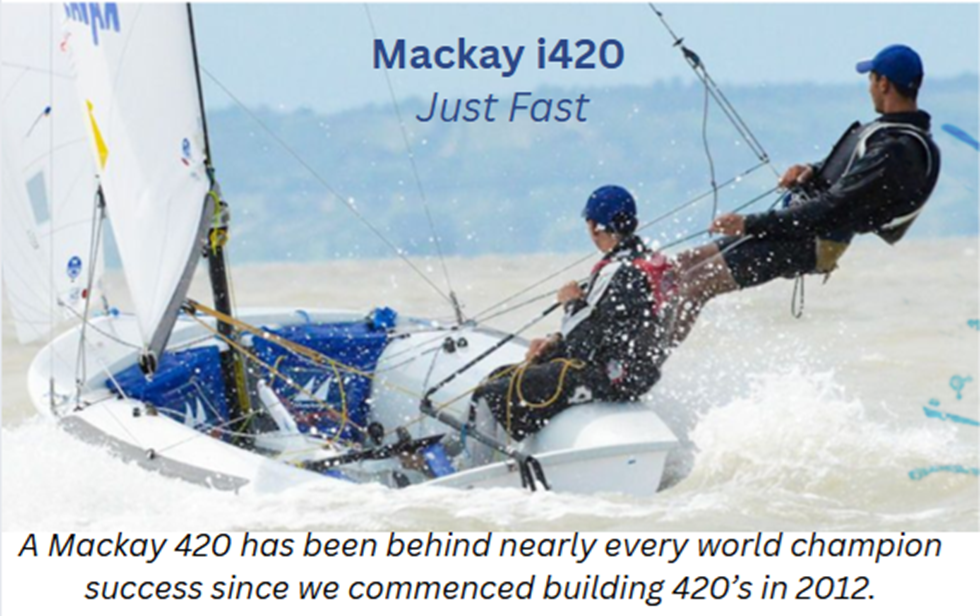
Skiff style sailing downwind – no capsizing. Young or old, big or small – jump straight into a high performance boat and have the time of your life. K6 sailors are passionate about their boats!
Great one-design regattas. Class start at Cowes Week. And the option to race on handicap with the dinghies or keelboats at clubs and regattas all over the place. Another RS winner.
Winner
“Sailboat of the Year”
British Nautical Awards 2002
Hull
- Long waterline length and narrow waterline beam for very low drag.
- High tech super-light epoxy kevlar/glass foam sandwich hull laminate.
- Long competitive life.
- Ergonomically shaped cockpit for comfortable sailing.
- Rig controls within easy reach of the helm and crew on all points of sail.
- Large lockers for convenient stowage.
Keel & rudder
- Vertically lifting keel with lead bulb.
- Permanently fitted keel lifting purchase can be deployed in seconds and comfortably handled by men and women.
- Vertically lifting rudder blade gives easy steering with rudder blade partially lifted when launching and recovering.
Rig
- Ultra-light carbon fibre mast is easy to step and produces a highly responsive rig.
- Mylar / Kevlar mainsail and jib for shape stability and high visibility.
- Self tacking and furling jib makes manoeuvres easy.
- Asymmetric spinnaker. The K6’s very light weight means exceptional downwind speed is achieved with only a modest size spinnaker. Low sheet loads and a spinnaker chute make handling the sail fun and easy for both men and women.
- Downwind performance of the type that used to be the exclusive preserve of the athletic skiffs.
Launching
- Easy launching and recovery in shallow water.
- Road trailer / launching trolley unit means the trailer wheels never go near the water. Minimises risk of bearing failure when travelling.
- Launch from virtually any slipway without resorting to the use of a car.
- Easy to single point lift with a gantry if no slipway available.
Crew
- Two or three crew, depending on your size and choice. No weight restriction.
| Designer | Paul Handley | |
| Length | 5.8m | 19′ |
| Beam | 1.82m | 6′ |
| Sailing weight | 280kg | 616lb |
| Sail area main / jib | 19.7sq m | 210sq ft |
| Sail area spinnaker | 26sq m | 310sq ft |
| Hull construction | Epoxy GRP foam sandwich | |
| Spars | Carbon composite | |
| Sails | Mylar semi battened mainsail and jib. Twin patch radial cut spinnaker. | |
| Foils | Keel – GRP vertical lift with encapsulated lead bulb. Rudder – lifting GRP. | |
Class website:
http://www.rssailing.com/index.asp?fleet=RS%20K6
 The Windmill Fleet brings families together from across the country to enjoy the thrill of friendly rivalry on the water and camaraderie ashore.
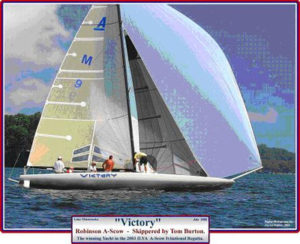 In sailing, the A-Scow is a large sailing scow It is 38 feet long and with reported top speeds of over 25 kts. With its rules of design, also known as scantlings, first being written in 1901, the A-Scow has a significant history. With a large sail area and little keel ballast, the five to seven crew members must work in unison on the A-Scow to keep the boat sailing fast and upright. The boat is mainly sailed in Minnesota and Wisconsin.
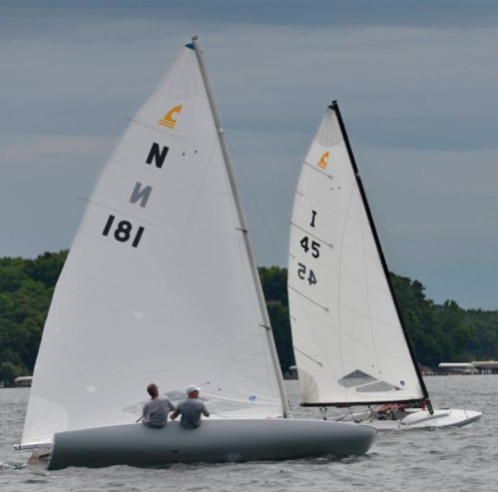 C Scow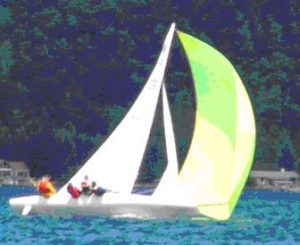
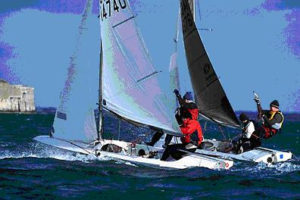 The International Fireball was designed to meet a need – to the bridge the gap between the small “family” centre boarders and the larger more expensive classes. The designer, Peter Milne, an Englishman, had these motives: cheapness, simplicity to build, unequalled performance potential, price and waterline length, individual appearance.